
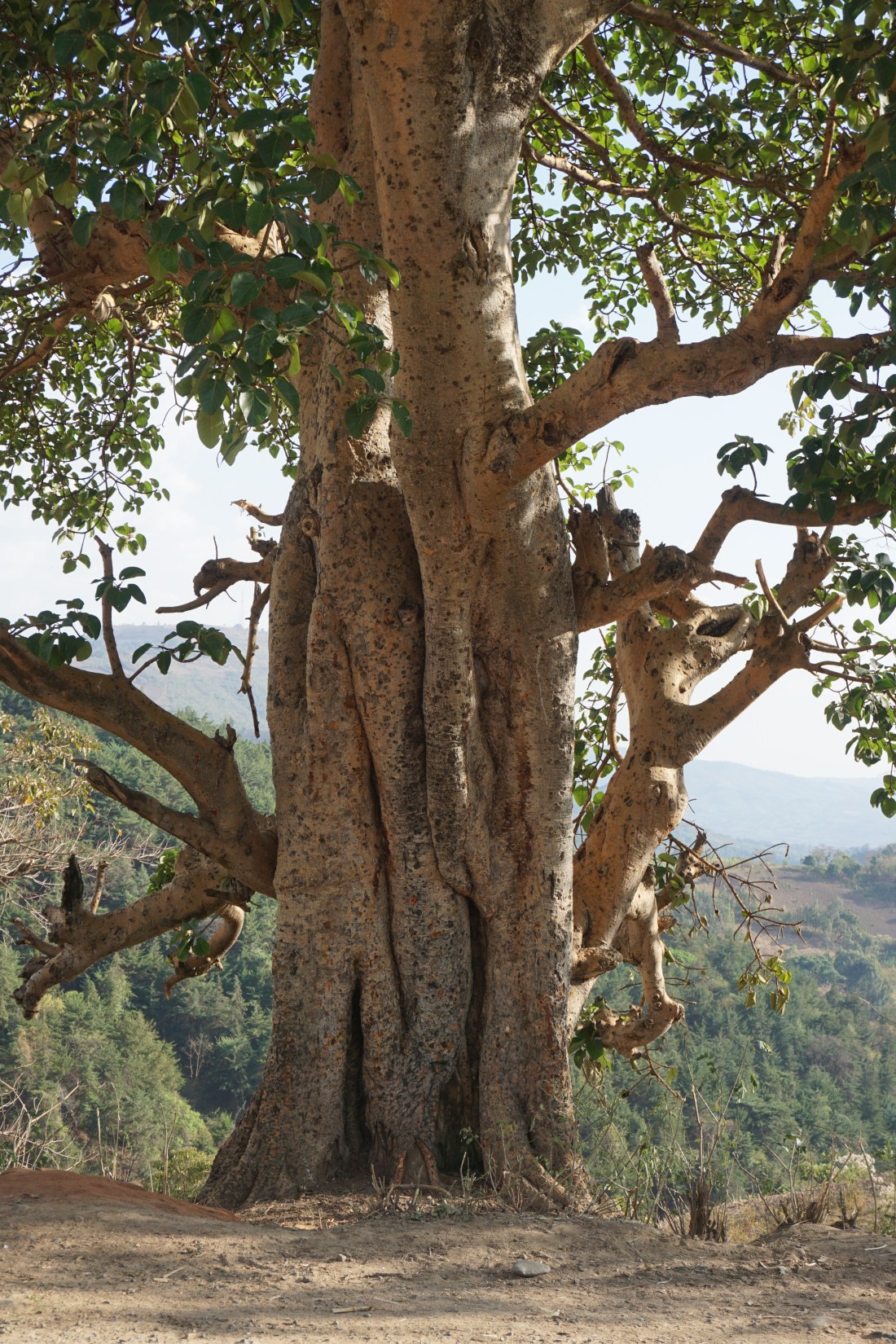
This is a very old moringa tree. The greens are used for cooking and making tea. It also has medicinal properties.
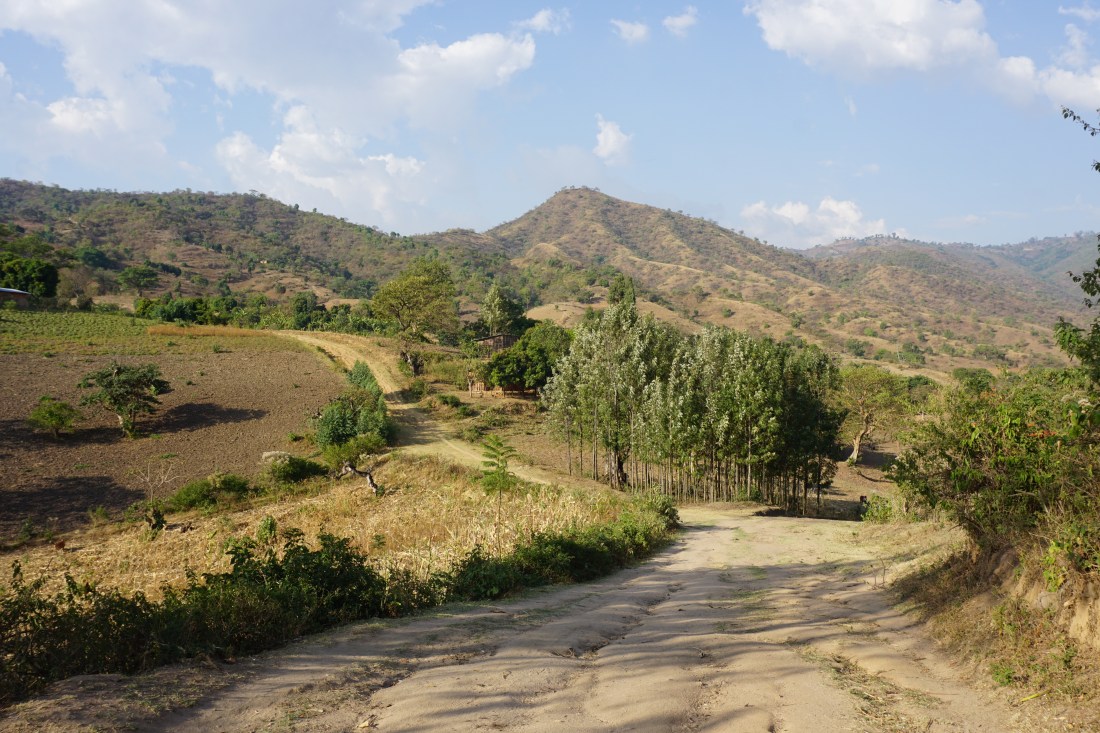
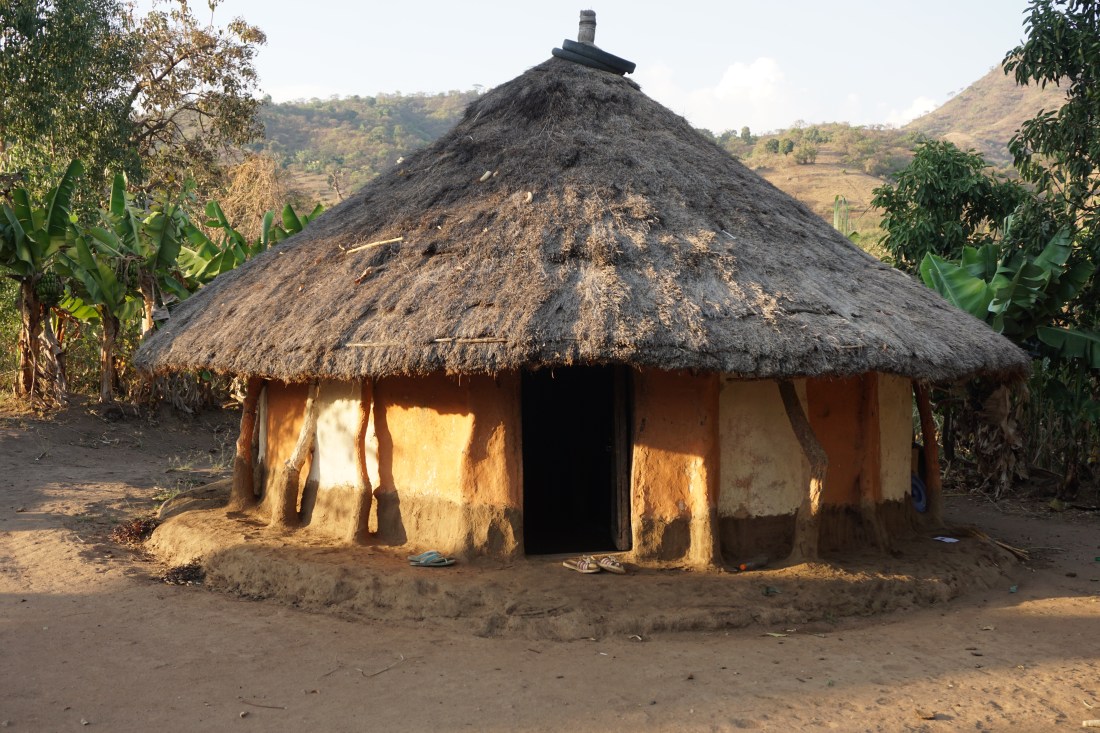
The Ari village we visited was in the most beautiful countryside.
Here we watched a blacksmith making a tool that is used in the fields. He had a collection of knives he had made for the market.




The pottery sold in the markets is all made by hand.
Here we were able to see a plate being made.


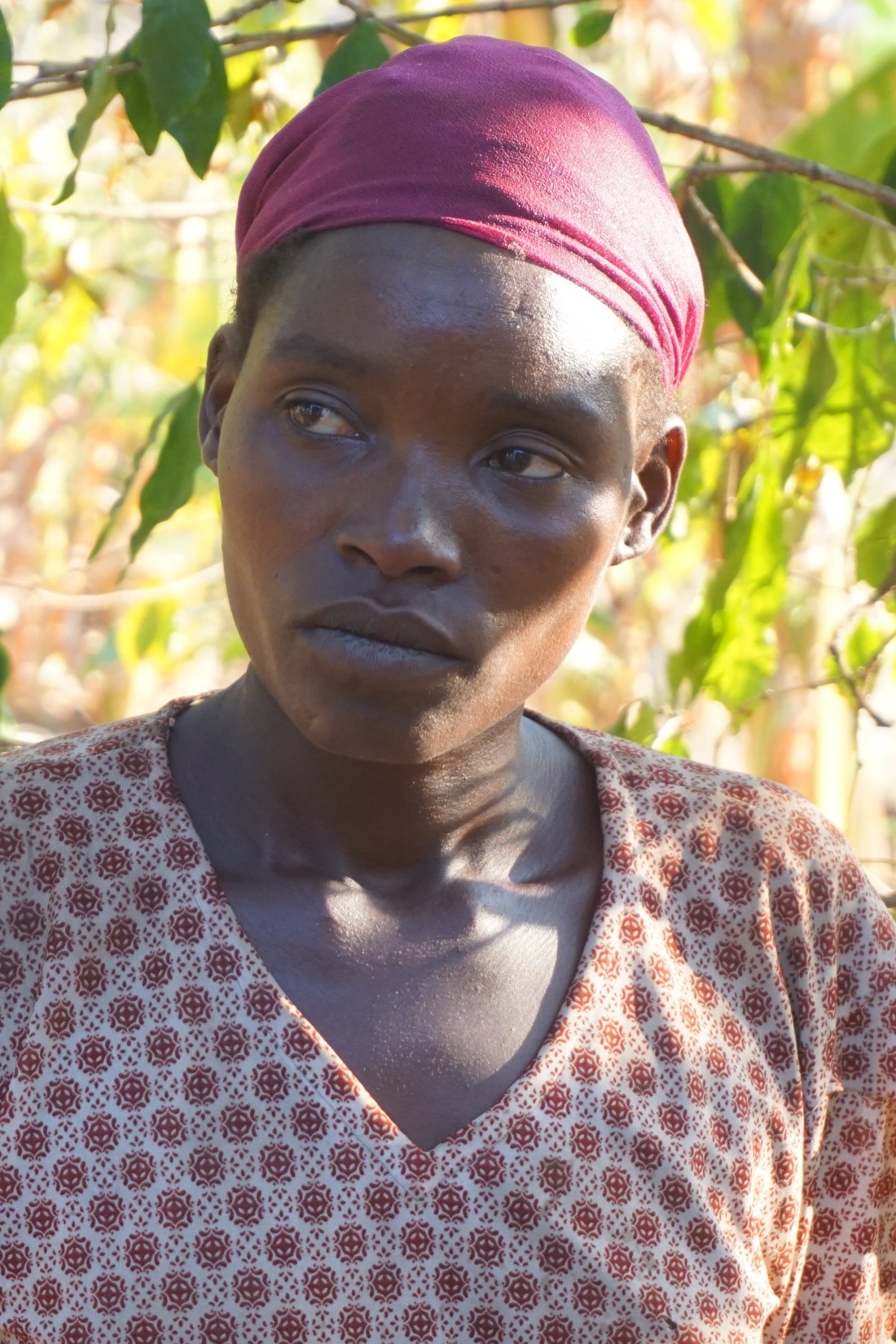


This woman also created the ceramic skillet that we watched the injera being cooked on. Injera is typically made from tef but in this village they made it from corn as it was less expensive. They grow corn here but not tef. The corn is dried, ground then mixed with water to ferment for two days before being cooked. John and I preferred it. as it is less sour tasting.


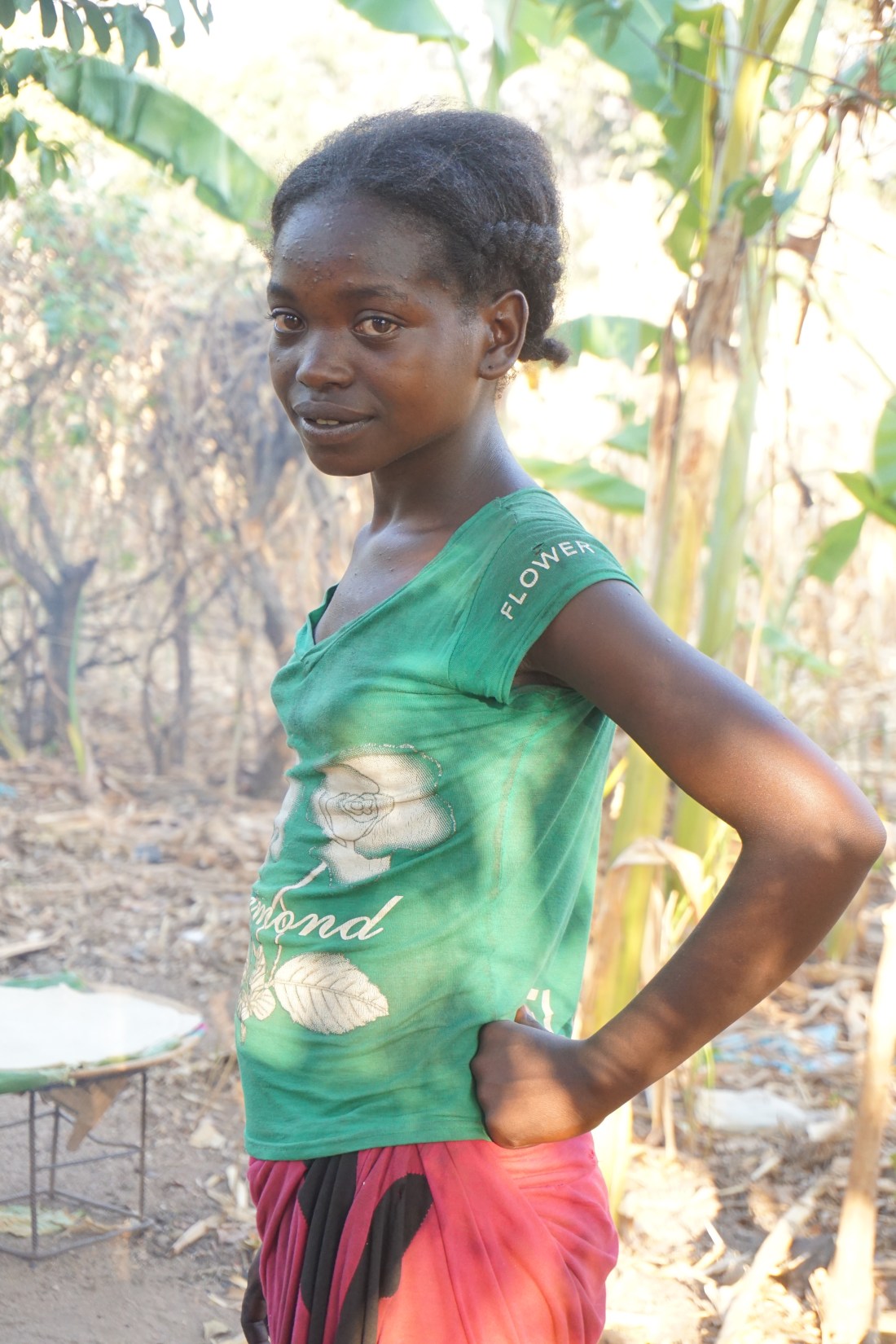




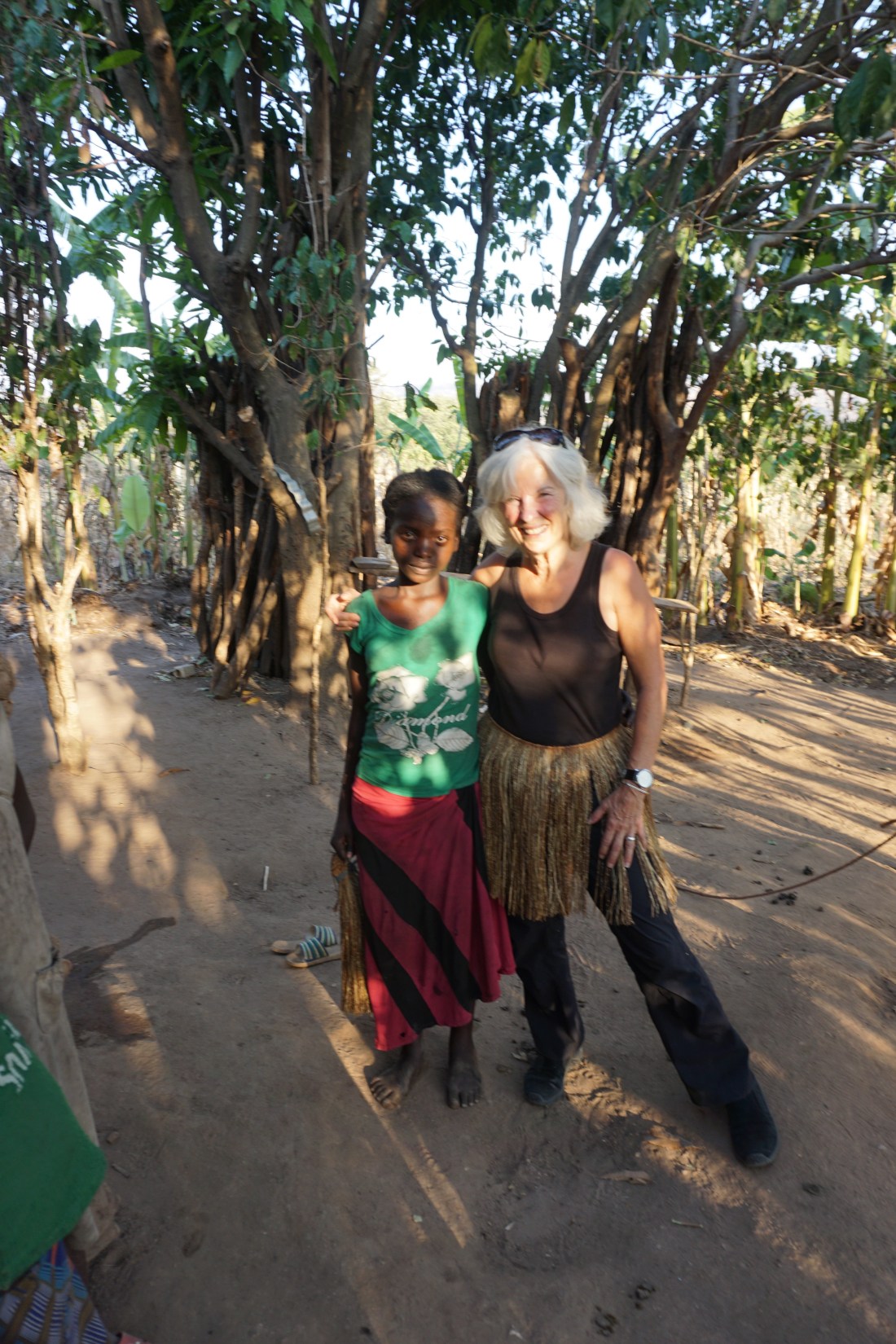
This is an example of the traditional skirts girls and women would wear made from fibre from the false banana plant.


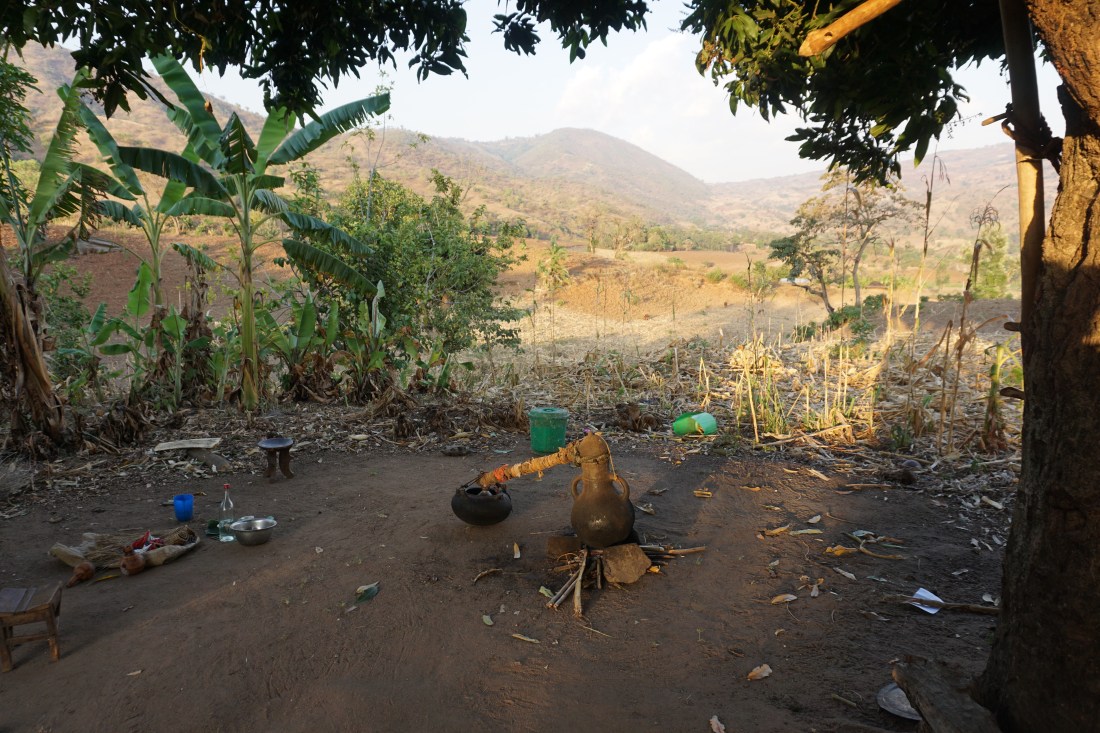
Arake, their alcohol, is made from a mash of corn, hops and sorghum which is fermented then cooked and distilled.
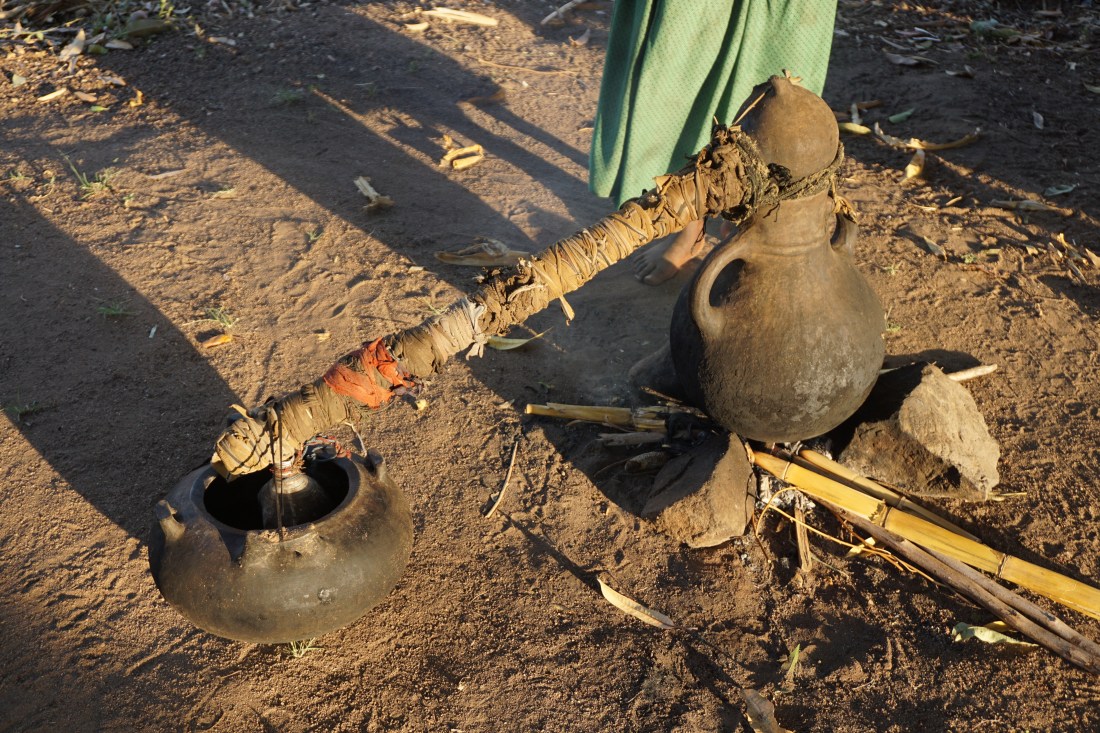
The corn is soaked and germinated before being ground.


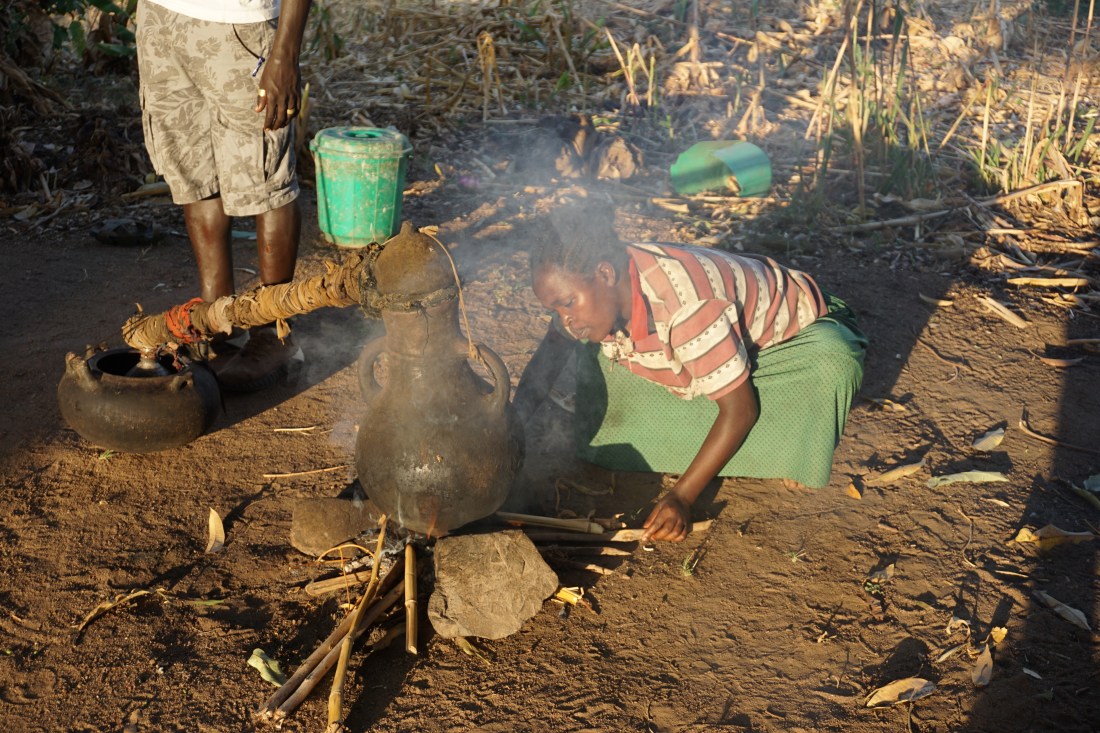
A lot of the alcohol is sold to the Mursi tribe. A bottle cost 150 birr or about 7.50 Canadian. This young lady produces about 5 bottles a day.


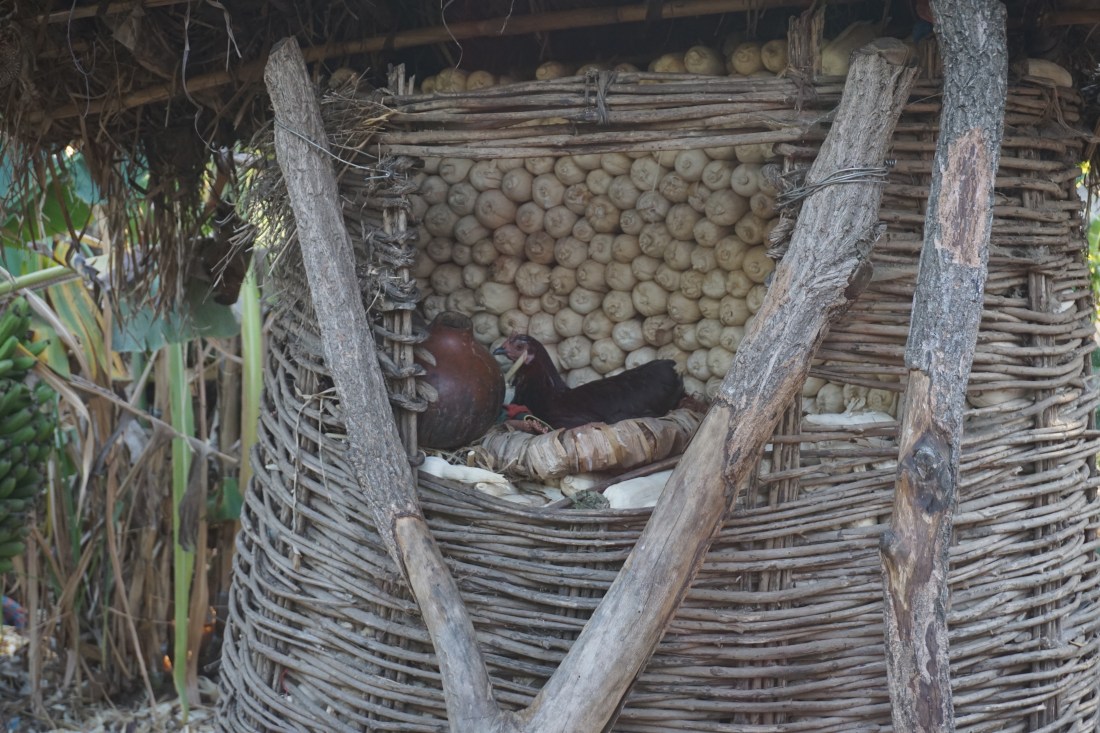
Her supply of dried corn.


Sunflowers she has dried.
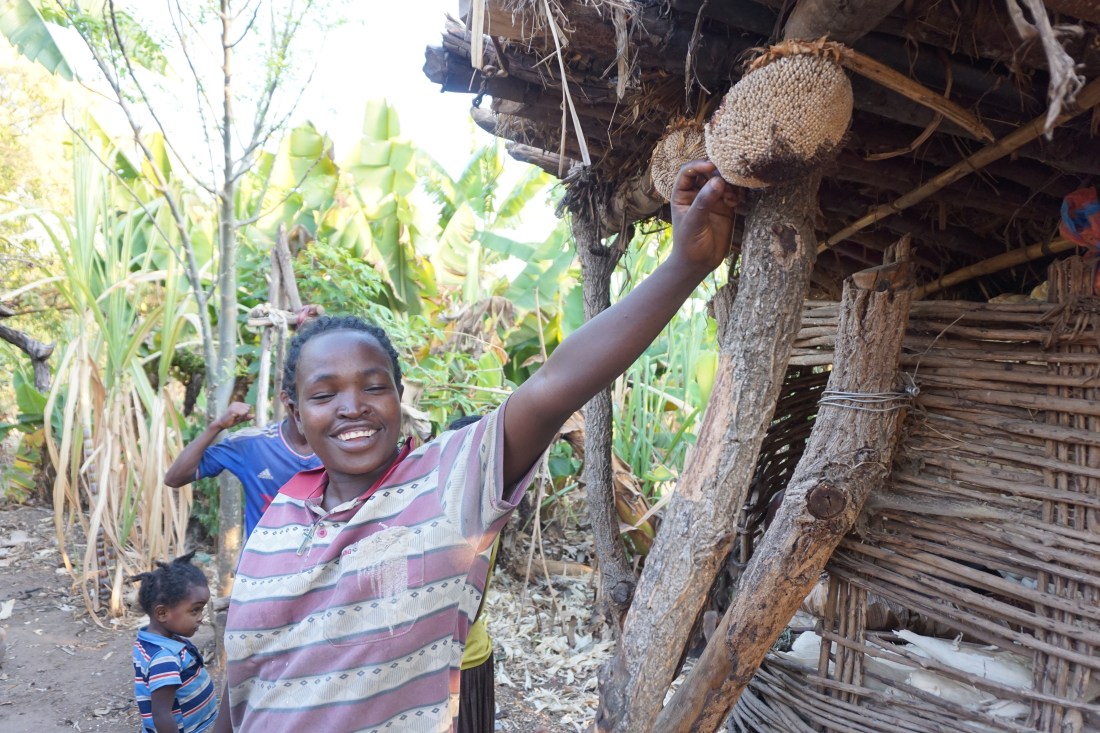
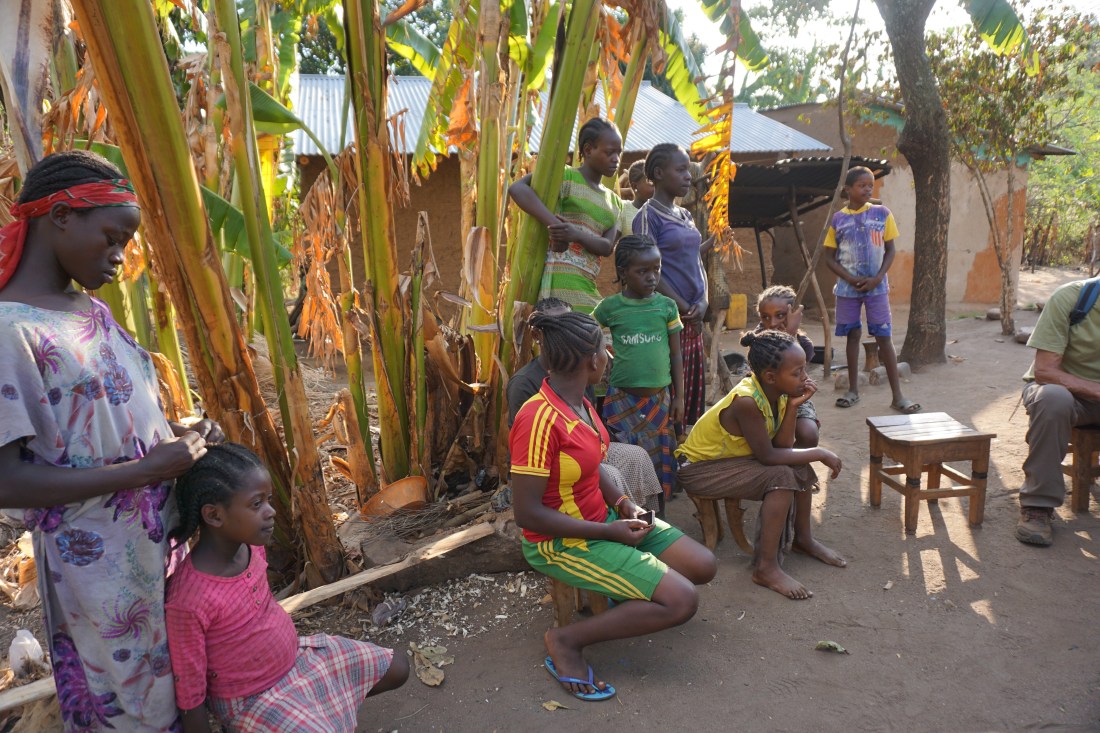
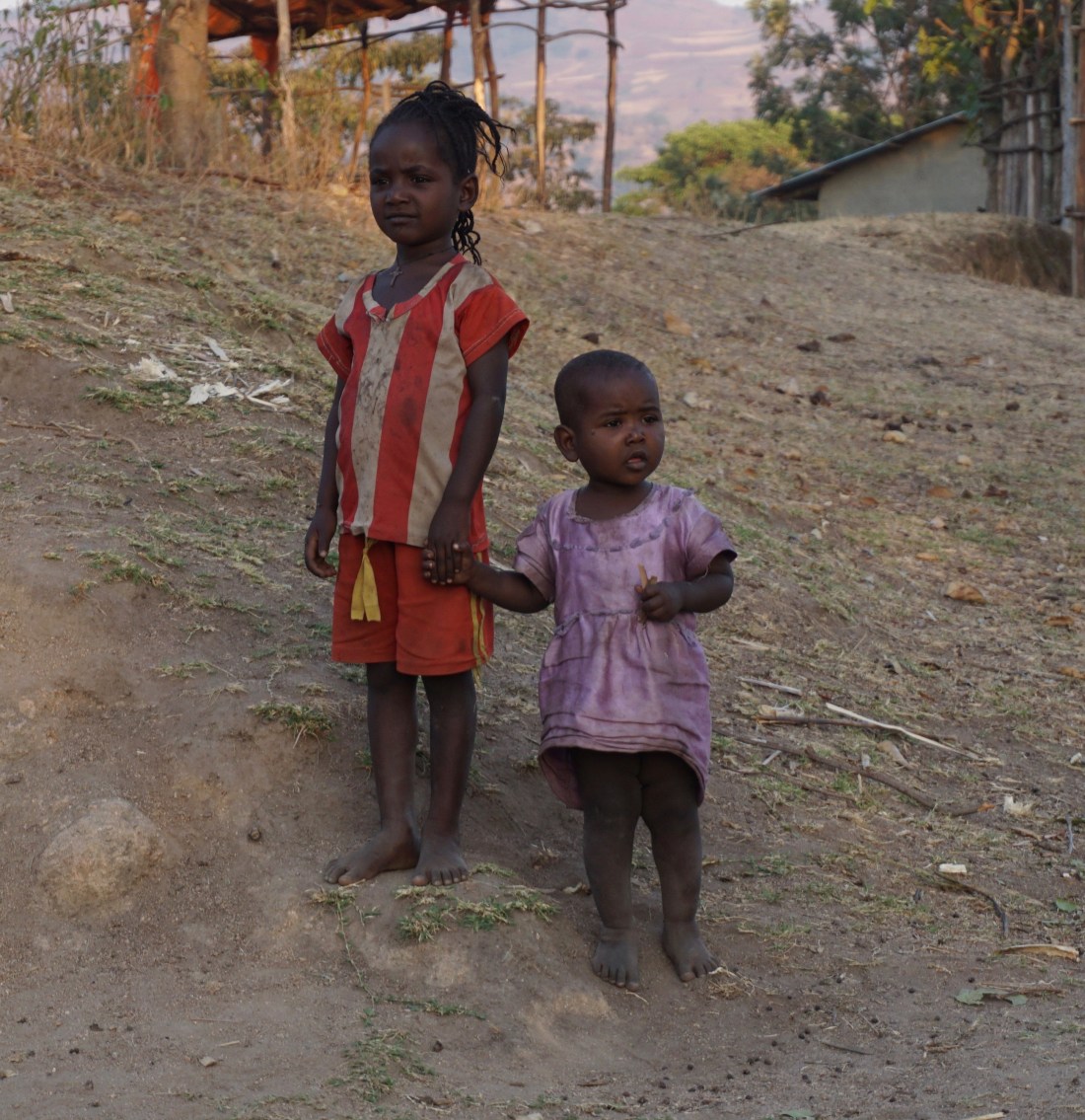
In each village it is not unusual to have a contingent of children following us.
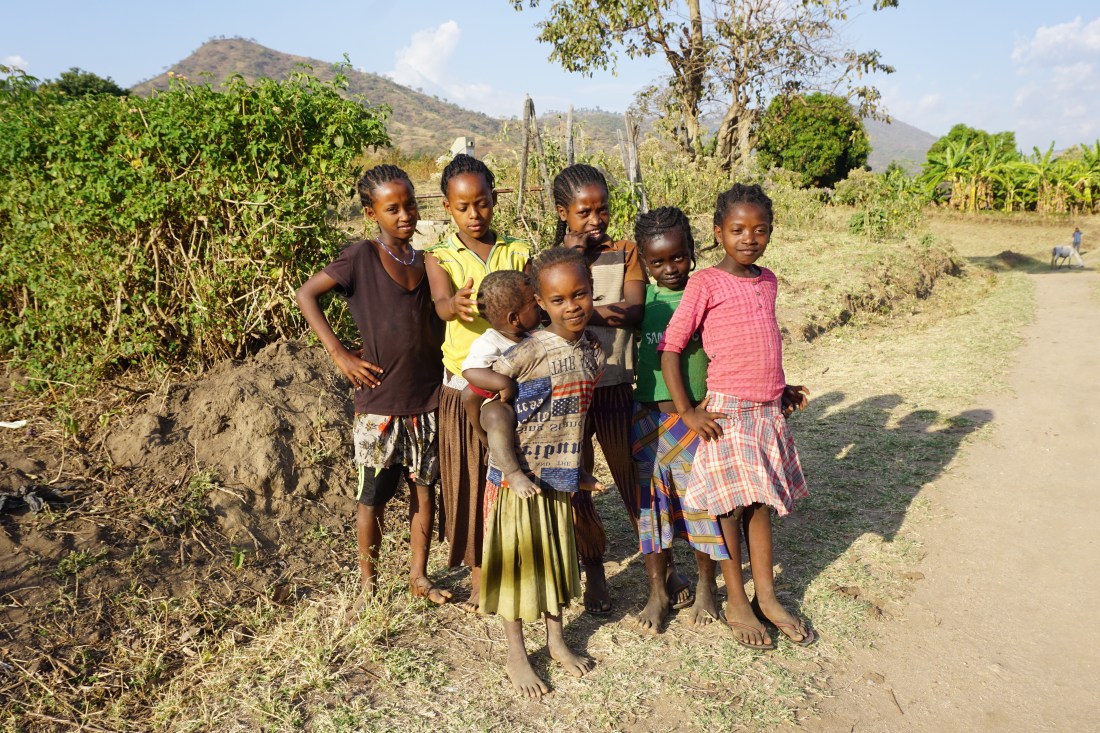
These young girls carrying water are so strong


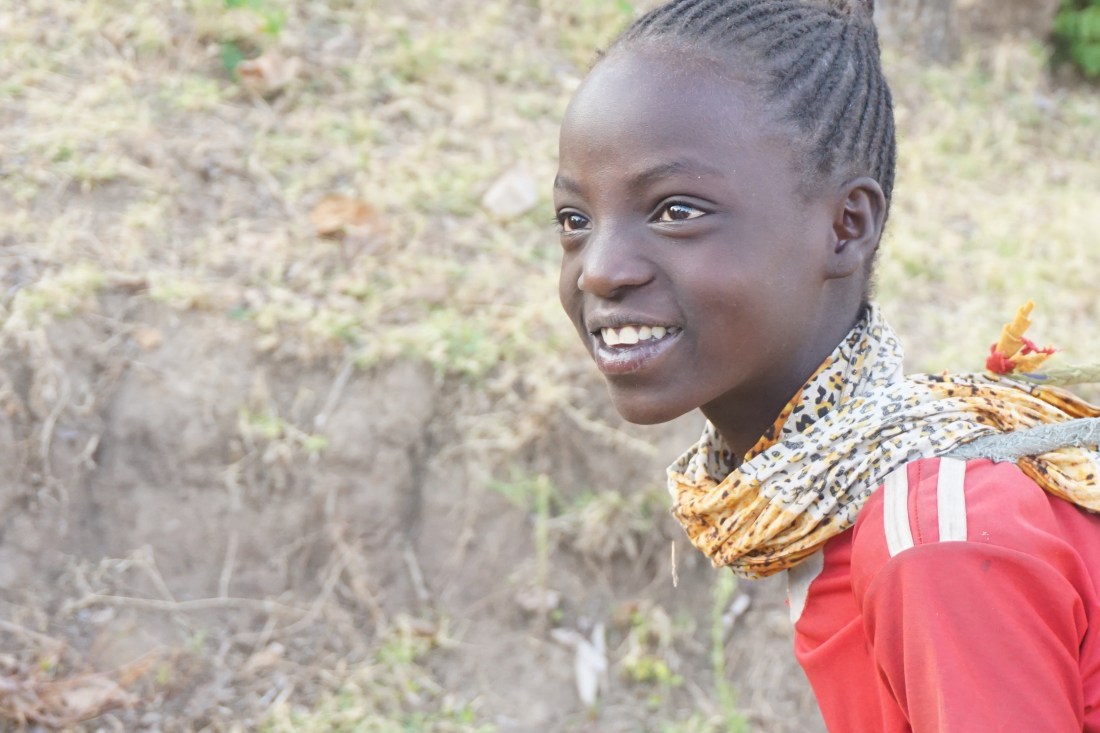
and beautiful.
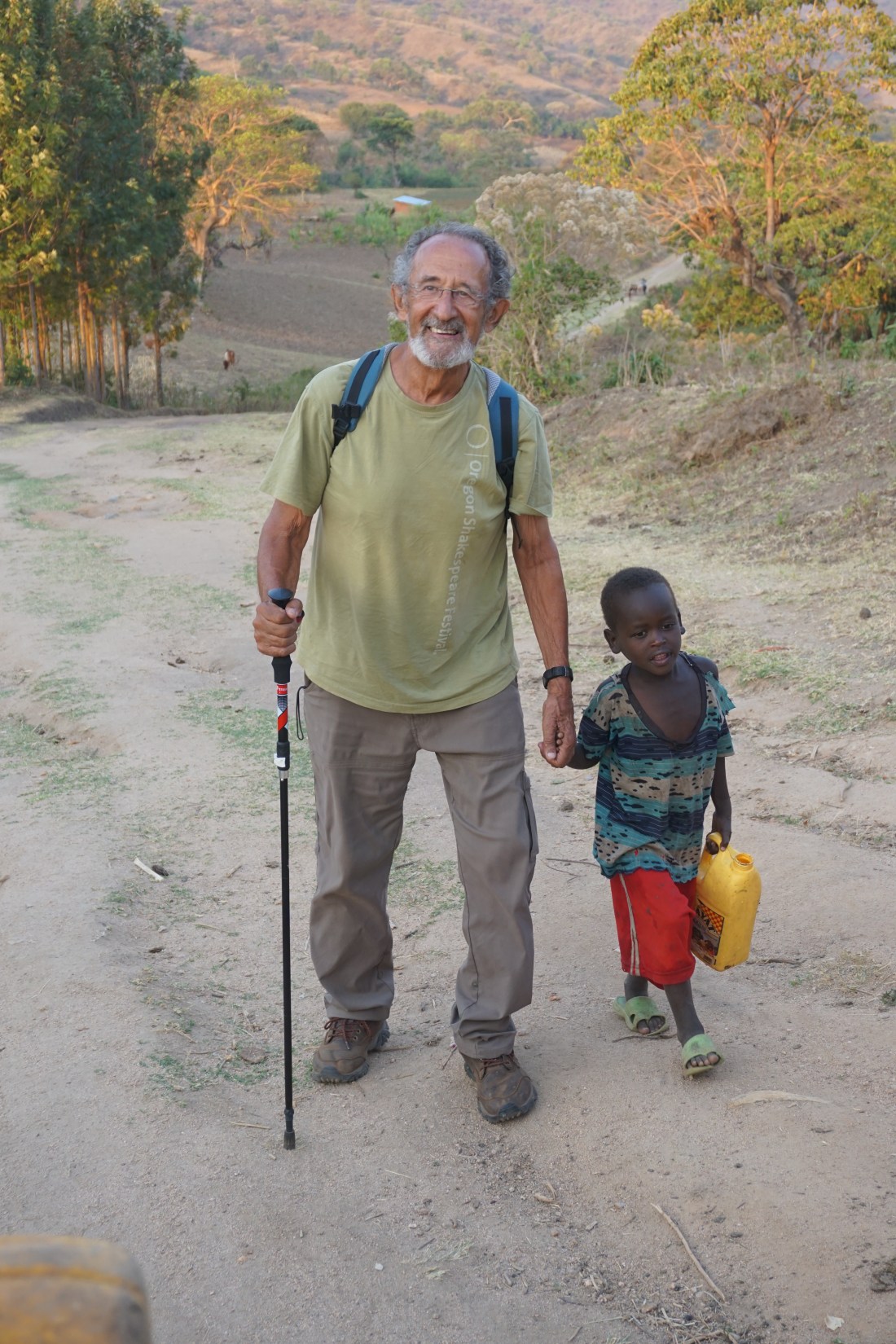
 John’s little buddy.
I enjoyed seeing how they trim their horses’ tails.


 BeverleyandJohn's2018Travels