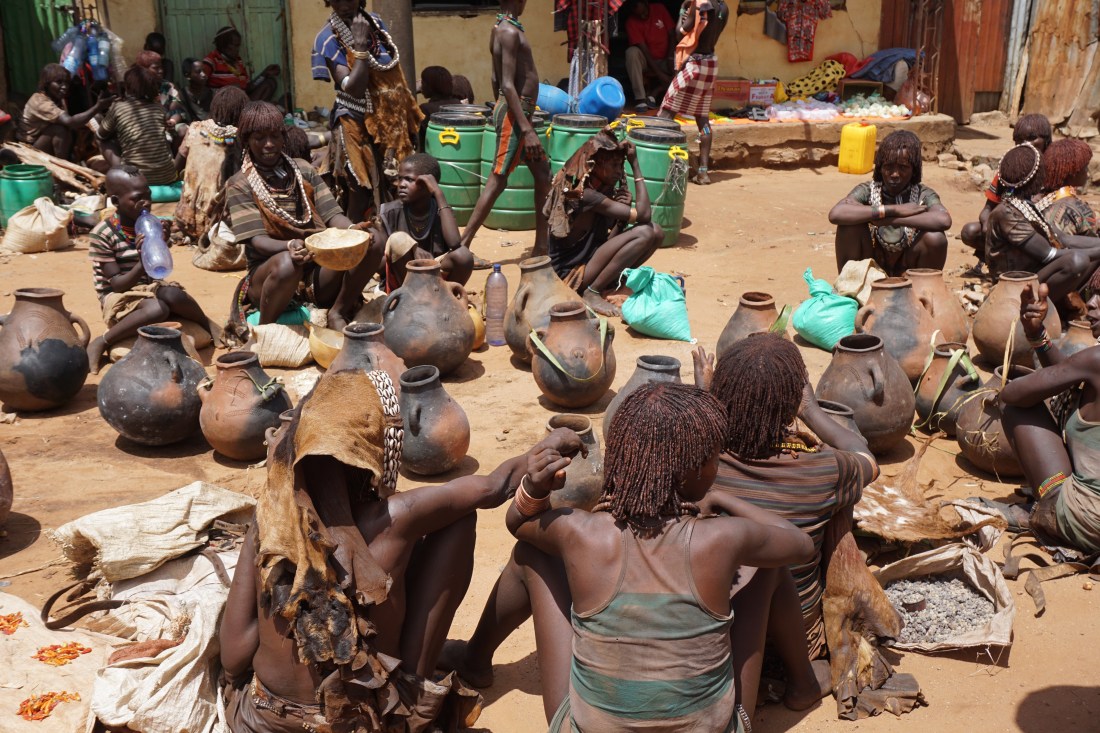
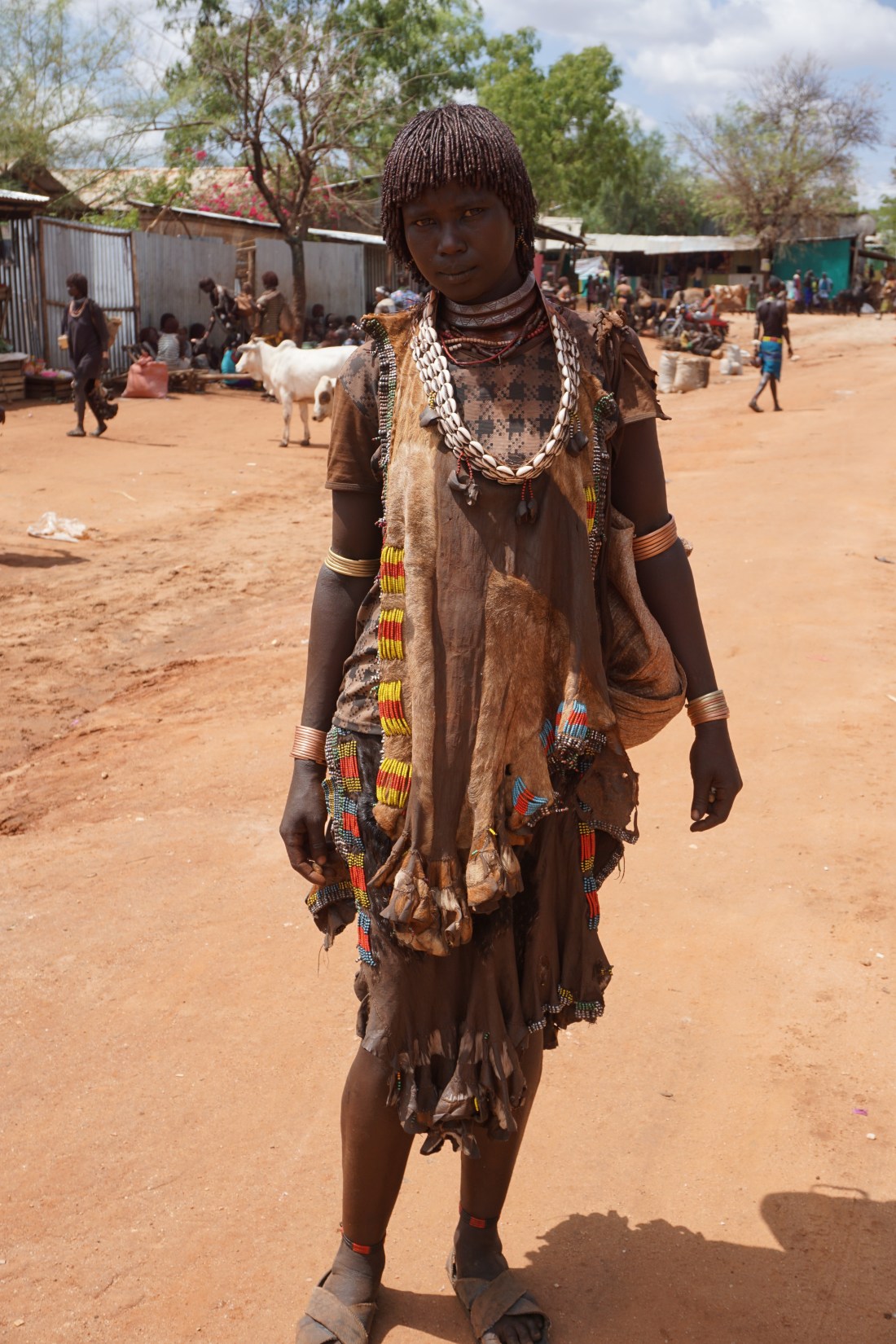
Southern Ethiopia – Bale Mountains

Today was Bale Mountain National Park.

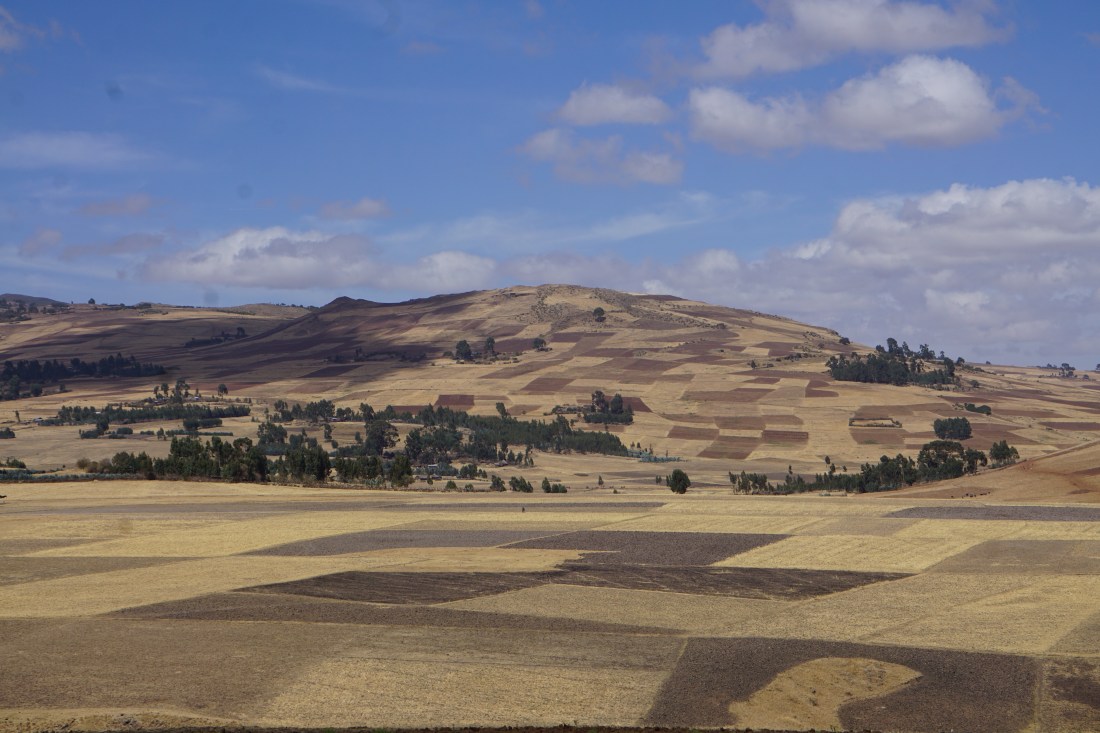
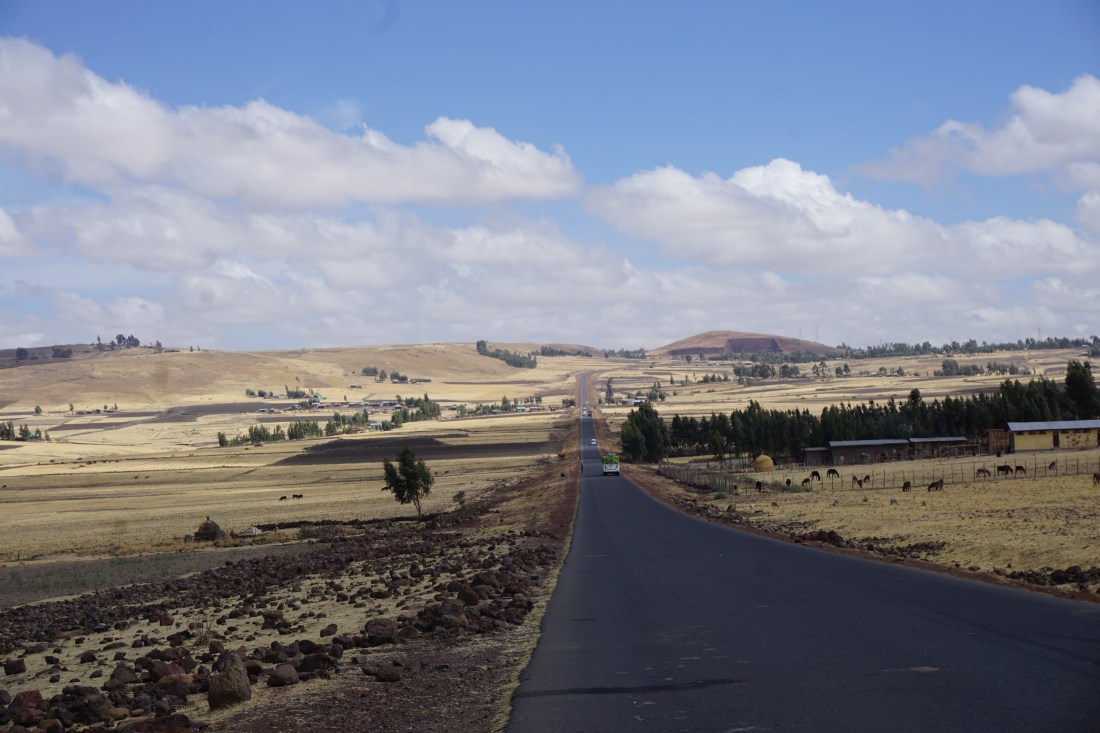
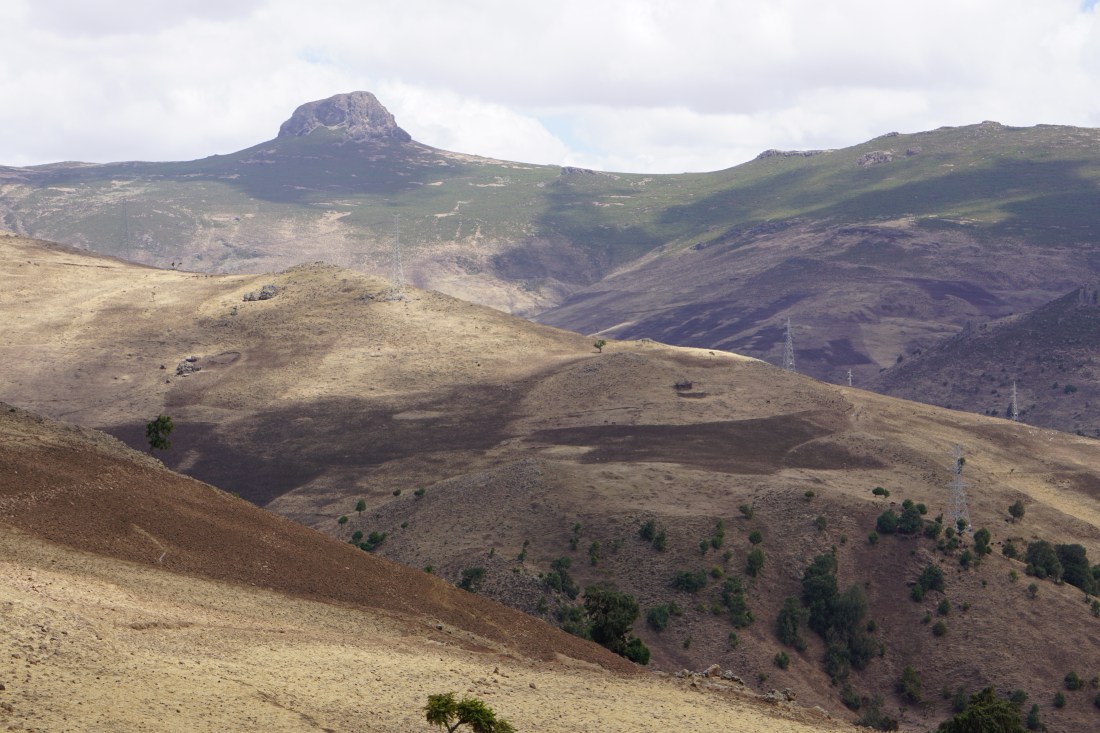
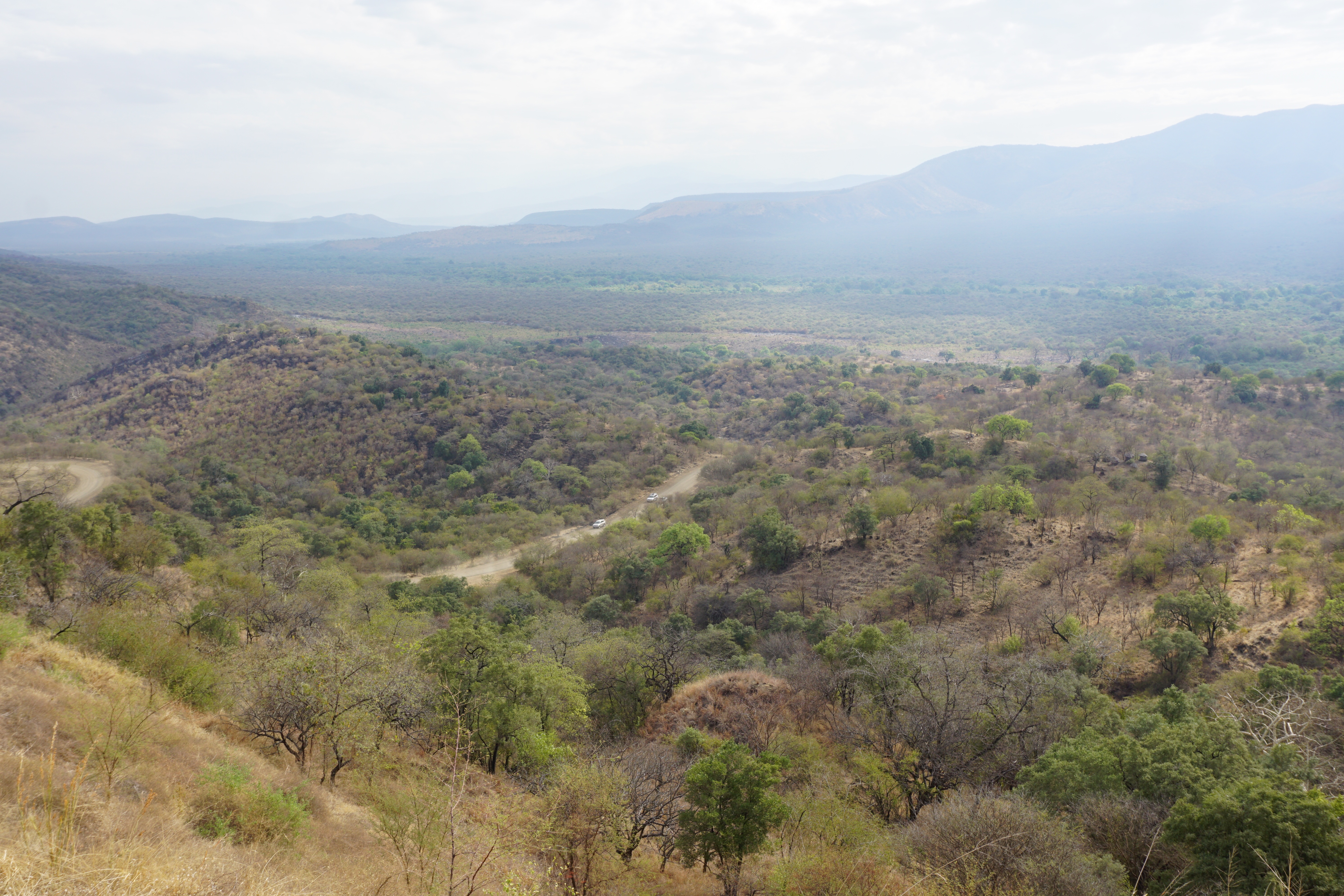
The countryside as we headed to the mountains was so unlike any we had been in so far in Ethiopia.  We could have easily been in Alberta.

DSC03495

DSC03489

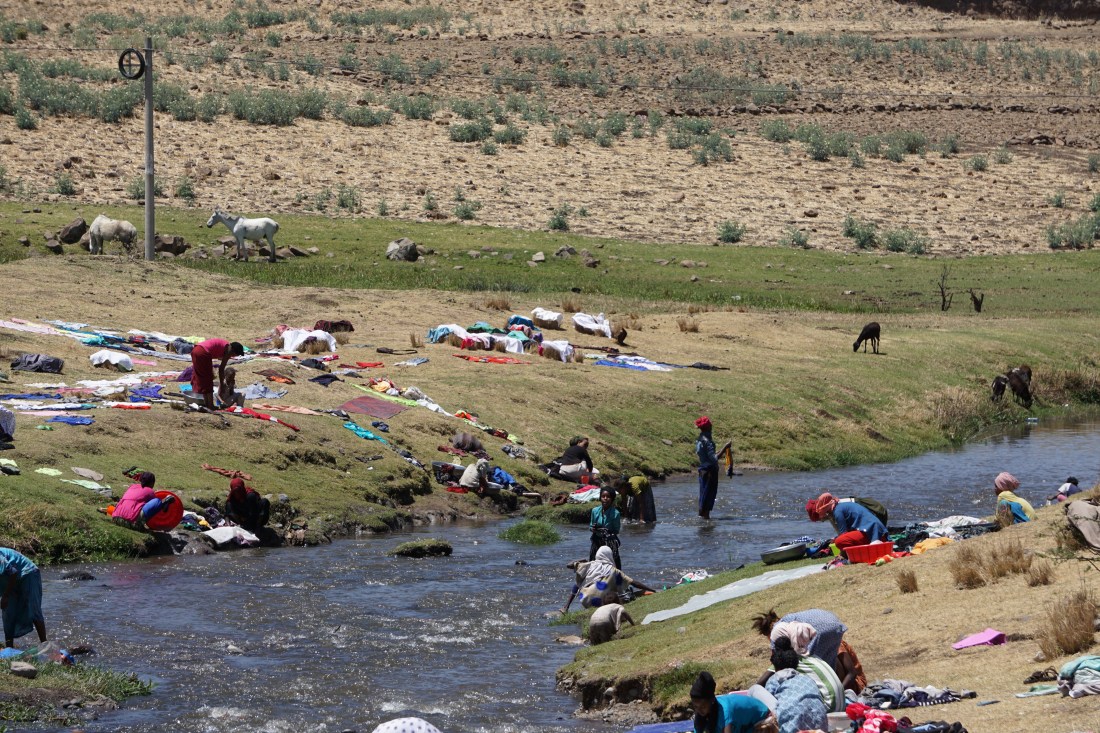
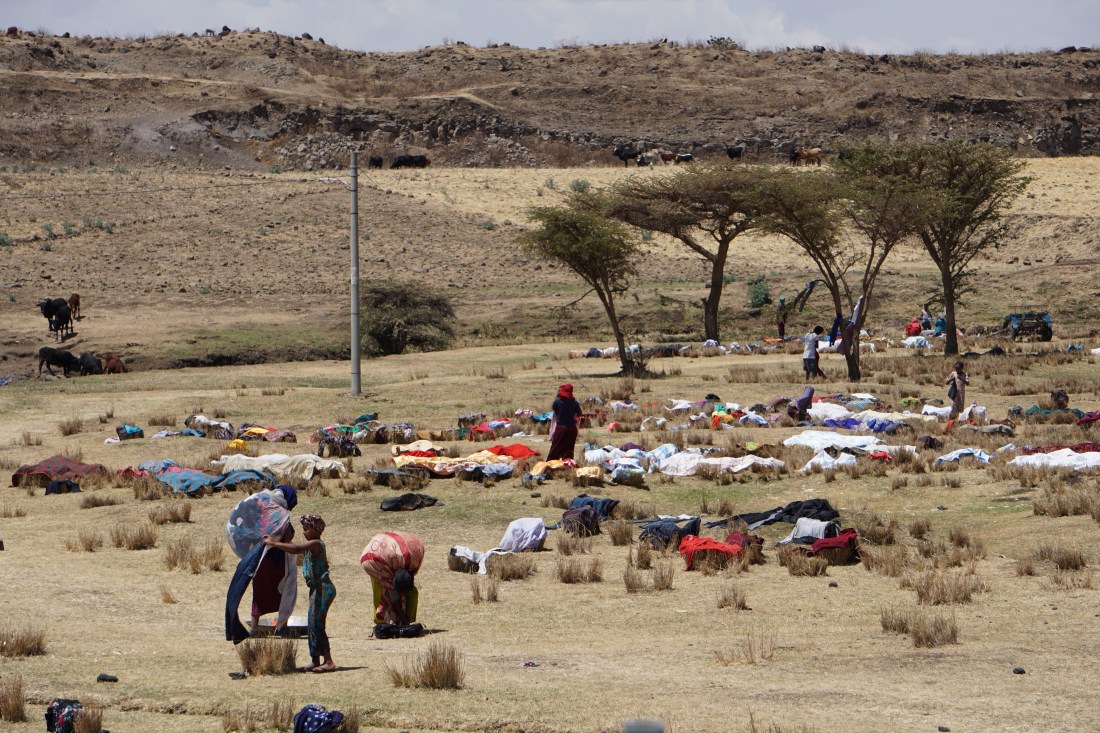
Women doing their Saturday washing by the river.

DSC03184

DSC03183

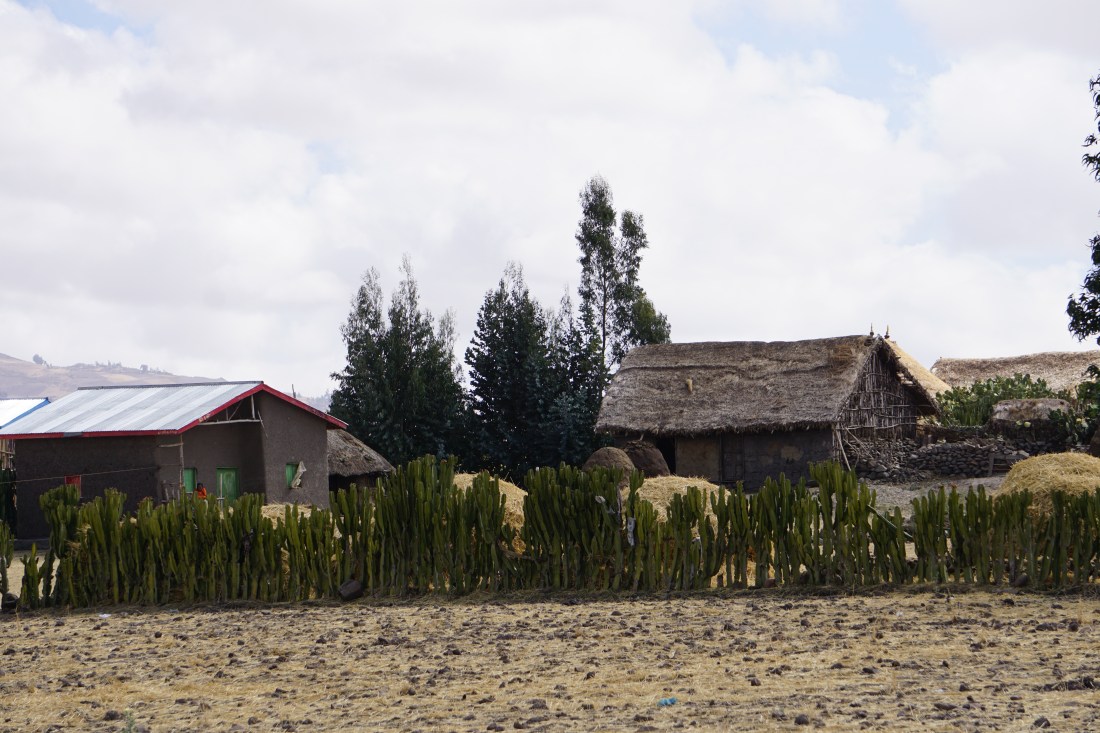
It was interesting to see how they made use of the cactus as fences.

DSC03492

DSC03201

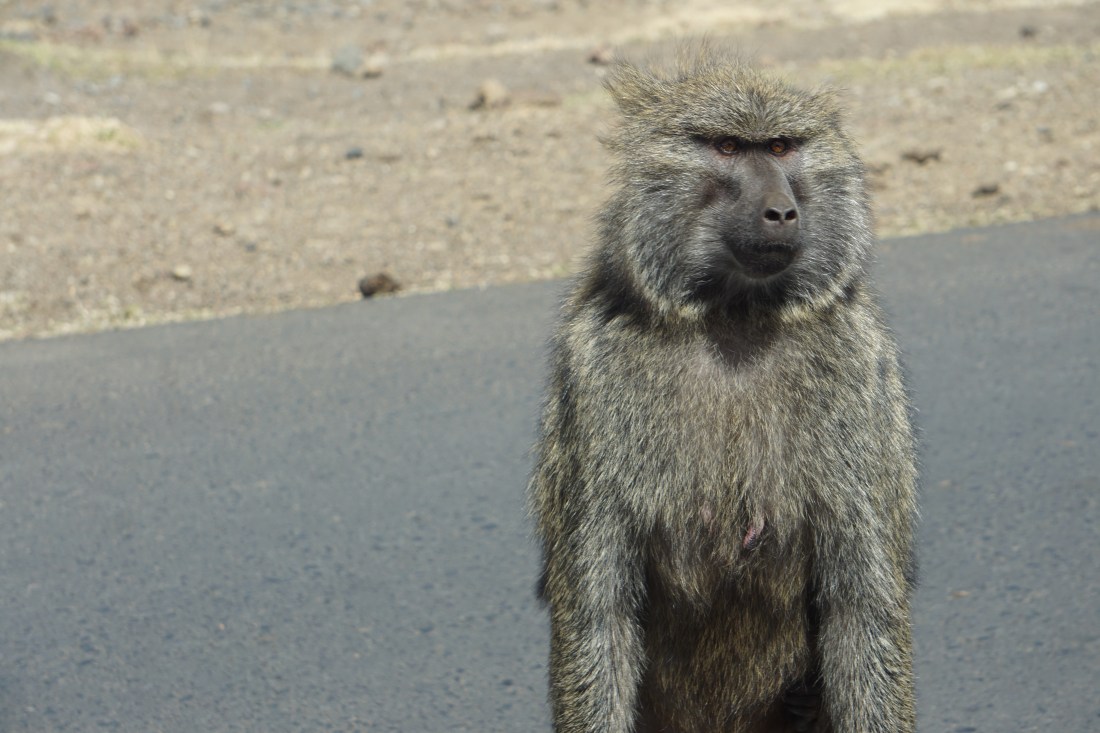
As we got near Bale Mountain National Park we started to see the animals.

DSC03258

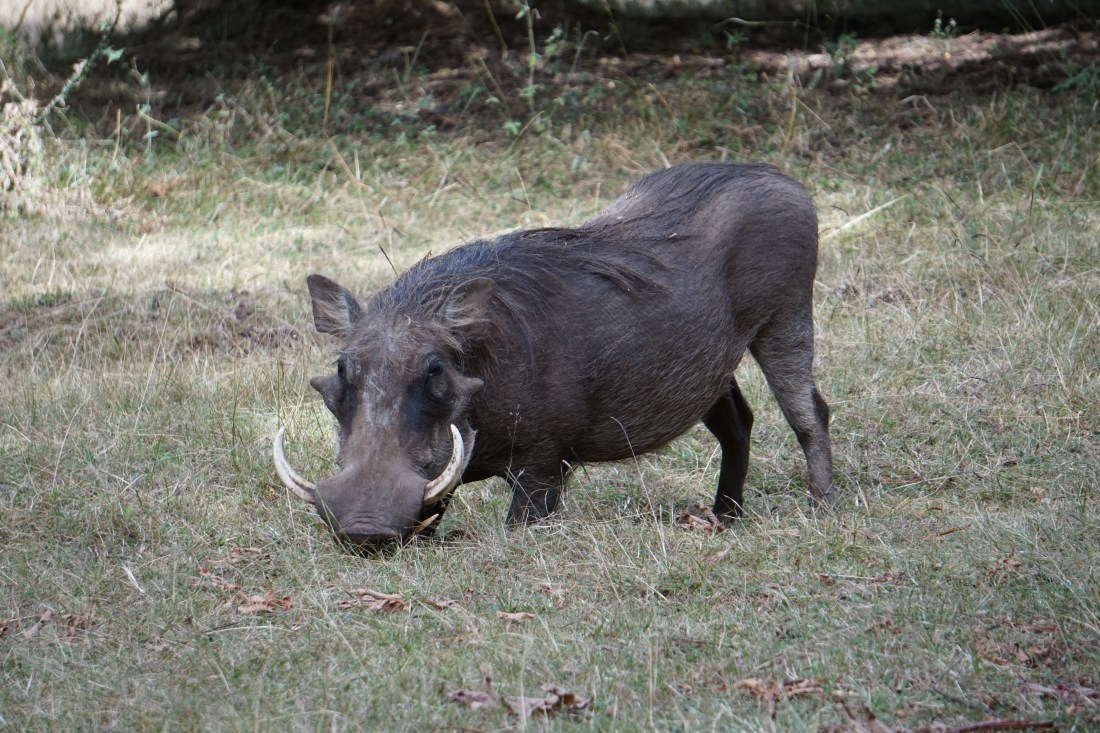
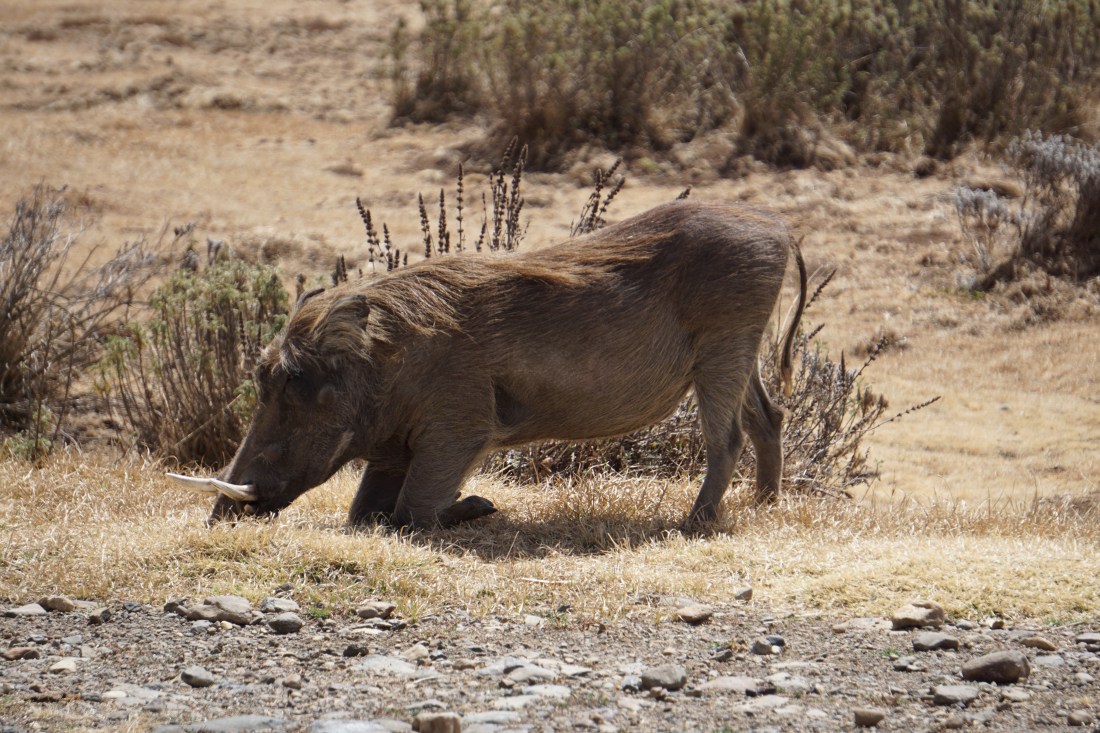
So fun to see warthogs down on their knees.

DSC03230

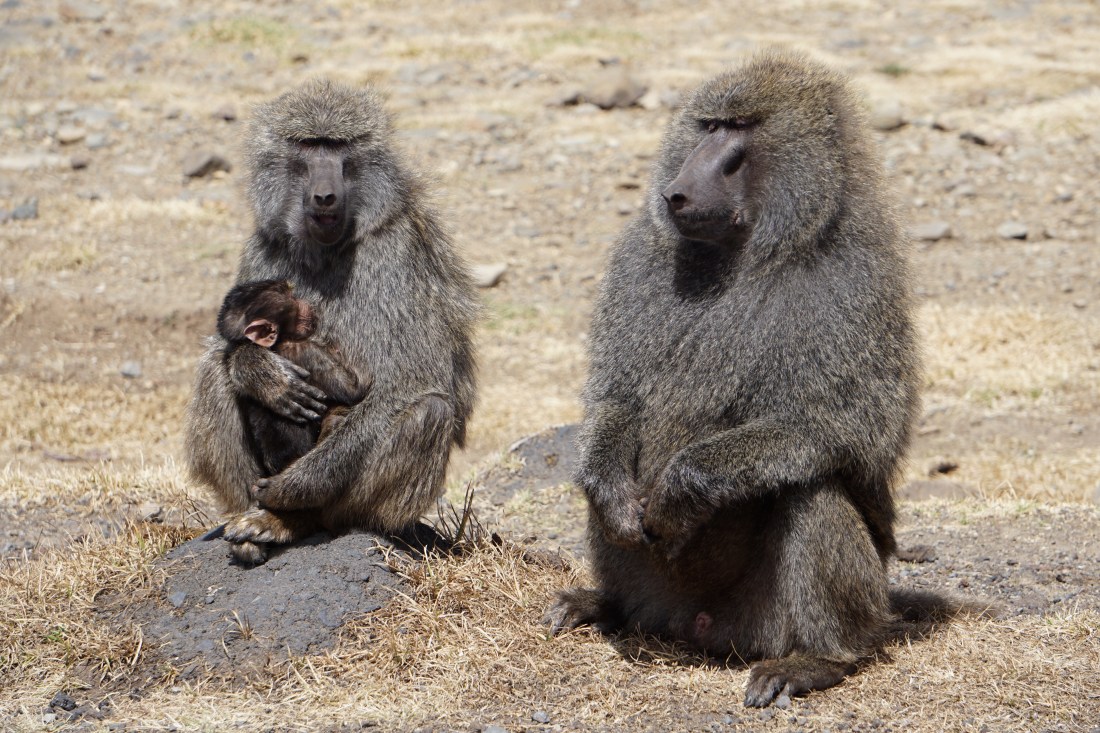
Momma, pappa and baby  baboon.

DSC03244

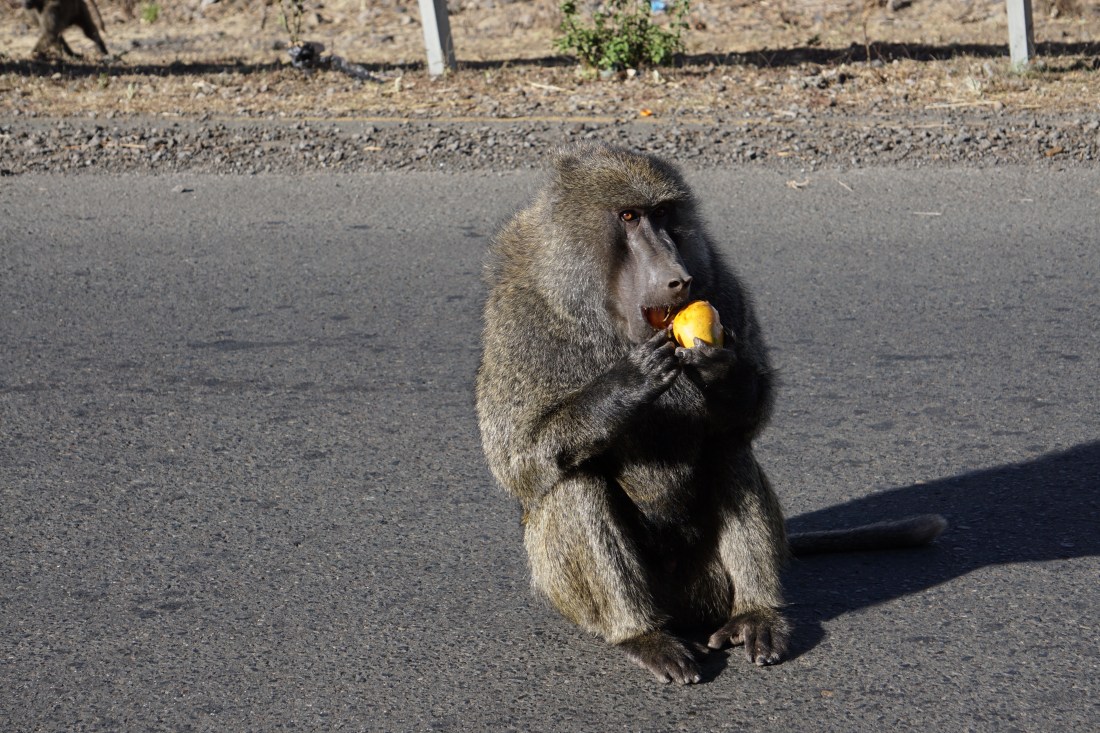
Are you going to give me something to eat or not?

DSC03235

Thank you.   I love mangos.

DSC03484

DSC03249

Entering the Park.

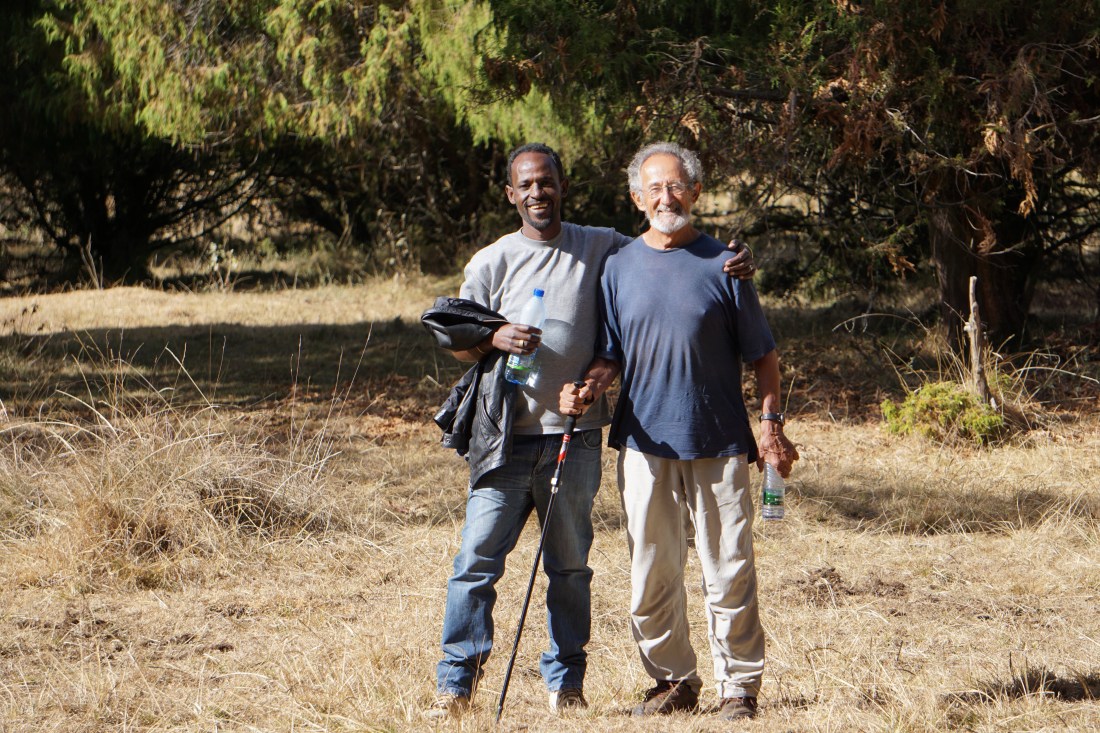
This was our local guide as we walked around the park. He was also our guide for the Sanetti Plateau Wildlife Excursion the next day. His love for the animals he was helping to protect was really touching.

DSC03346

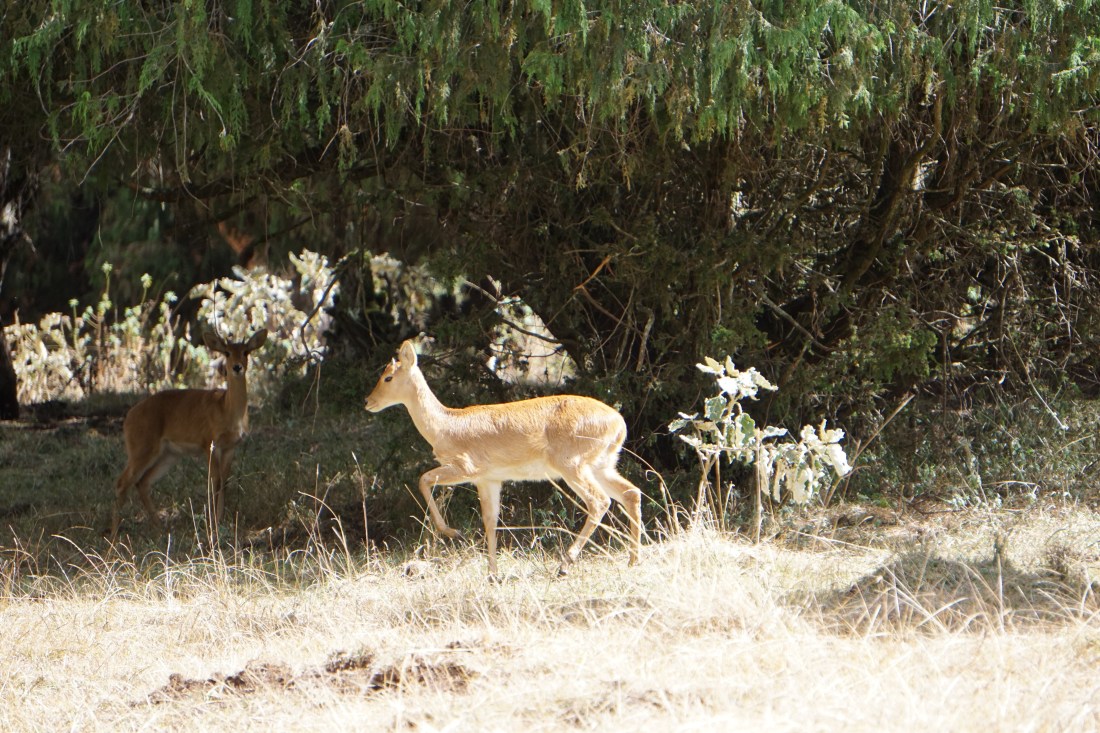
Common duiker.

DSC03263

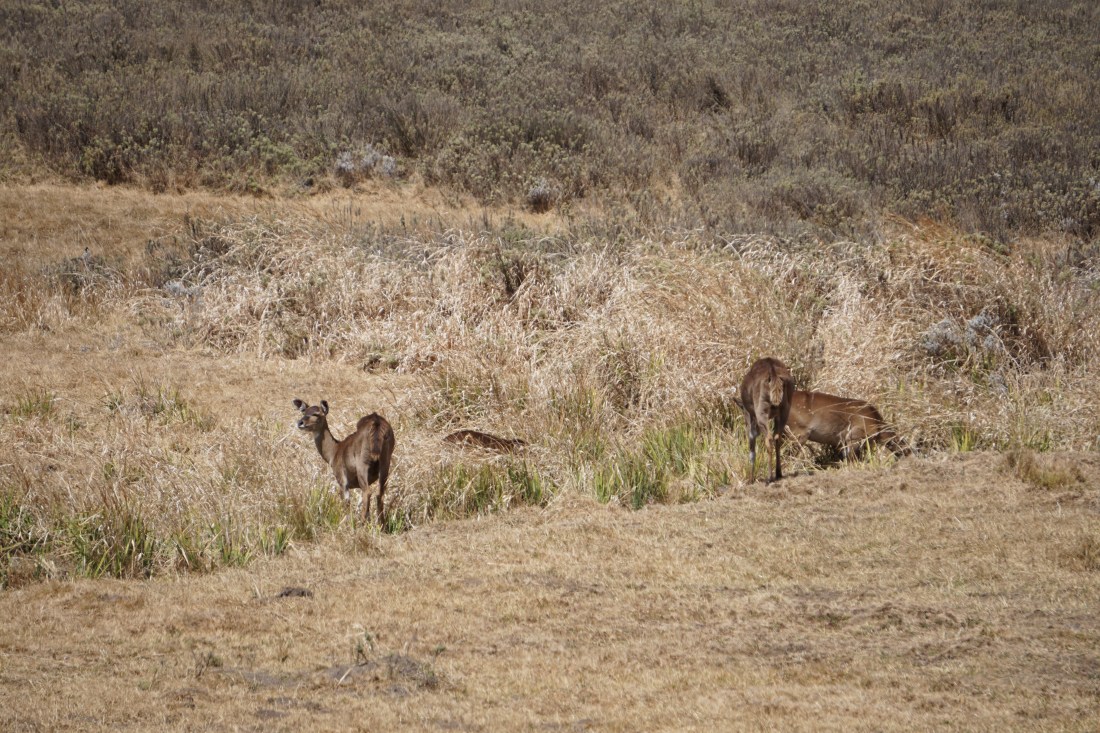
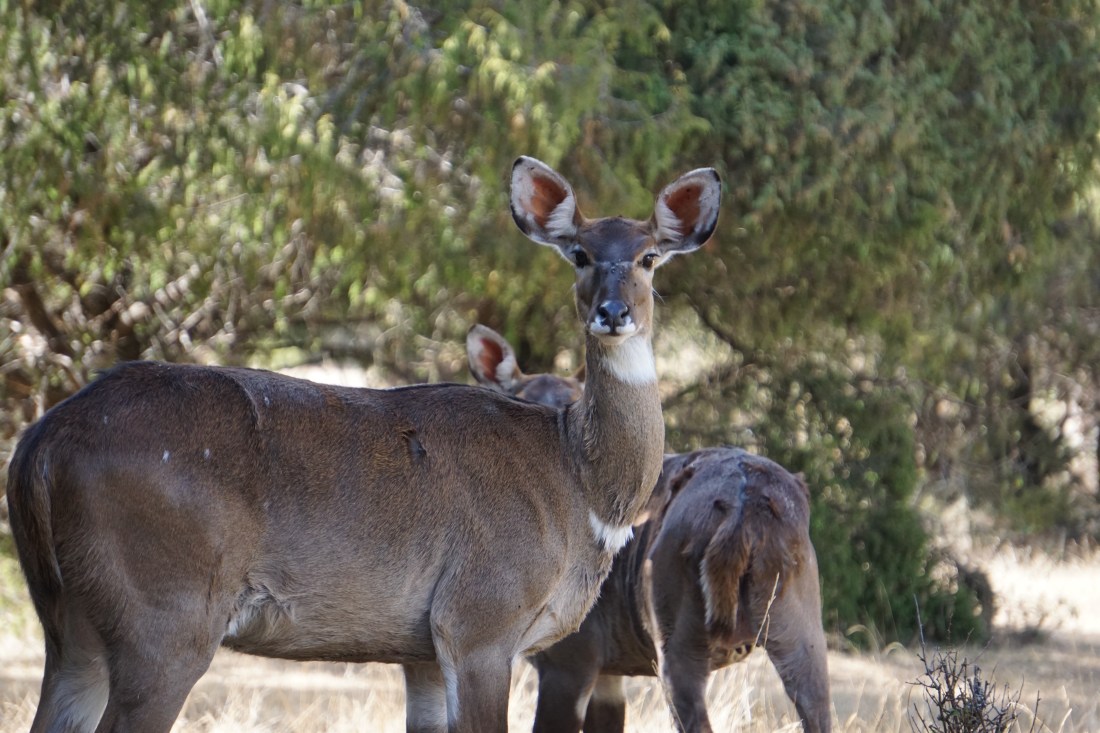
Female mountain nyalas.


DSC03355

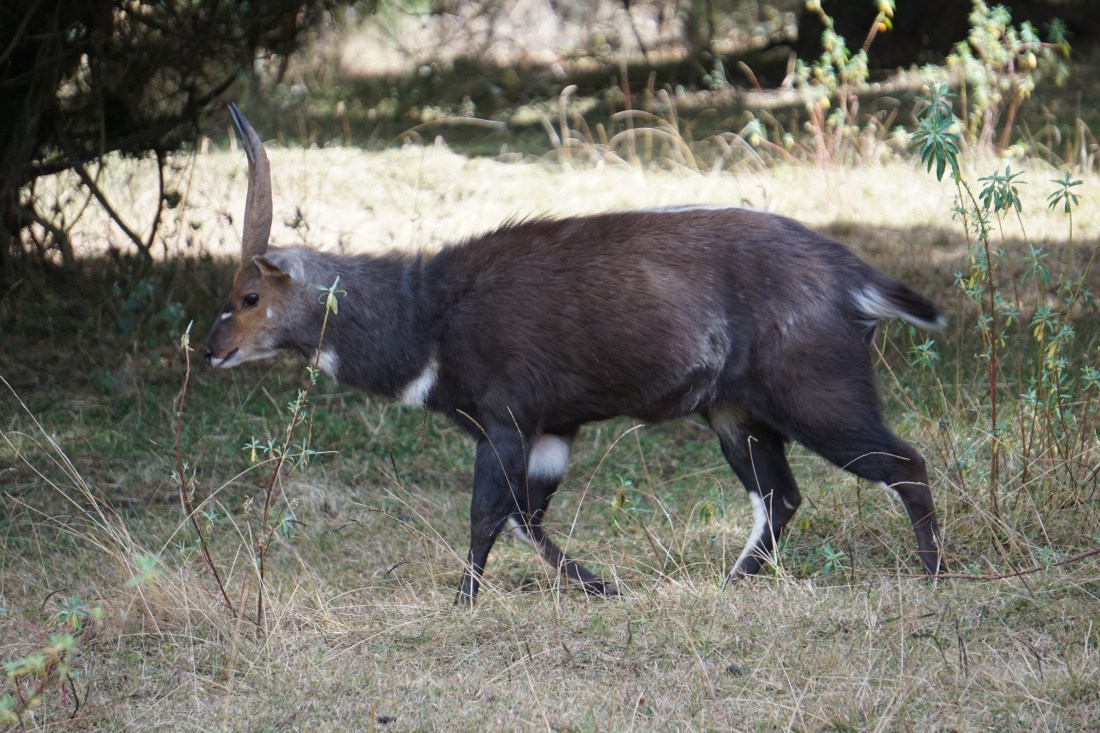
The bushbuck is very shy and our guide was amazed we got to see one.

DSC03272

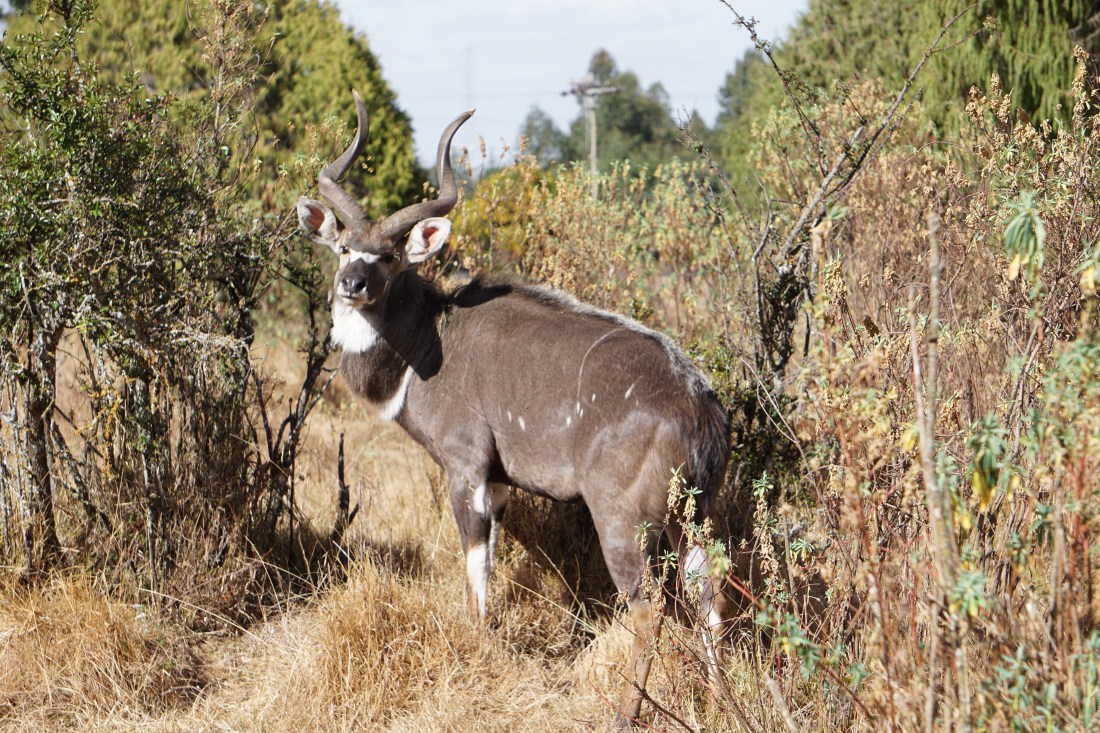
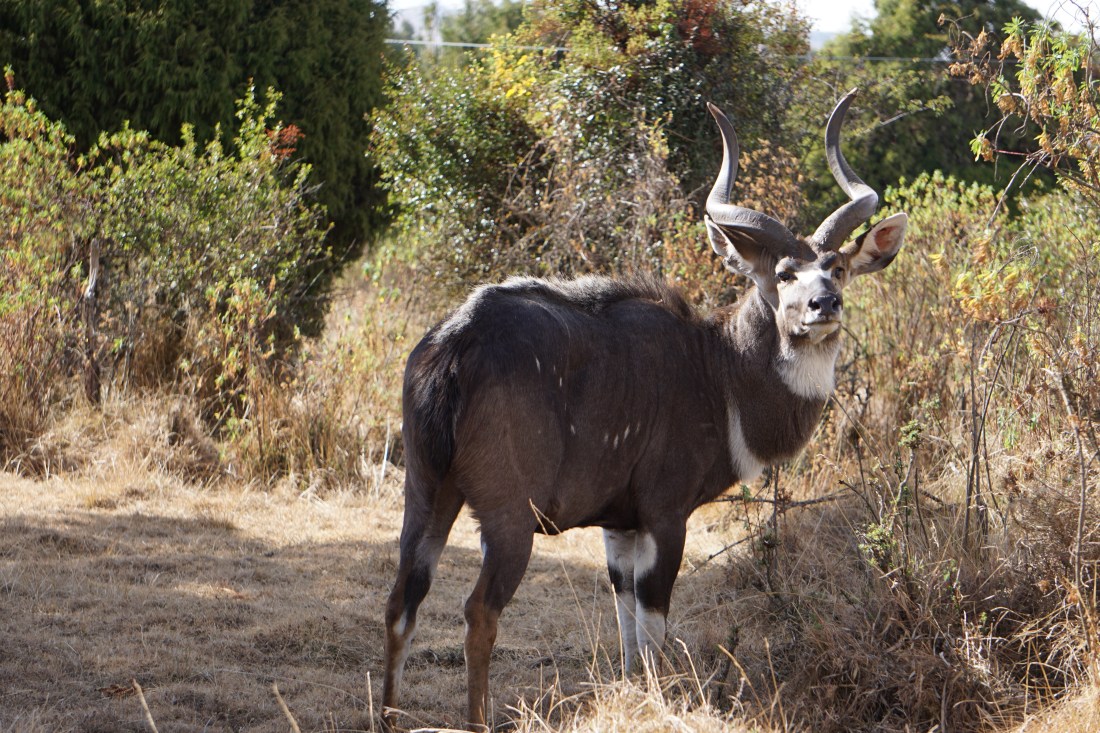
Male mountain nyala.

DSC03365

DSC03363

To our disappointment we did not see a big headed mole rat which also lives in the park.

Southern Ethiopia – Hawassa

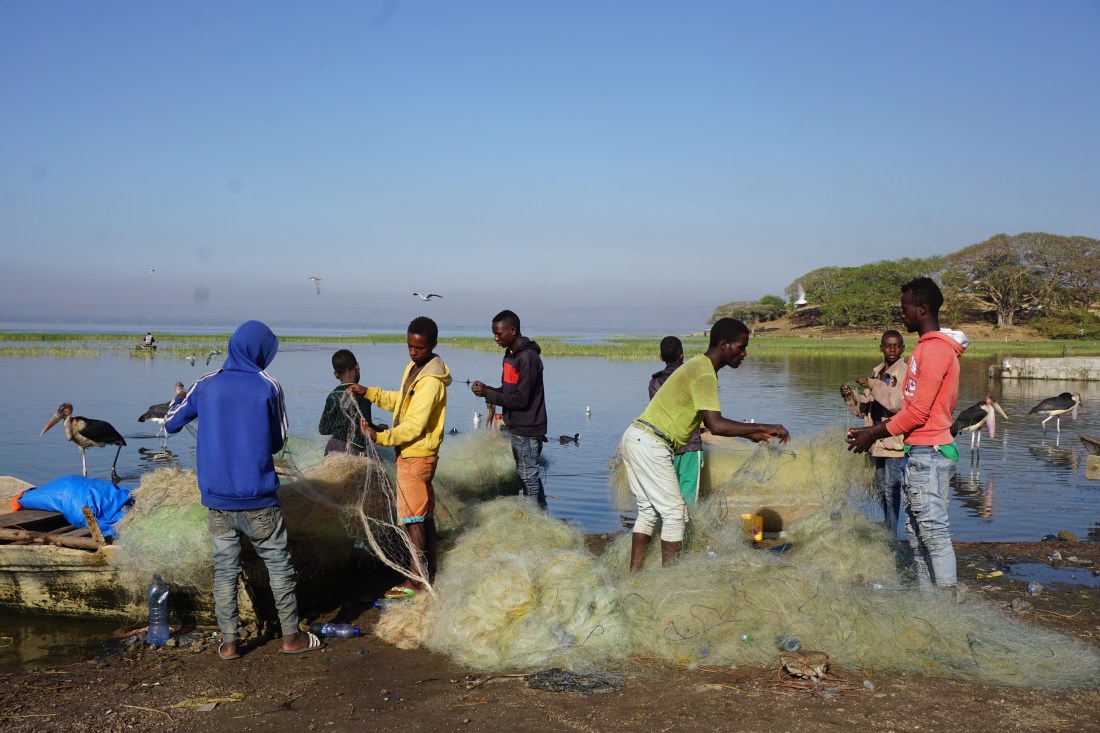
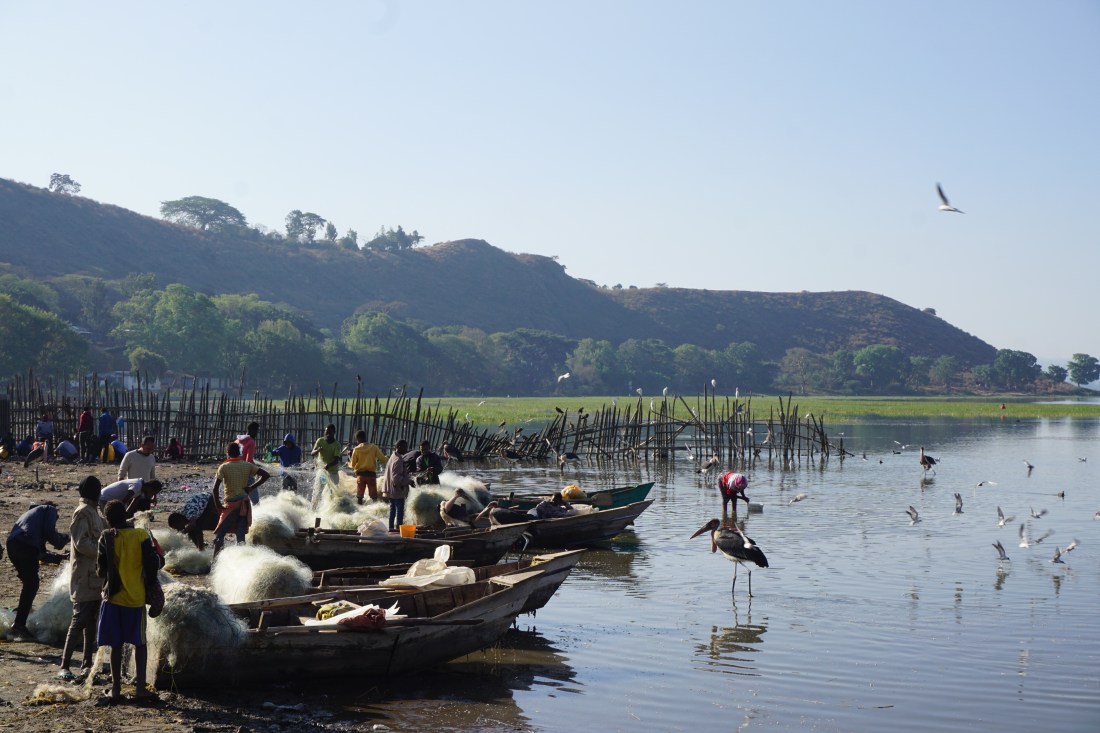
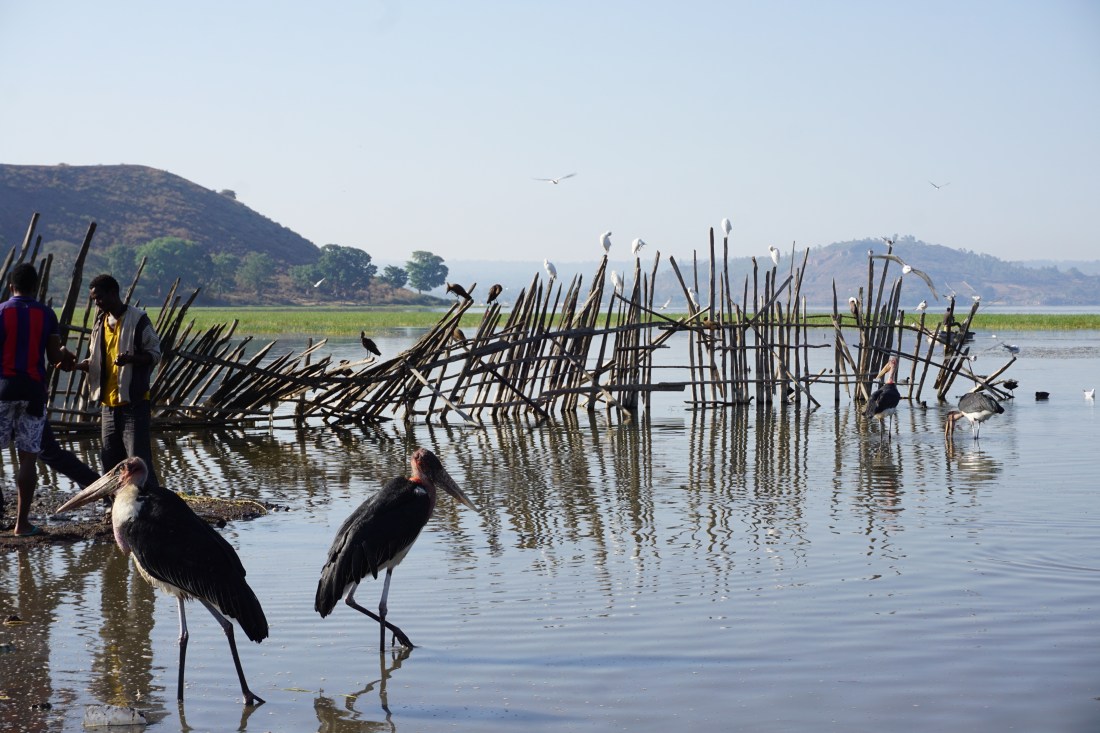
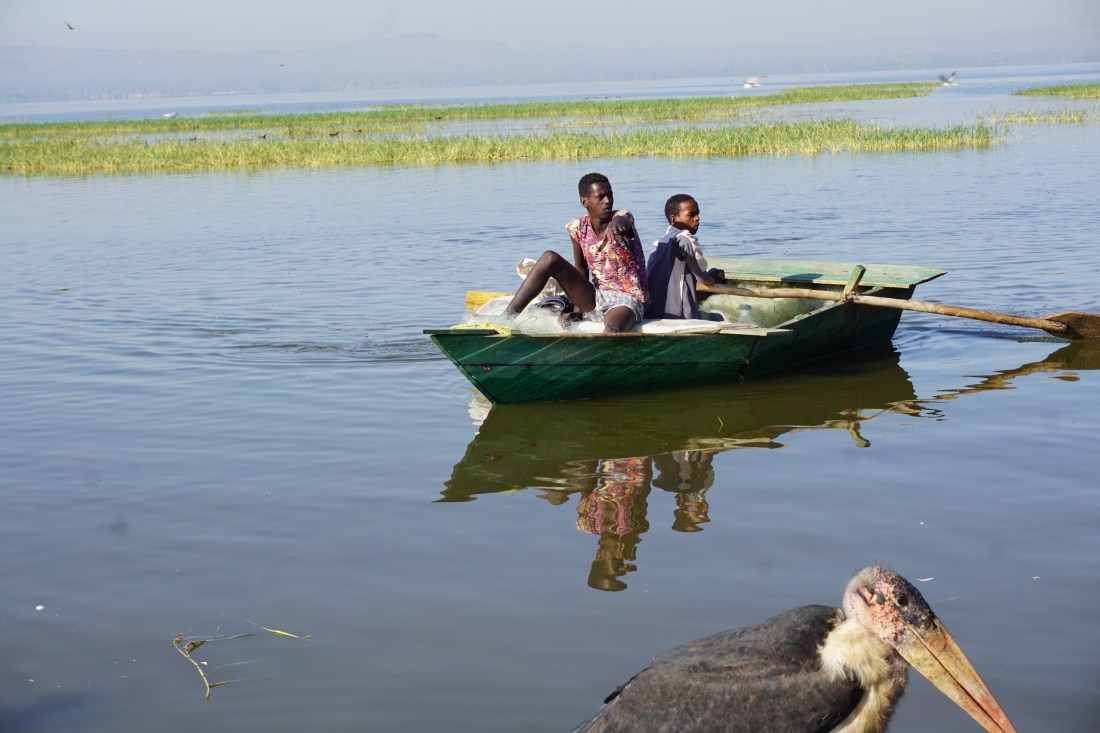
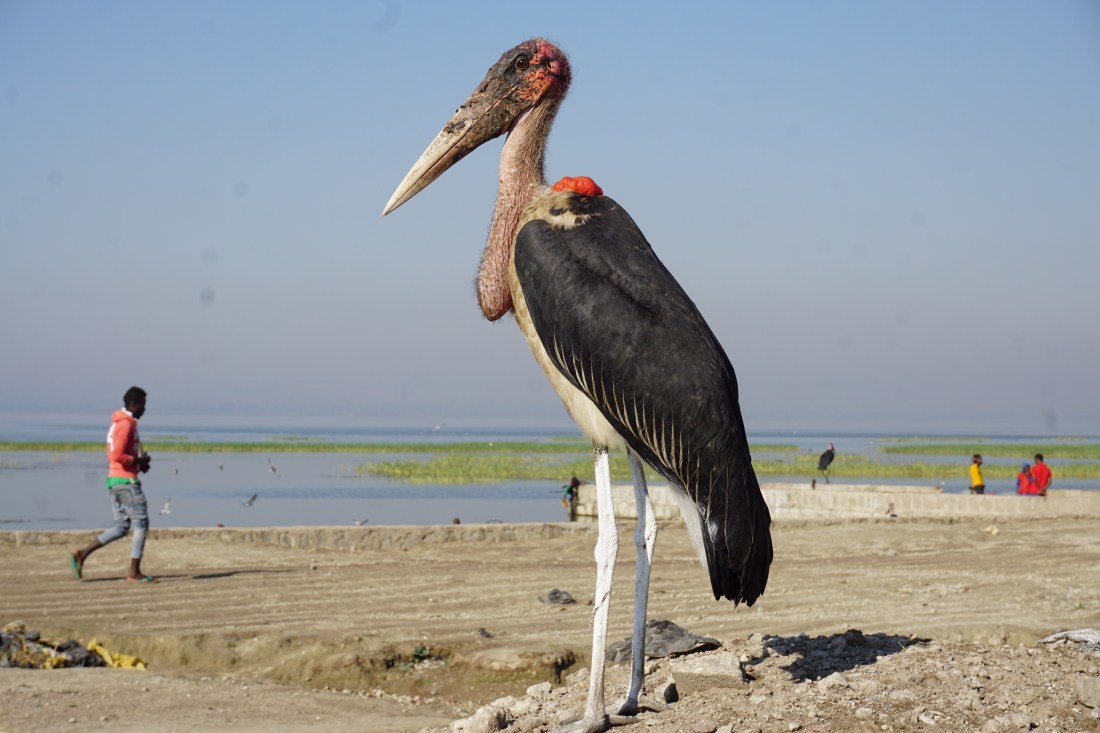
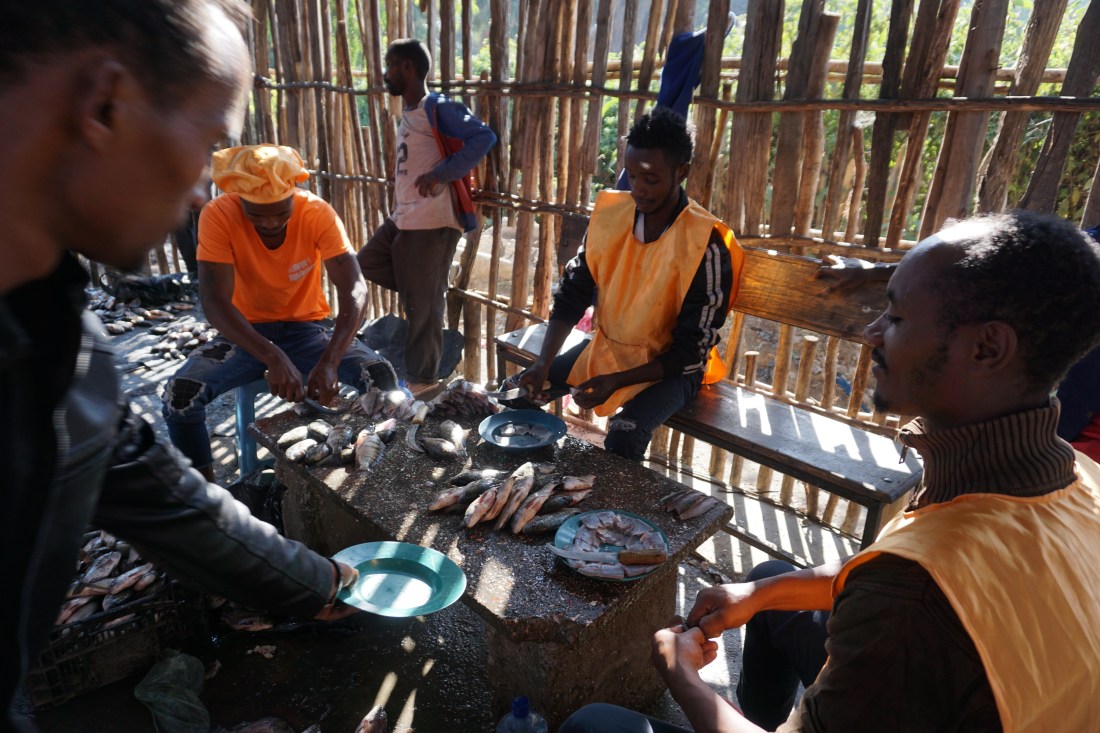
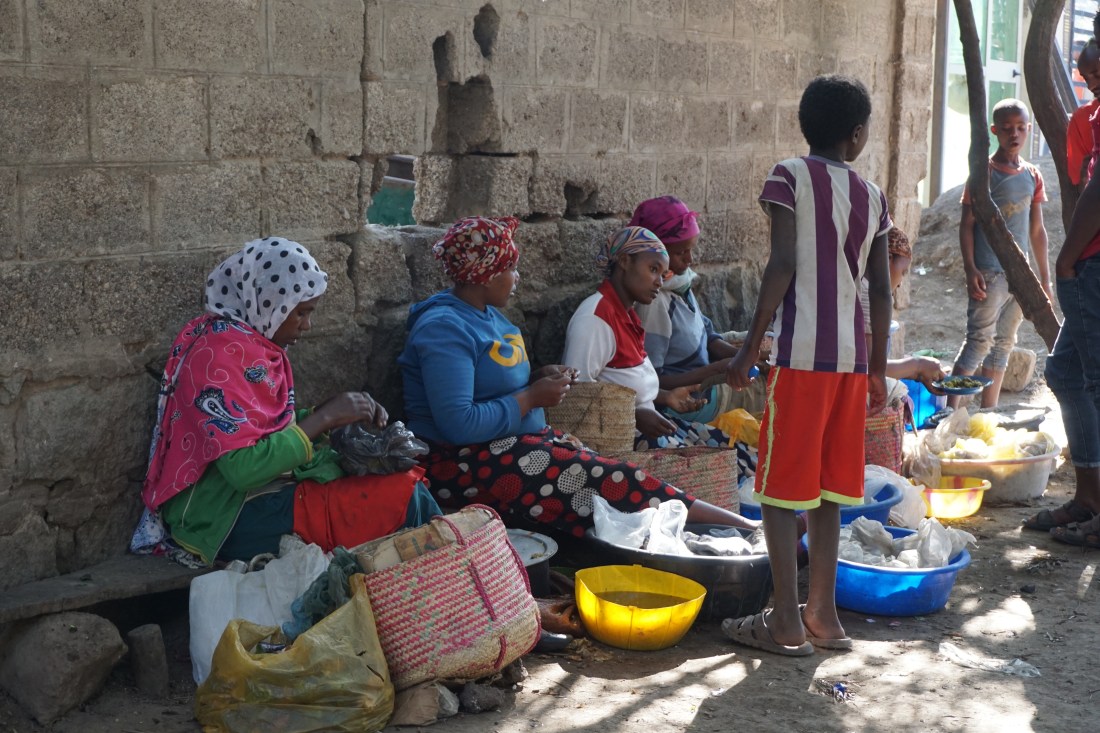
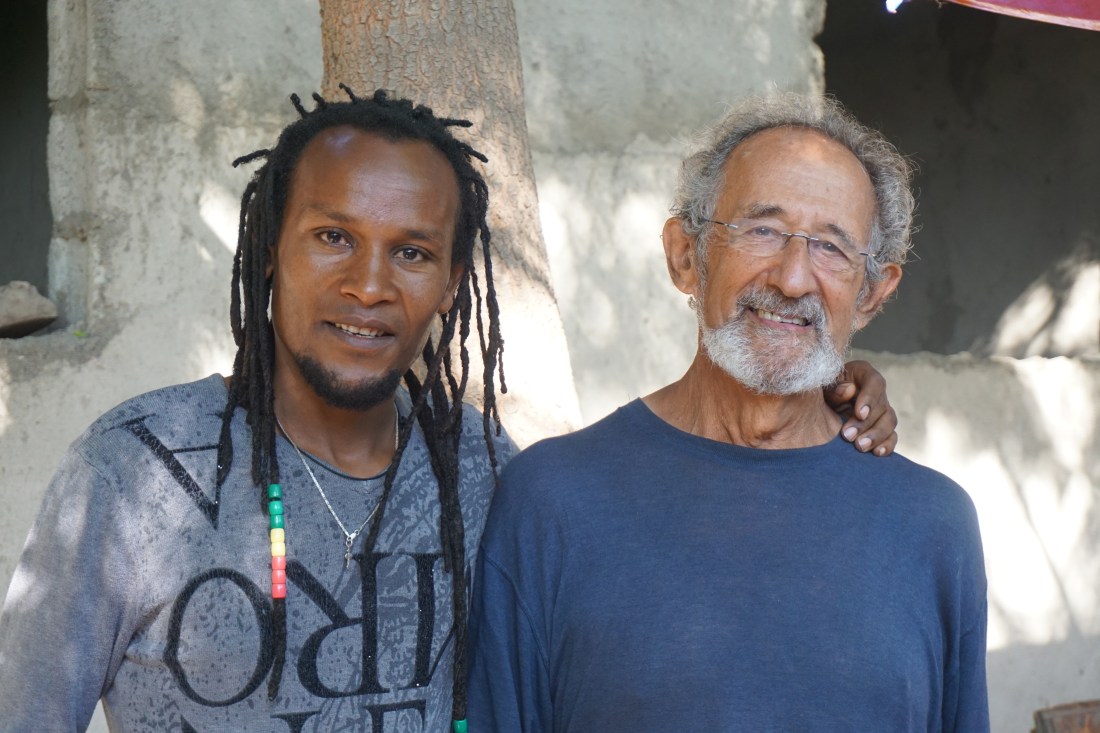
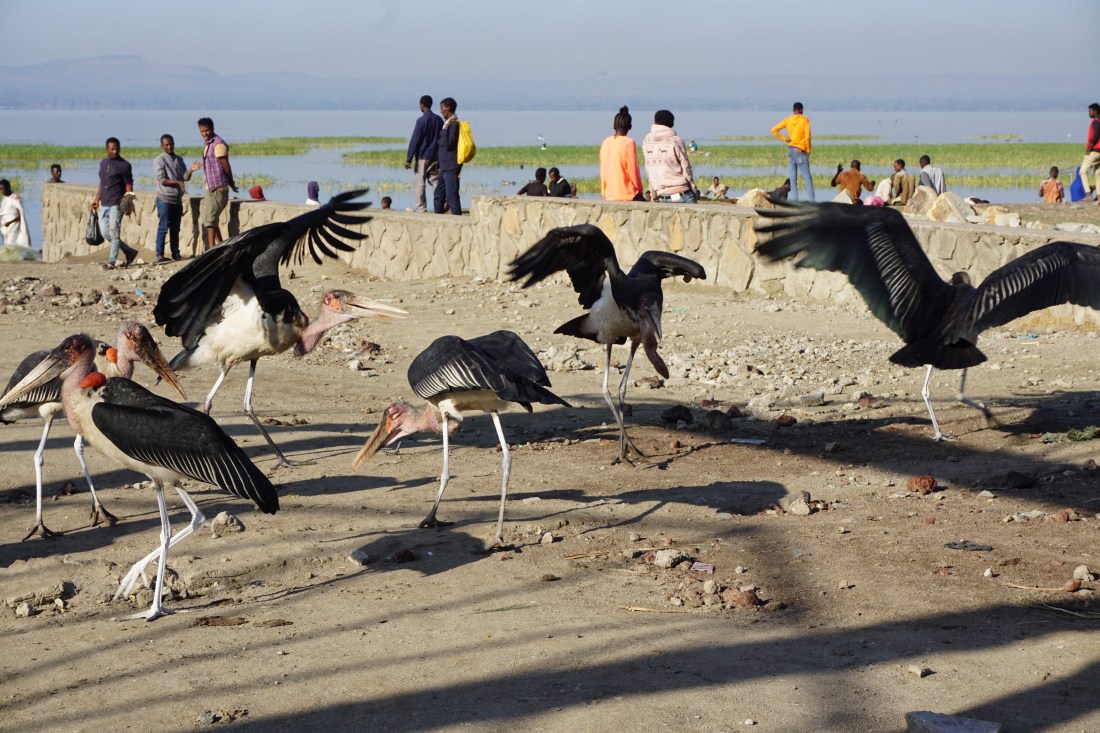
The Hawassa fish market was very interesting. We had an excellent local guide. The Marabou Storks were fascinating.

DSC03045

The fishermen were fishing for tilapia, nile perch and catfish in Lake Awassa.

DSC03067

DSC03062

DSC03069

DSC03056

DSC03095

DSC03076

DSC03082

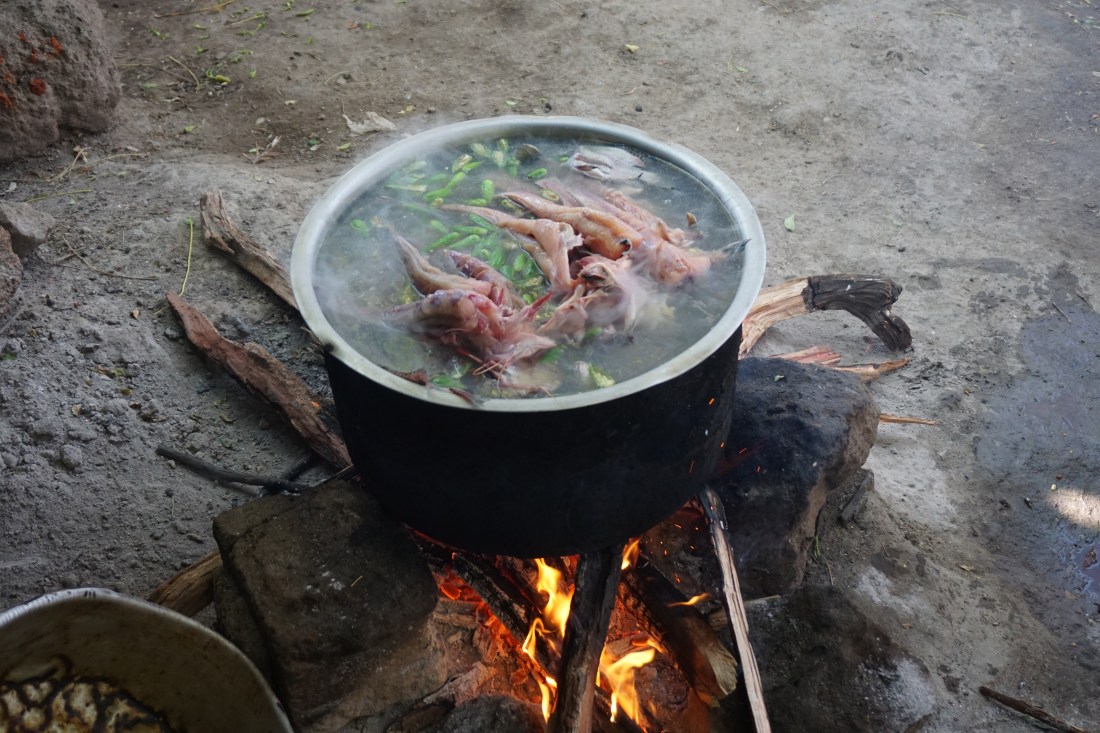
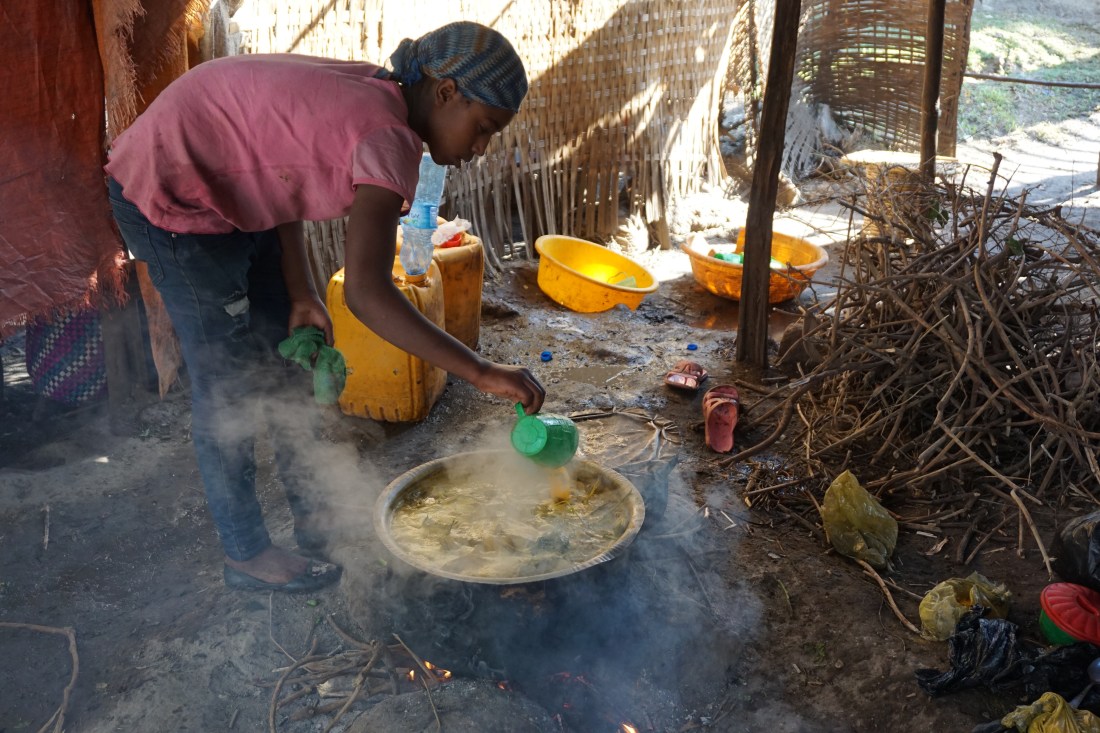
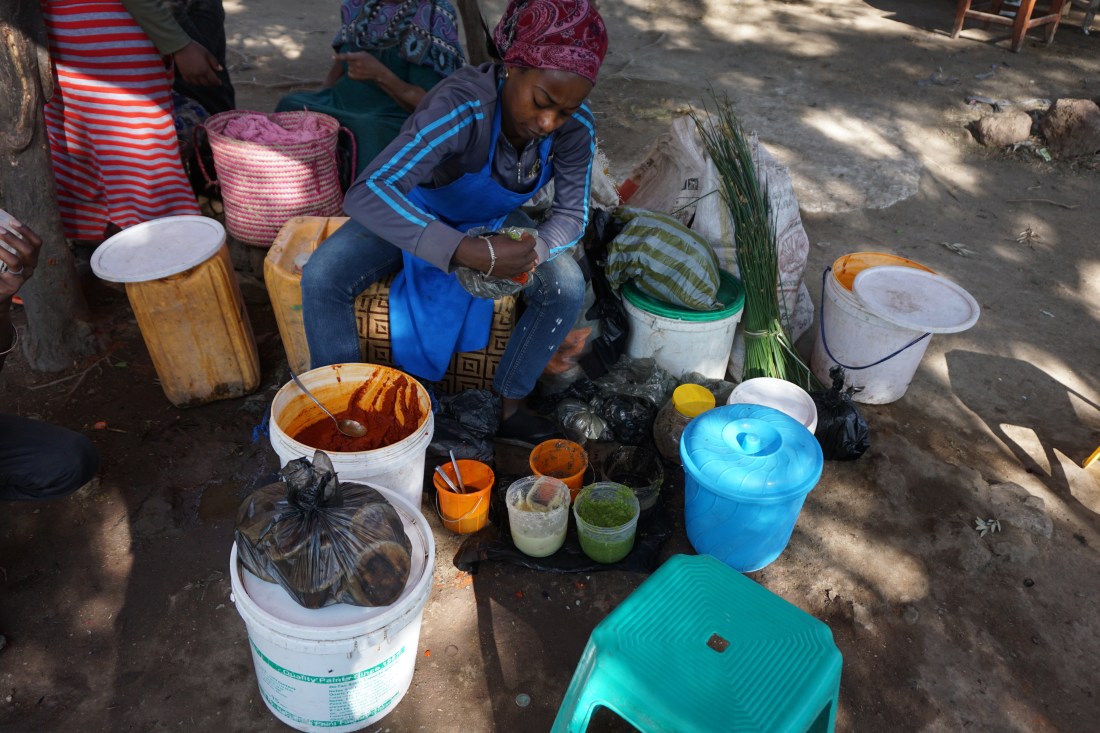
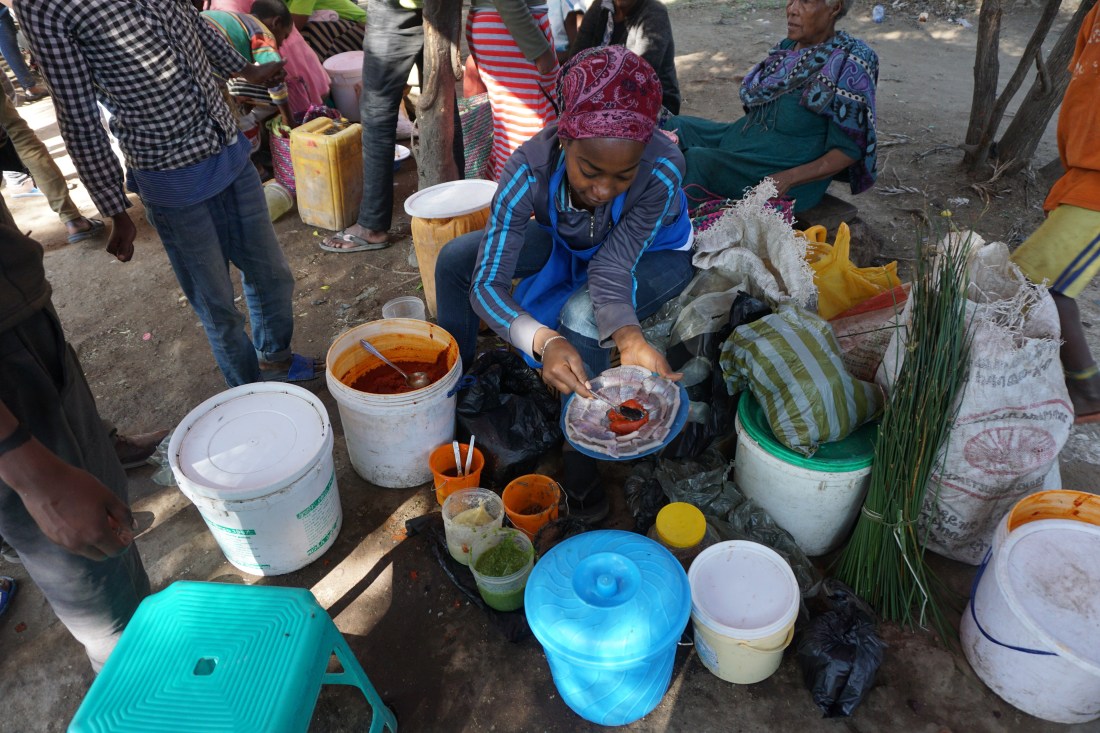
Fish soup is a specialty at the market with each stall having its own variation on the spices.

DSC03101

DSC03097

Selling combinations of spices in bags or

DSC03113

on plates with raw  fish.

DSC03115

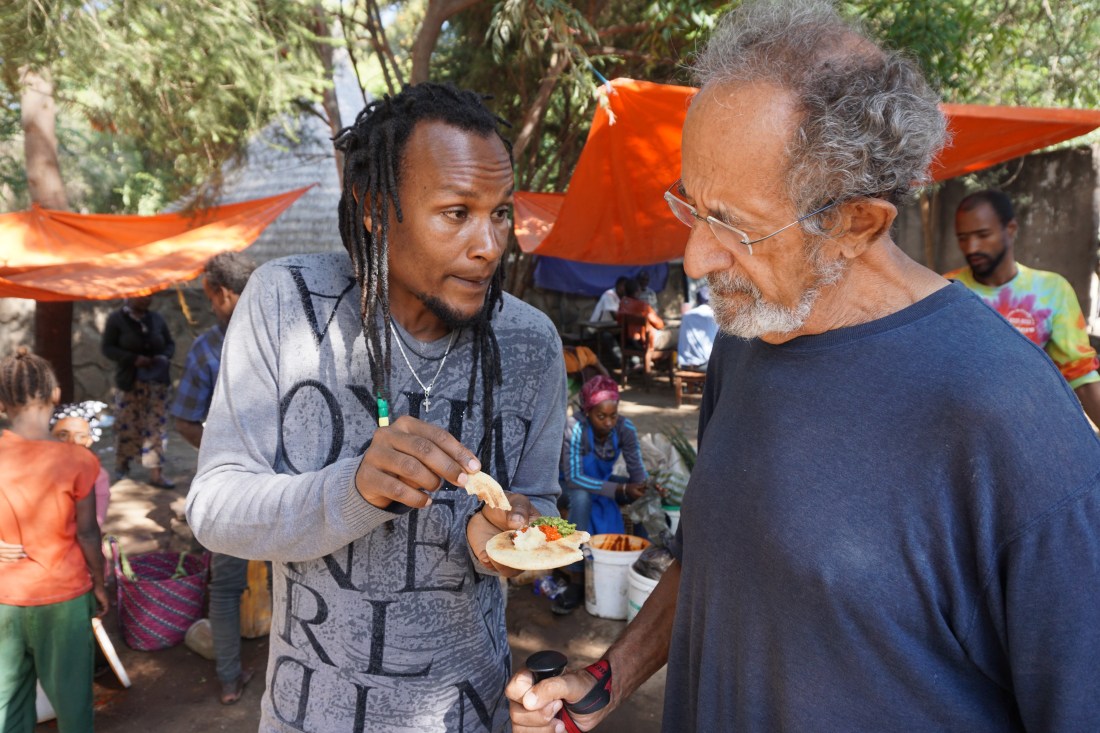
Come on try it John, it’s not really that hot.

DSC03114

DSC03118

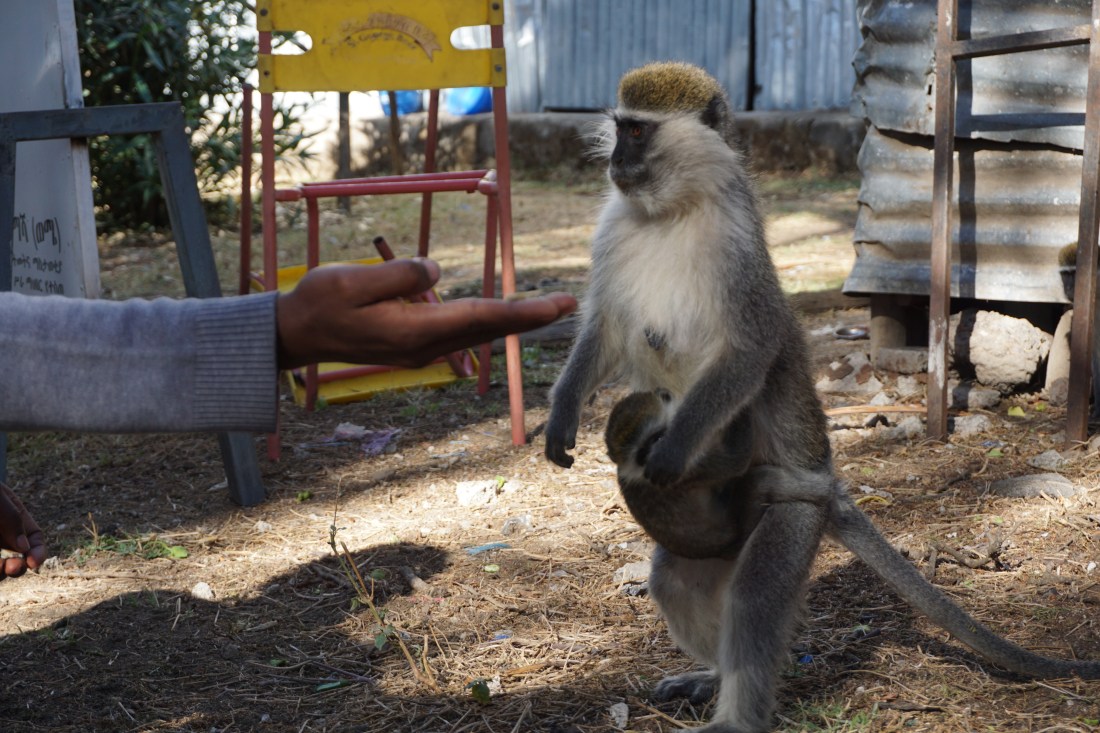
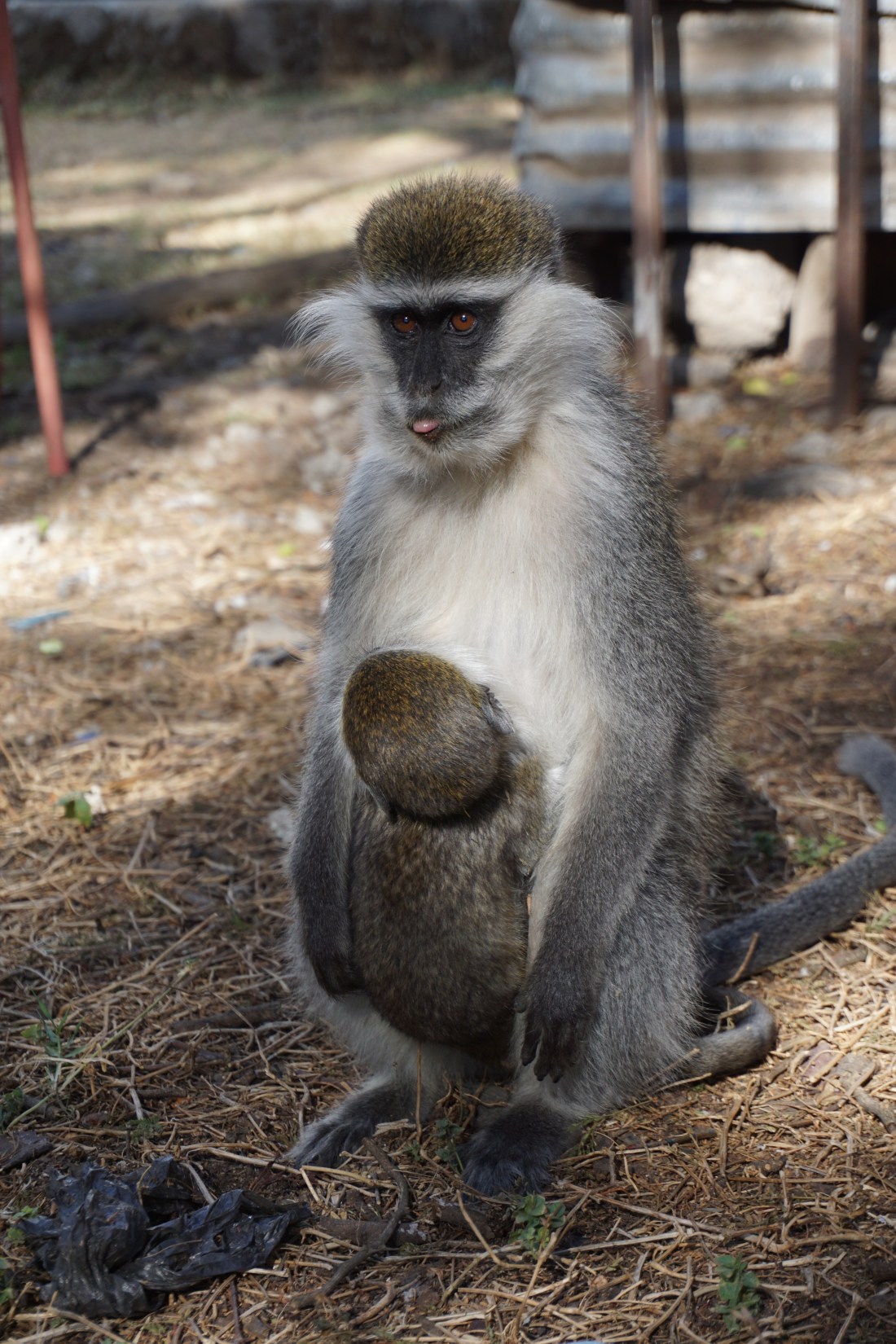
Monkeys all over the market.

DSC03138

DSC03142

DSC03109

Our guides card.DSC03145

John wanted a tour of the Rastafarian Village in Shashamane  Our driver stopped at the entrance to the village to hire a local guide however within five minutes of trying to recruit one,  two fights had broken out so we did not go in.

After Haile Selassie visited Jamaica in the 1930’s as the leader of the only Black independent state in Africa,  a movement named after his birth name  (Ras Tafari Makonnen) become popular is Jamaica and in parts of Africa. Many Jamaicans moved to Shashamene,  South of Addis Ababa and remain there today.


Southern Ethiopia

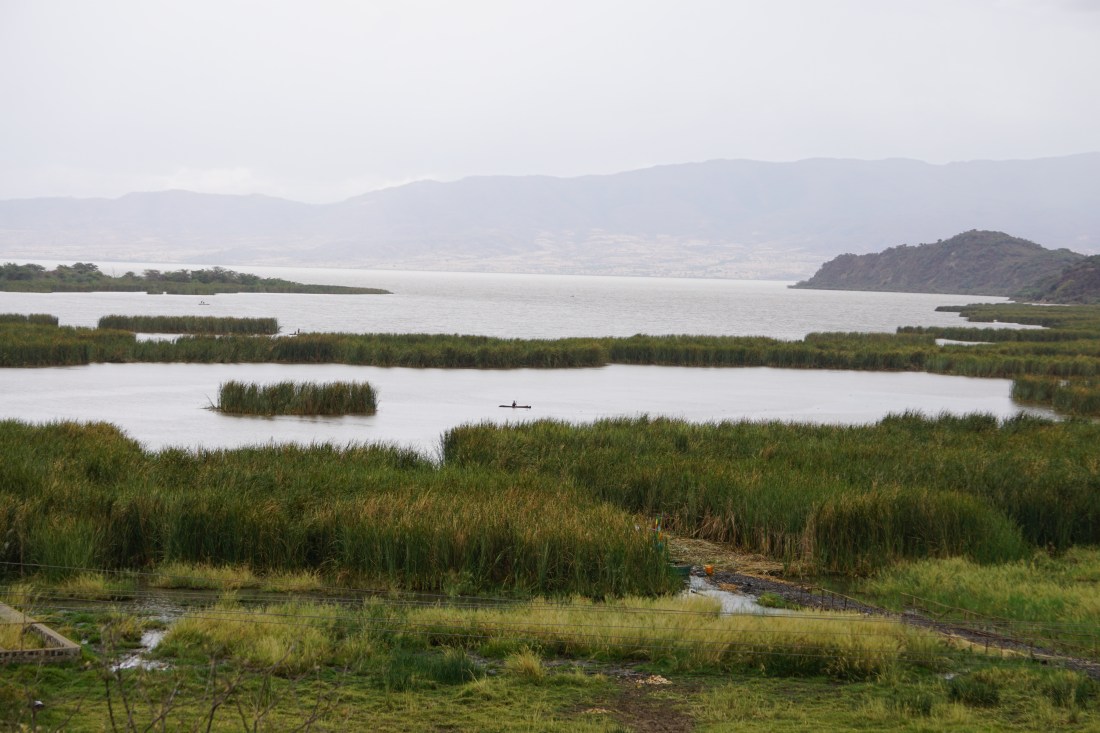
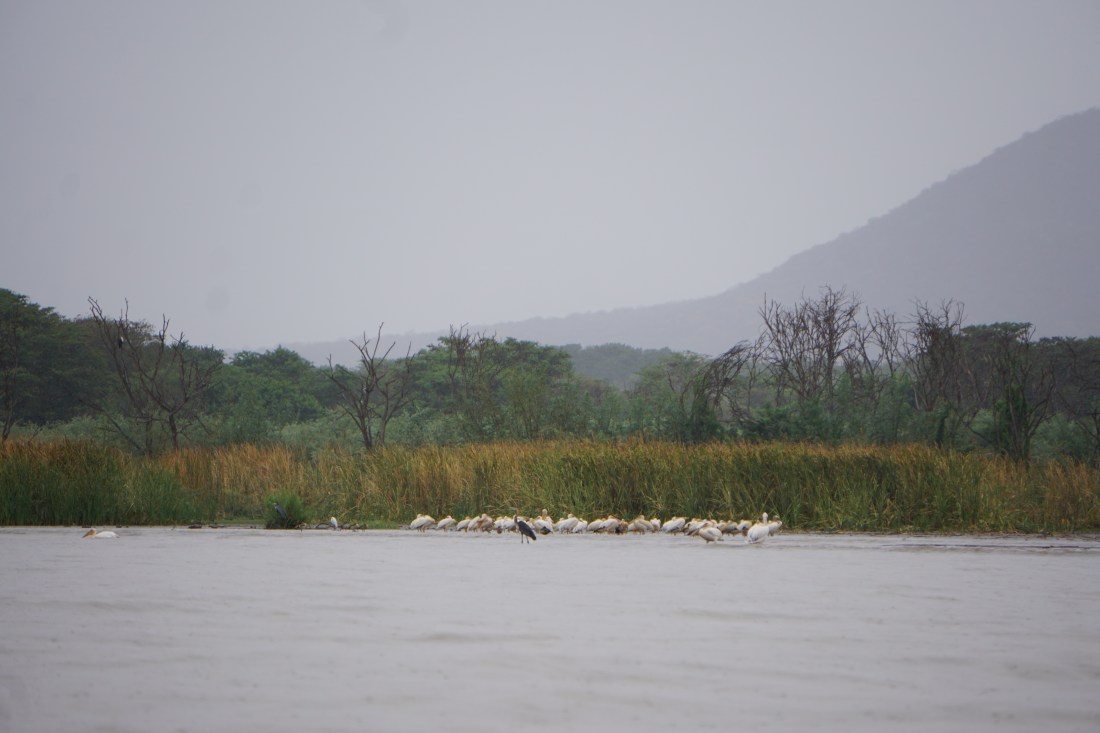
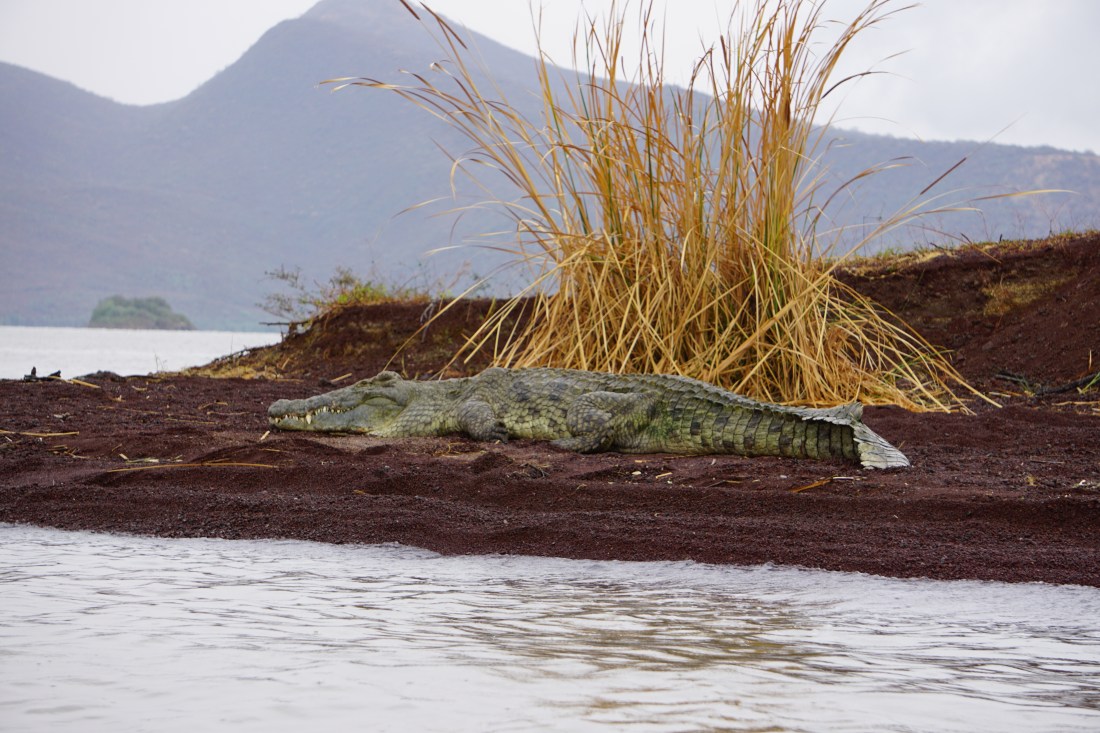
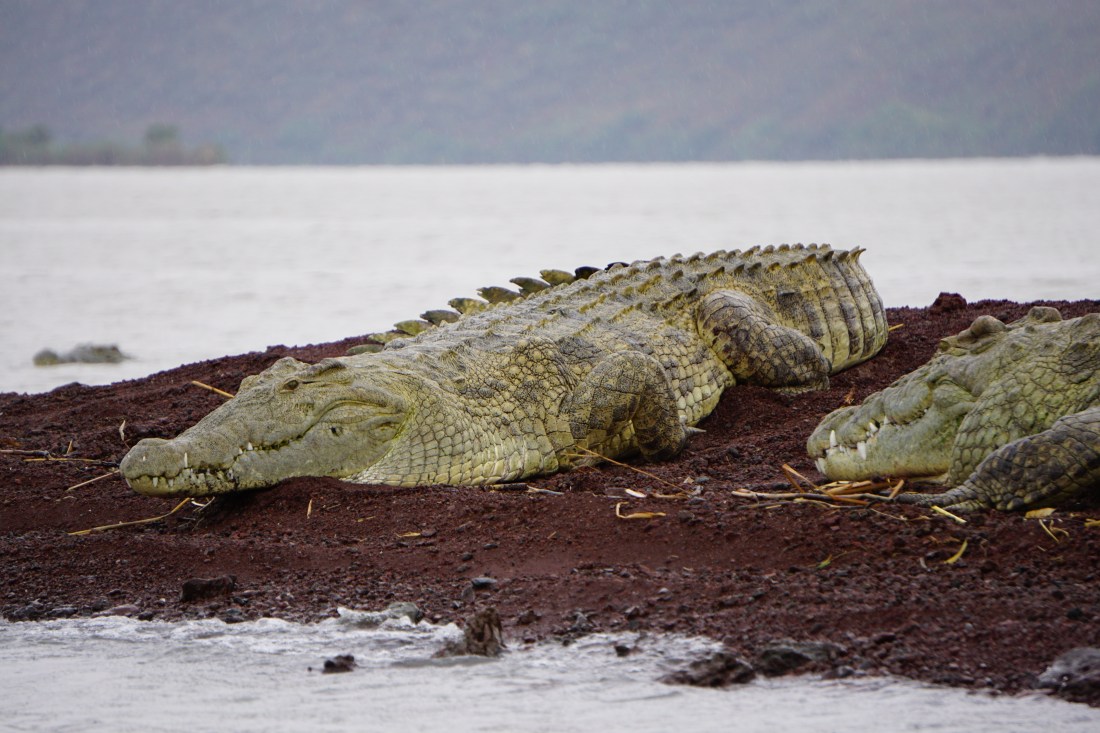
Today we drove to see the Hartebeest reserve,  and the crocodiles on Chamo Lake. The sights on the way were just as interesting.

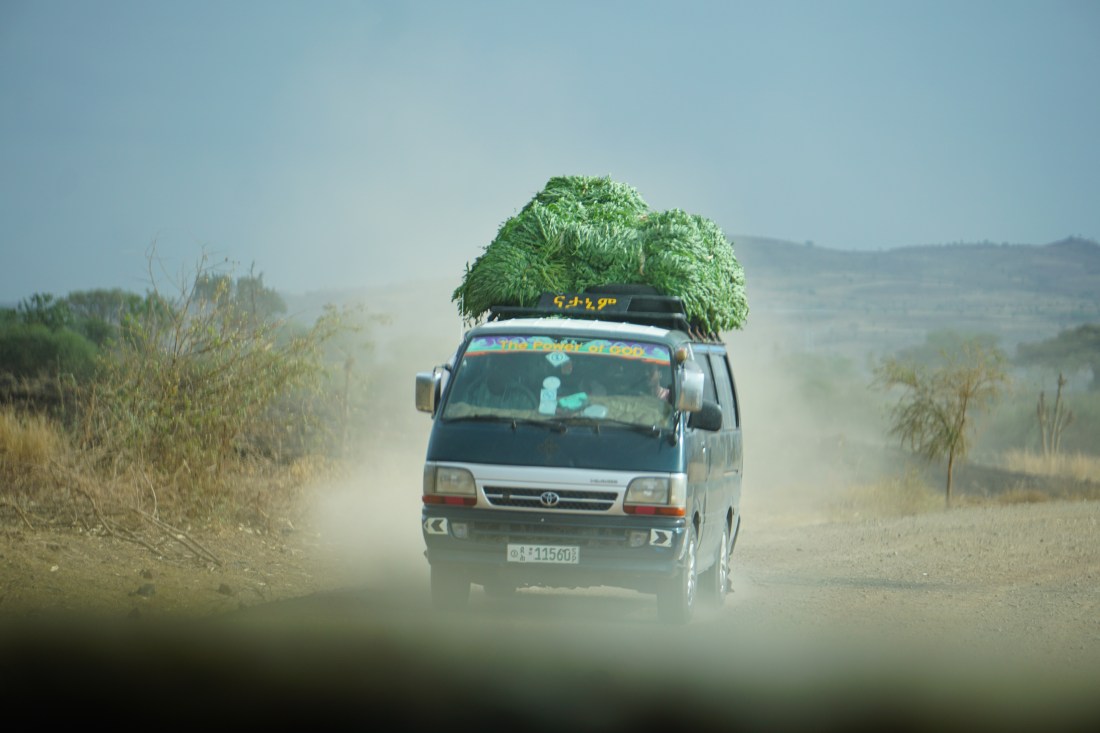
Passing trucks of moringa being transported to the market.

DSC02757

Along the road you would see the piles of moringa ready to be picked up a well as blue bags which were always for red chilies.

5 people at a time on a motorbike.DSC02943

Interesting birds.


DSC02792

These tiny little bird house were hanging in the trees.

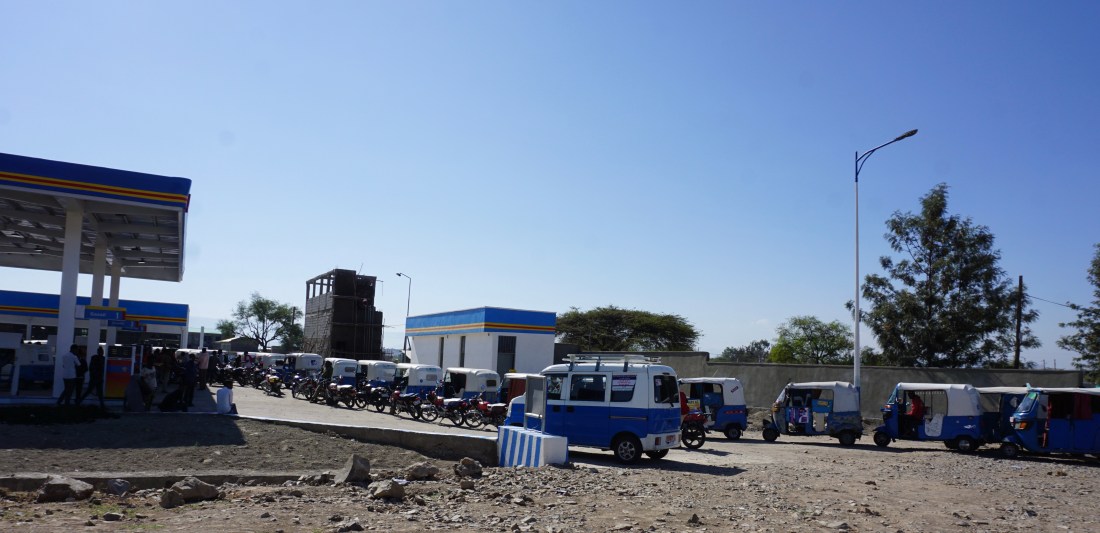
This was a familiar sight with motorbikes, tuktuks and cars always lined up for petrol as there never seemed to be enough to meet the demand.

DSC03157 (1)


DSC02885

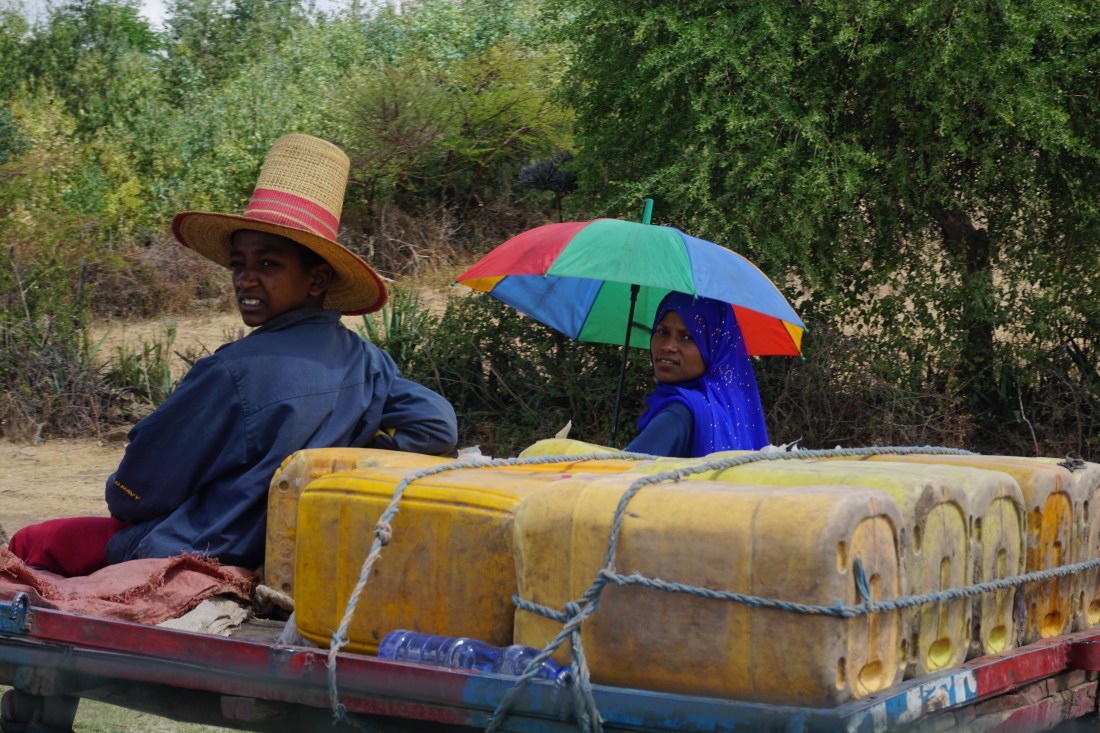
In this area the men wore these tall hats.

DSC02893

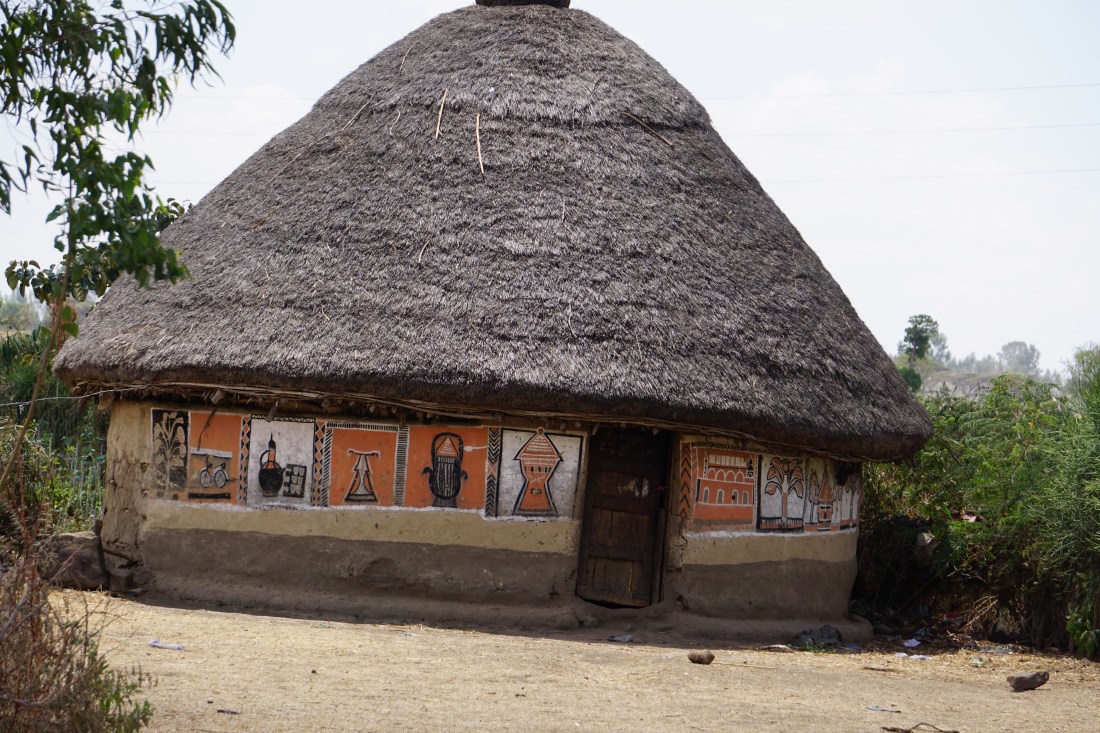
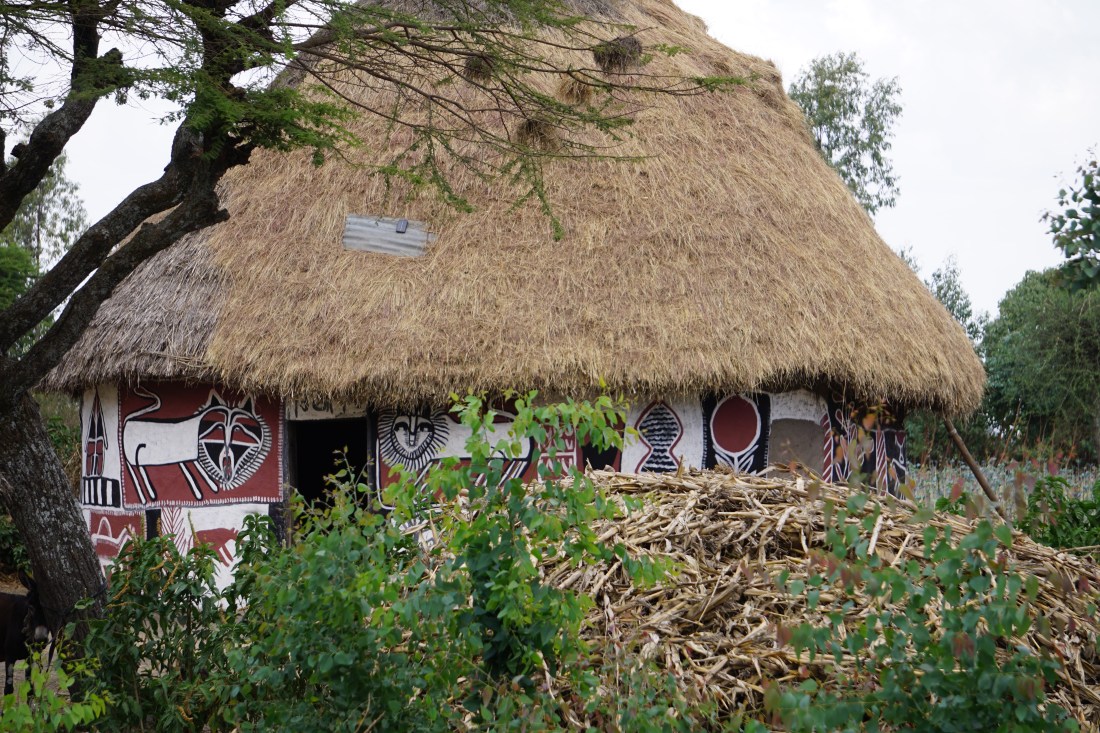
In  the Hawassa area,  this Alaba village is noted for the paintings on the homes.

DSC02927

DSC02929

DSC02905

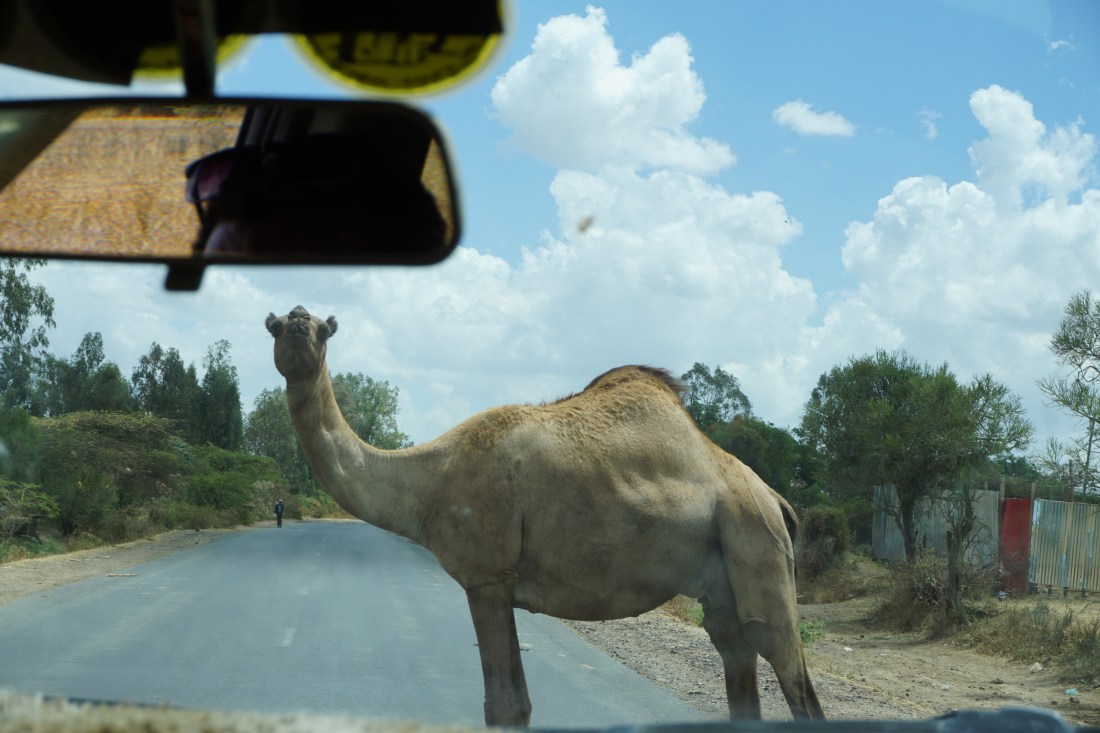
Excuse me while I stop to check you out as I wander across the road.

DSC02898


Fruit growing.


DSC02986

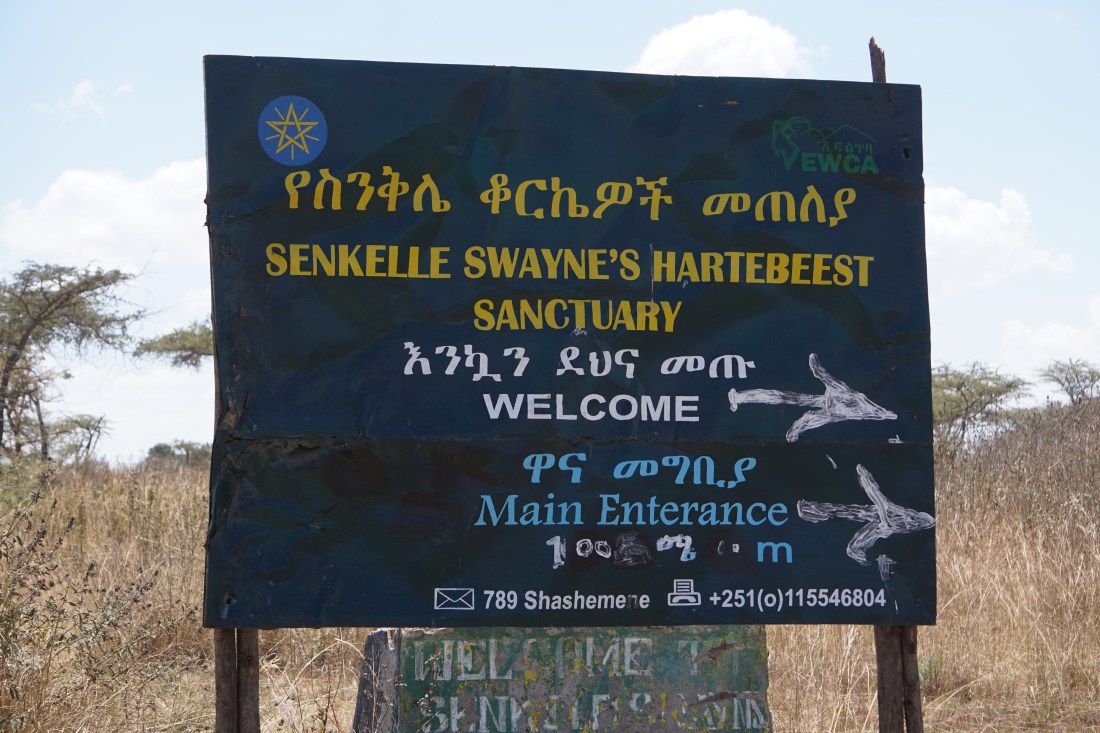
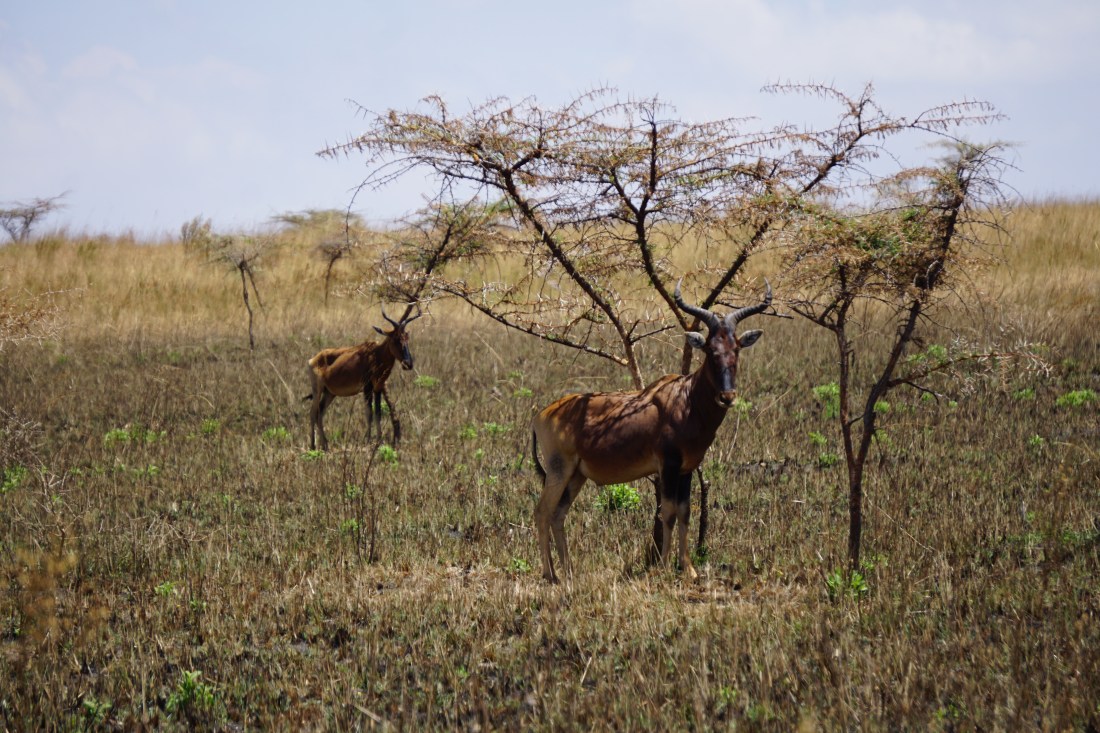
Senkelle Sanctuary here we saw the endemic Swayne’s Hartebeest. It was a long hot walk to find them. DSC02967

A small antelope roamed with them.

Chamo Lake.

DSC02801


DSC02847

DSC02858

DSC02861

Excuse the swear at the end as my camera runs out of battery!

Stayed at Haile Resort in Arba Minch. Very lovely.

DSC02868

DSC02865

Our driver, Mesfin, and the organization that arranged our 16 day tour.


Southern Ethiopia

Staying at the Kanta Lodge in Konso.
DSC02748

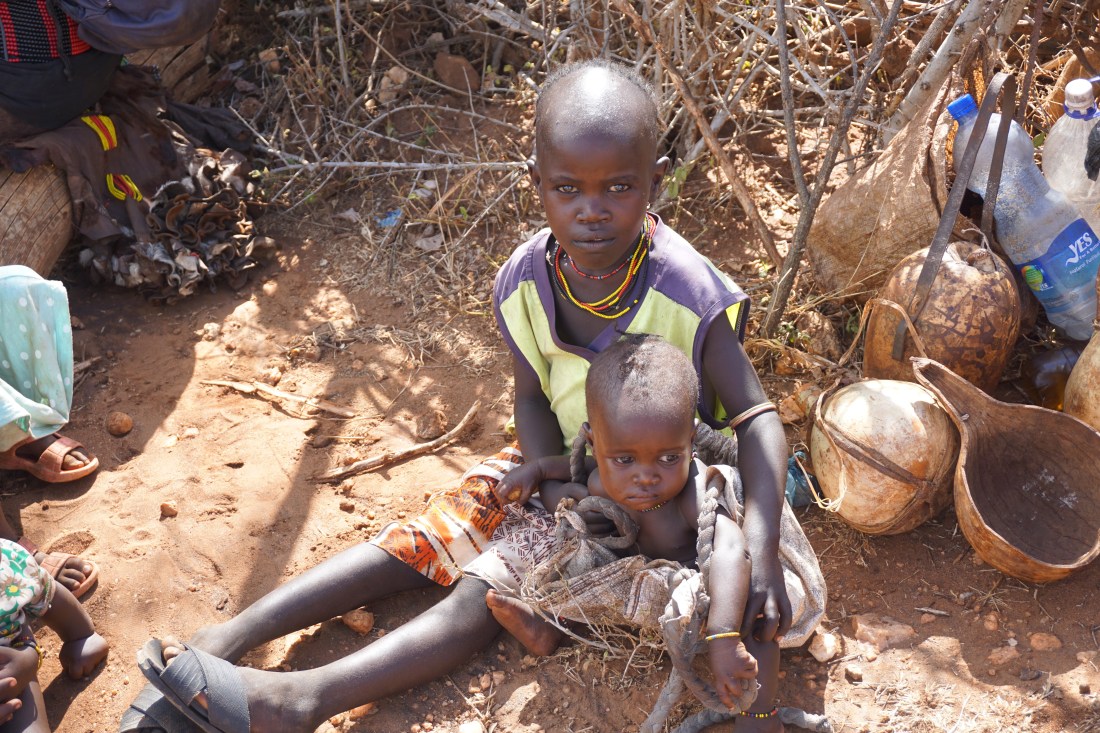
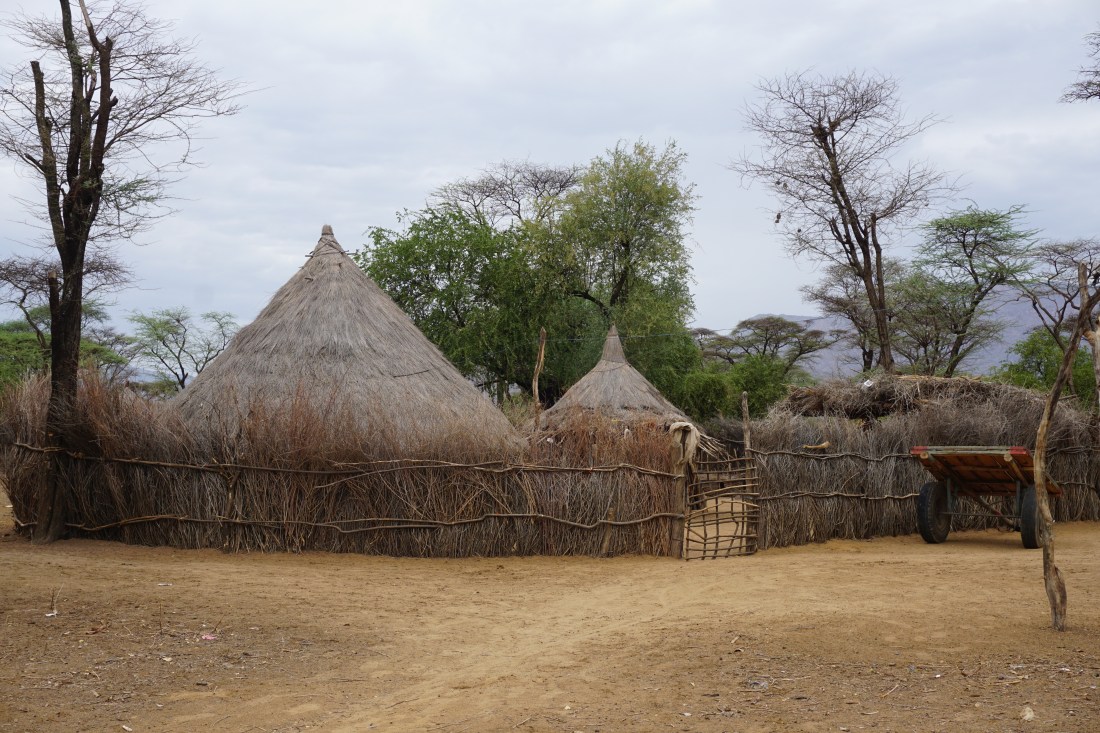
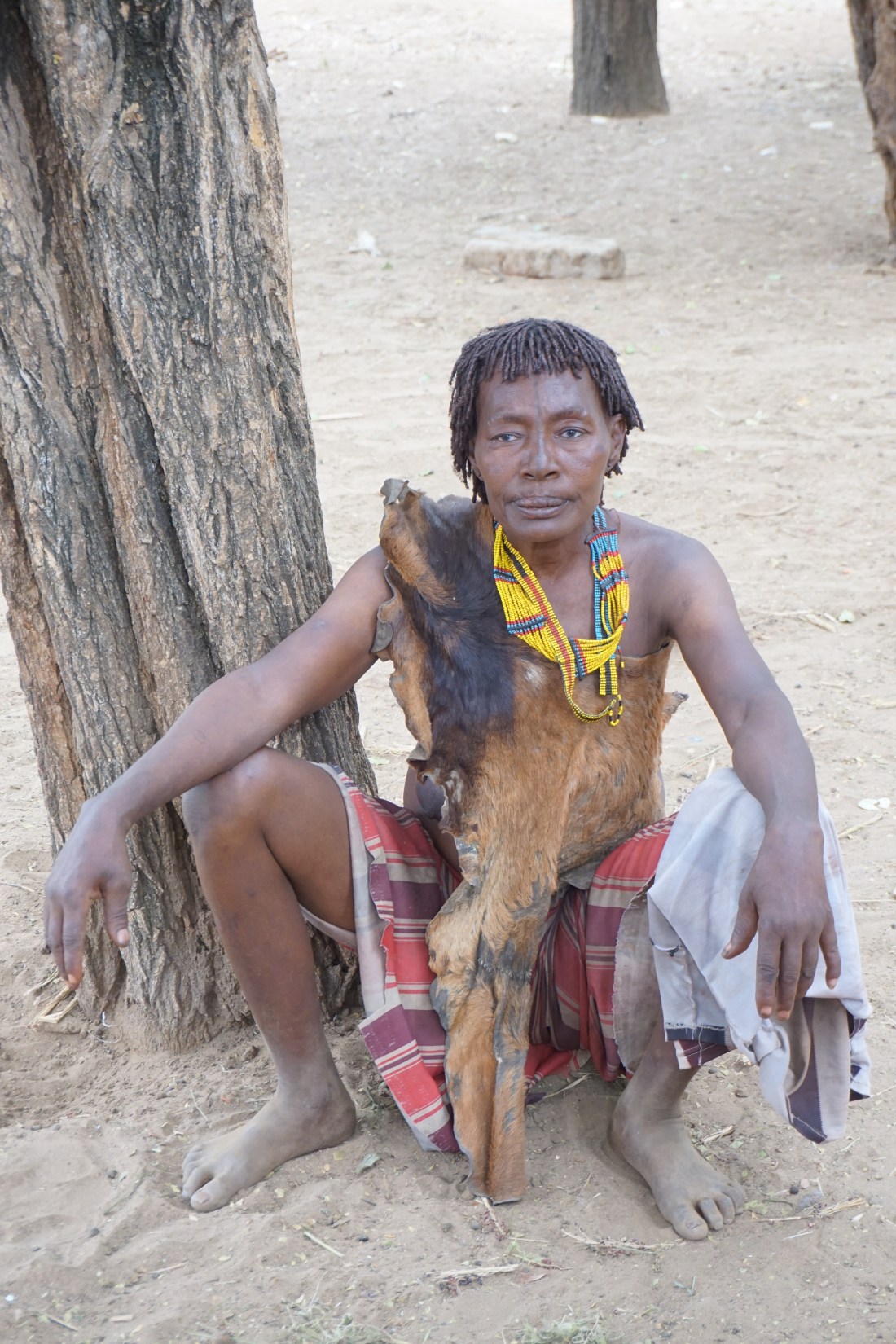
This village was sad to visit as it was so poor. However the money we pay the local guides does go to help the community so that is a positive.
DSC02627

DSC02648

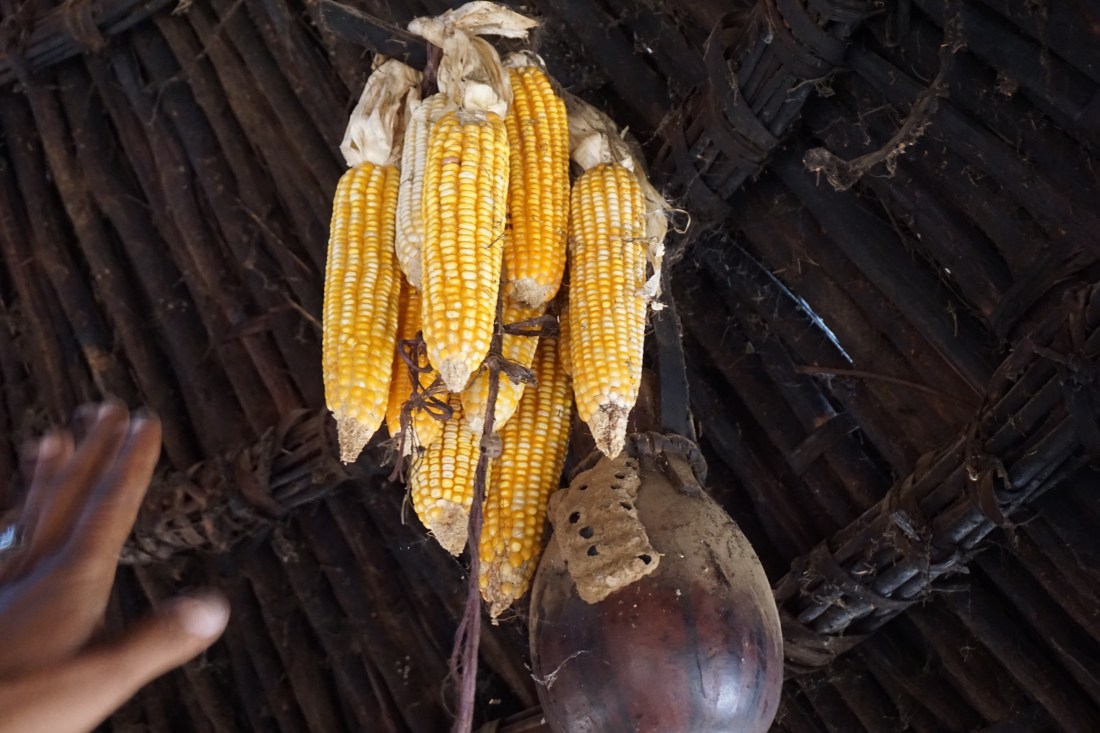
This woman’s home.

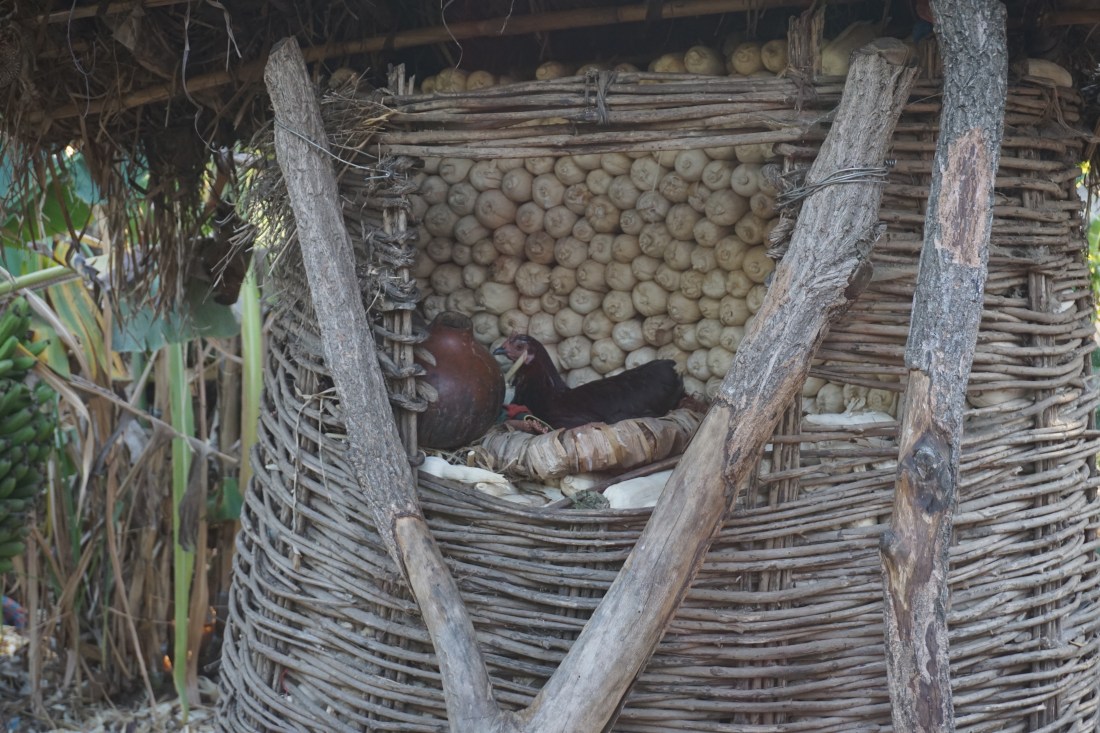
Corn for the next crop drying on the ceiling.
DSC02641

Cooking implements hanging from the ceiling and cooking area in the enclosed yard.

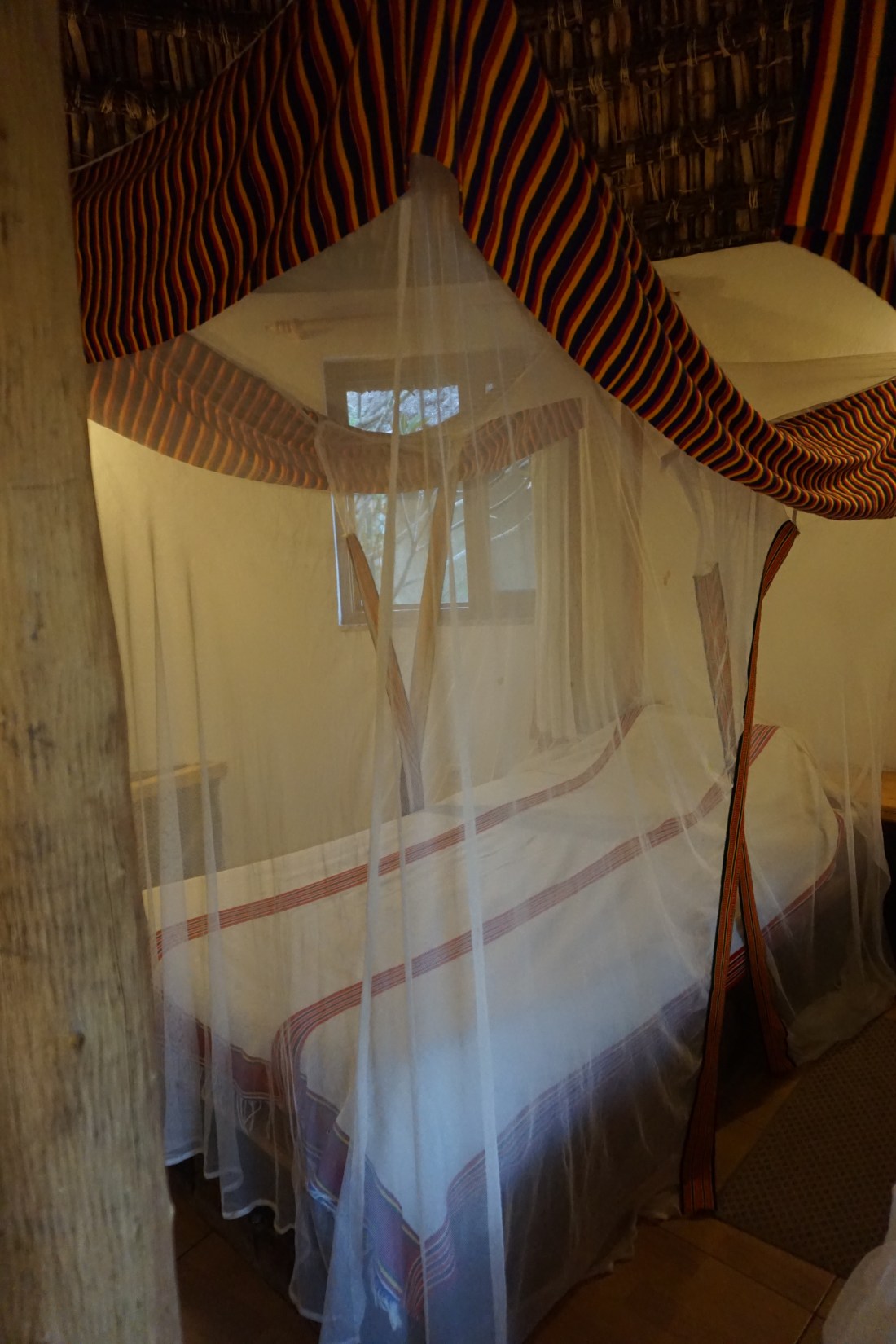
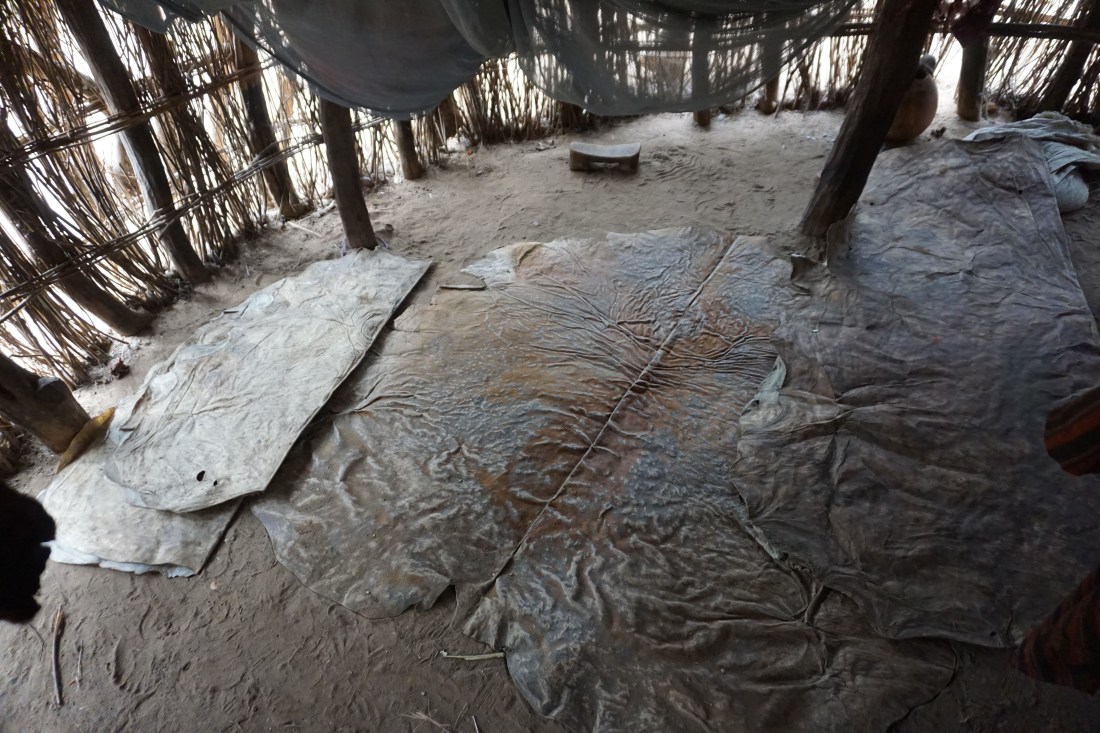
Goat skin for beds. This one even had a mosquito net.
DSC02643

DSC02635

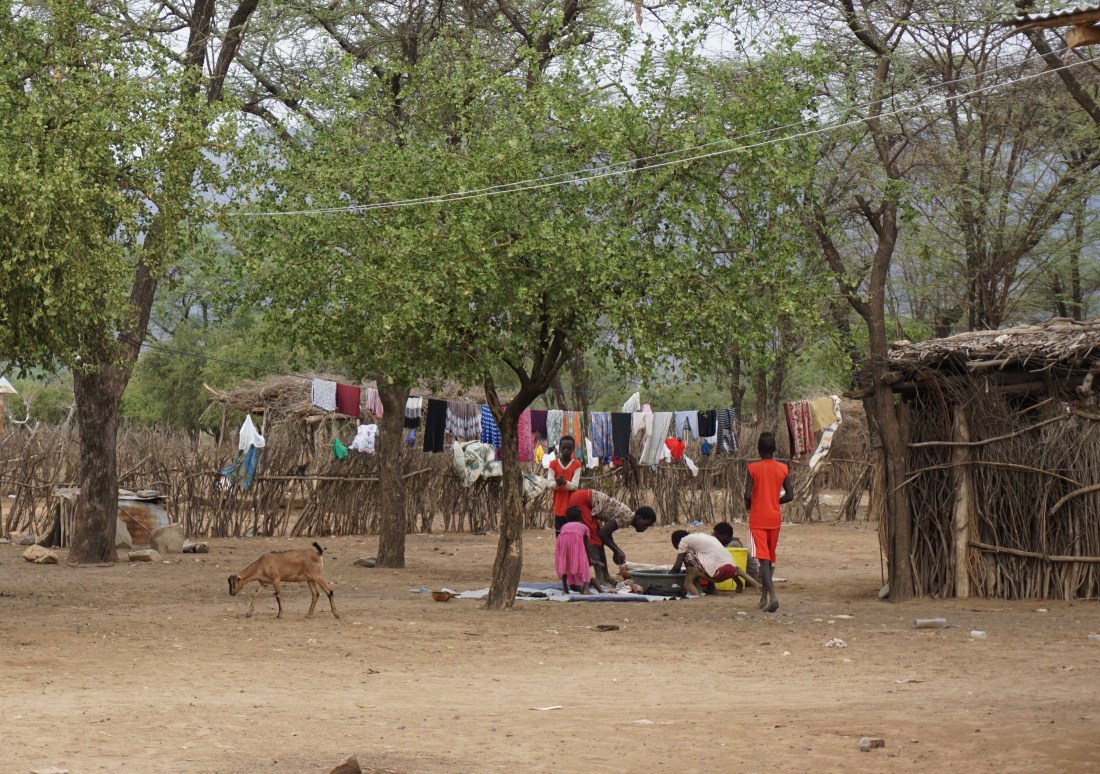
These women hauled their water for washing as none was close by.
DSC02659

DSC02658

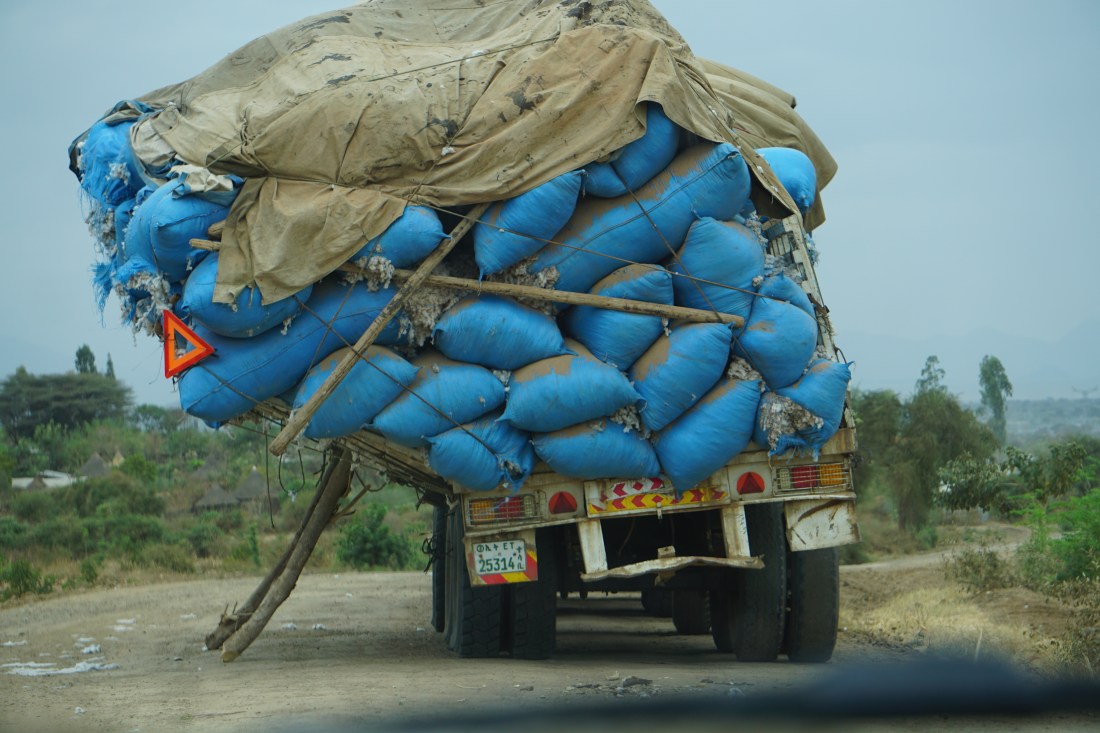
On the way to the Konso Village,  we saw this accident where the side of the truck carrying cotton collapsed.
DSC02774

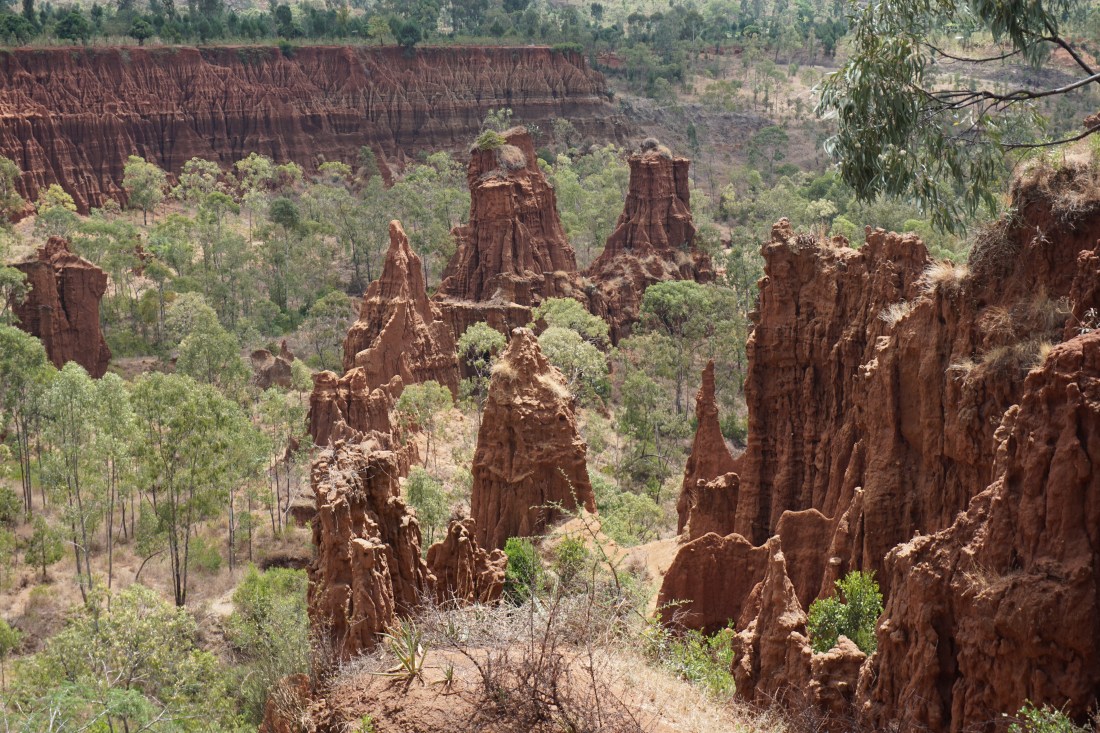
This area is called New York and is reminiscent of the Grand Canyon as the land is fairly flat until you reach the eroded sandstone formations.  No one knows how this developed but local legend says a group of musicians were playing when one of the groups’ drums disappeared.  They searched but could not find it so they prayed to their god for help.  They went home and in the morning when they came back this is what they saw.  They said it was the work of theirod digging to help them to find the lost drum.

The name New York was attached to the site when people from Norway were here helping with an aid project. They said to the people that what they were doing was new work so the locals picked up the term and called the area New Work.  When Americans came they said it looks like the skyscrapers in New York so that is the name that has stuck.
DSC02677

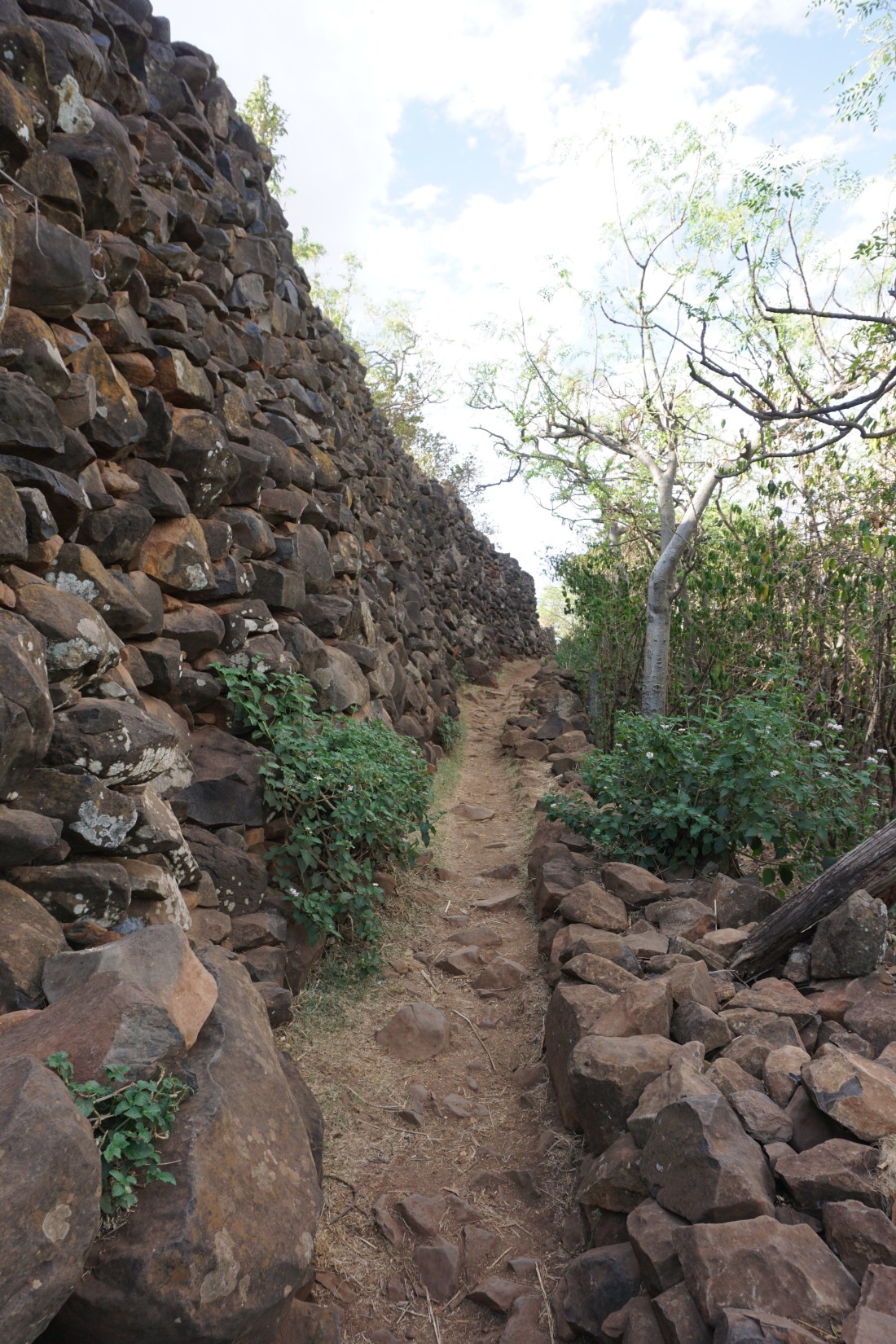
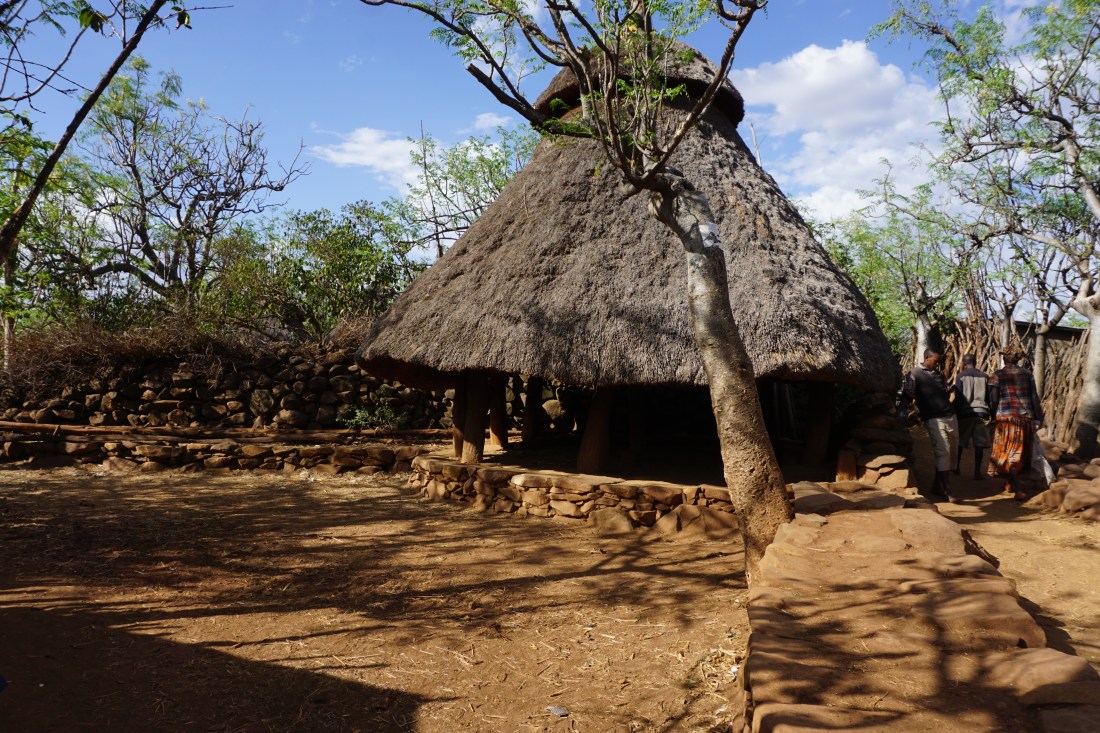
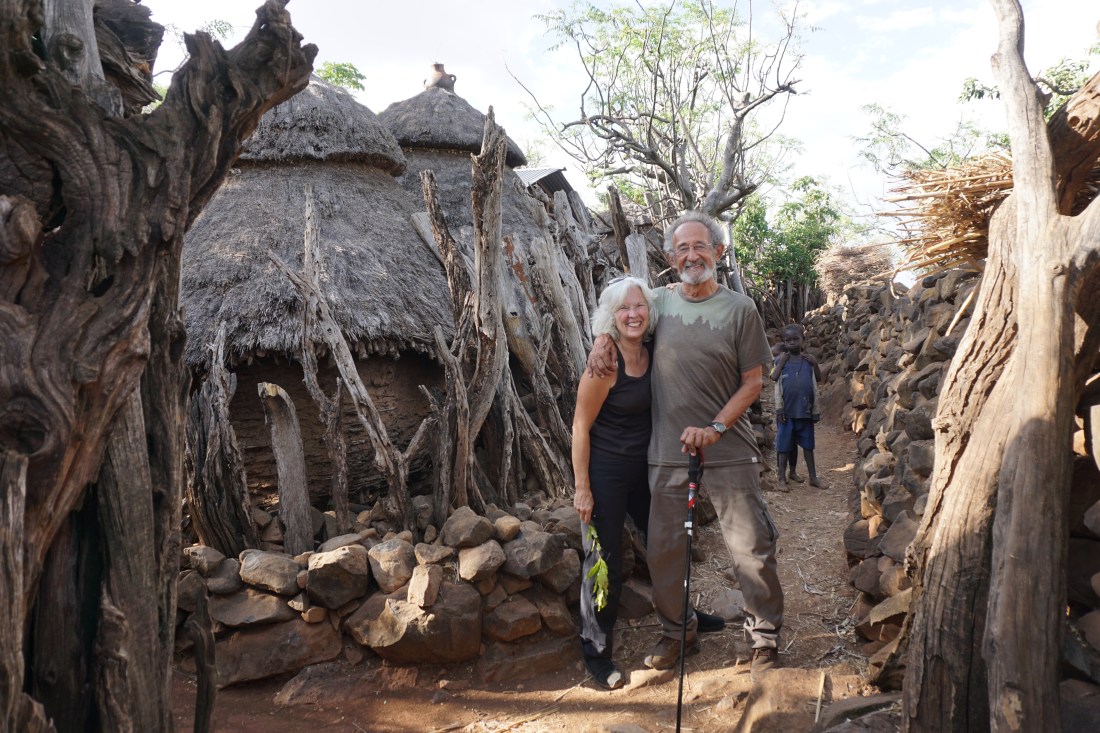
This Konso village was established 800 years ago.  It has three walls of stone that circle the village. The first inner wall is 1 km around. As the village grew two other walls were added;  the third wall is 350 years old and is 3 km around built without mortar.
DSC02726

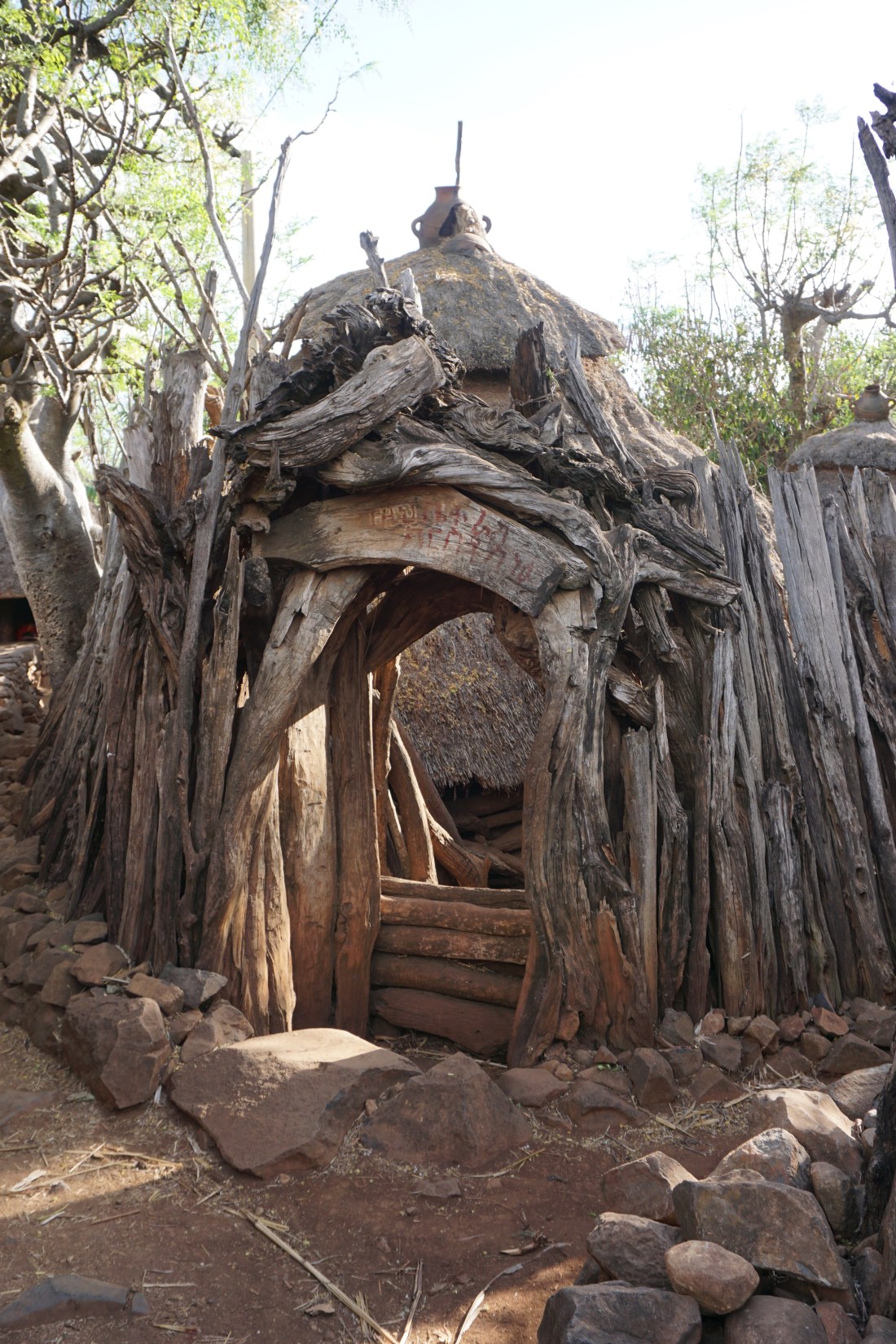
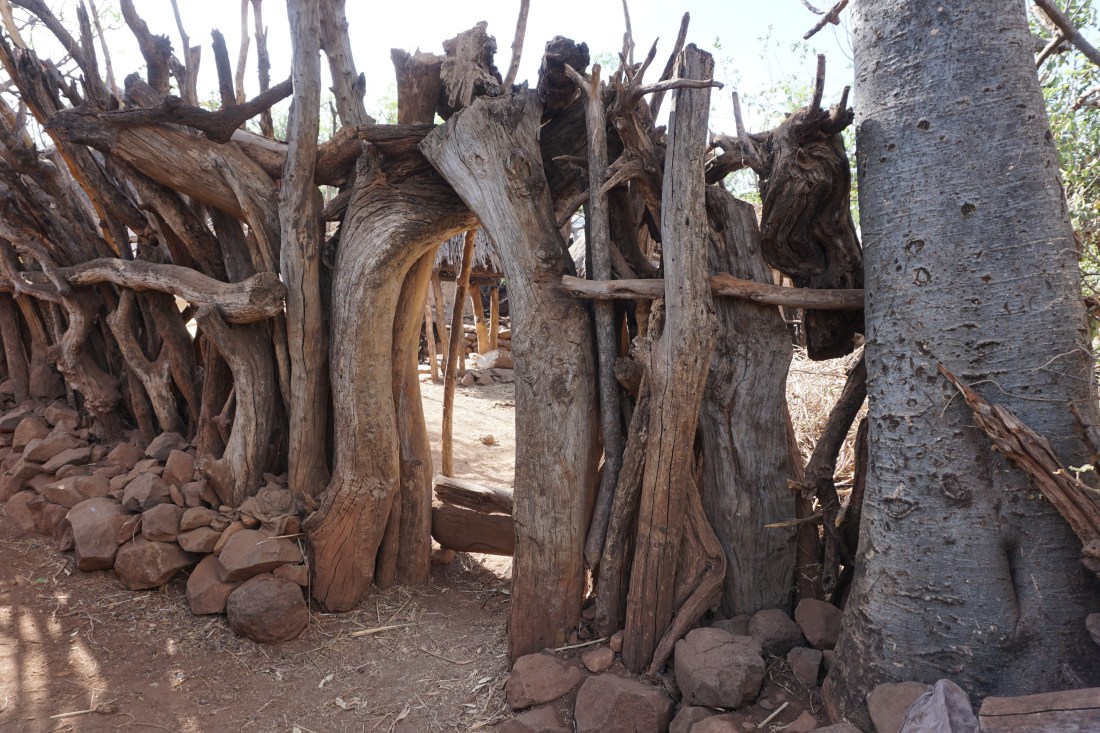
The families are proud of their homes as is evident from their entrances. When they leave home they slide poles across the entrance to let others know they are not home and to keep the wandering livestock out.
DSC02733


DSC02705

The young boys in the village sleep in these structures from the age of 12 until they marry.  There are 10 in the village and each one has up to 30 boys in it. The population of this village was 8,000.
DSC02708

They climb up inside.

DSC02701

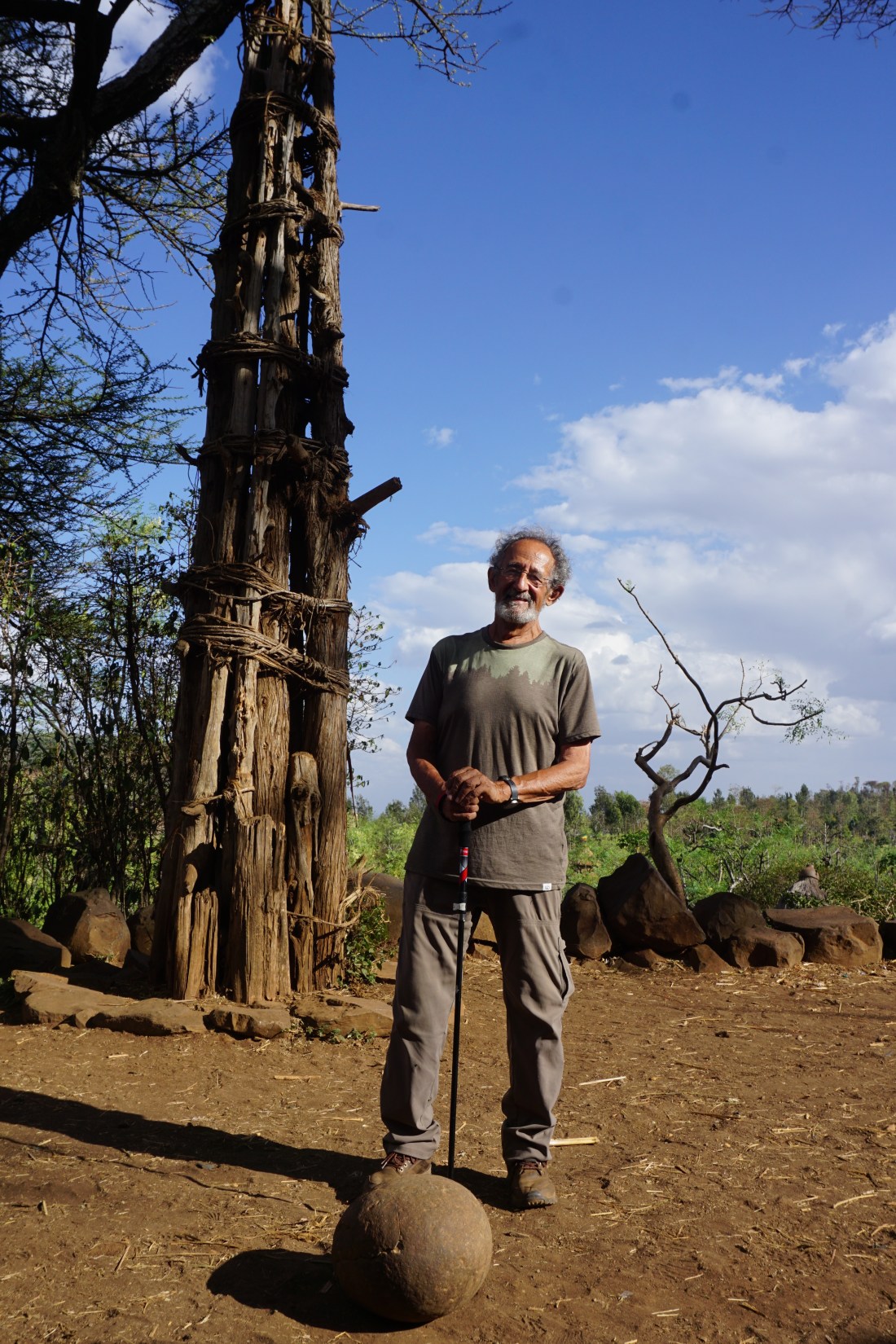
This is the main community centre in the village.  Here all ceremonies are held. A boy has passed into manhood and the right to marry once he can lift this round stone over his head and throw it behind him.  It weighs 120 lbs.

The tall wooden structure determines the age of the village with each stick representing so many years.
DSC02722

The community is a UNESCO World Heritage site.
DSC02736


Southern Ethiopia – Ari tribe

This is a very old moringa tree.  The greens are used for cooking and making tea. It also has medicinal properties.

DSC02498

The Ari village we visited was in the most beautiful countryside.

DSC02499

Here we watched a blacksmith making a tool that is used in the fields.  He had a collection of knives he had made for the market.

DSC02518

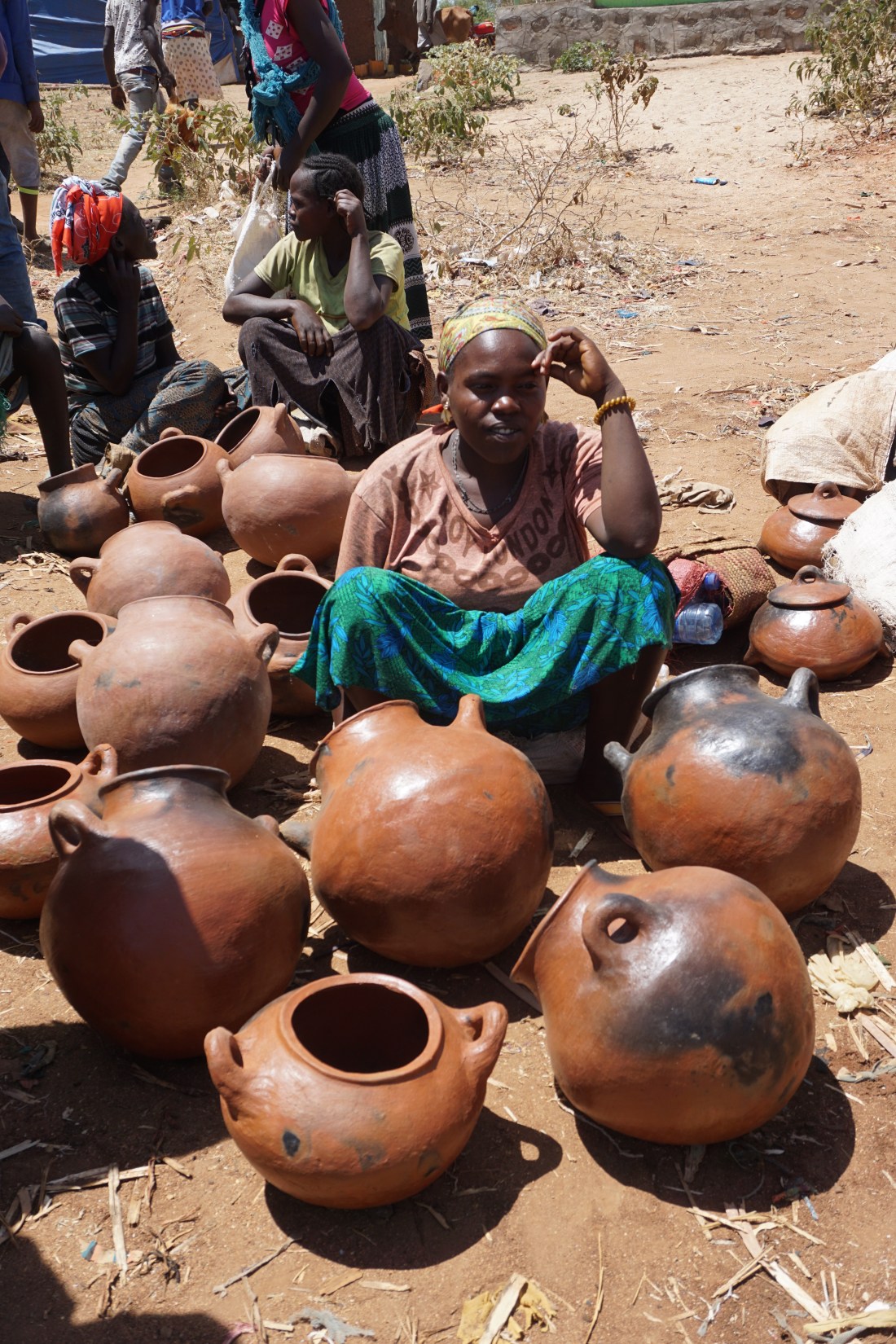
The pottery sold in the markets is all made by hand.

Here we were able to see a plate being made.

DSC02582

This woman also created the ceramic skillet that we watched the injera being cooked on. Injera is typically made from tef but in this village they made it from corn as it was less expensive. They grow corn here but not tef.  The corn is dried, ground then mixed with water to ferment for two days before being cooked.  John and I preferred it.  as it is less sour tasting.


DSC02555

DSC02514

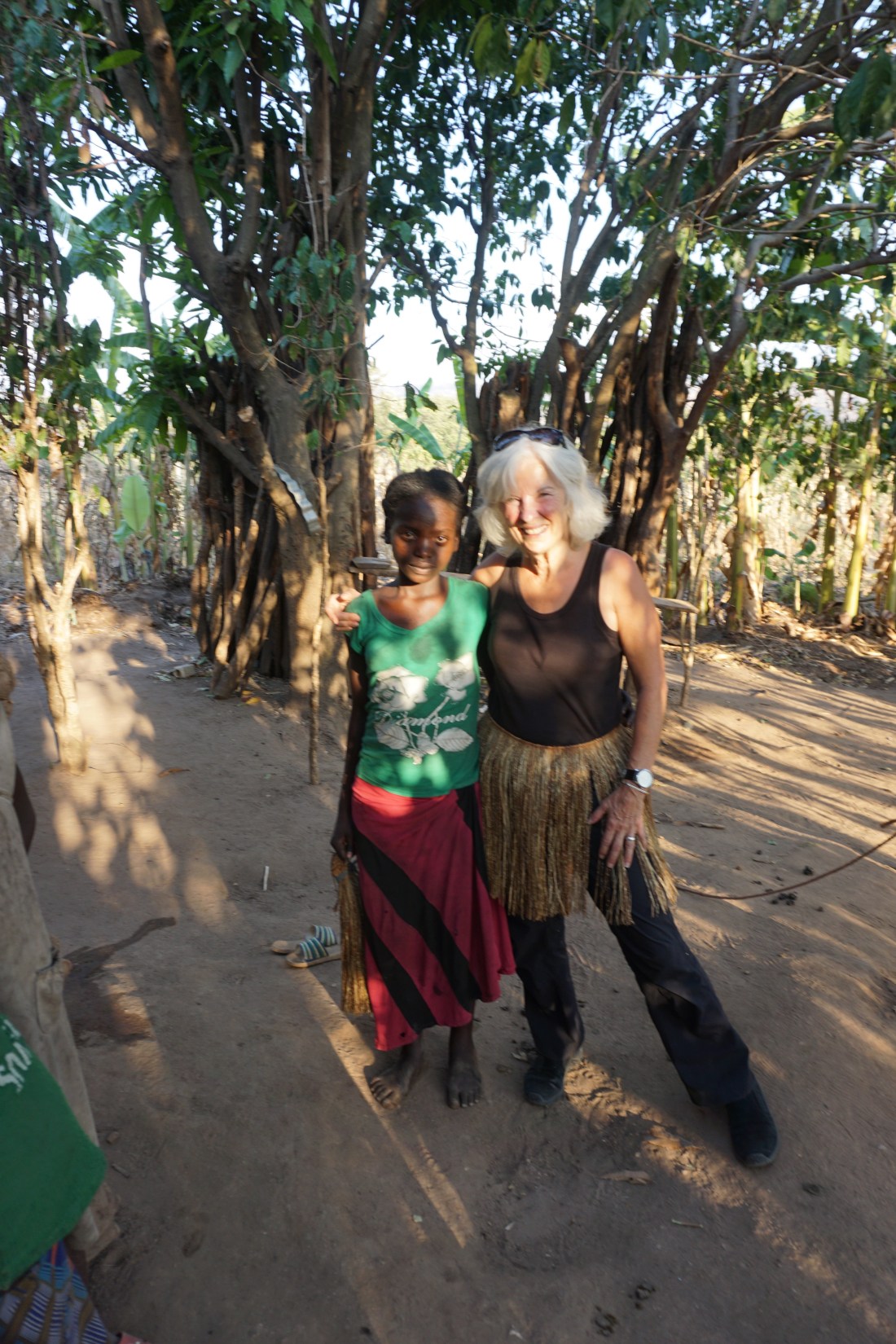
This is an example of the traditional skirts girls and women would wear made from fibre from the false banana plant.

DSC02578

DSC02583

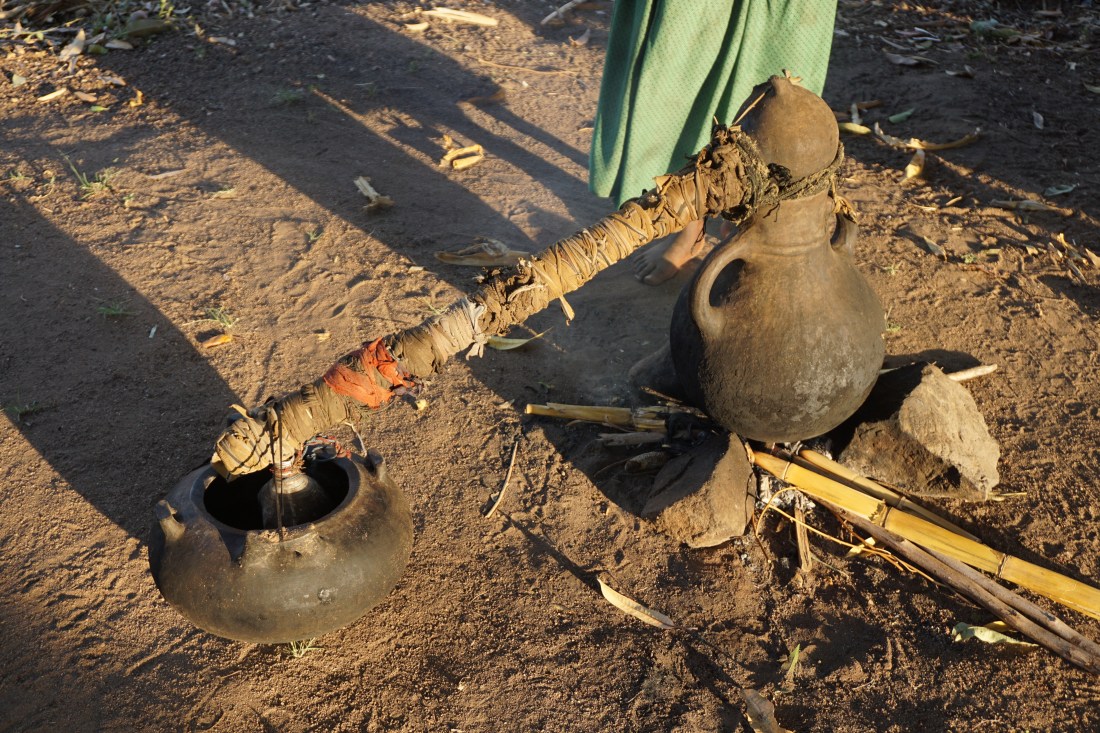
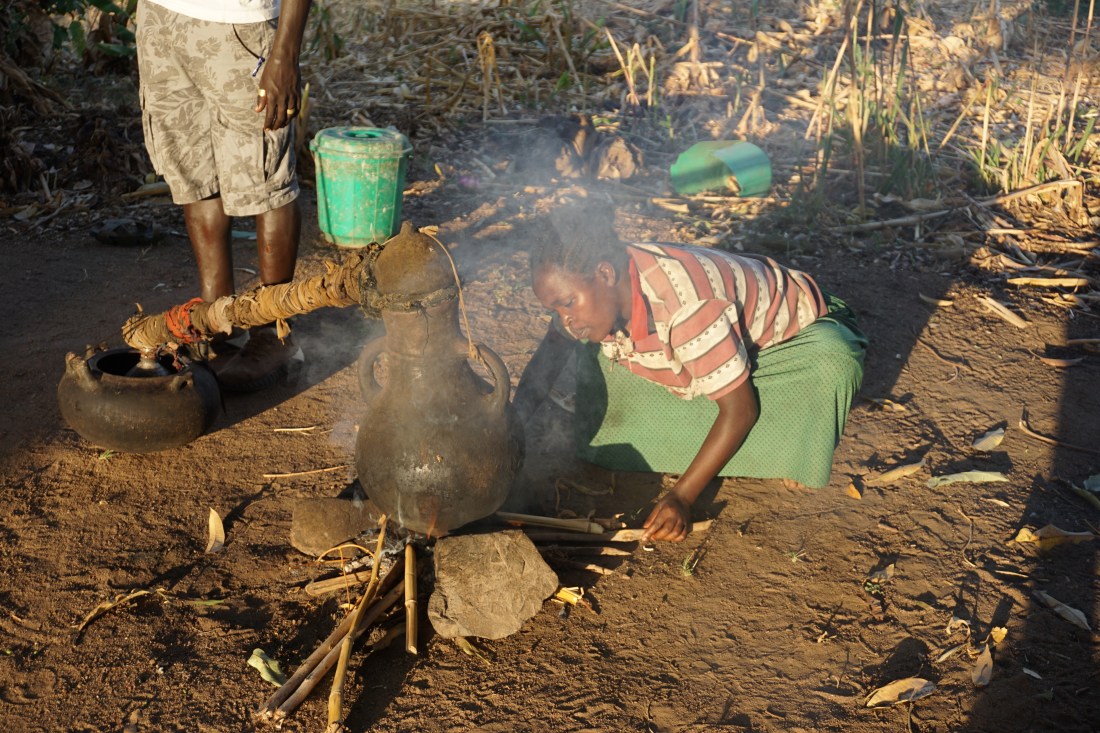
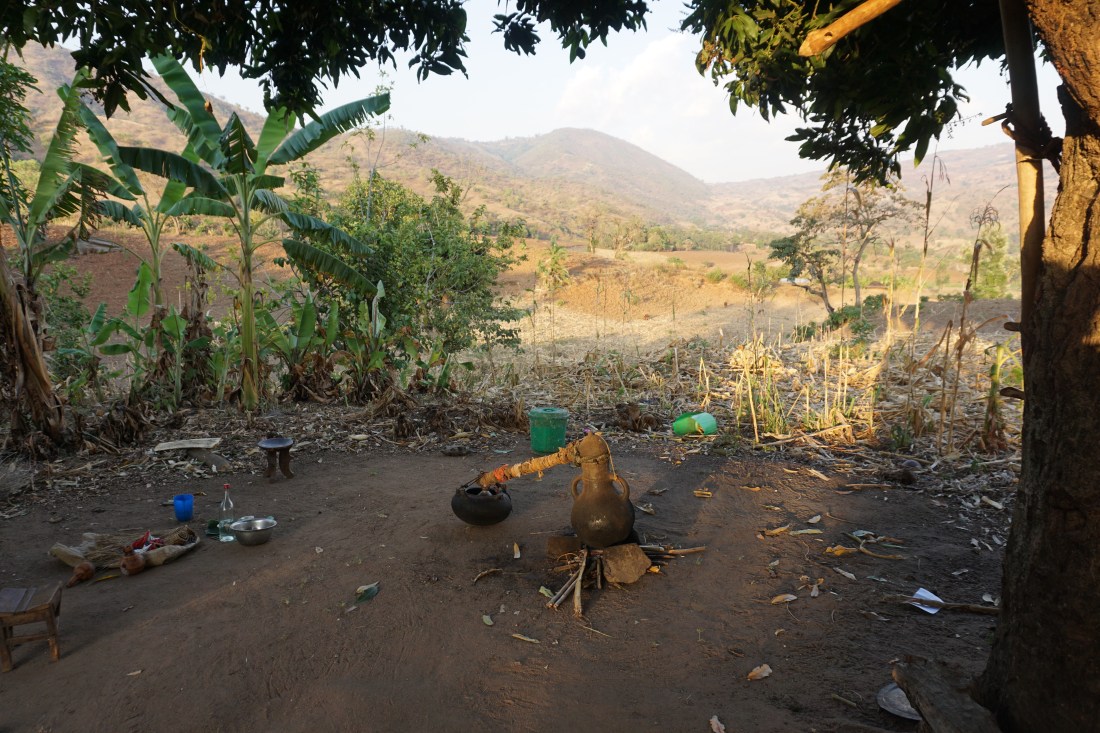
Arake, their alcohol, is made from a mash of corn, hops and sorghum which is fermented then cooked and distilled.

DSC02592

The corn is soaked and germinated before being ground.

DSC02594

A lot of the alcohol is sold to the Mursi tribe.  A bottle cost 150 birr or about 7.50 Canadian.  This young lady produces about 5 bottles a day.

DSC02610

Her supply of dried corn.

DSC02603

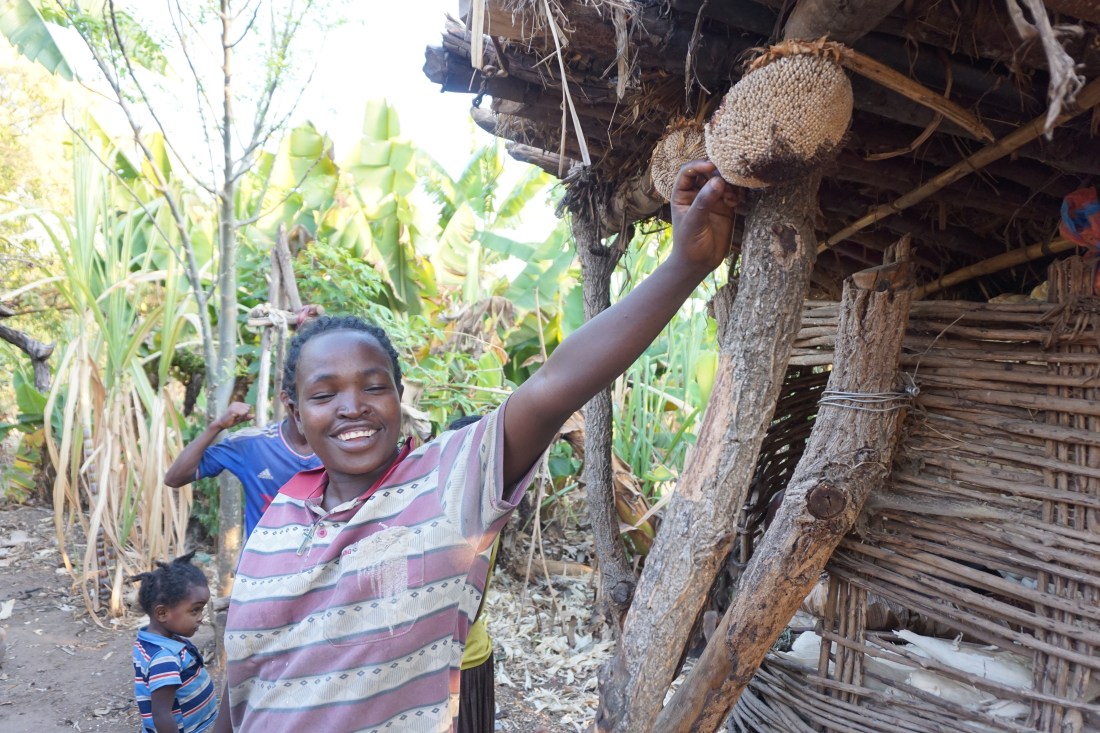
Sunflowers she has dried.

DSC02608

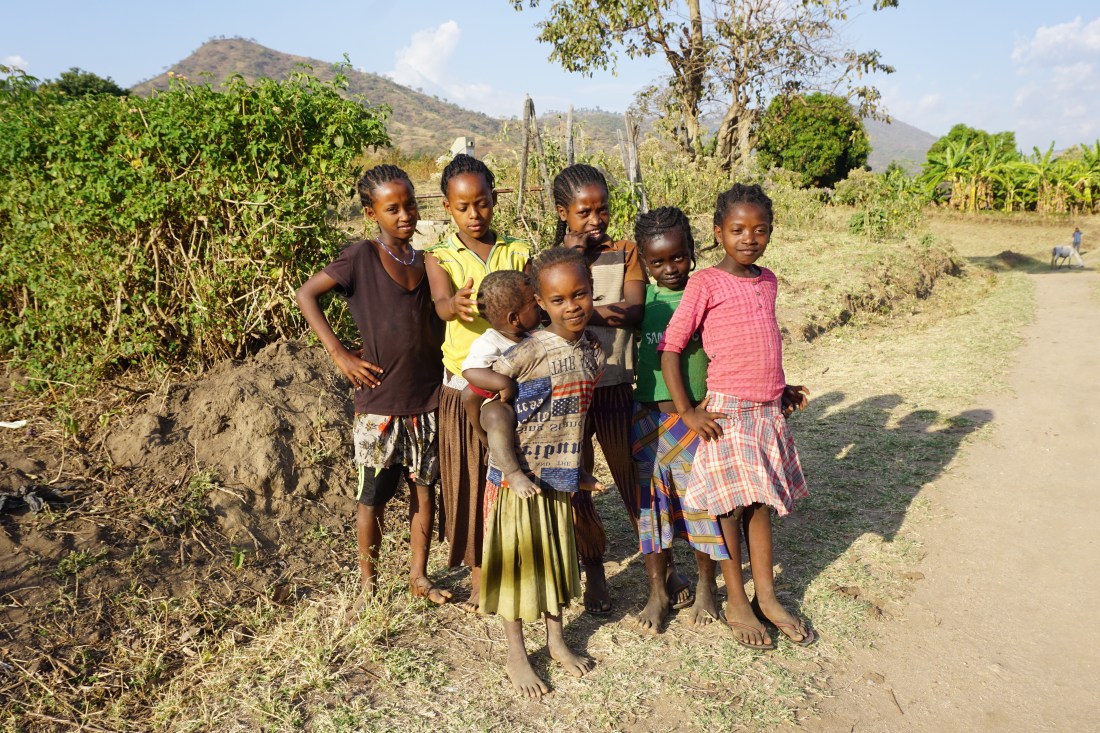
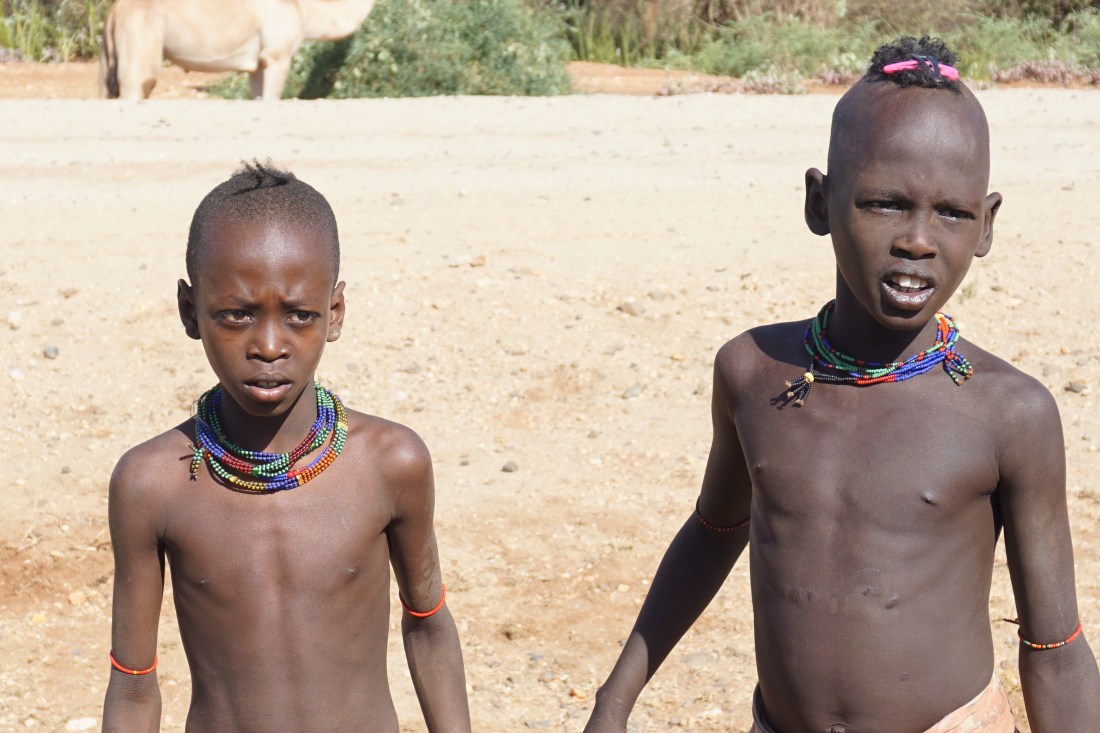
In each village it is not unusual to have a contingent of children following us.

DSC02502

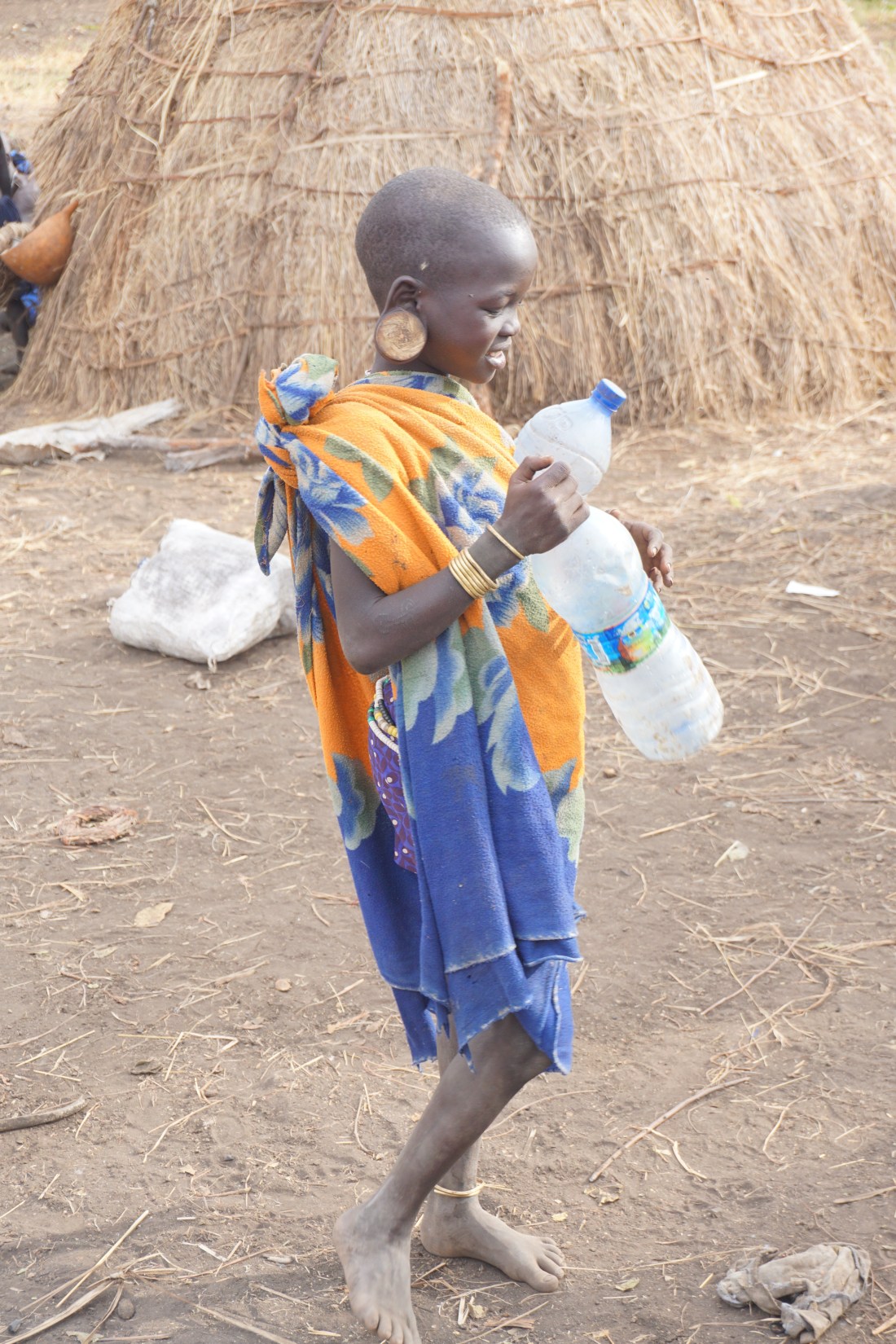
These young girls carrying water are so strong


and beautiful.

DSC02616John’s little buddy.

DSC02619

I enjoyed seeing how they trim their horses’  tails.

DSC02623

Southern Ethiopia – Mago National Park and Mursi Tribe

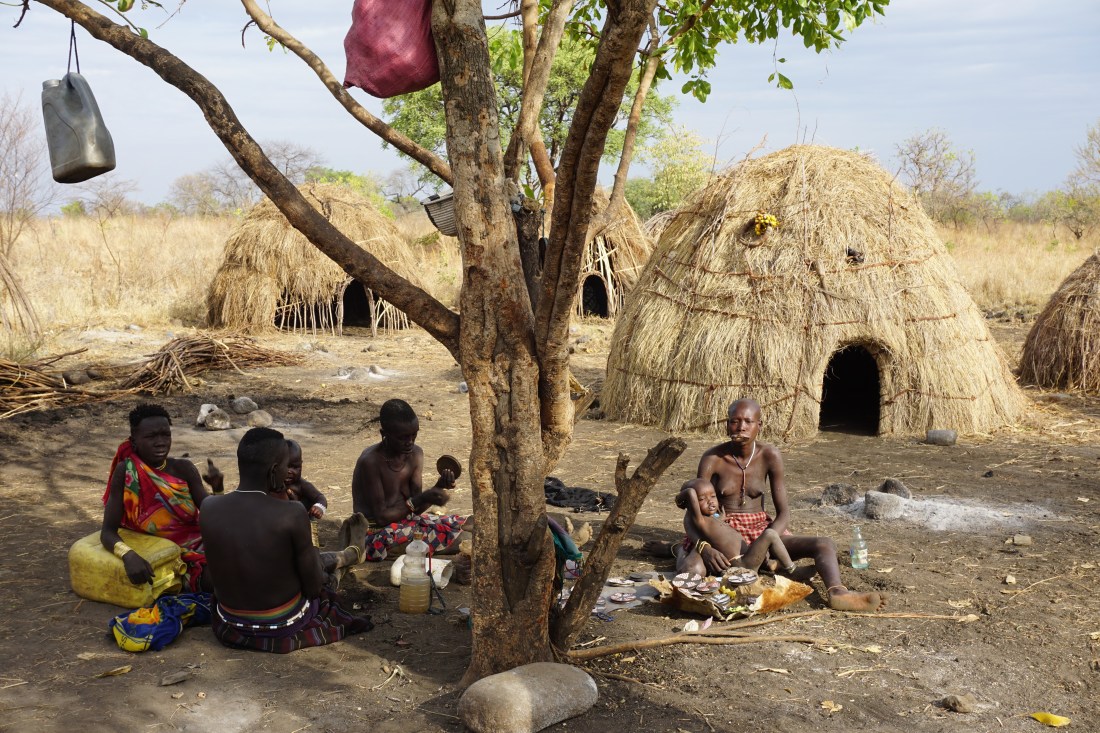
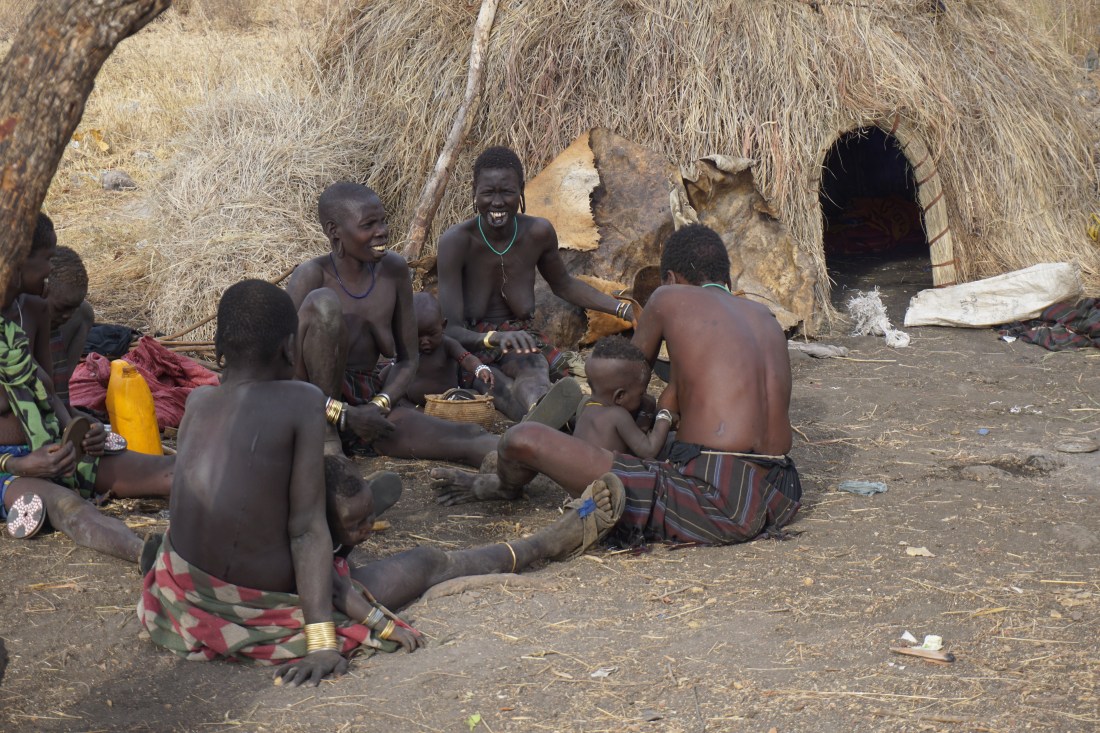
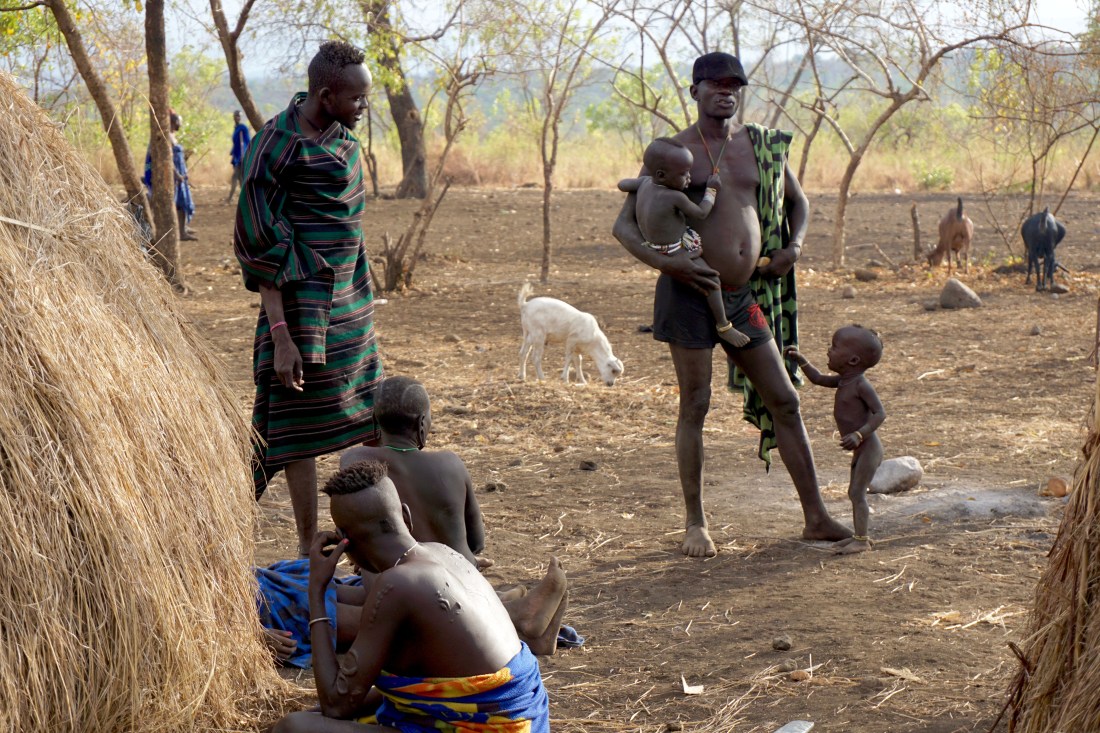
We drove through the Mago National Park to see the Mursi tribe who live in the park,   the newest National Park in Ethiopia. During the drive we saw colobus monkeys, baboons, dik diks (a small antelope), a great bustard and an assortment of other birds, none of which I got on camera as they were too fast but fun to see.


DSC02473

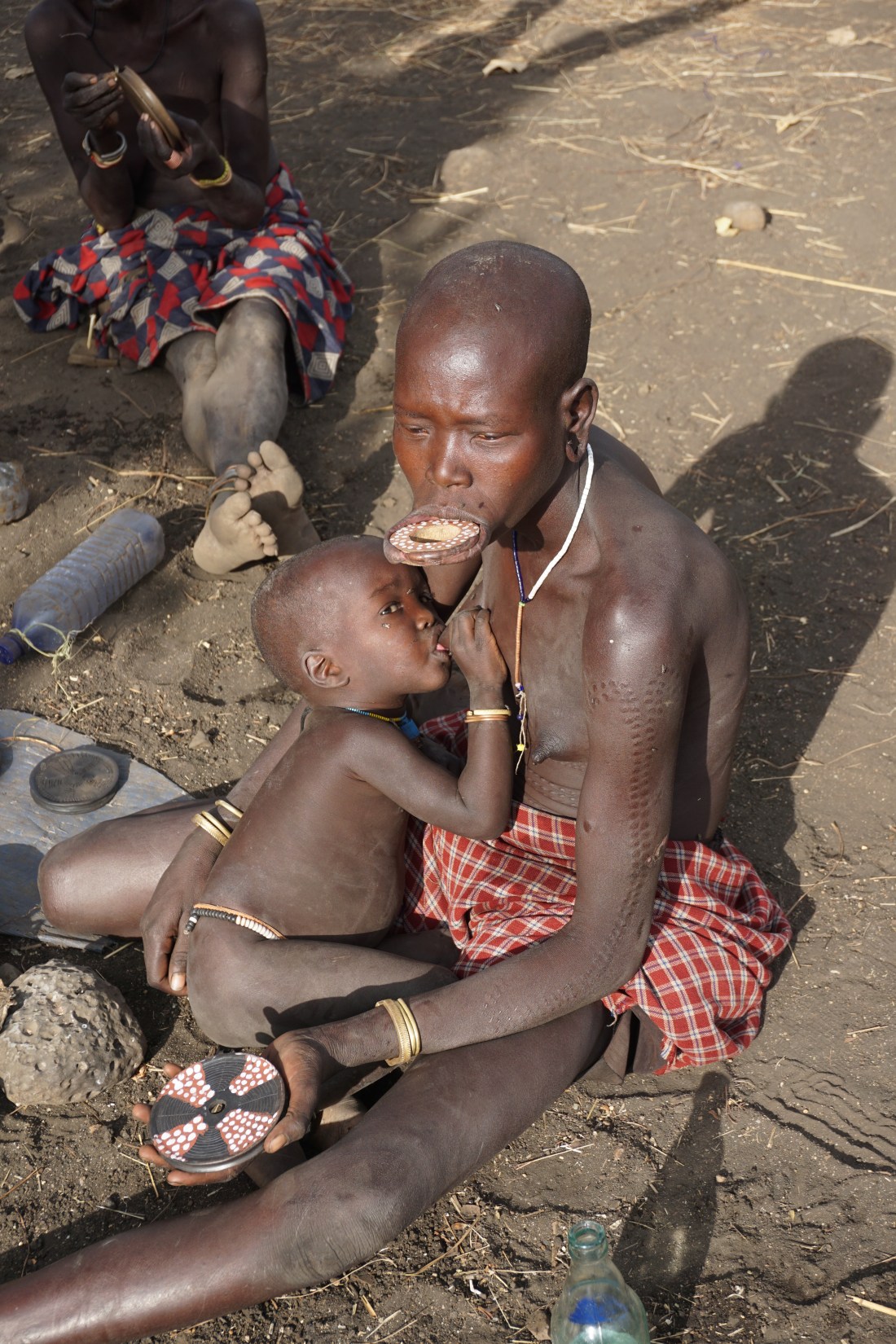
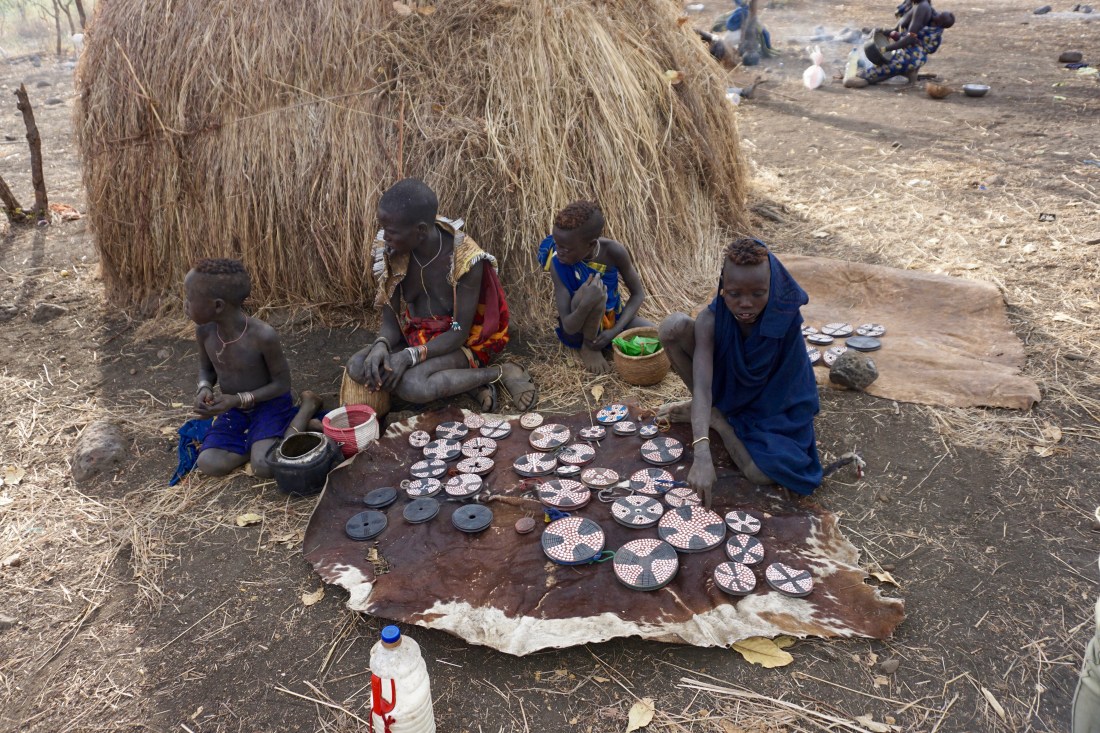
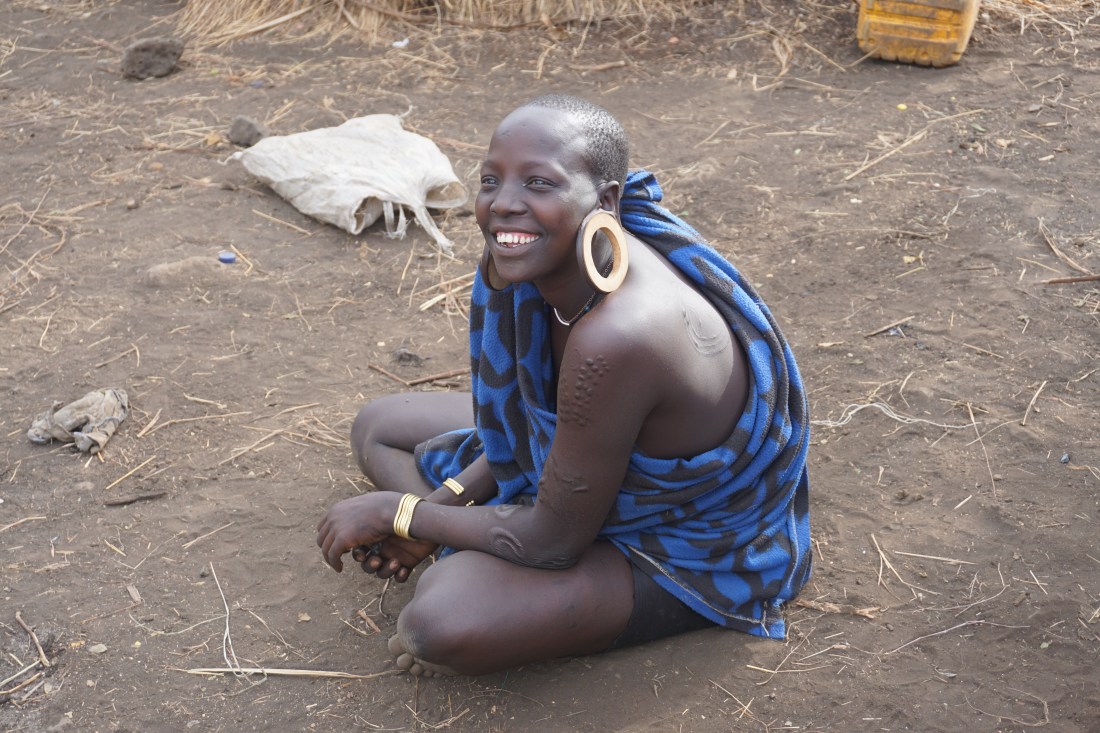
Mursi women are famous for putting clay plates in their lips which is considered beautiful and a way of identifying and differentiating themselves from the surrounding tribes.

DSC02461

DSC02460

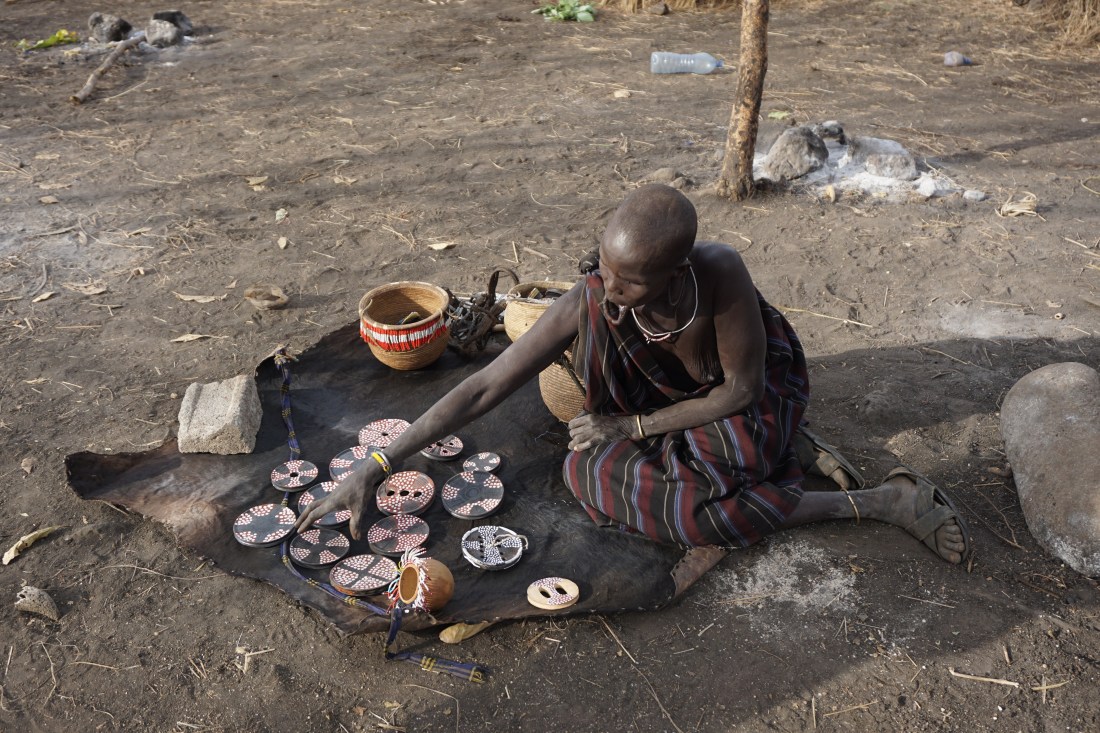
Decorating clay plates for the market.

DSC02406

DSC02457

DSC02436

Heading to get water from the river.

DSC02438

Village chief with his twins.

DSC02409 (1)

This community of 120 received its first school one month ago. The teacher, below, told us that everyone in the community is coming to the school. The first course is Amharic, the national language.

DSC02405

DSC02417

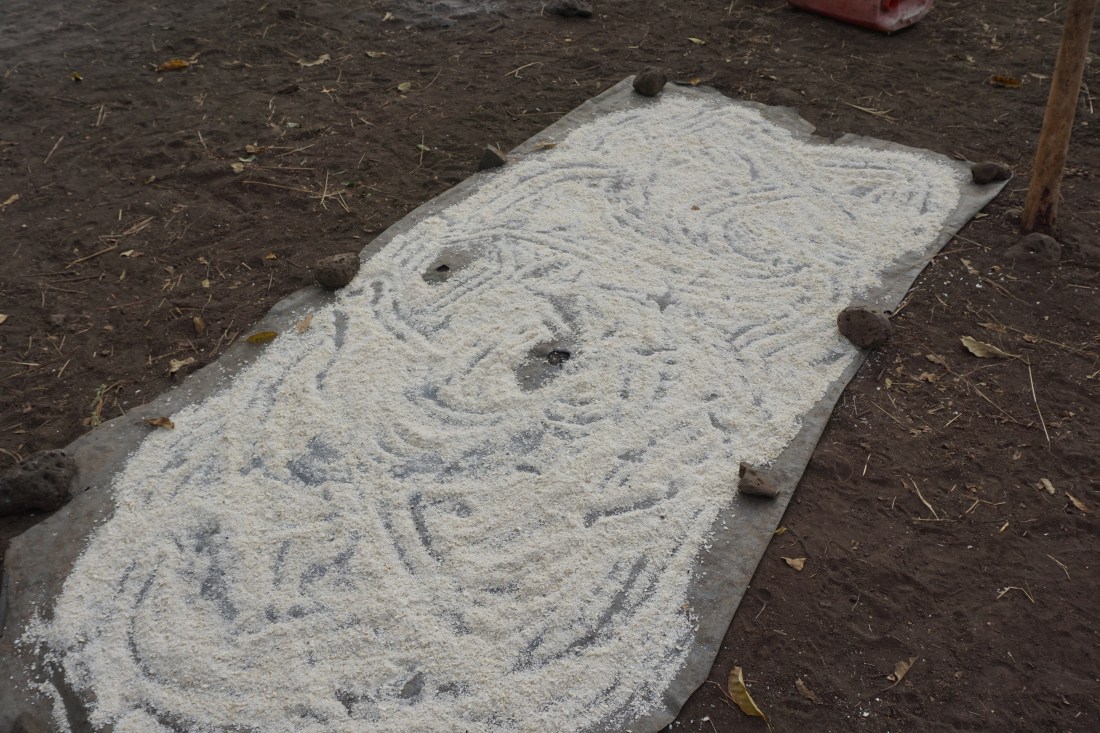
Drying sorghum to make homemade beer.

DSC02452

Southern Ethiopia – Hamar Village and Kako Market


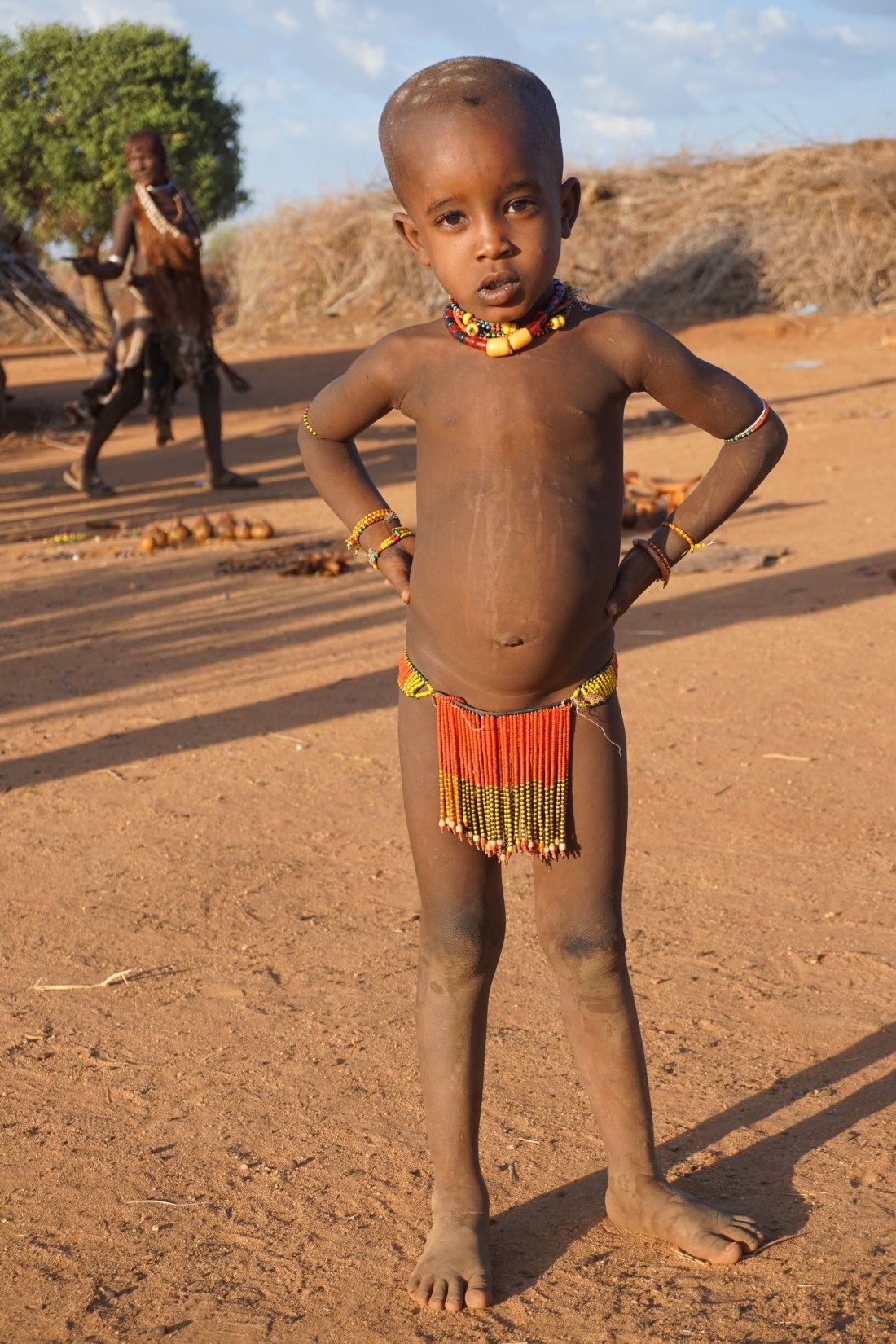
This is our guide Kolo’s home and village. He lives with his parents and siblings in this Hamer Village. There are 53 different tribal groups in Ethiopia.DSC02263

The entrances to the homes are small so their livestock do not enter.

DSC02255

DSC02304

DSC02269

DSC02285

DSC02290

Young boy and girl caring for the livestock.

DSC02318

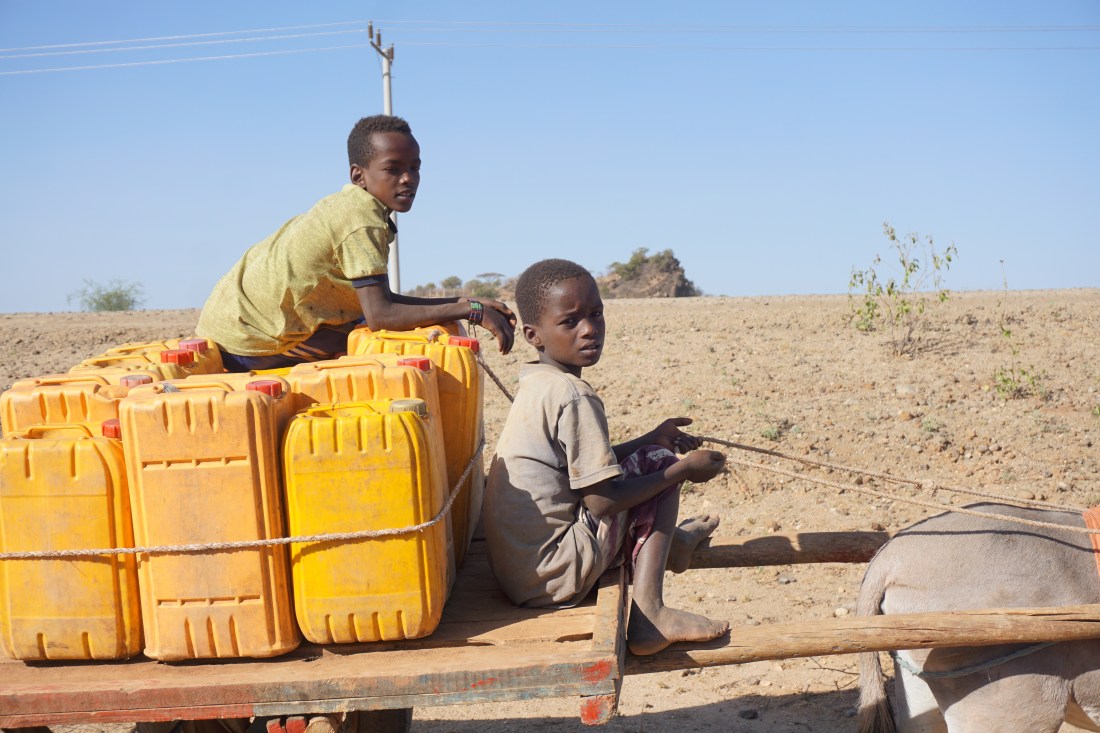
Ethiopian water deliver system.

DSC02312

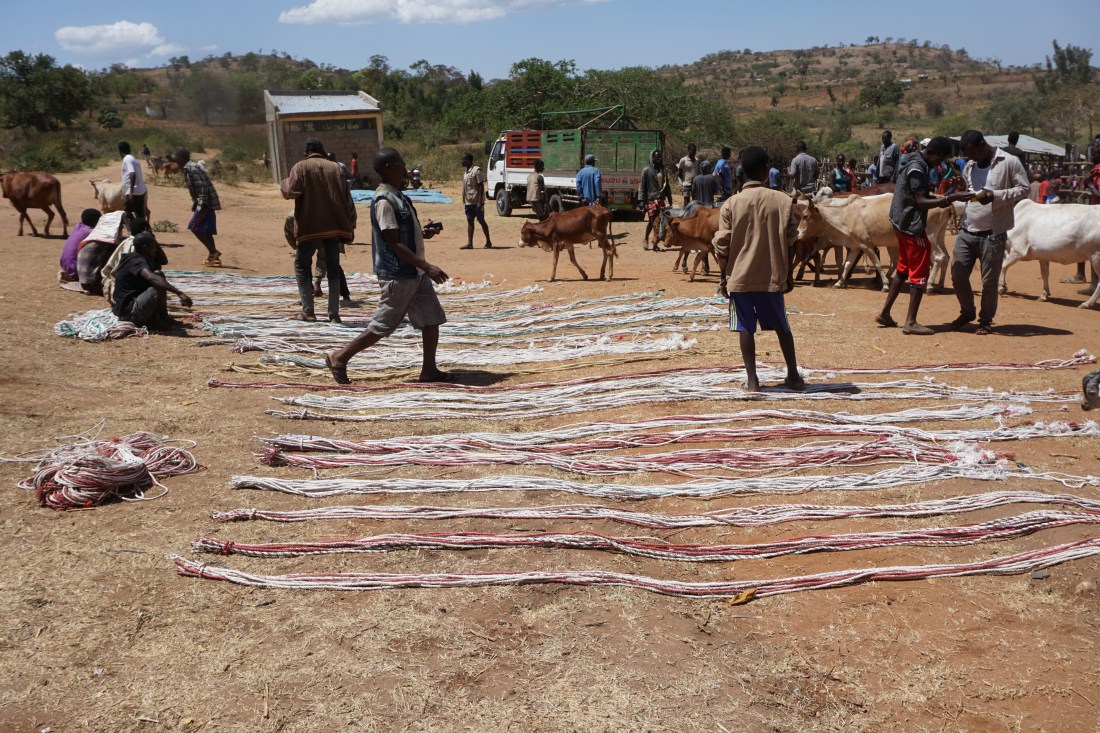
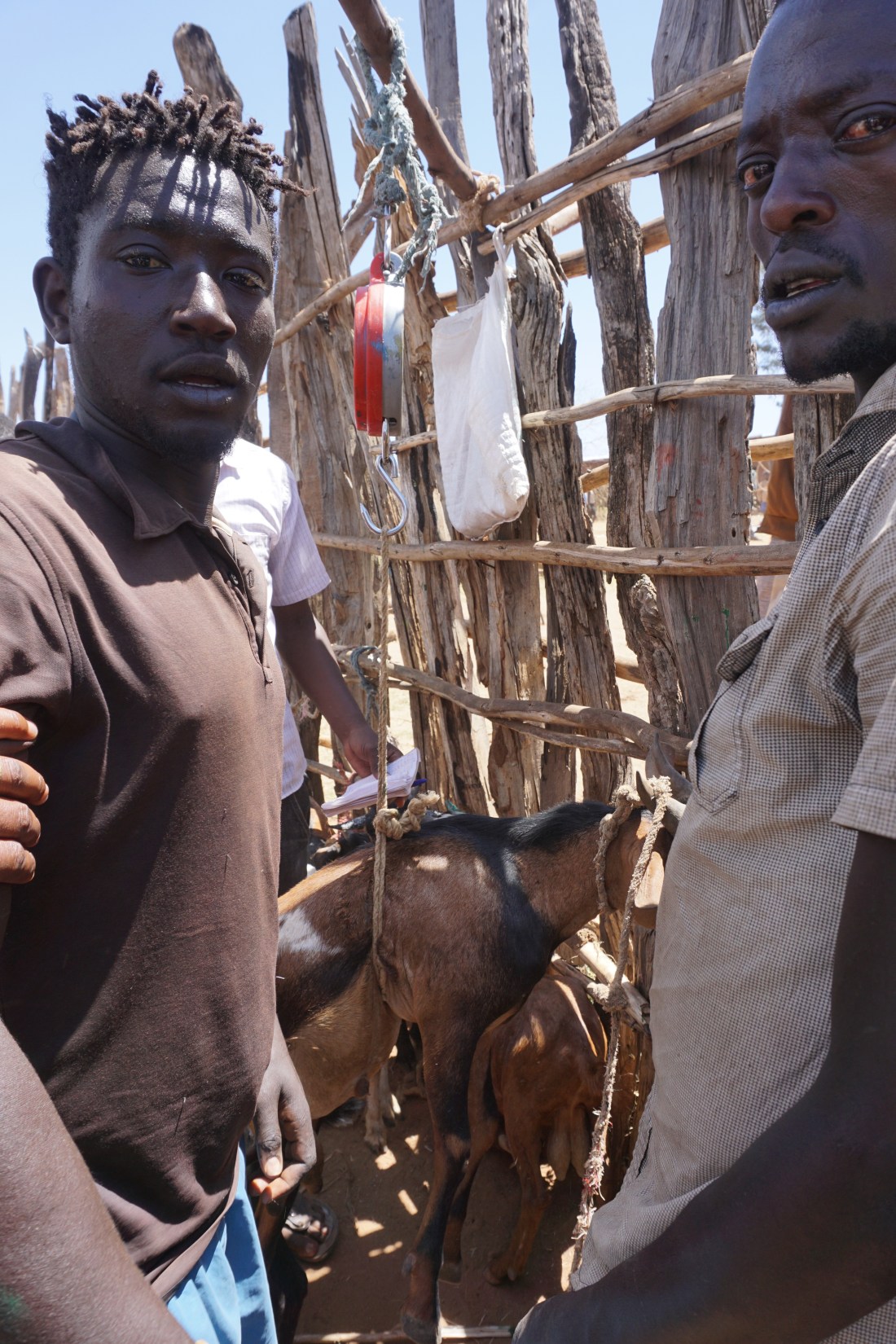
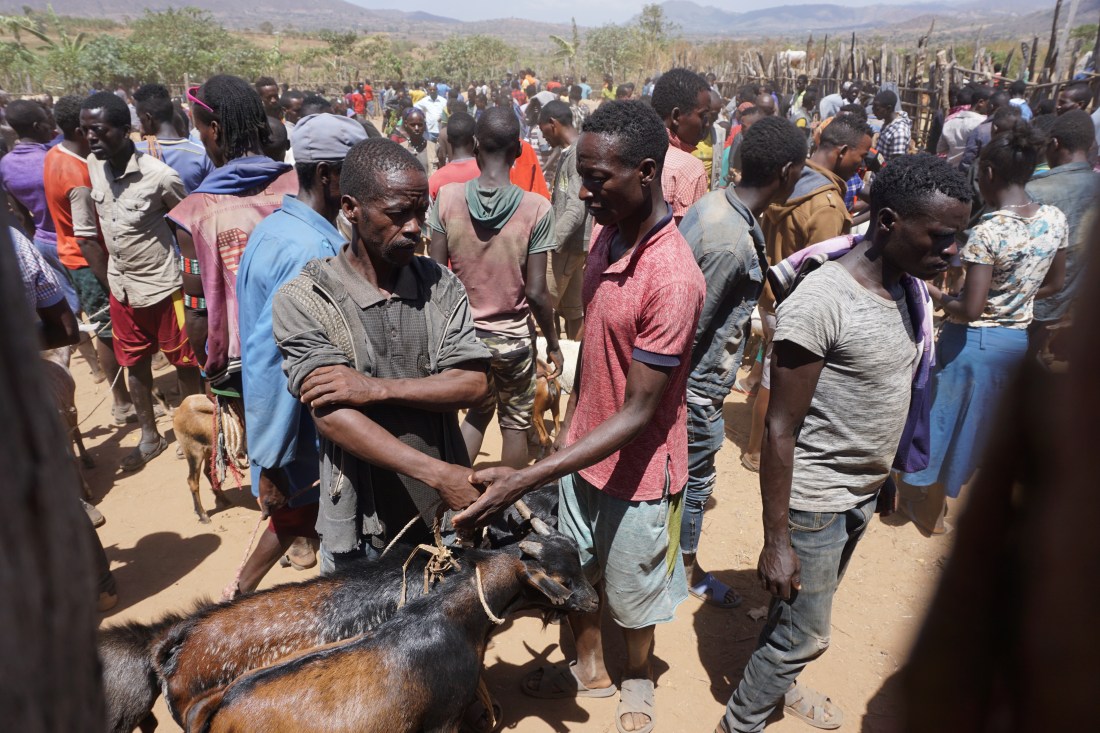
At the Kako market in the Omo valley we visited the animal market first. Our driver got upset with this guide saying he cheated him because he was not a certified guide. We suspect because he could speak English,  he was posing as one. We were pleased with his explanations but he did not have an official receipt to give to our driver after he had paid him.

DSC02322

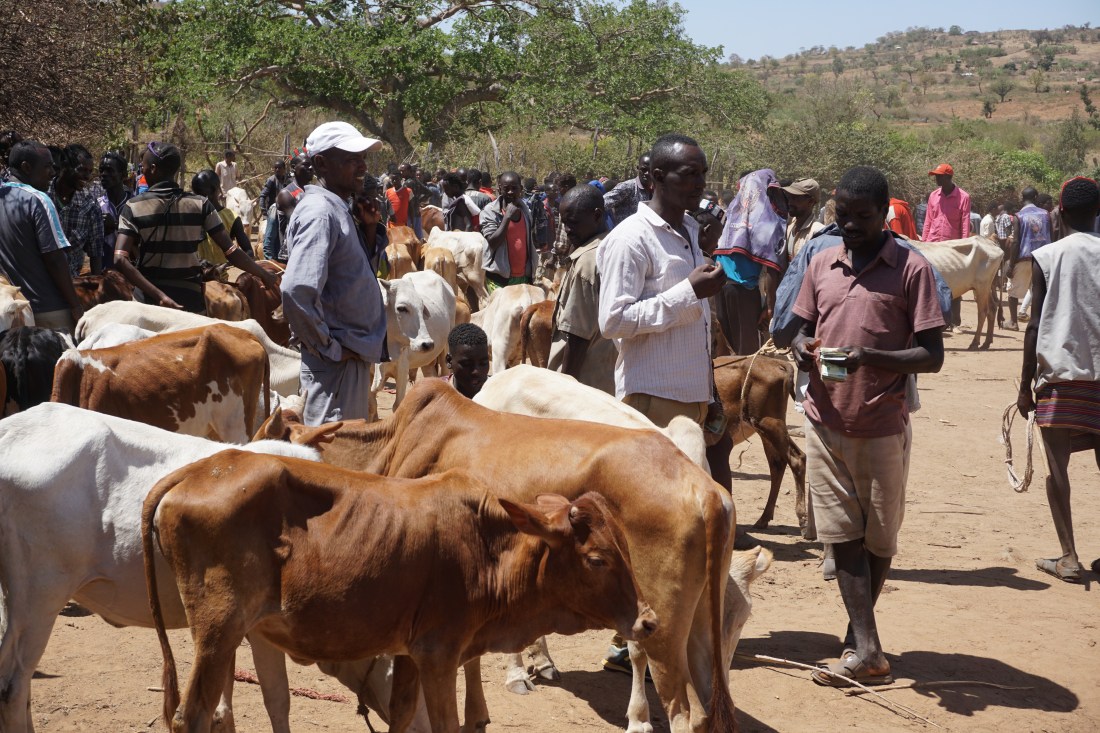
Buying the cattle.

DSC02340

Weighing the goats.

DSC02342

DSC02325


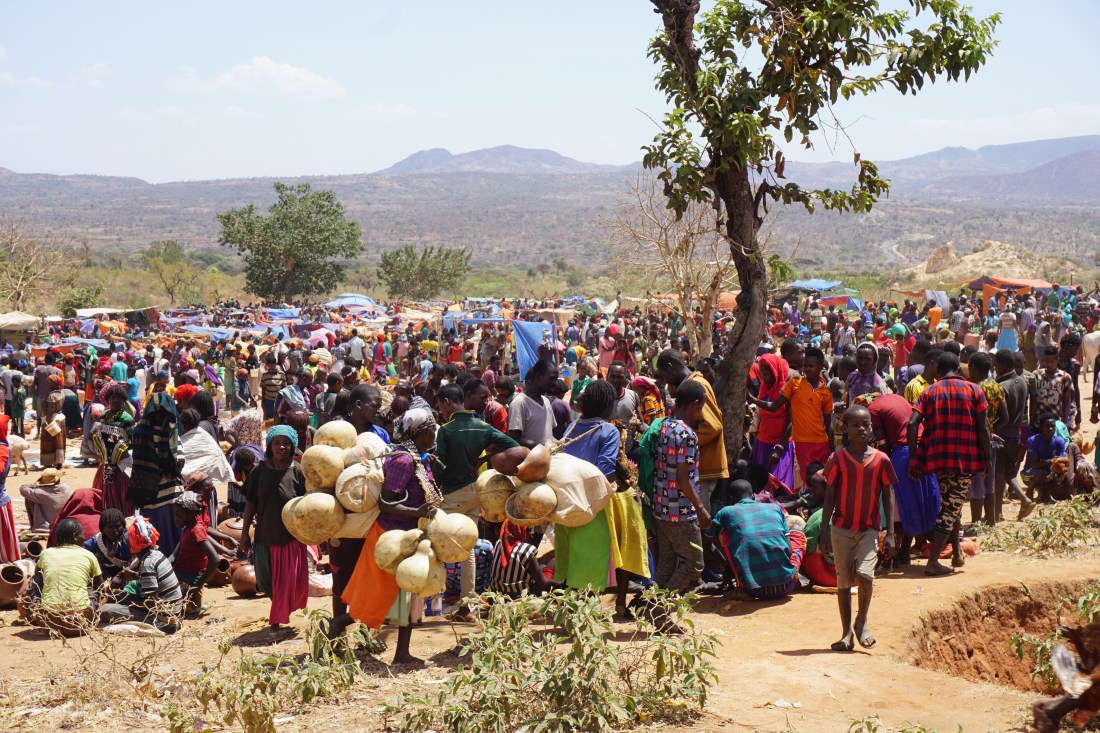
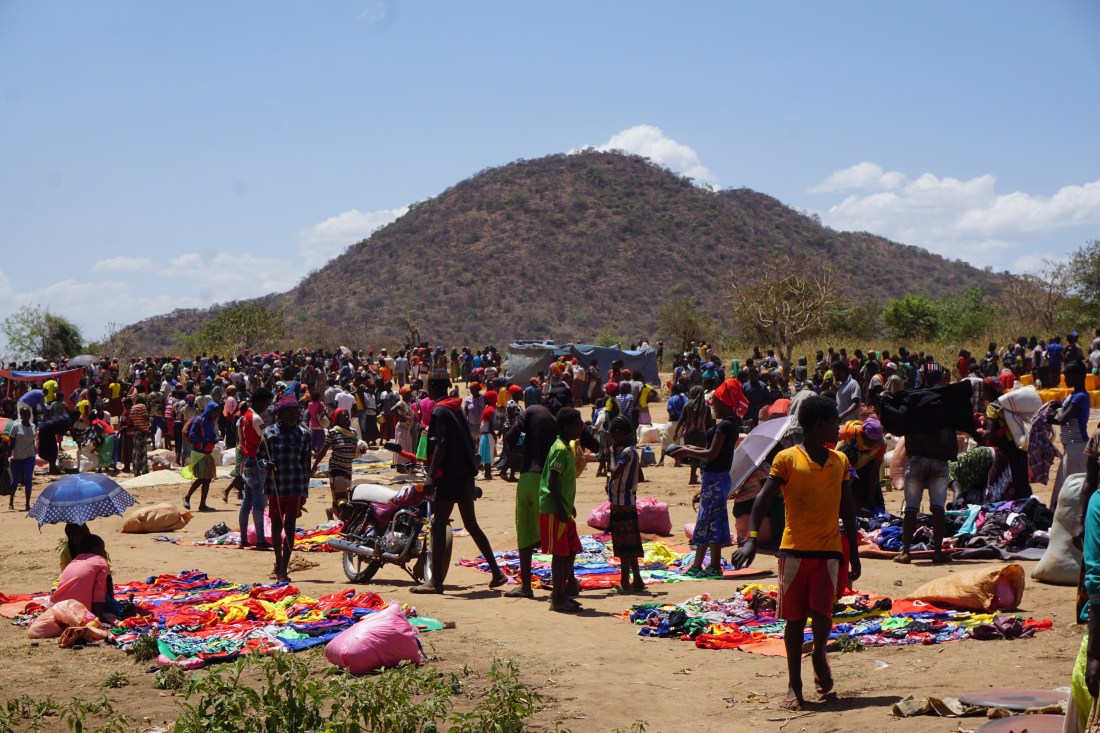
The main market.

DSC02383


DSC02356

Selling tabaco.

DSC02362

Protecting her new hairdo with the hair butter.


DSC02350

Tree where honey is sold.


DSC02378


DSC02382


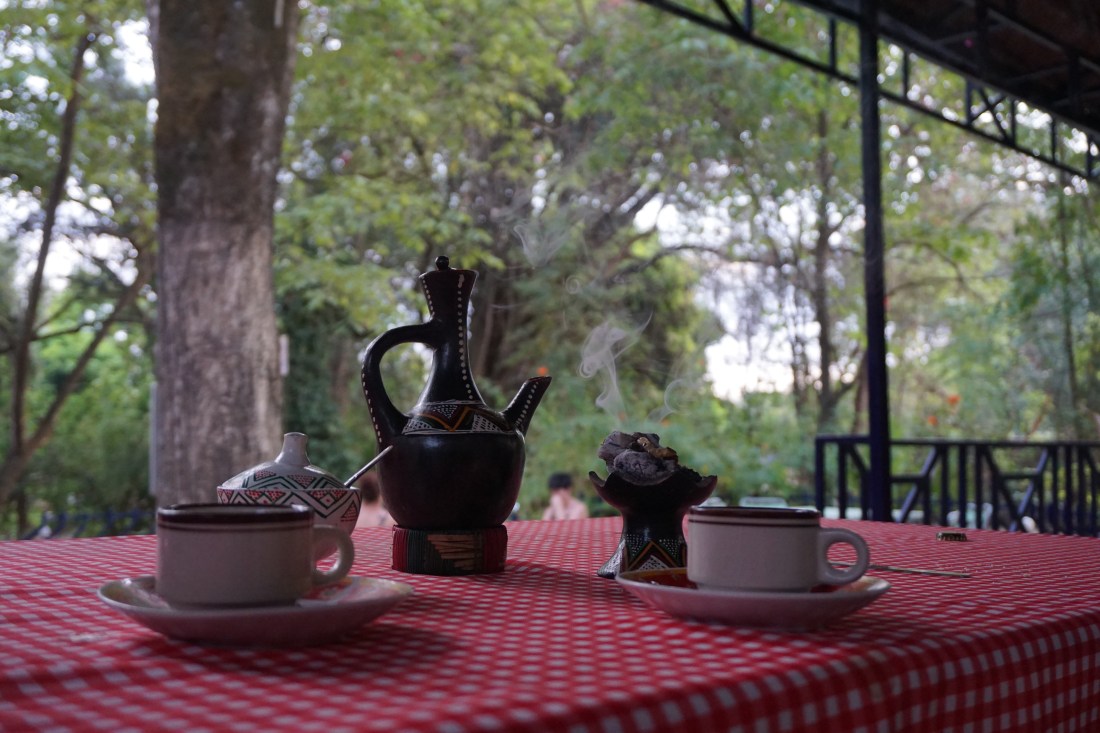
Excellent Ethiopian coffee is most often served with incense.

DSC02389

Southern Ethiopia – Korcho

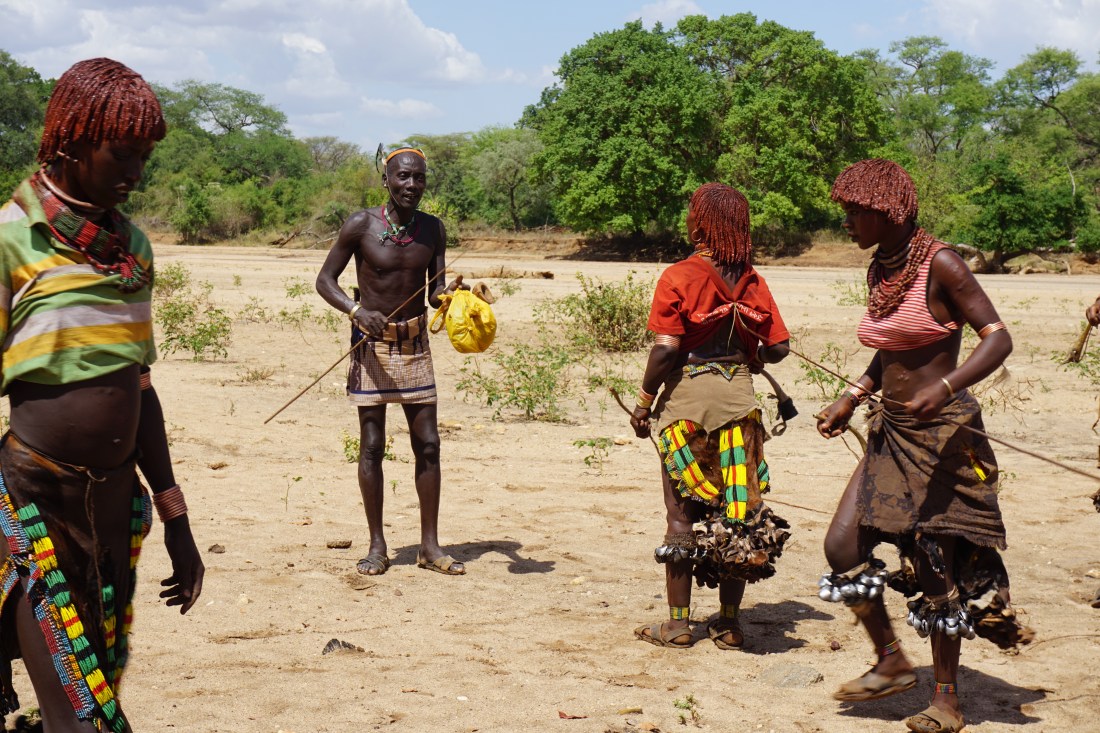
The following are dancers from the bull jumping I was not able to include before.

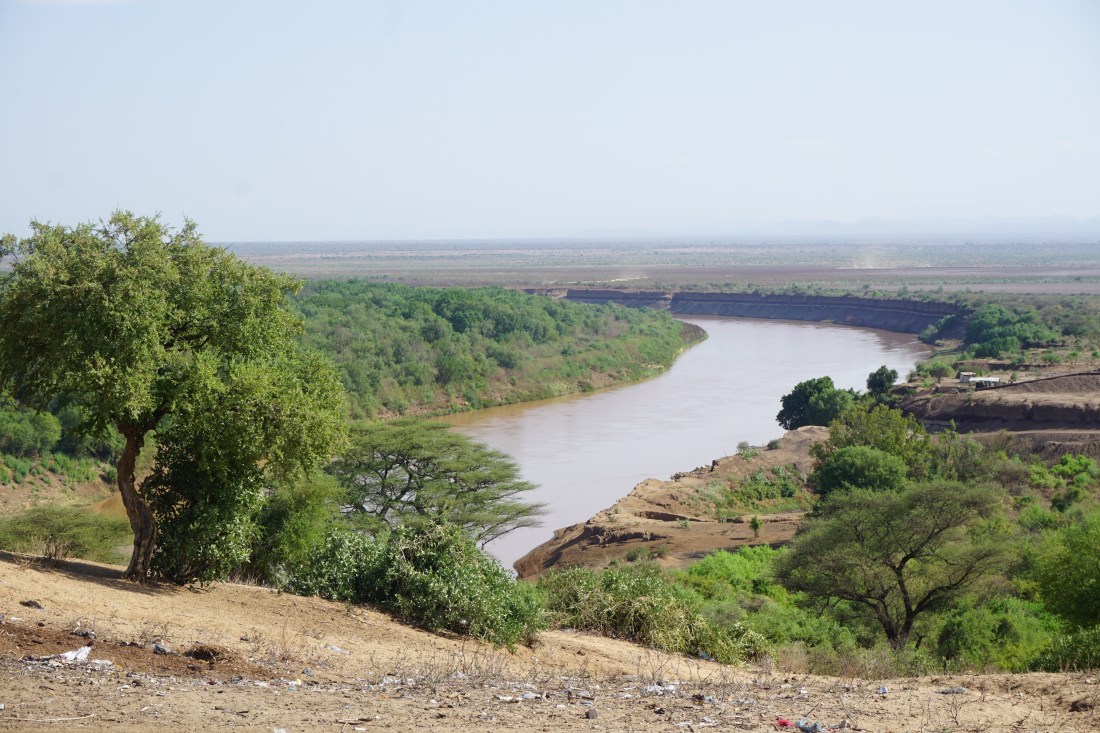
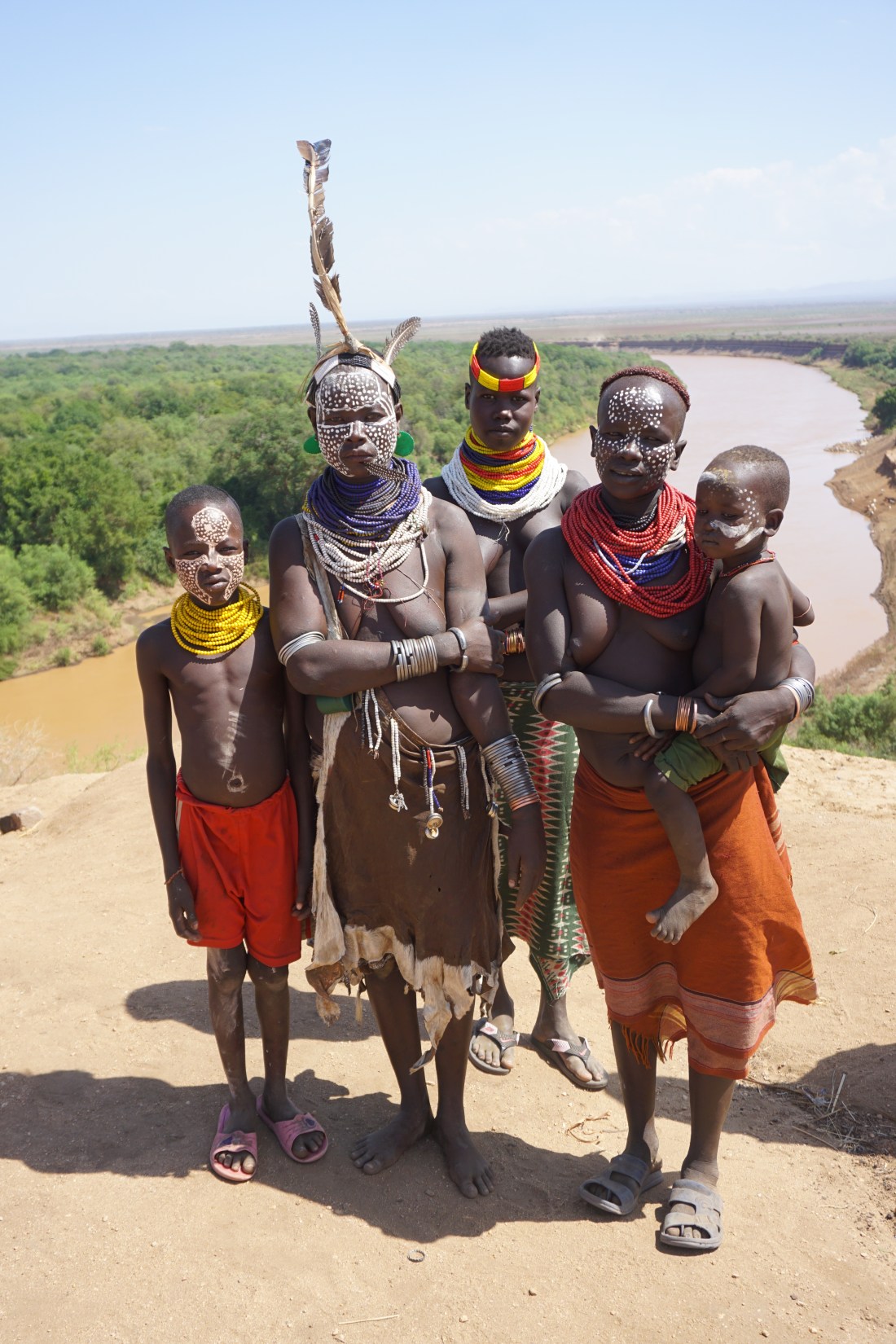
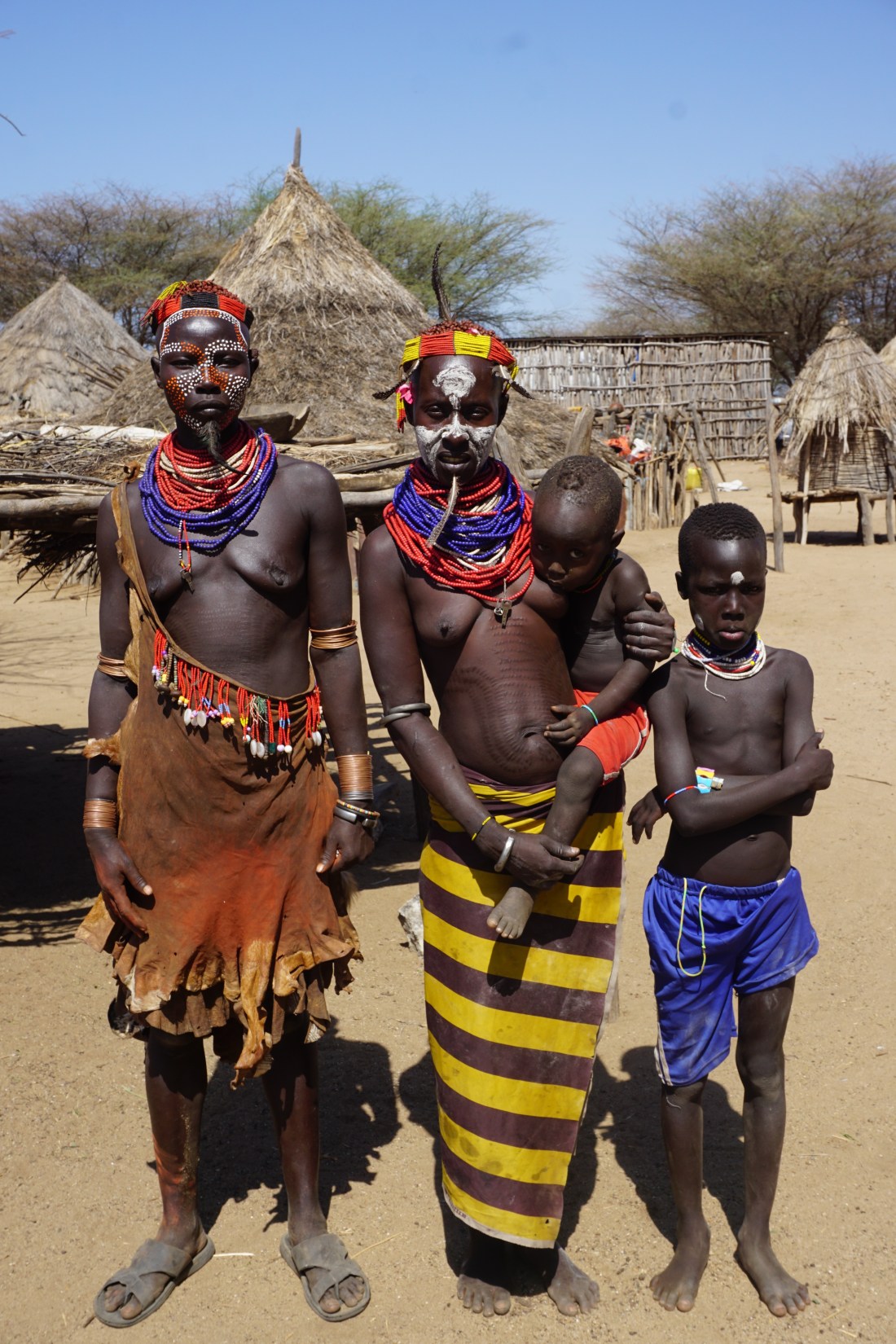
We visited the Karo people in the Korcho village on the Omo River.

DSC02166

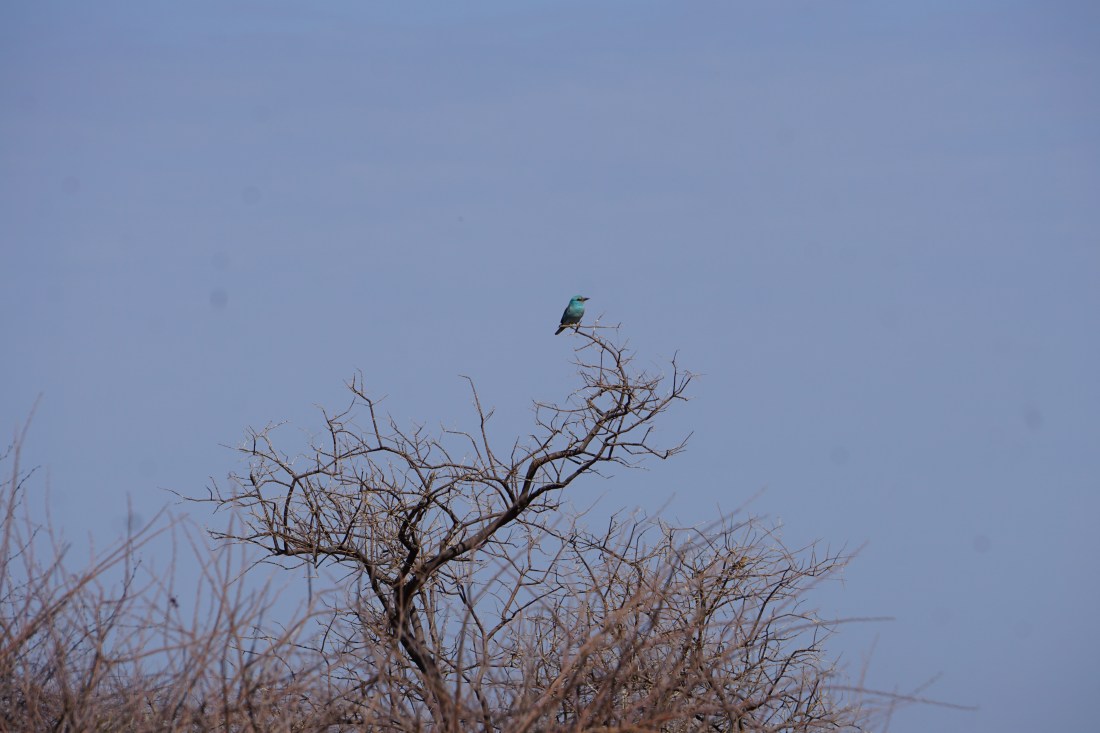
Saw lots of guinea fowl on the way with their beautiful blue plumage.

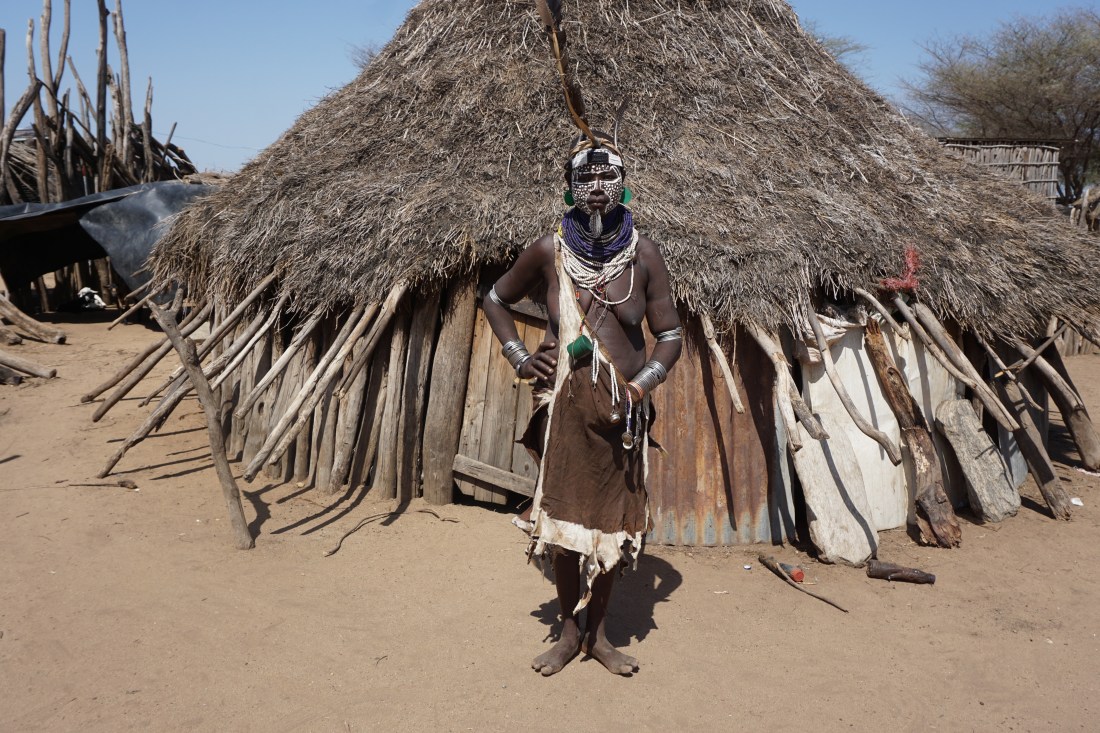
This tribe has the least amount of members and is known for their body painting.

DSC02223

Our young guide, who was home for a break from school in Turmi, explained  that the villagers’ body painting is typical of their tradition.

DSC02202

DSC02207

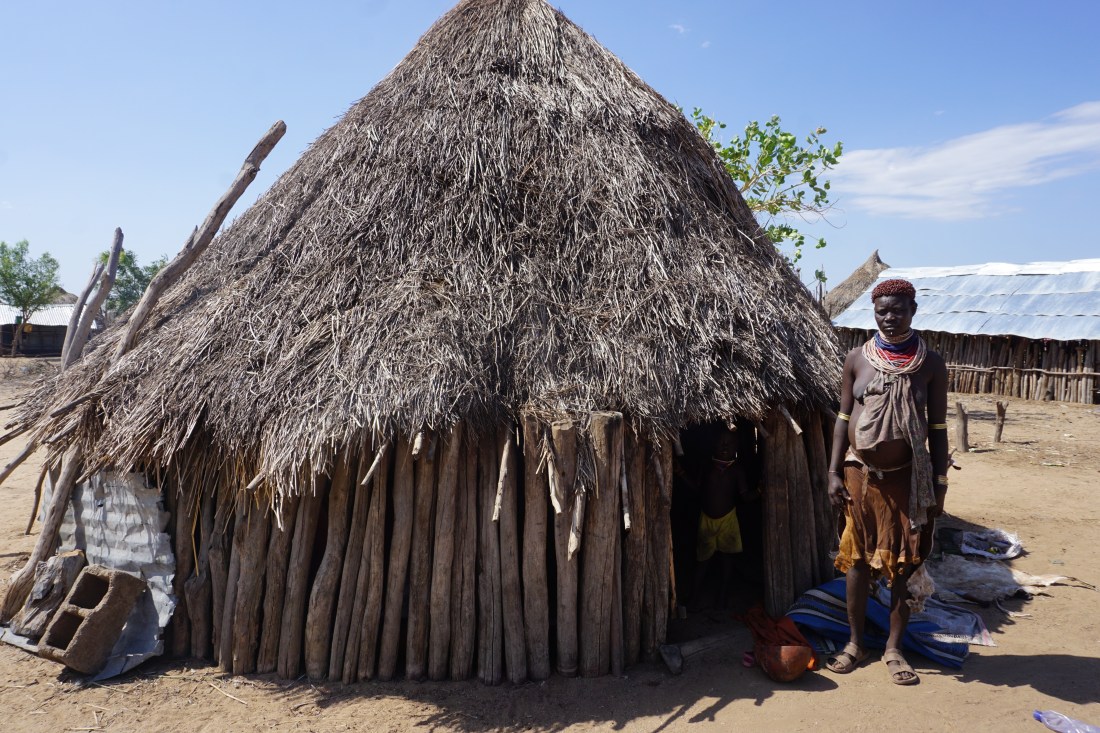
This woman’s home.

DSC02190

The large white bags contain grains and the yellow containers are for drinking water. The family sleeps on goat skins spread on the ground at night.  All their implements for cooking and eating are hung on the walls.

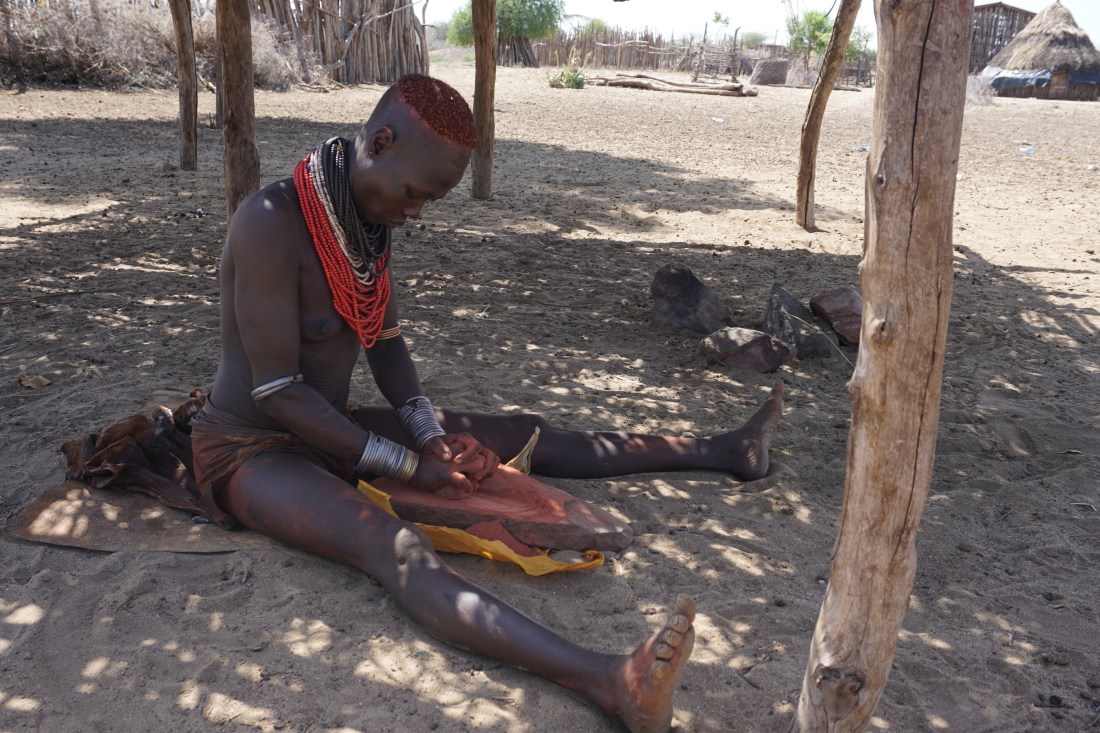
Grinding clay for hair decorating.

DSC02192

The tribe are herdsmen.

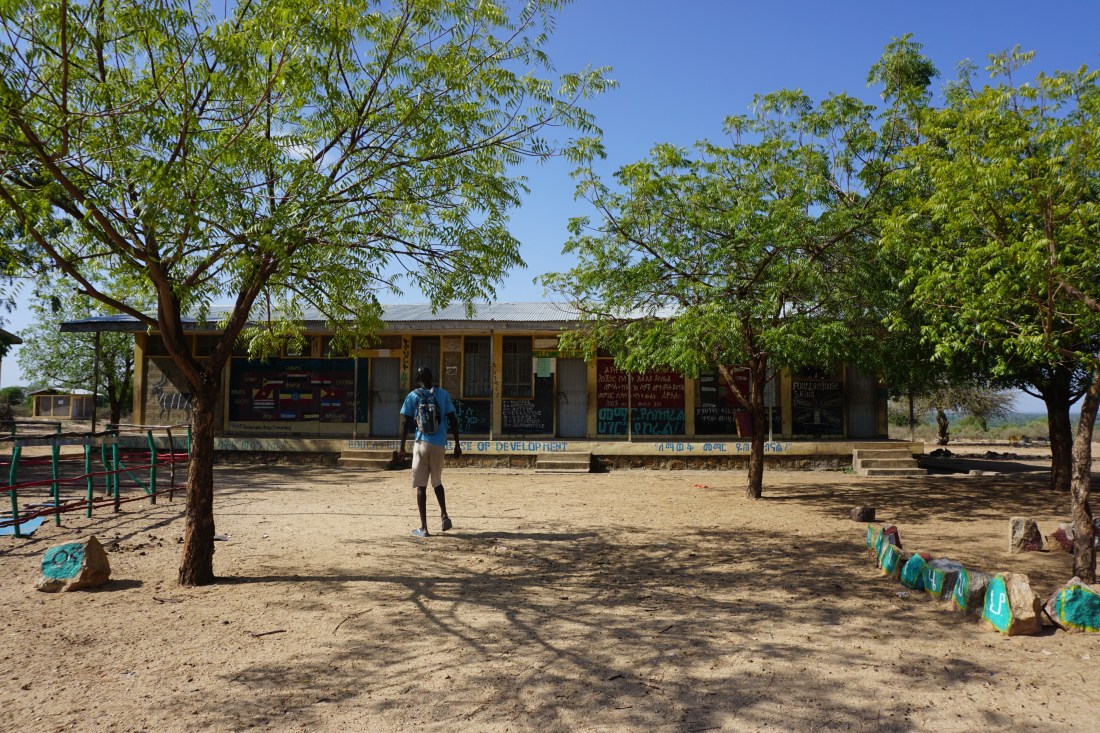
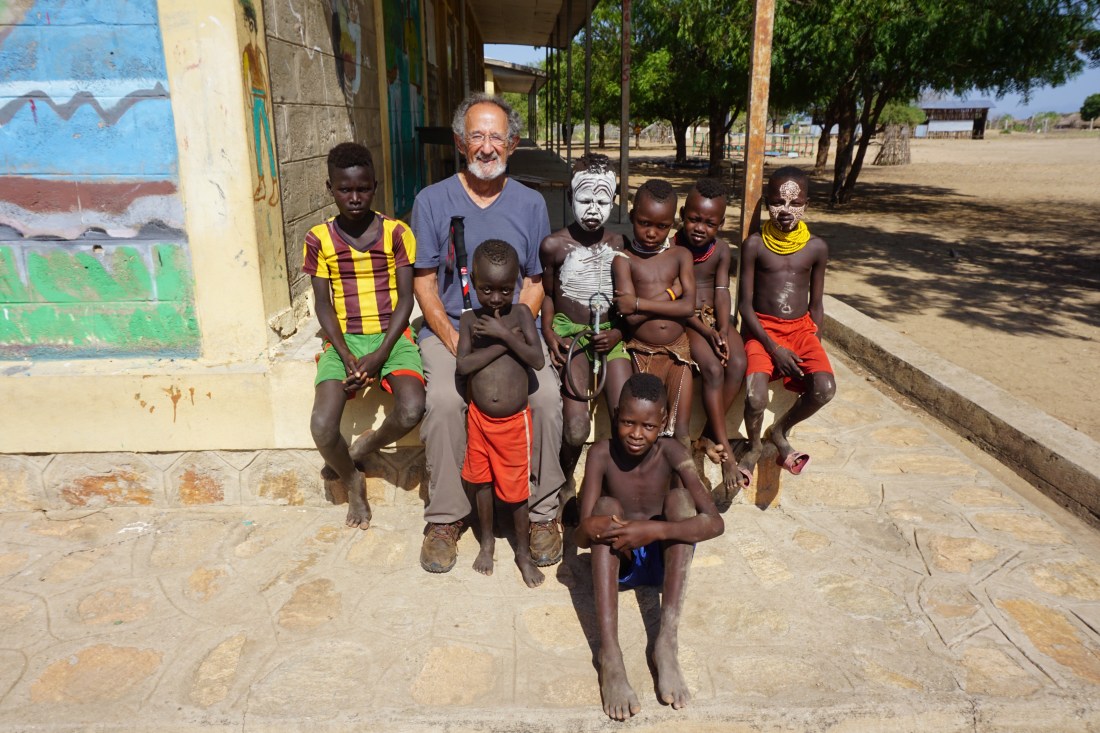
We visited the village school. For some of these tribes education is not embraced as the older generation feel their culture will be lost if the children are educated. This school was built by Save the Children.

DSC02169

Our guide said the teachers come from Tumi but soon they will have a teacher who lives in the village.

DSC02171

DSC02180

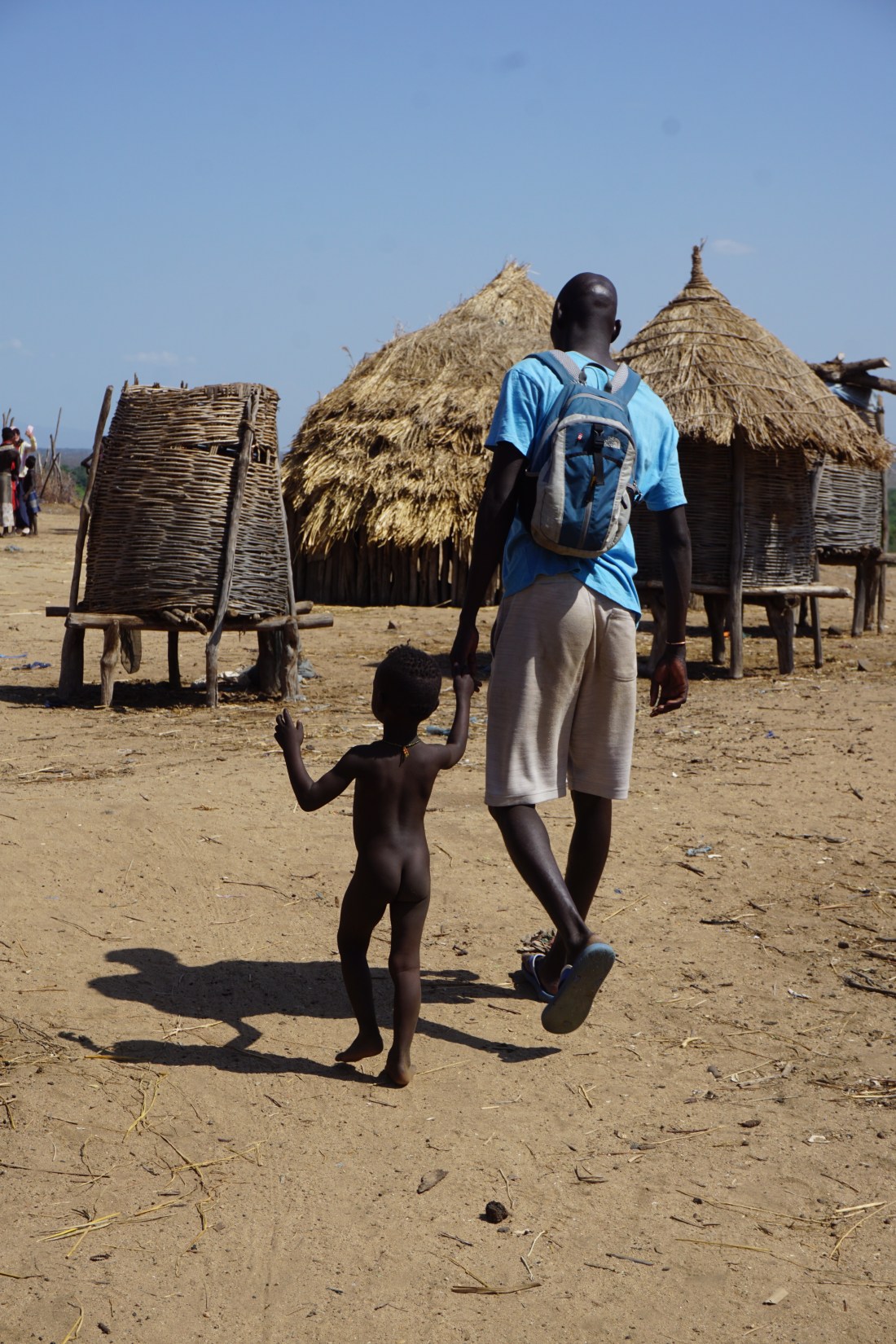
Our guide with his nephew.

DSC02197

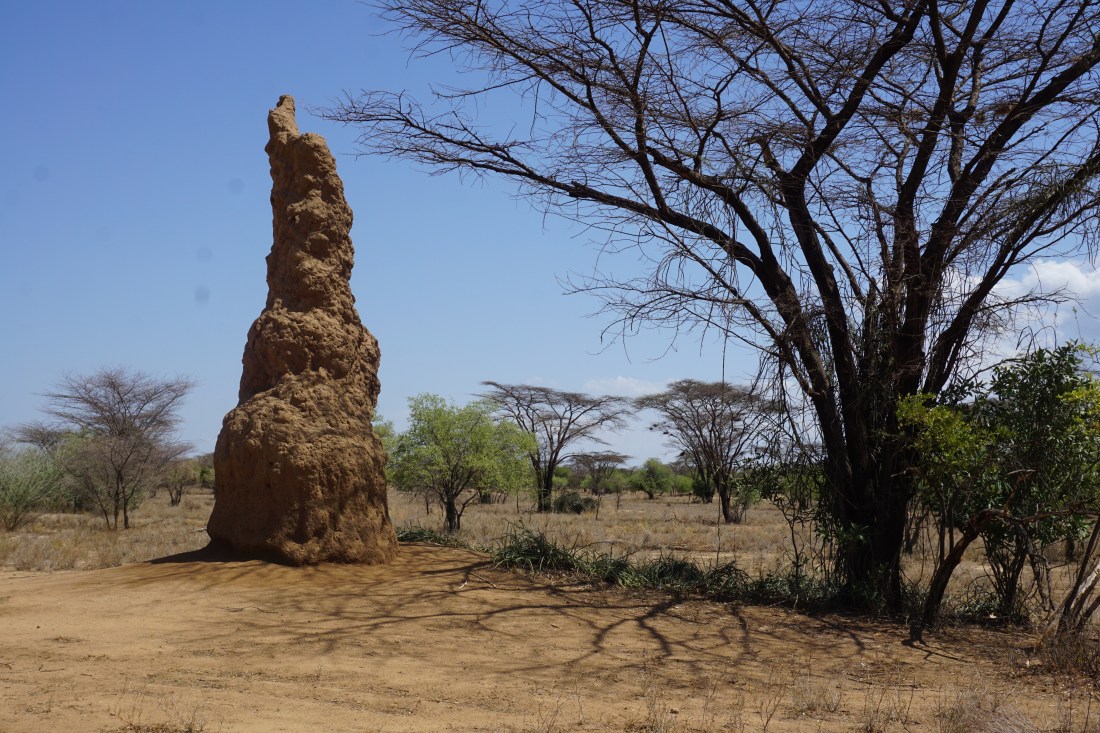
A great variety of termite homes everywhere. All shapes and sizes.

DSC02235


DSC02249

Southern Ethiopia – Dimeka

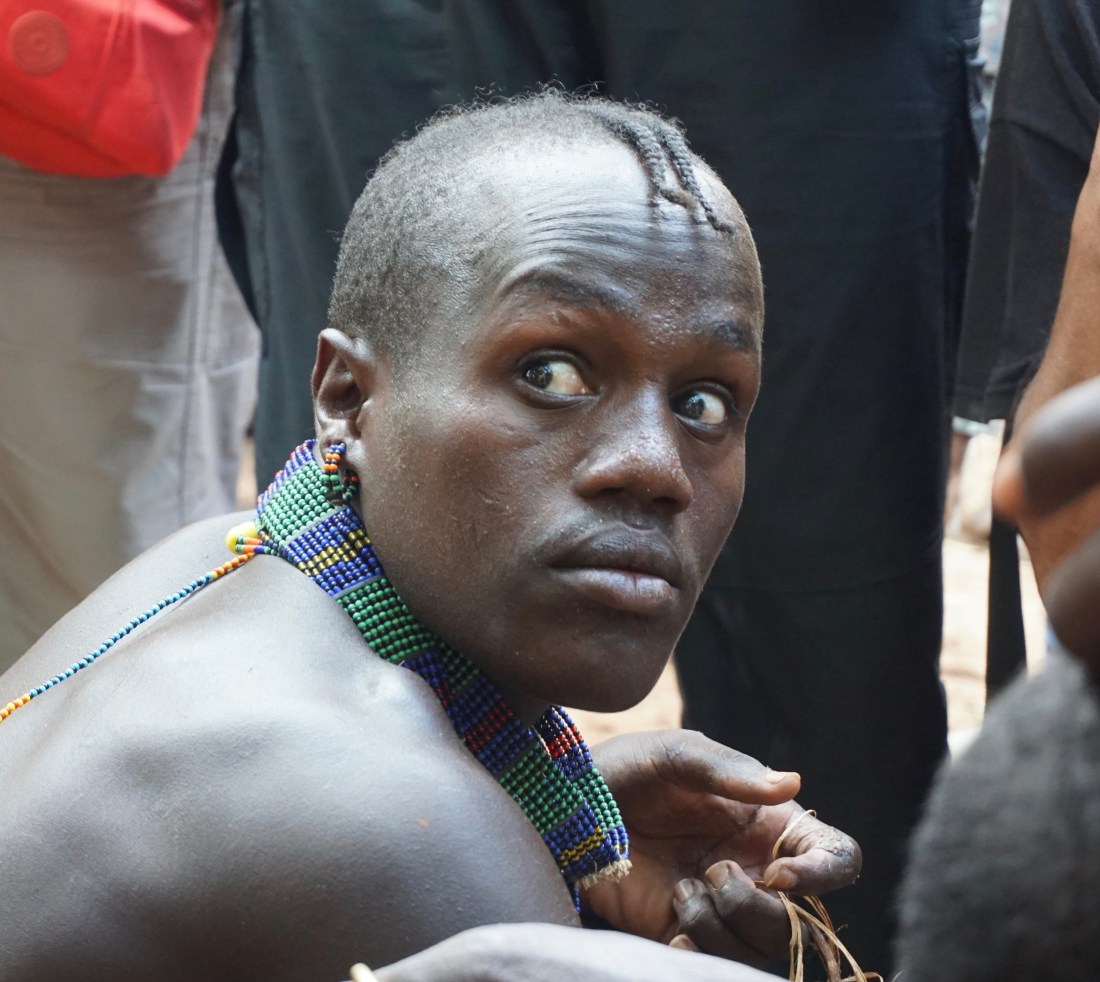
After this market in Dimeka we went to see a traditional bull jumping ceremony.

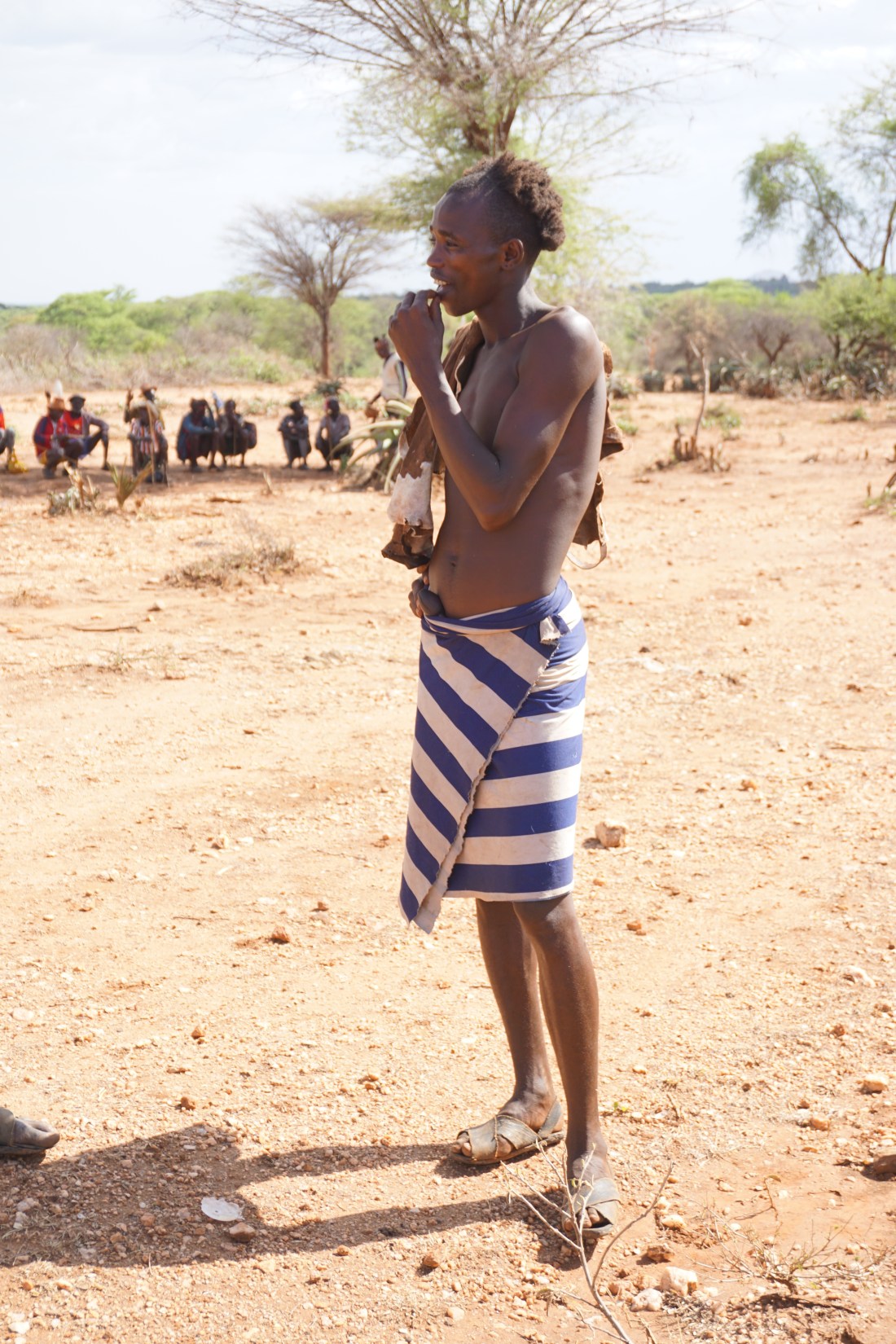
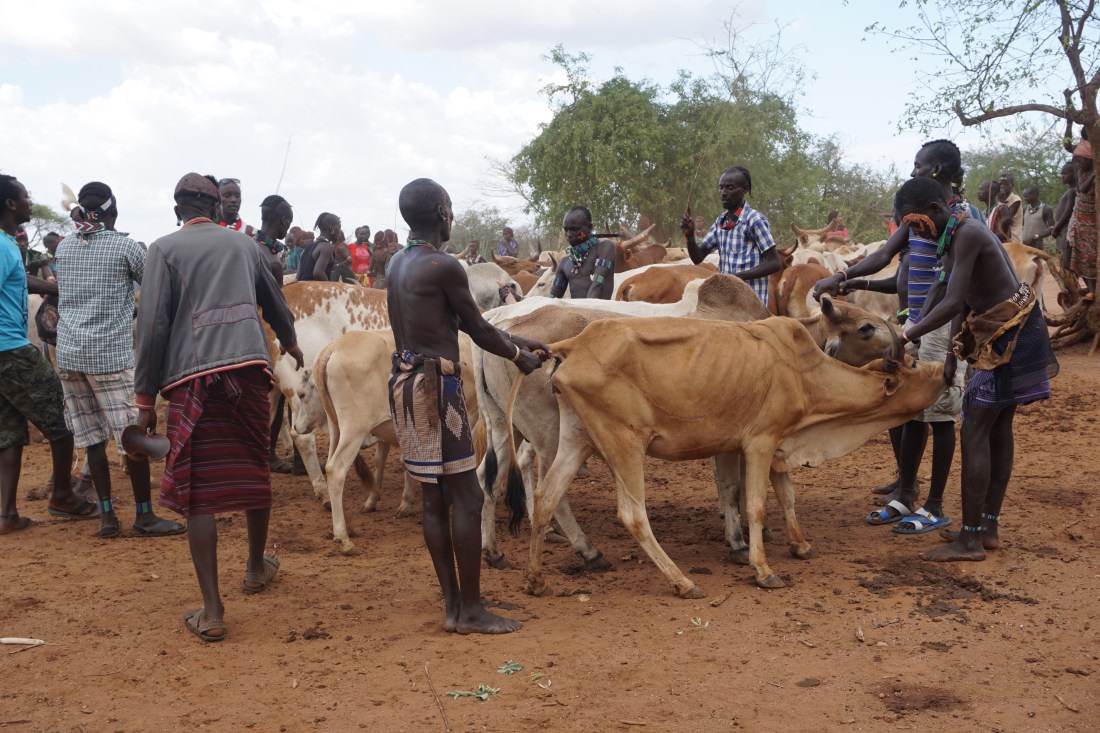
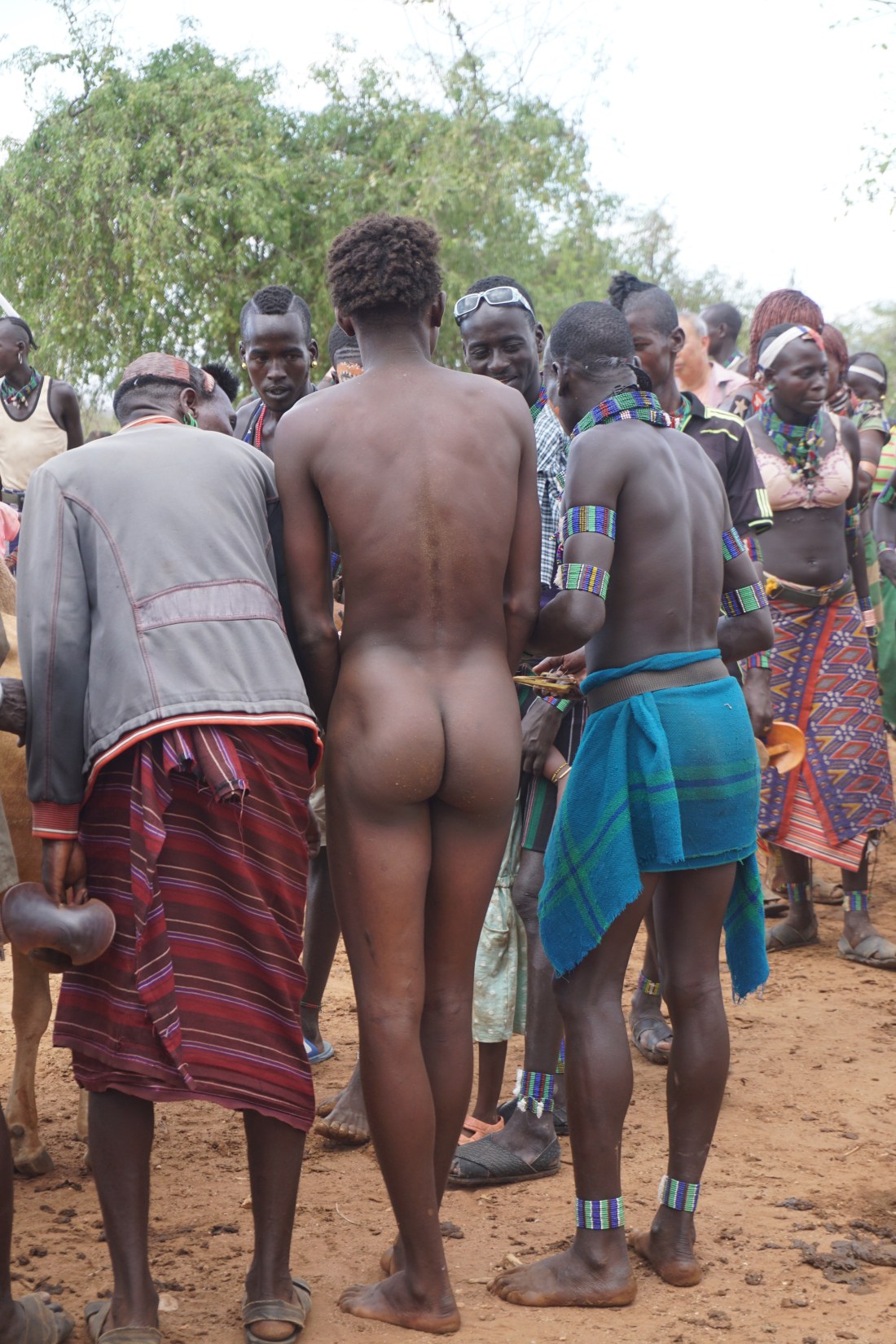
The Bull Jumping Ceremony is where a young boy jumps lines of bulls to show the community that he is old and mature enough to carry the responsibility of marriage. Once completed successfully his father will choose a wife for him from another Hamer village. This is the young man who the ceremony was for today.

DSC02121


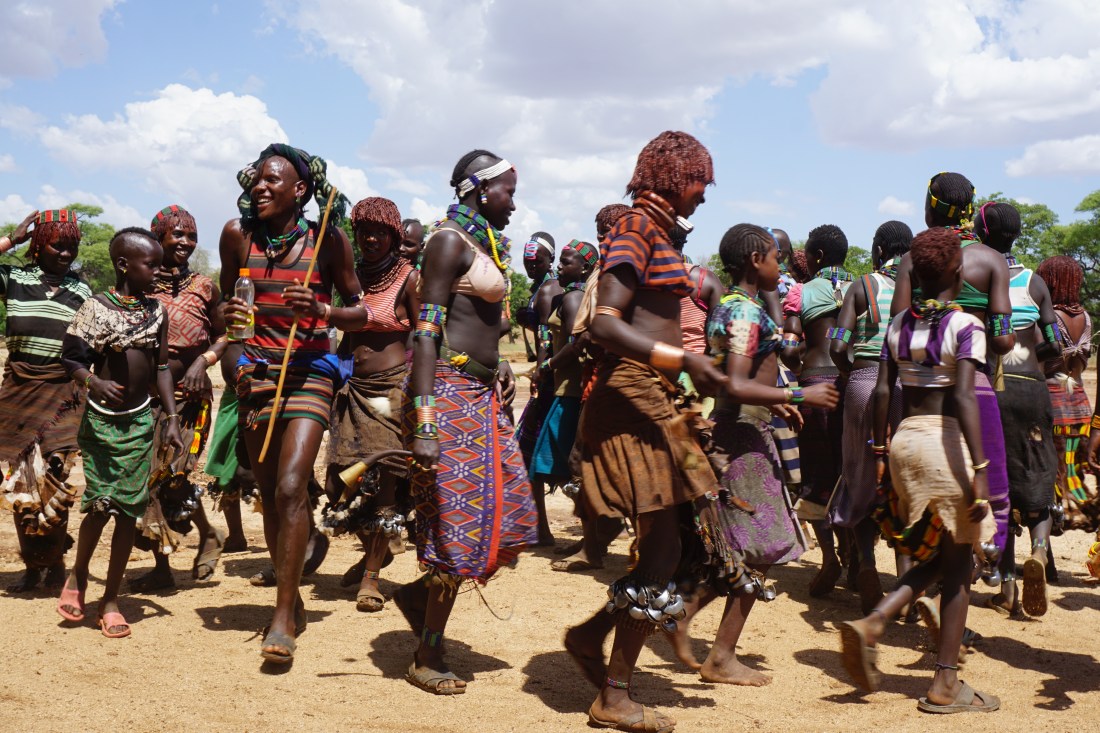
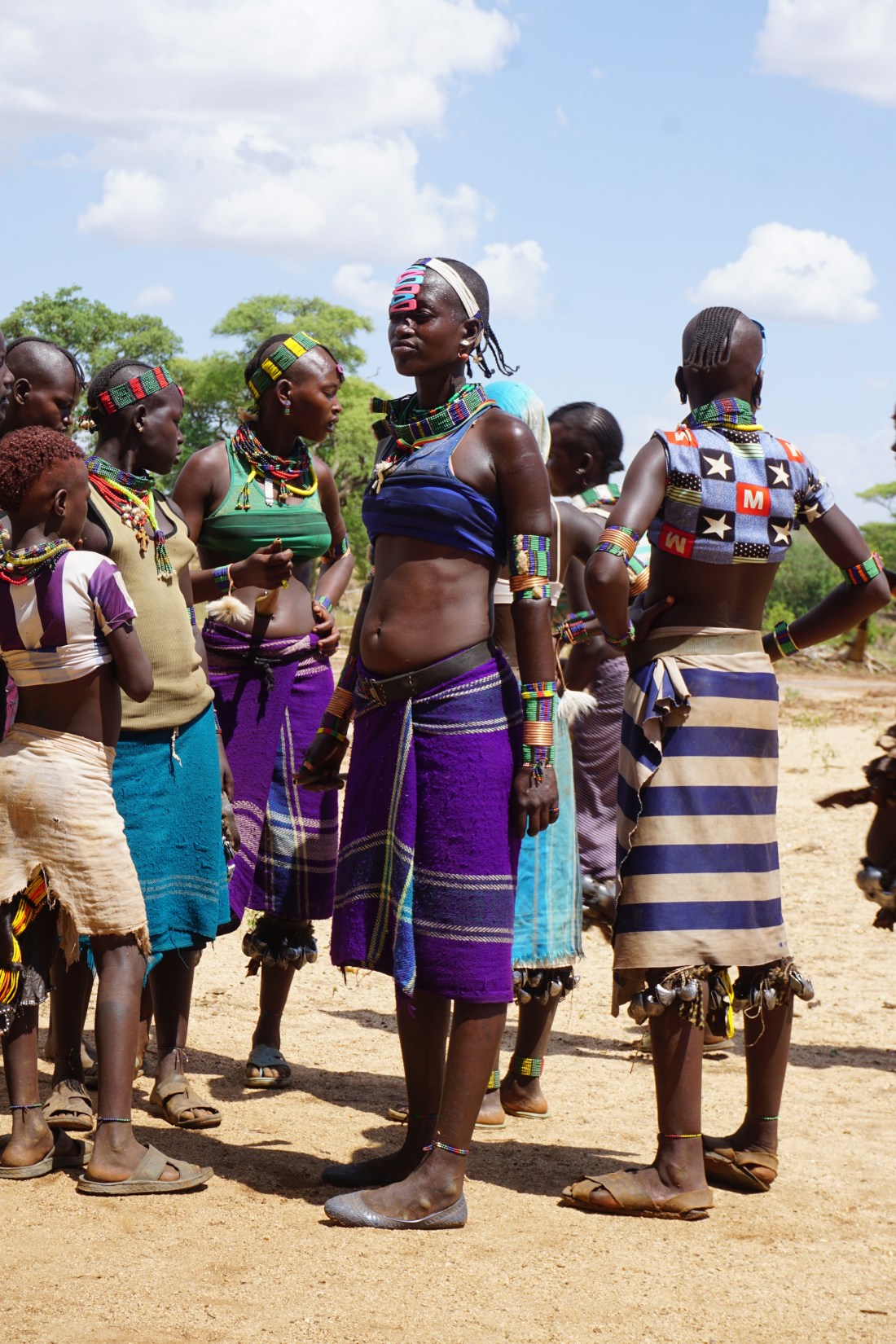
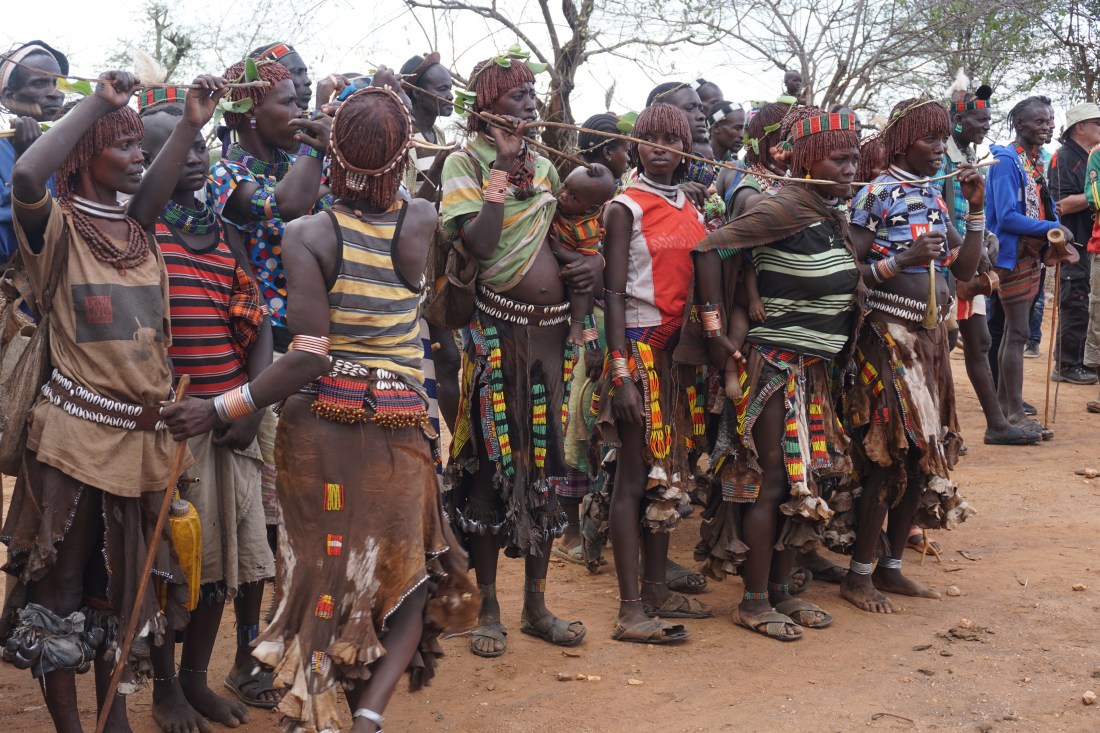
The ceremony begins with the young women from the community dancing for almost 2 hours in the heat. It was 32 that day.

DSC02029

So many striking women.

DSC02042

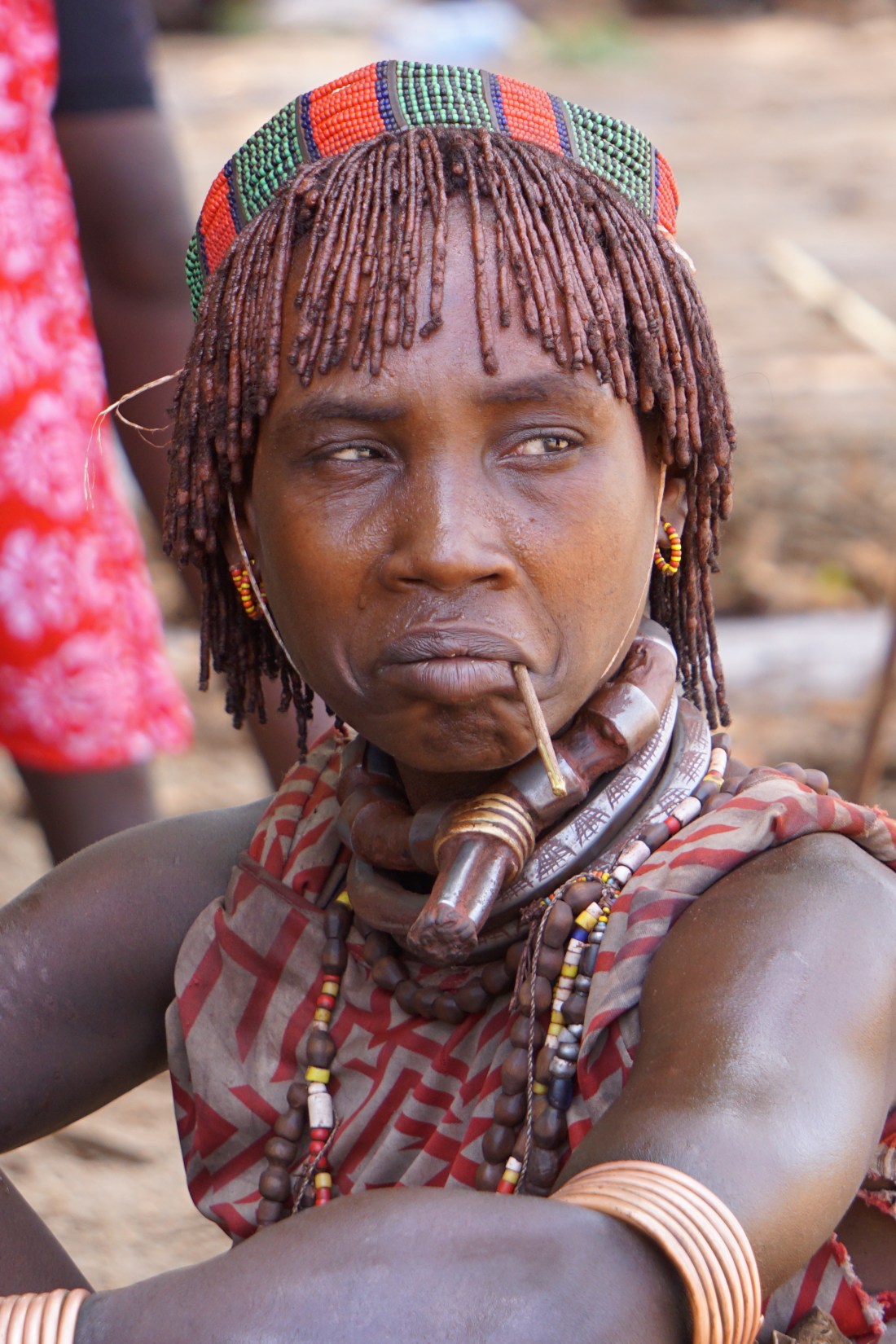
The necklace this woman is wearing with the extension in the front indicates she is a first wife.  Hamer men can have up to 3 wives. So many striking women and so much energy.

DSC02021

This woman would be a second wife as she has two necklaces without the larger one.

DSC02039


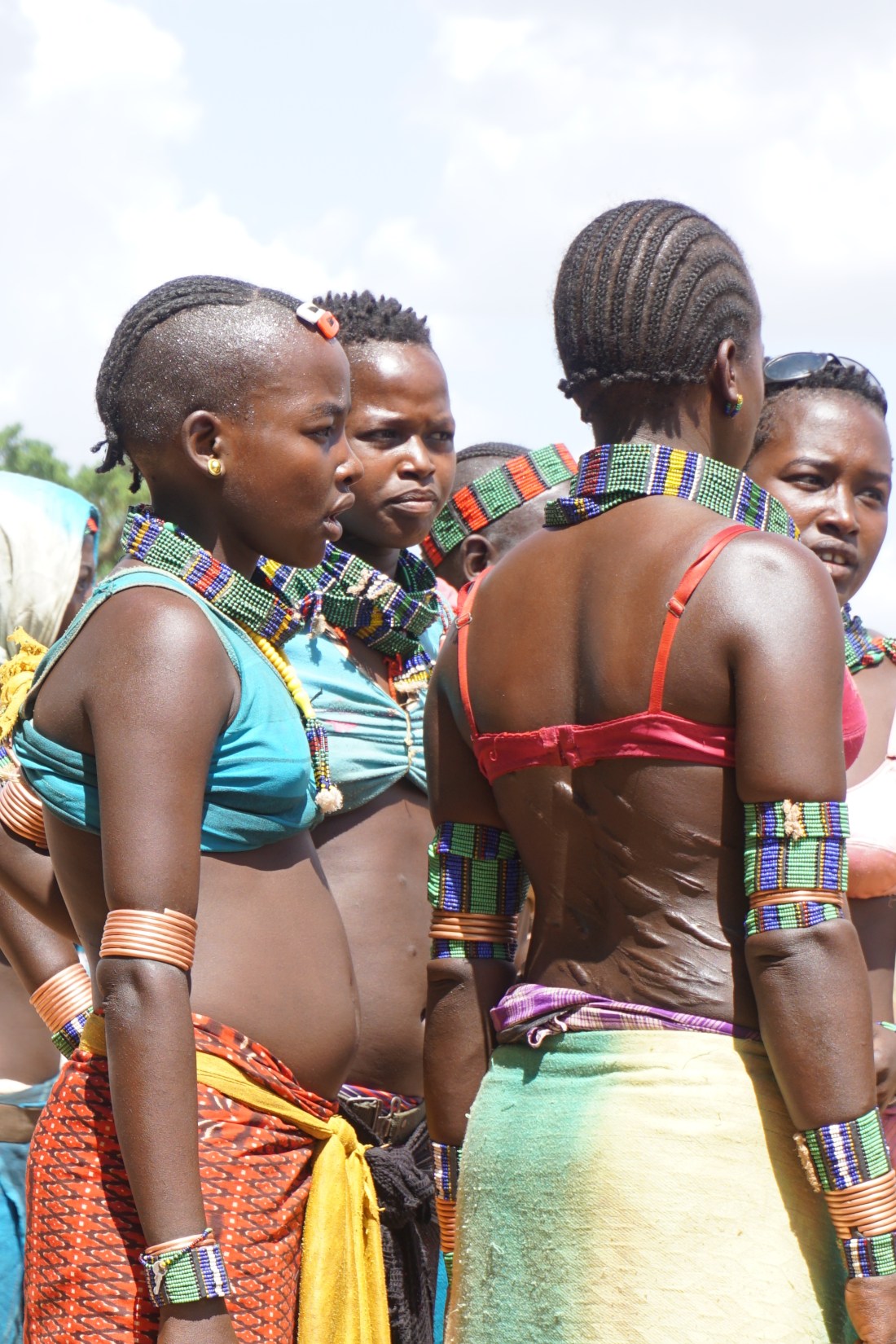
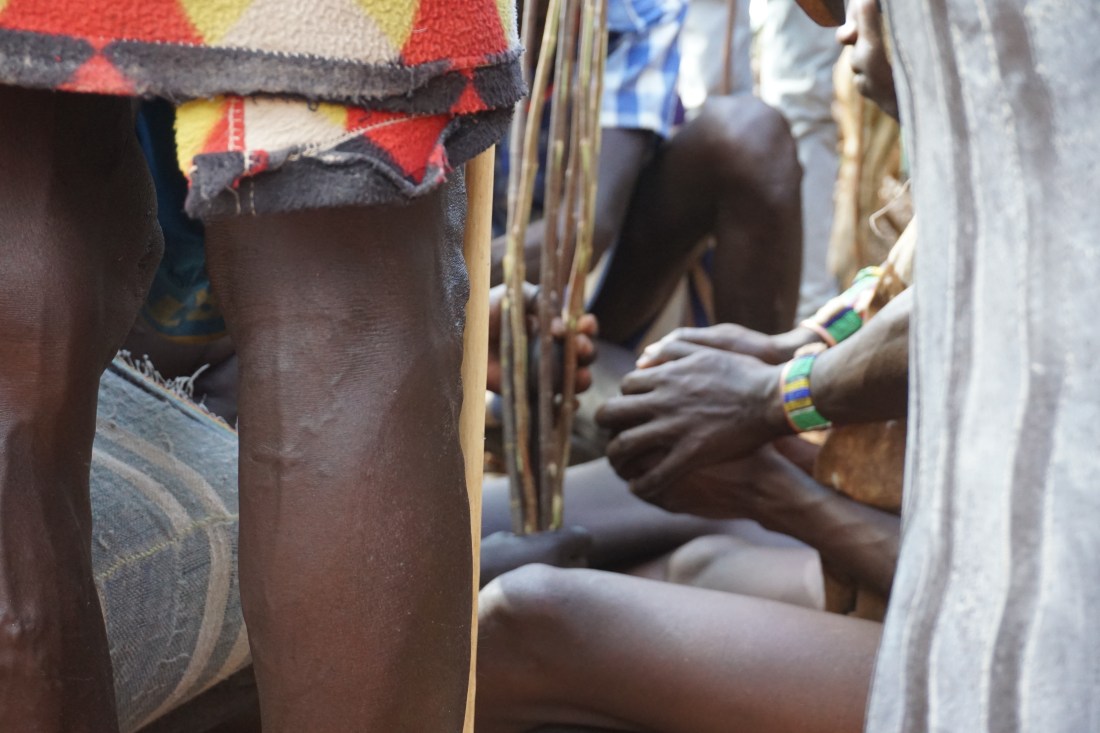
The next part of the ceremony is called the whipping, rather barbaric from our perspective, but the young women are chased and whipped by the brothers and relatives of the young man the ceremony is for.

DSC02074


The scars are a symbol of the amount of suffering the women are willing to endure for their new husband’s family.

DSC02063

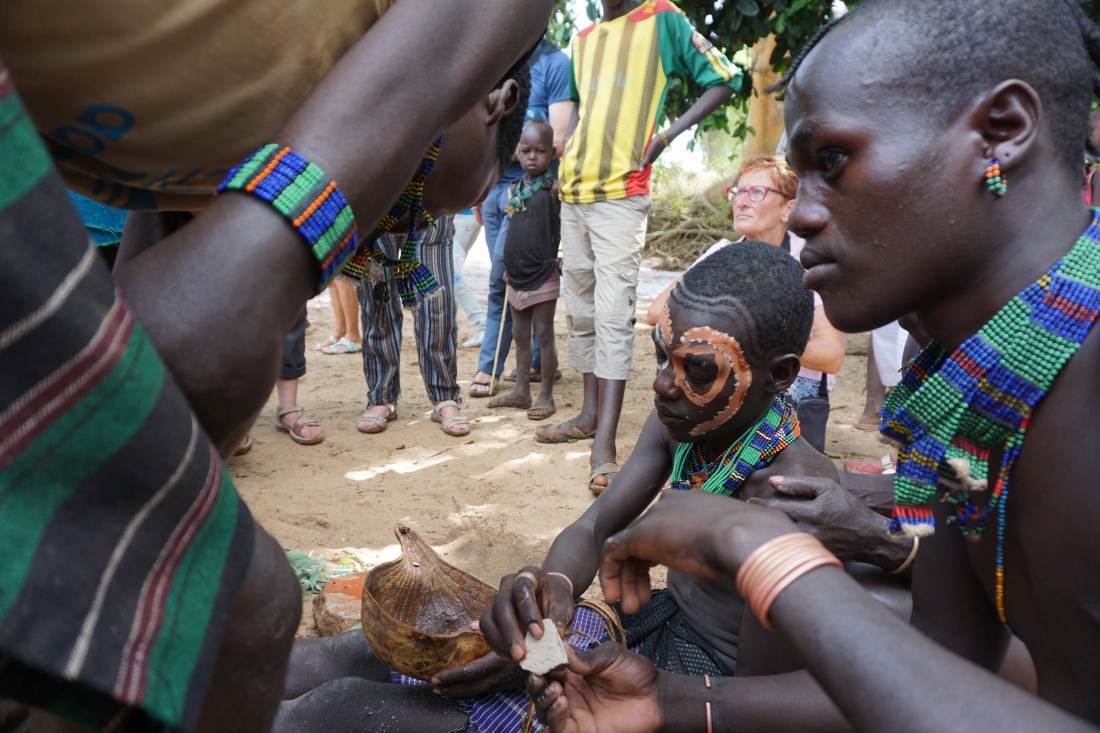
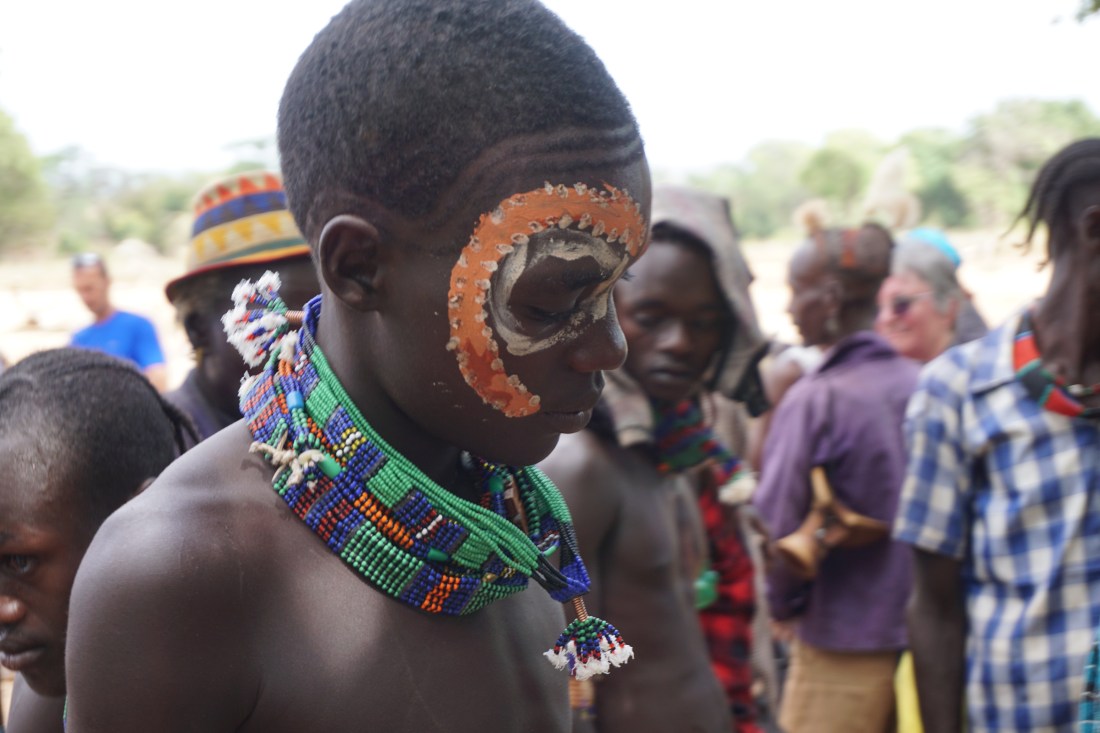
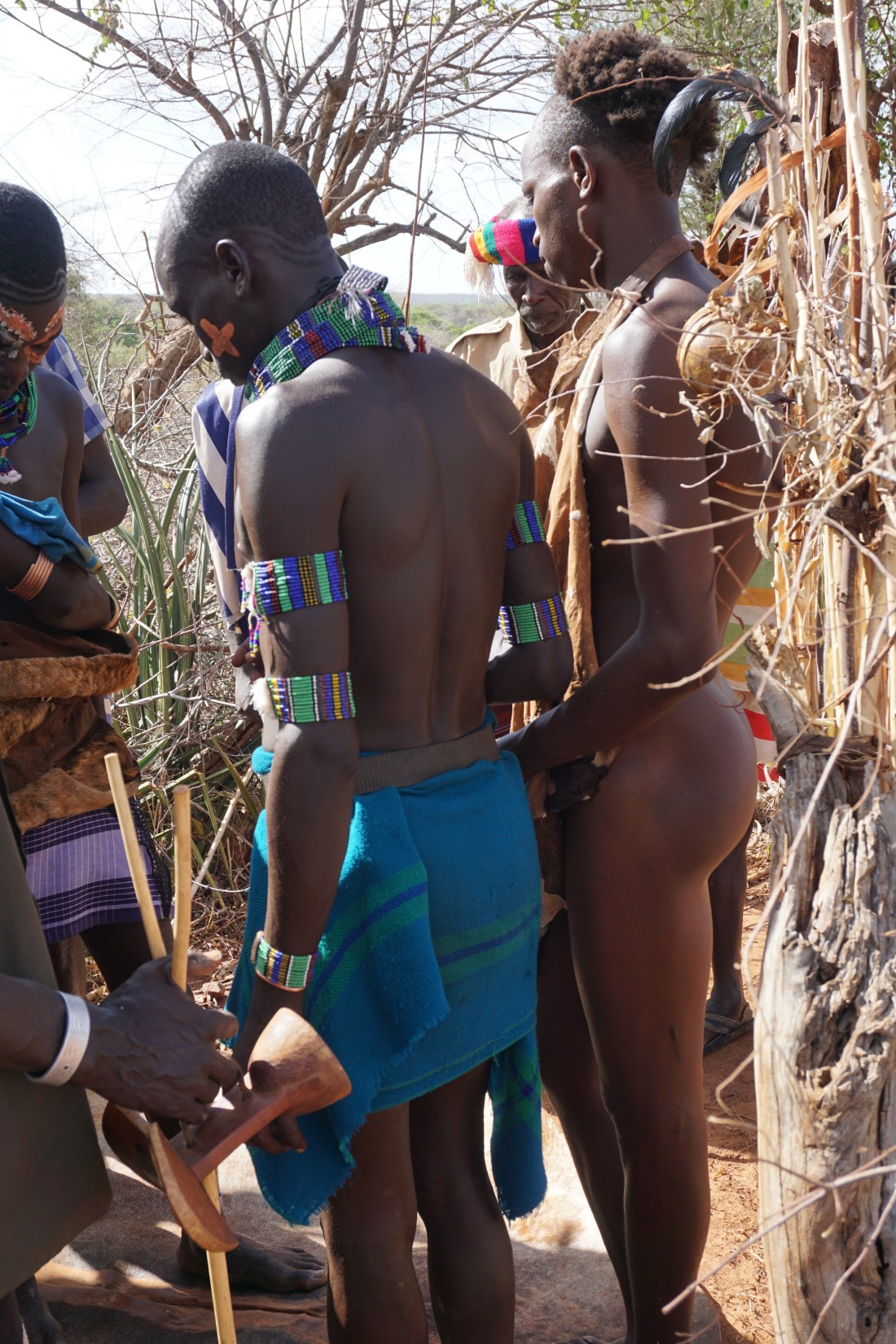
Next a painting of the young man for the next ceremony begins.

DSC02112

DSC02113

DSC02096

The new groom is blessed by the men of the his family and his wife to-be’ s family to ensure the passing on of the family lineage through the birth of many healthy children.

DSC02132

DSC02129

New the bulls are selected for the jumping.

DSC02141

While everyone watches.

DSC02117

DSC02144

Getting ready to begin..

DSC02145and finally the jumping.

Our wonderful accommodations that evening.


Southern Ethiopia – Turmi – Dimeka – Omorate

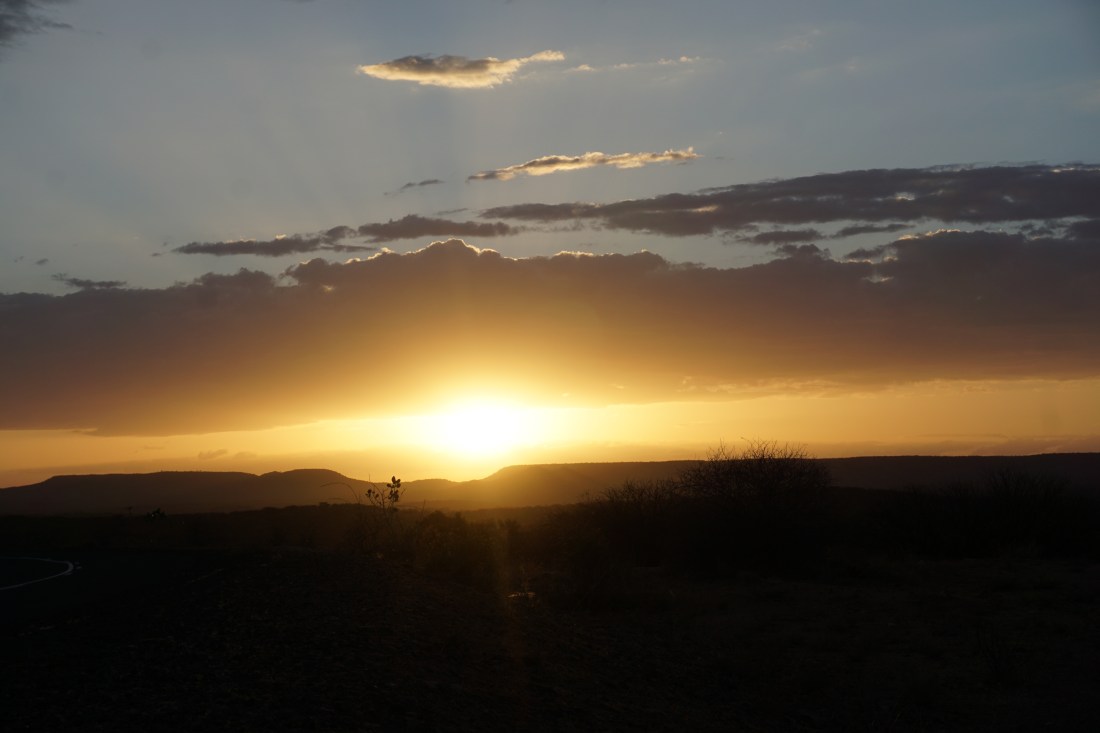
The 6:00 start today allowed us to see the beautiful sunrise

DSC01754

These plants line the roads and though they look like fruit are just large pods that are very dangerous.  Messin, our driver said just a tiny drop of the milk from the pod will cause instant blindness.

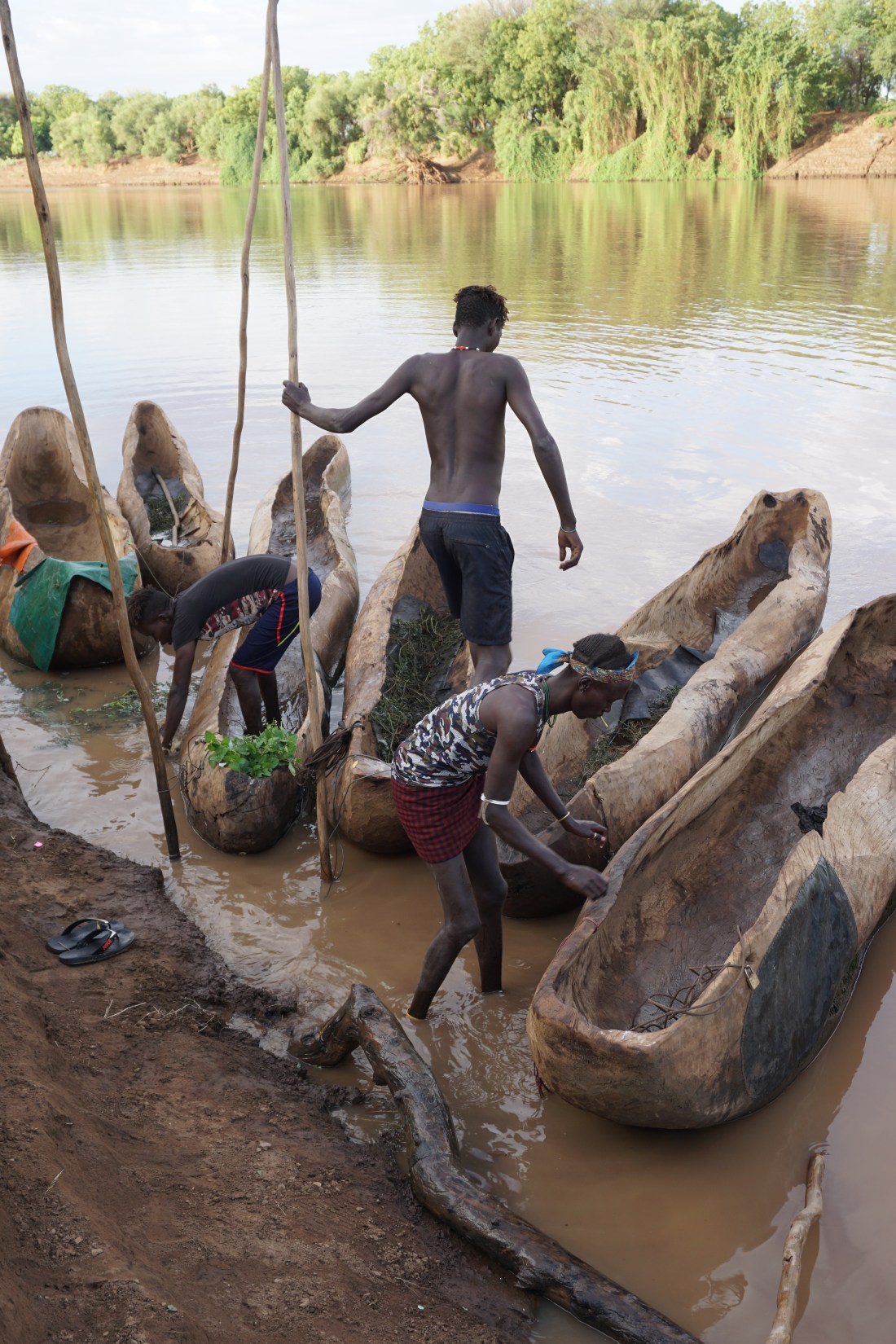
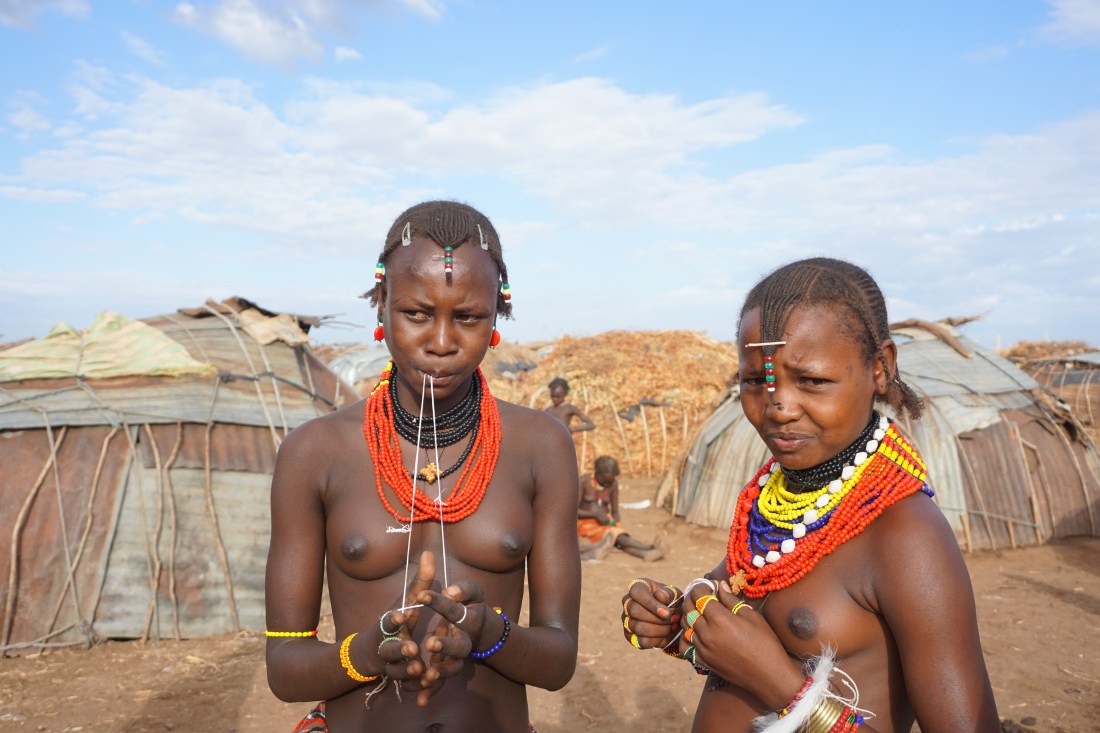
We drove to the Omorate area and took a donta, the name of the boat made from one piece of wood across the Omo River to the village of the Dasenech people. The Omo flows into Lake Turkana.

DSC01768

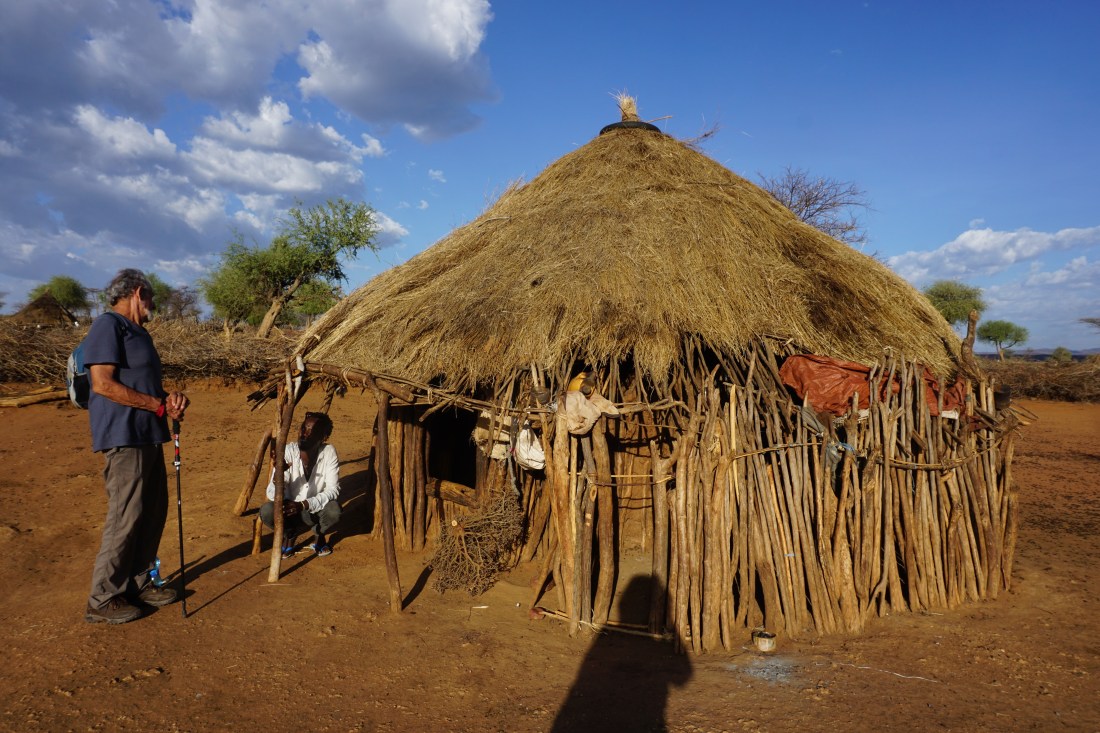
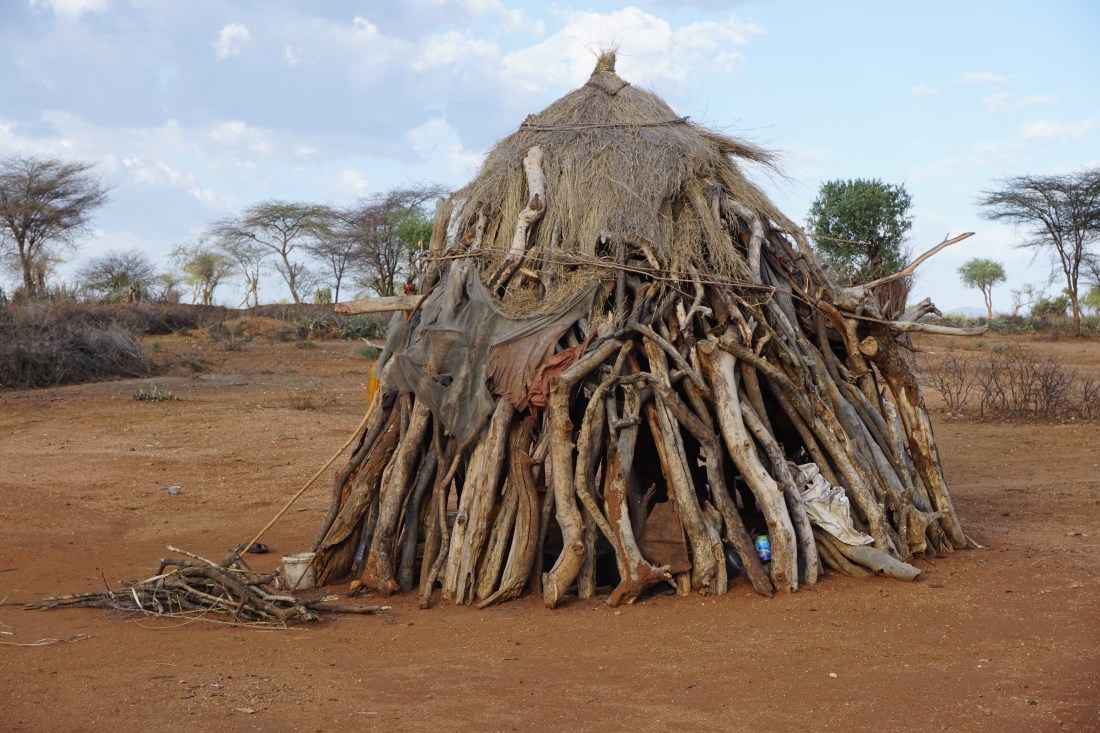
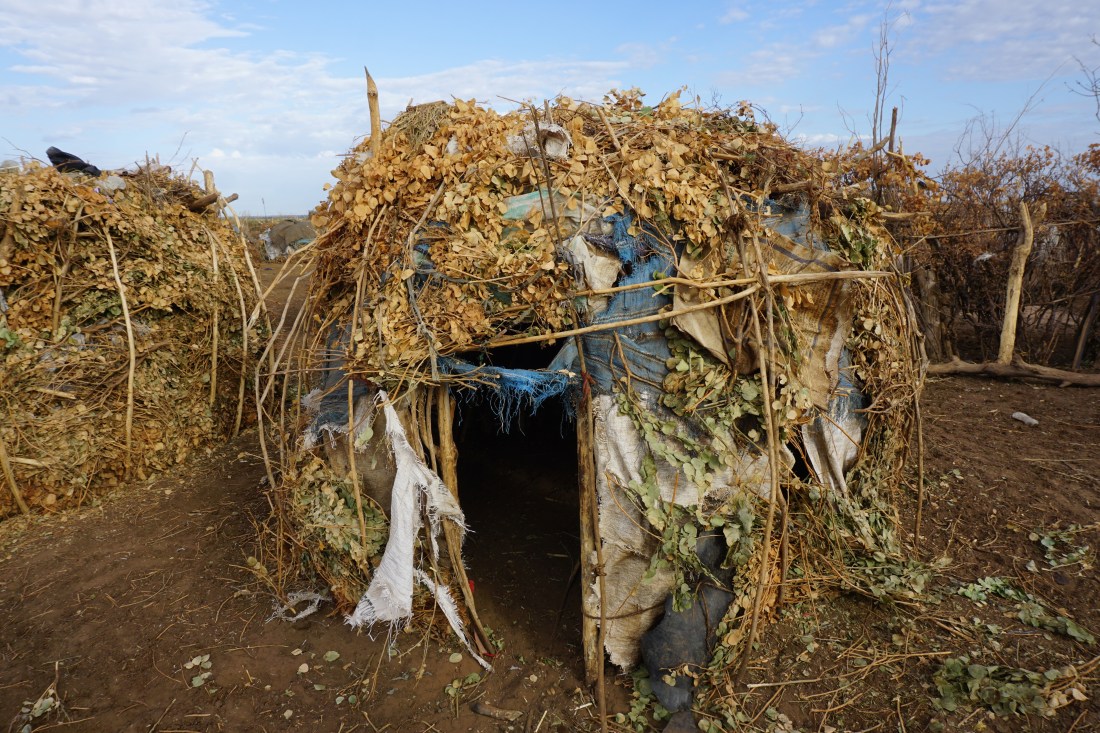
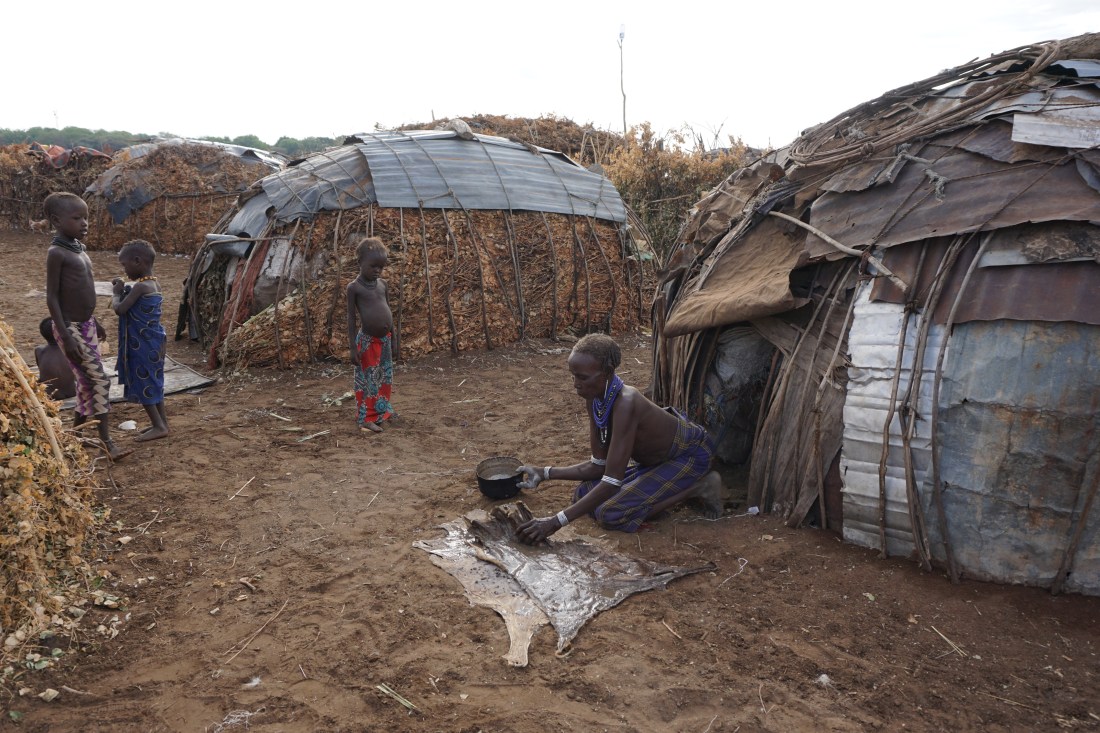
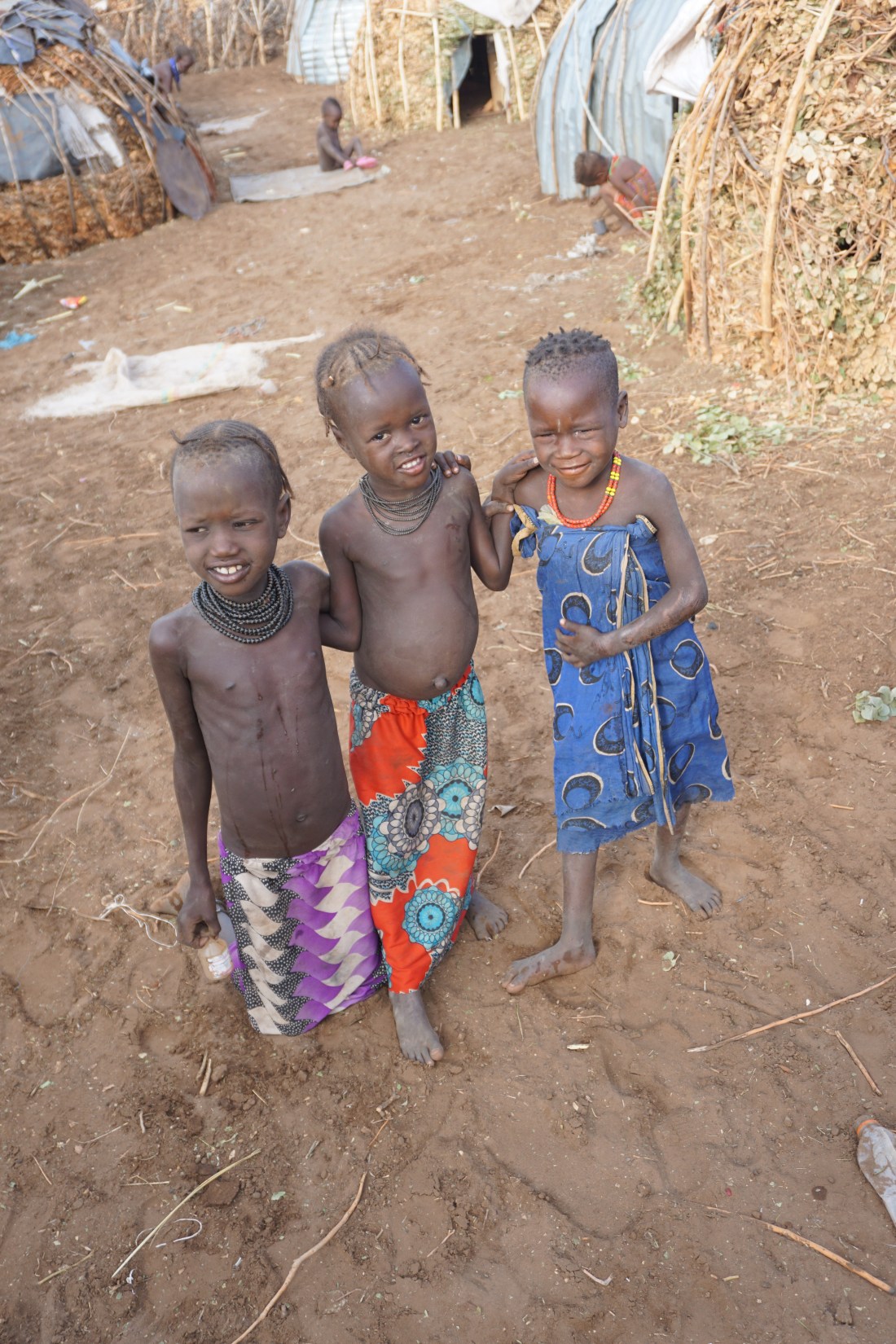
The village homes are dome shaped, made from wood and covered with anything available.

DSC01796

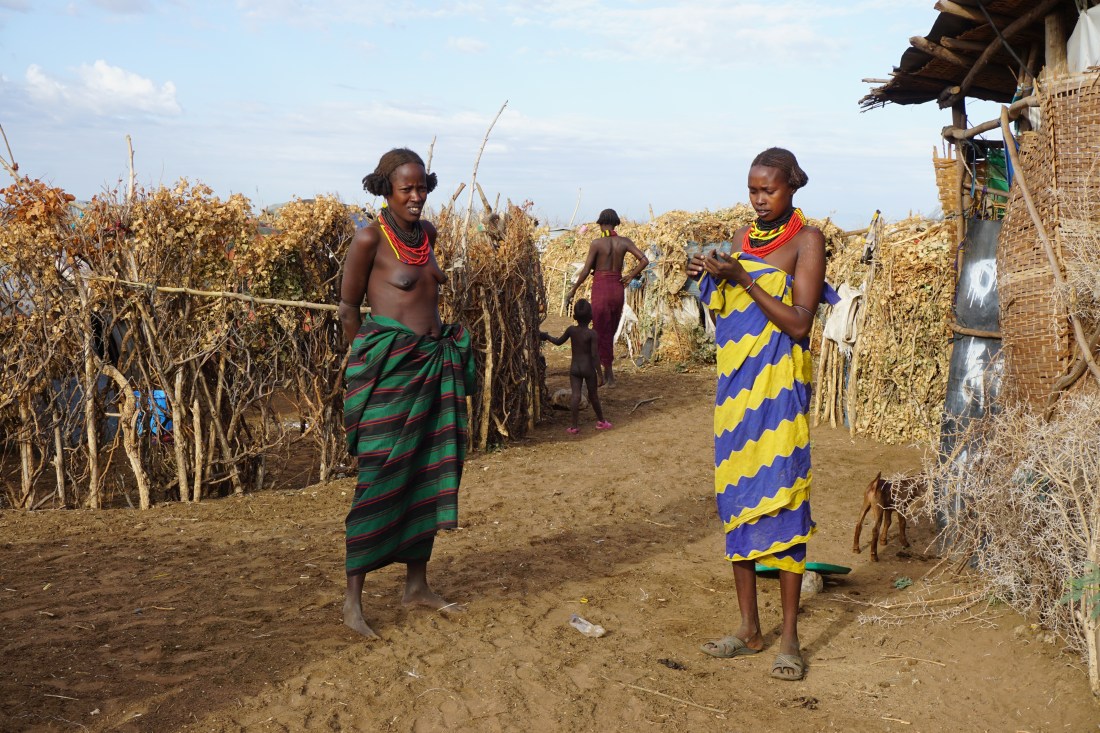
I paid a fee of 200 birr to allow me to take photos in the village to the woman on the right which she is counting.

DSC01783

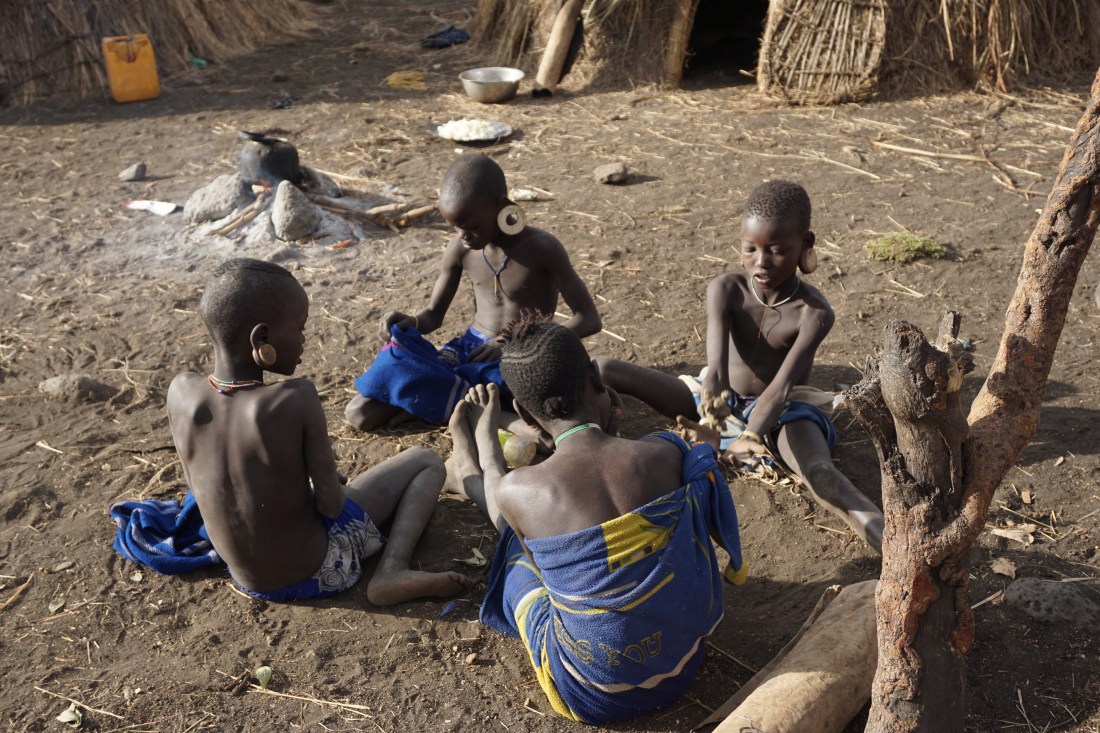
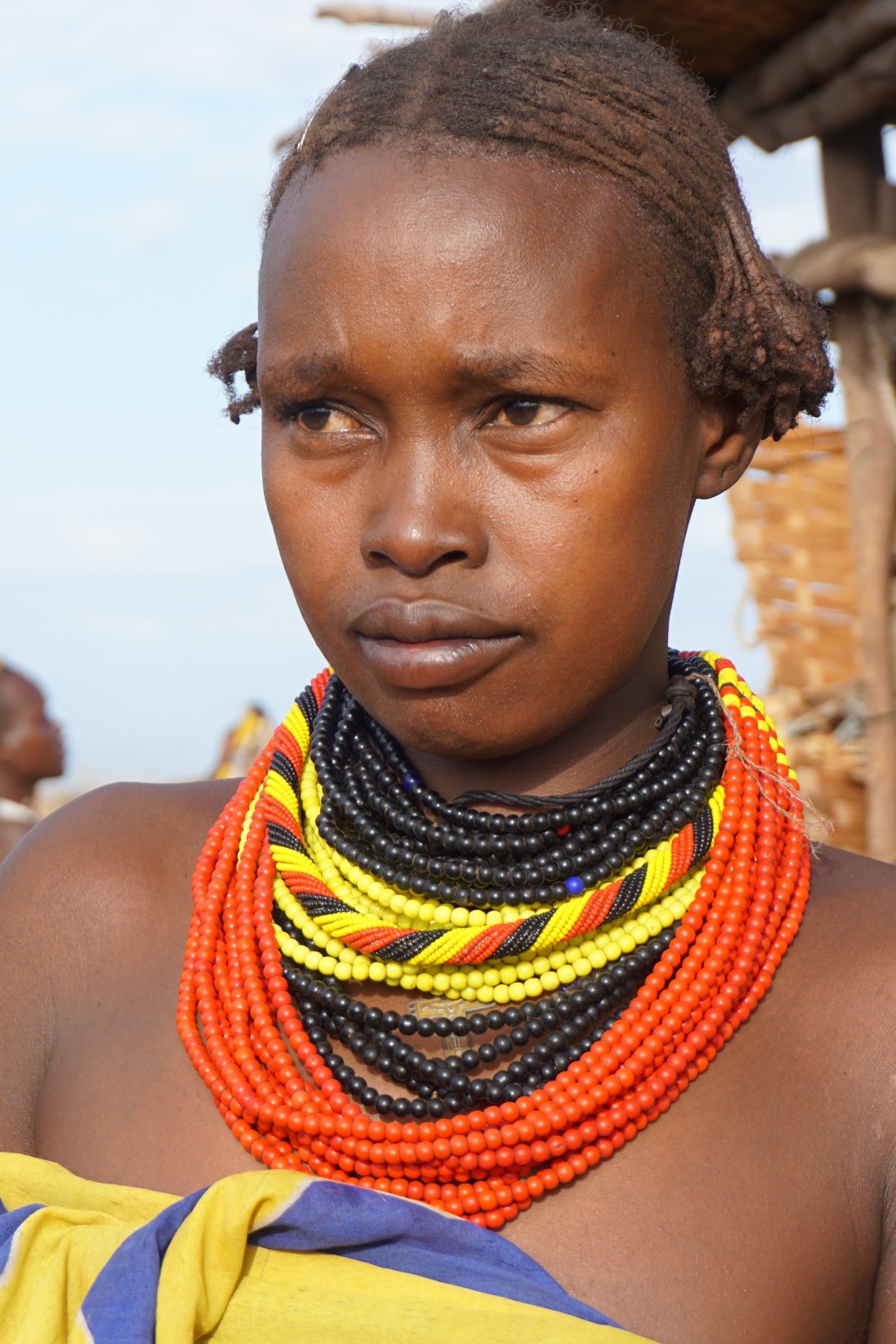
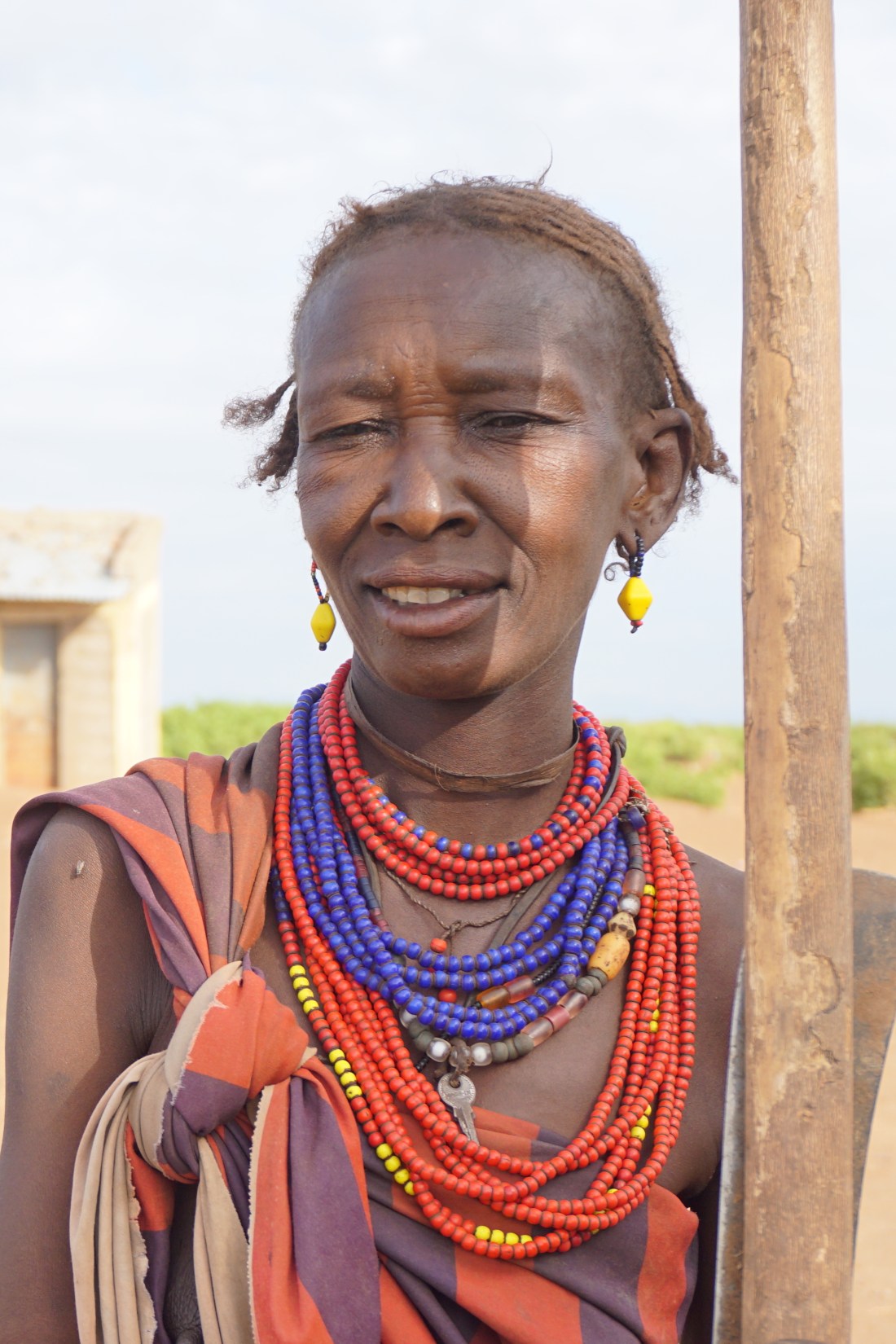
Hair styles of the women vary according to whether they are single, married without children or married with children.

DSC01787

Mens’ hair is also very ornate. This young man is decorating a small stool the men carry for sitting on and for resting their heads on when they sleep.

The young girls as well as older girls were playing string games.


DSC01826

Softening a goat hide.
DSC01806

DSC01799

Village elders.
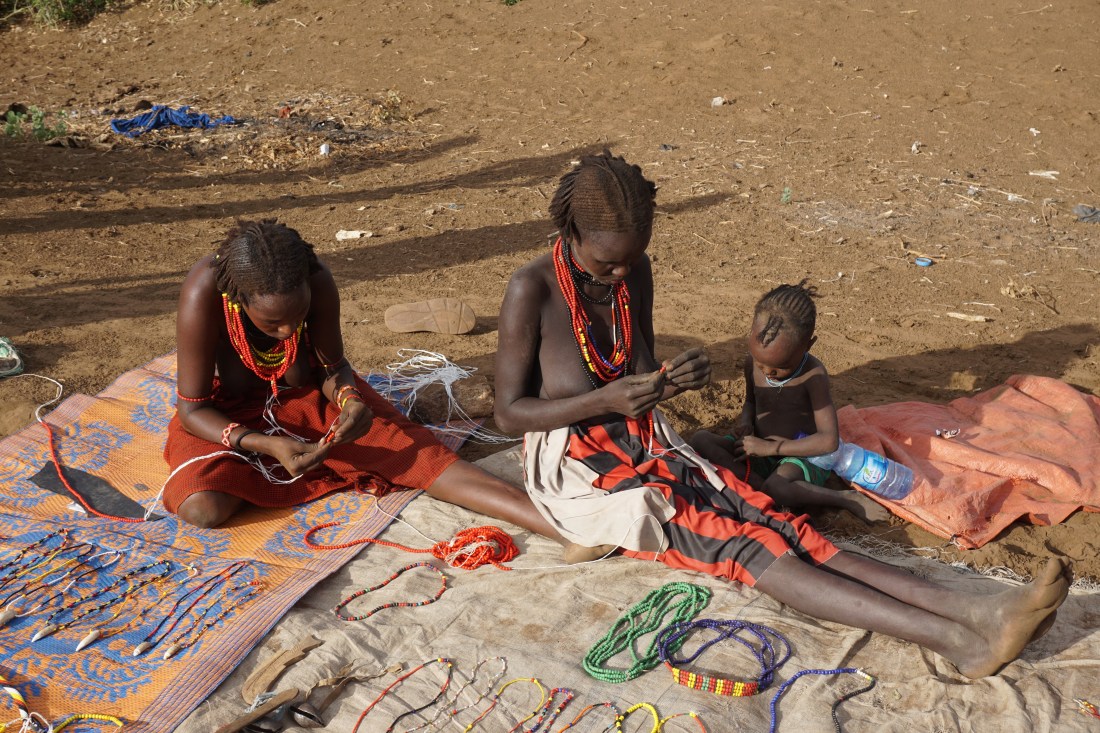
Working on crafts to take to the market.

DSC01841

DSC01881

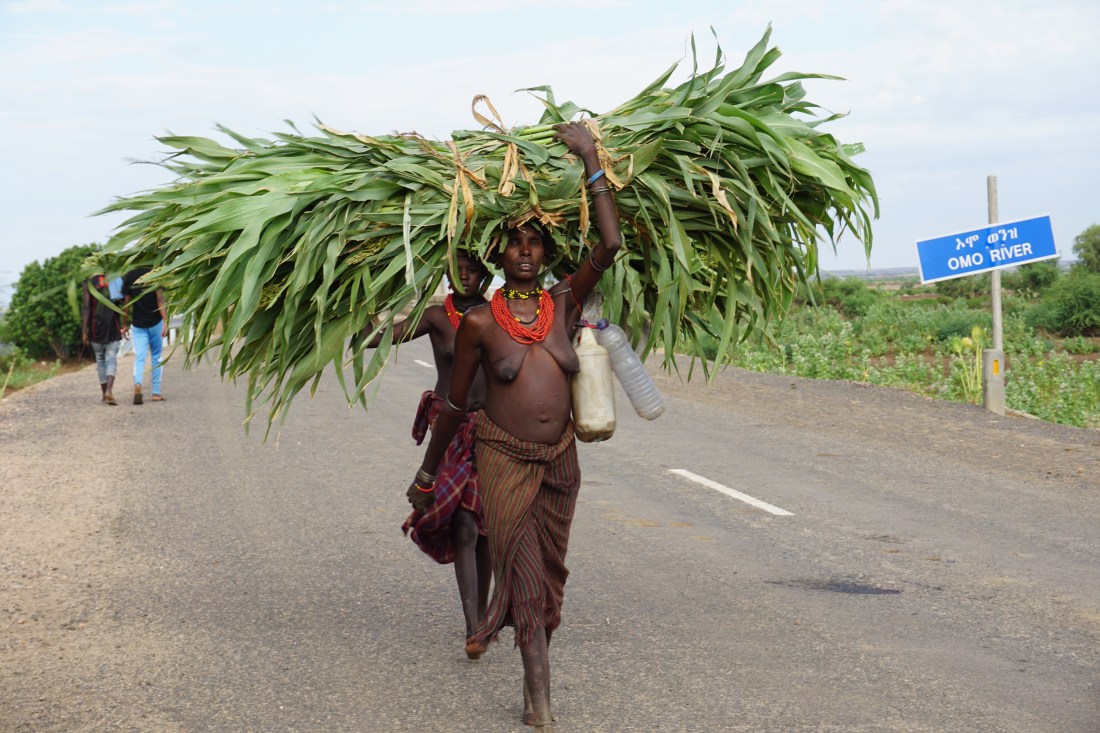
Amazing to see how much they carry.

DSC01884

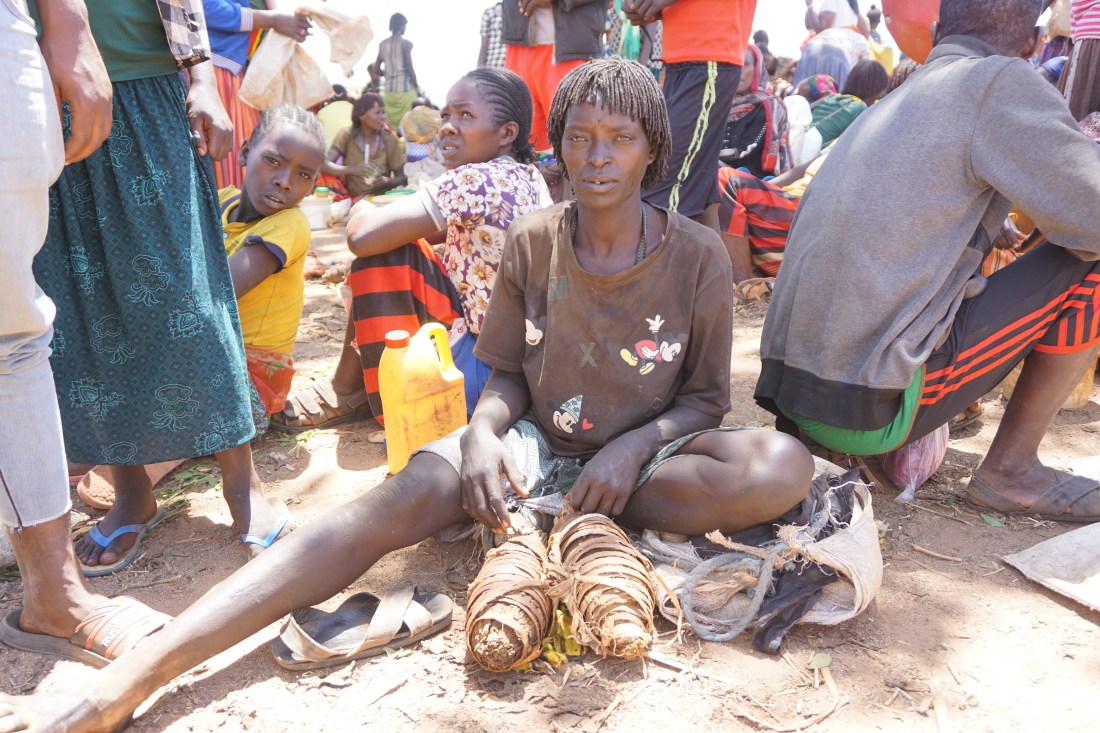
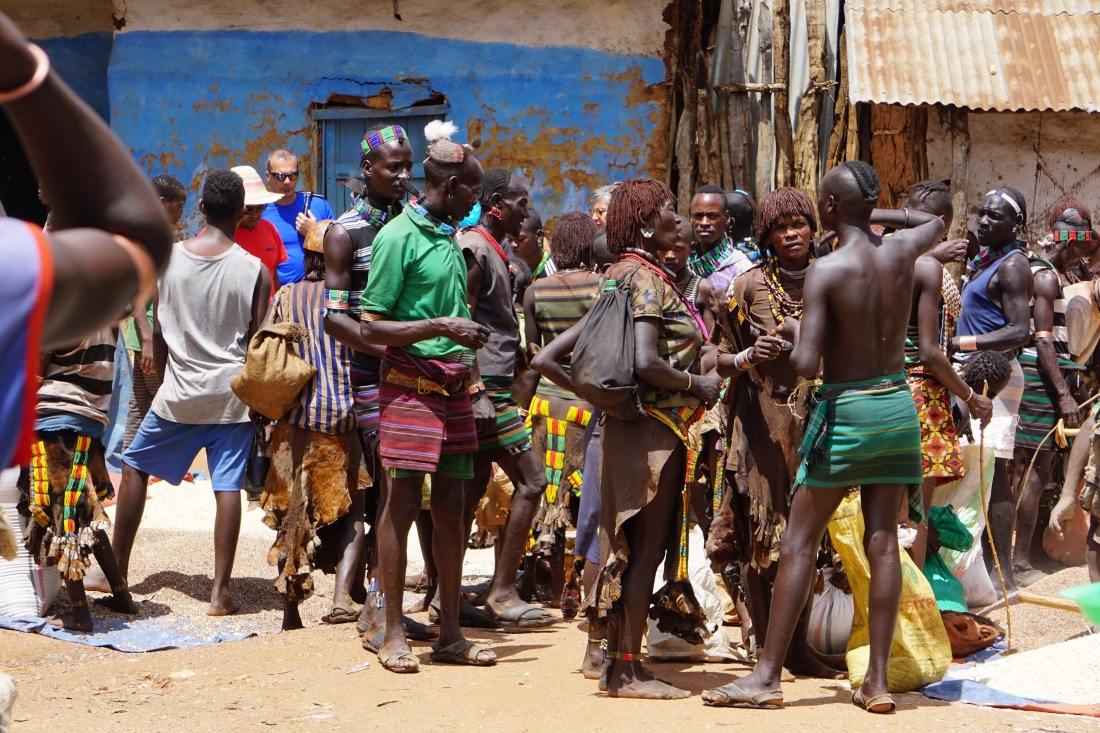
From this village we went to the market in Dimeka which is considered to be one of the unspoiled markets in Ethiopia.  Hamer people from three different areas come to this market.

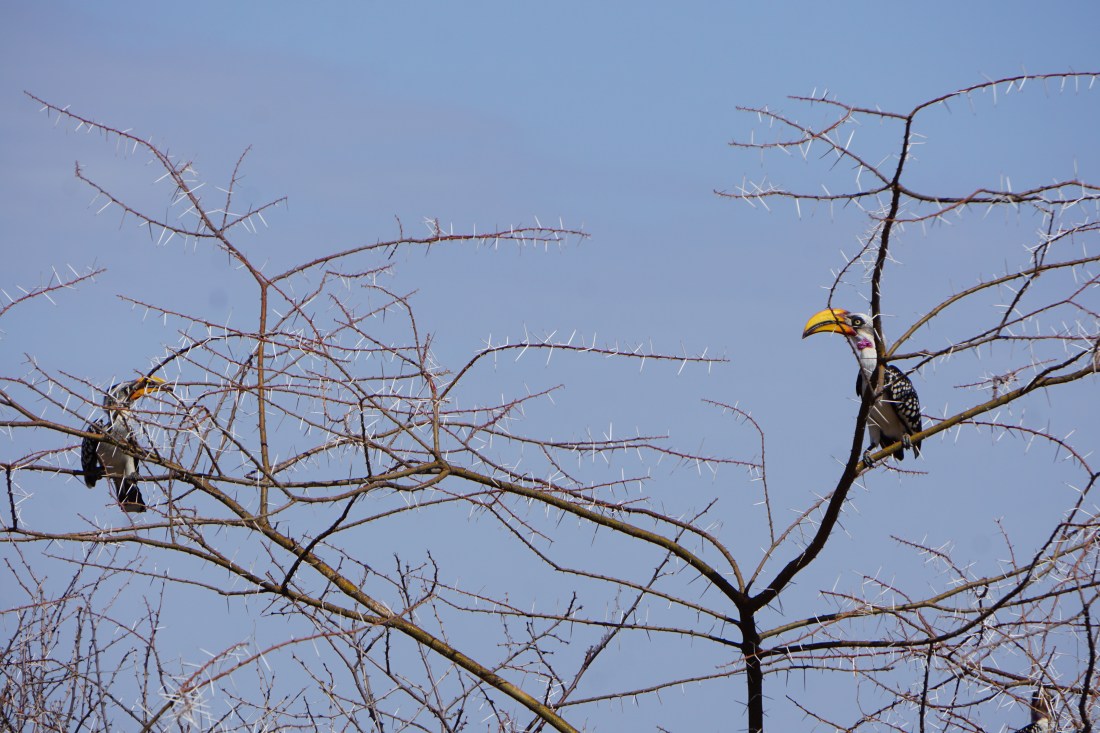
We spotted some very interesting birds on the way.
DSC01898

DSC01906

Coffee in the shade at the market.  Ethiopian coffee is very strong and very smooth.
DSC01921

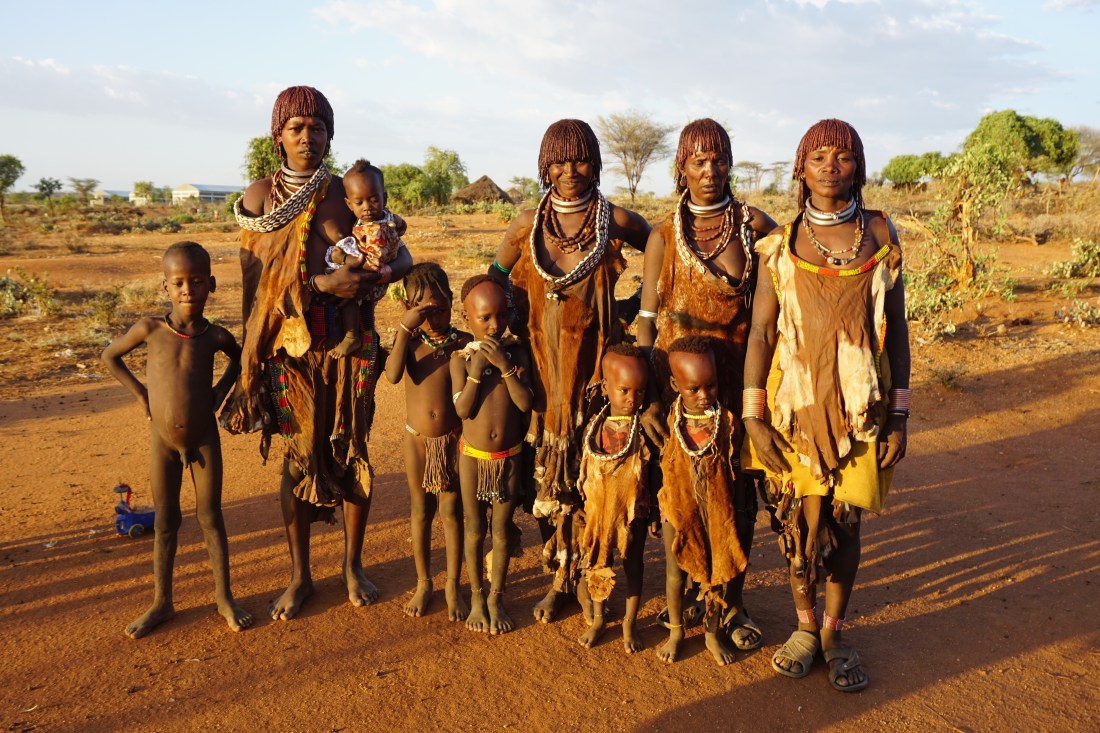
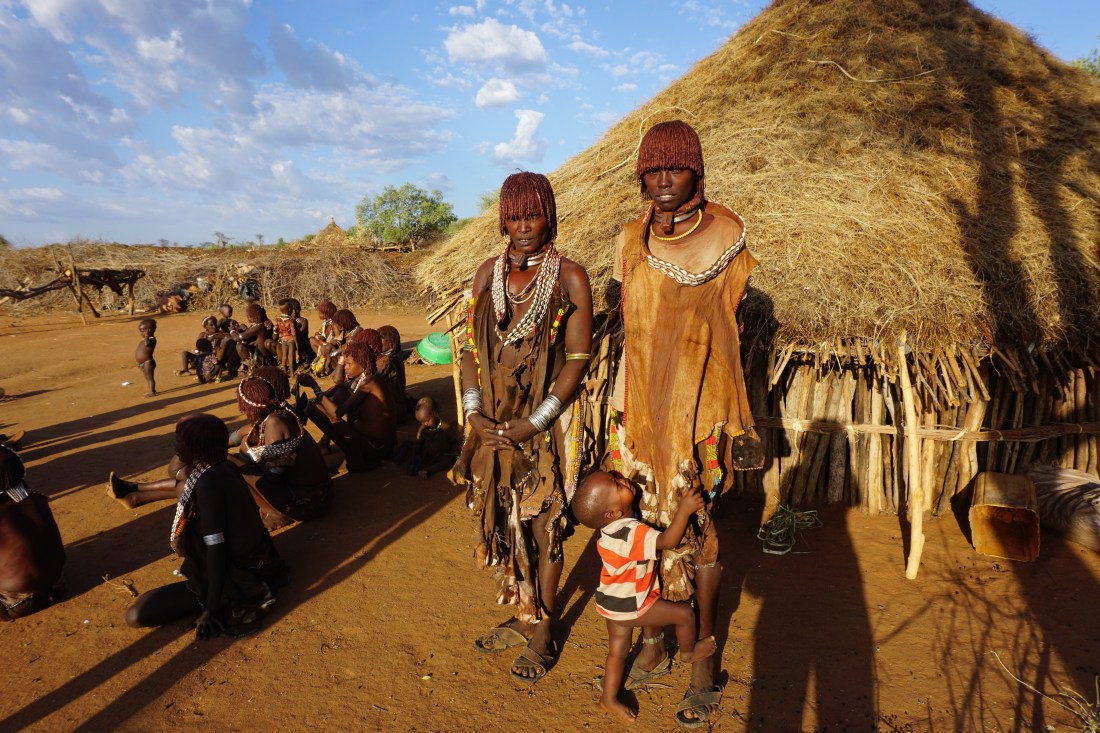
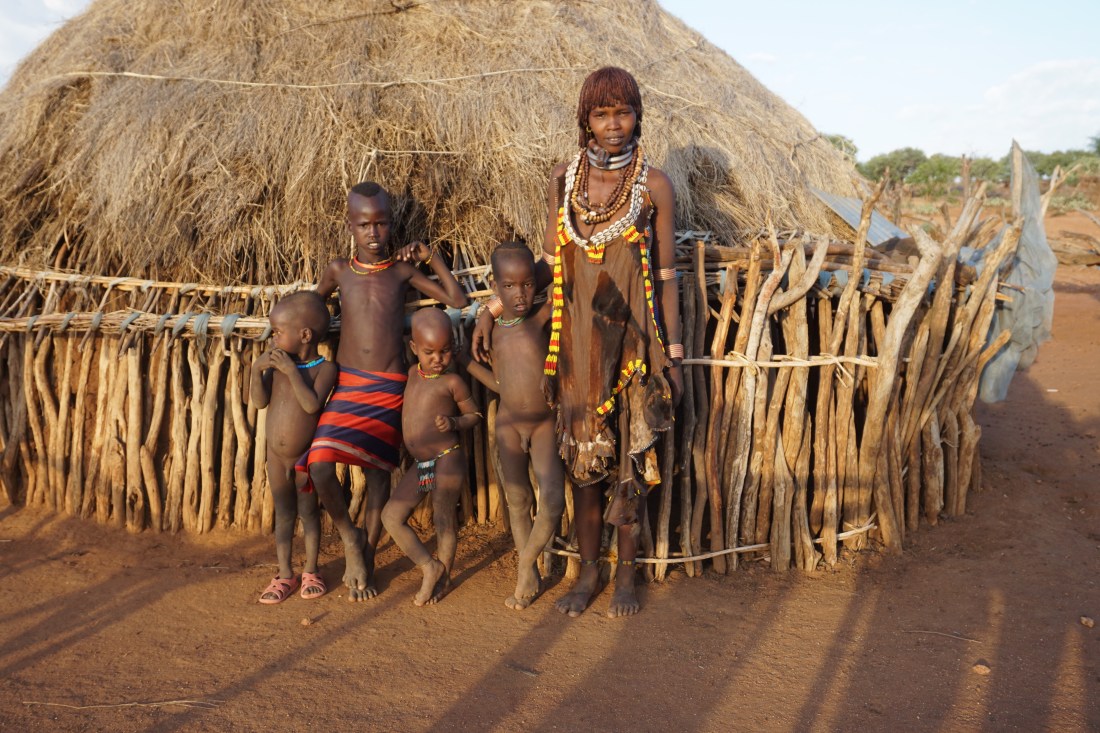
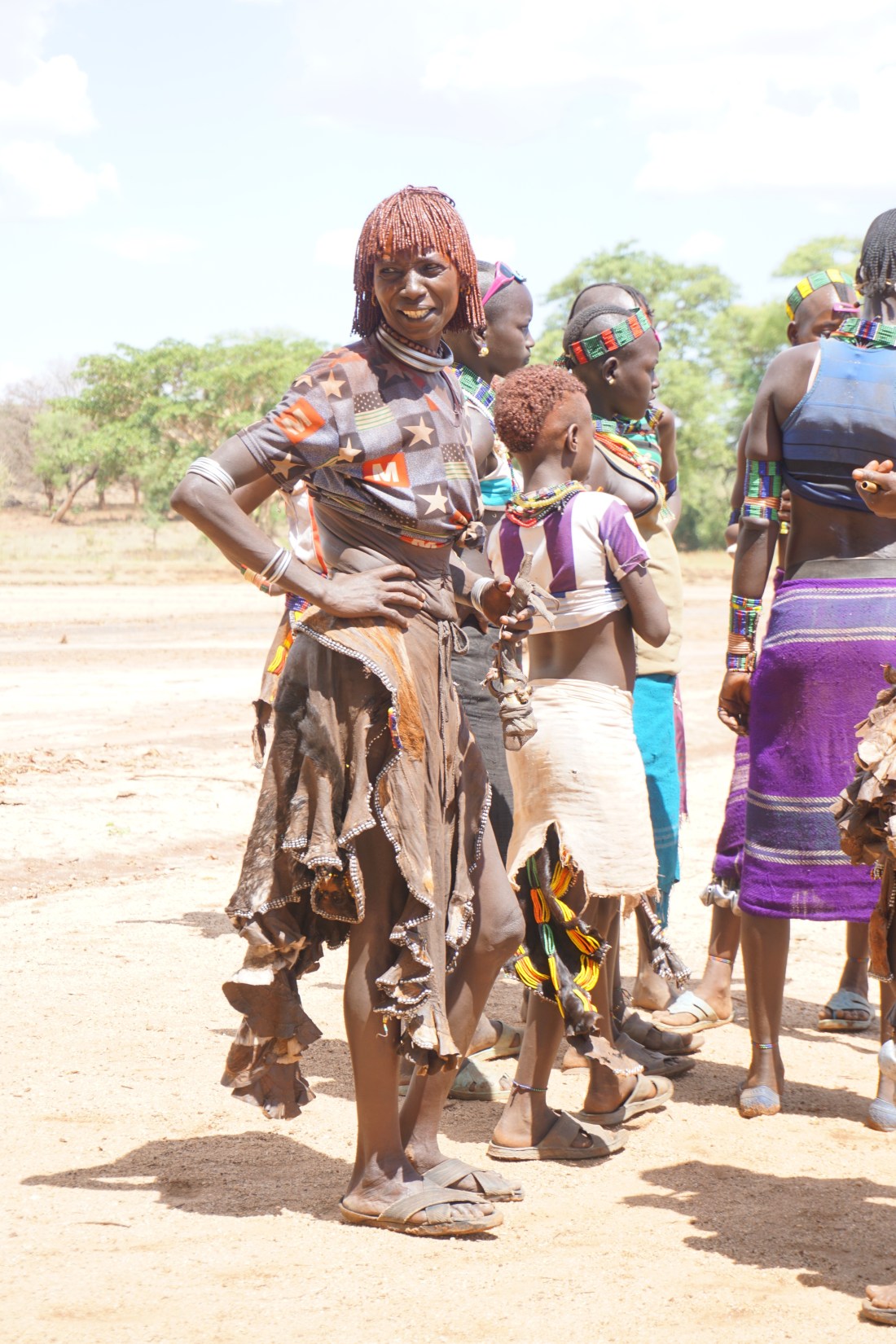
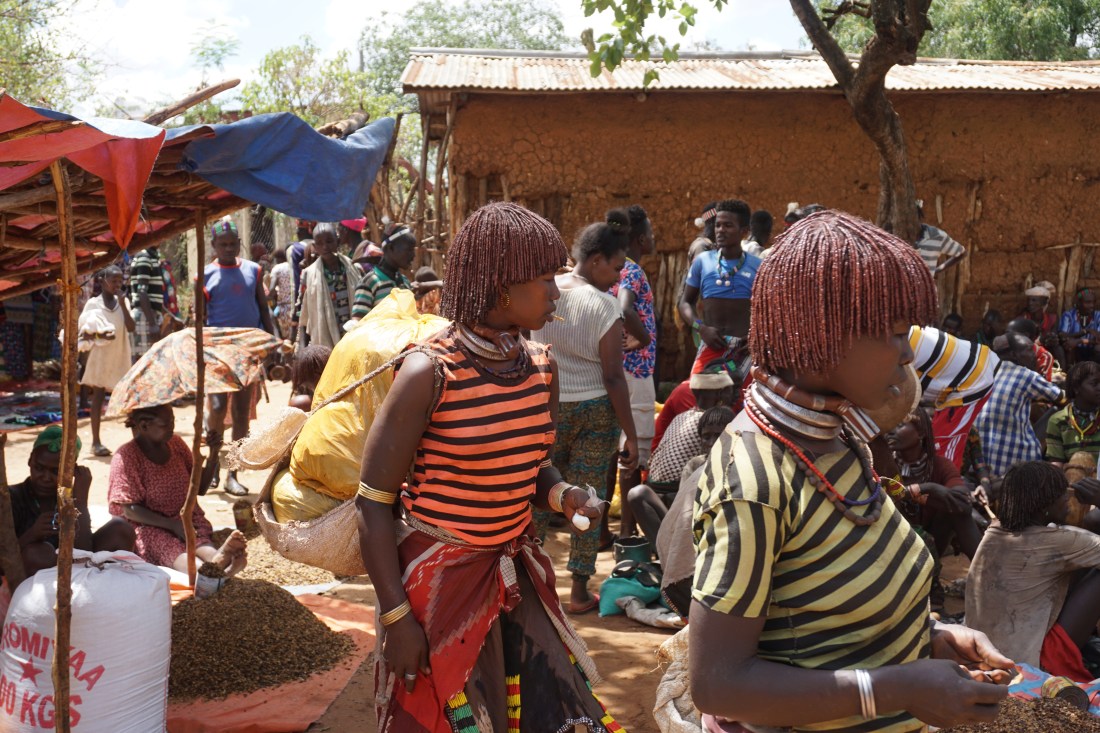
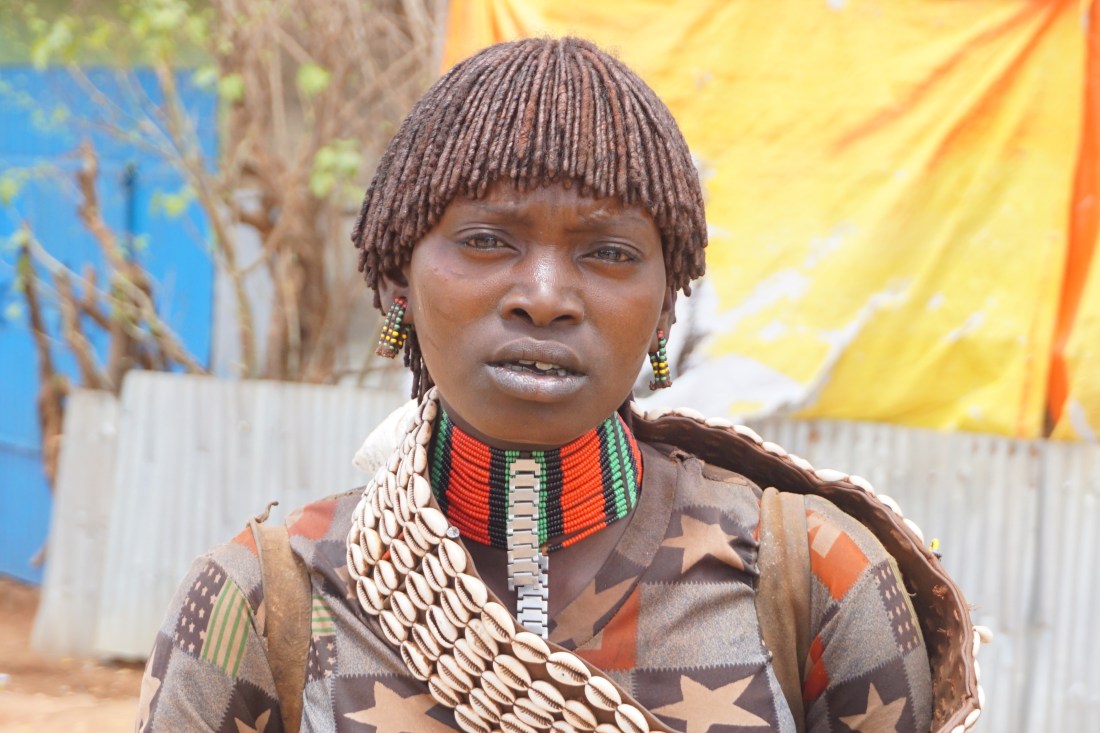
Hamer women wear their hair short and decorate their dreads with red clay and butter.

DSC01947

DSC01933

DSC01974

DSC01960

The goat skin skirts are weighted down with hand made metal beads.

DSC01920