Leaving London as the florist below the flat were getting ready for Valentines Day.
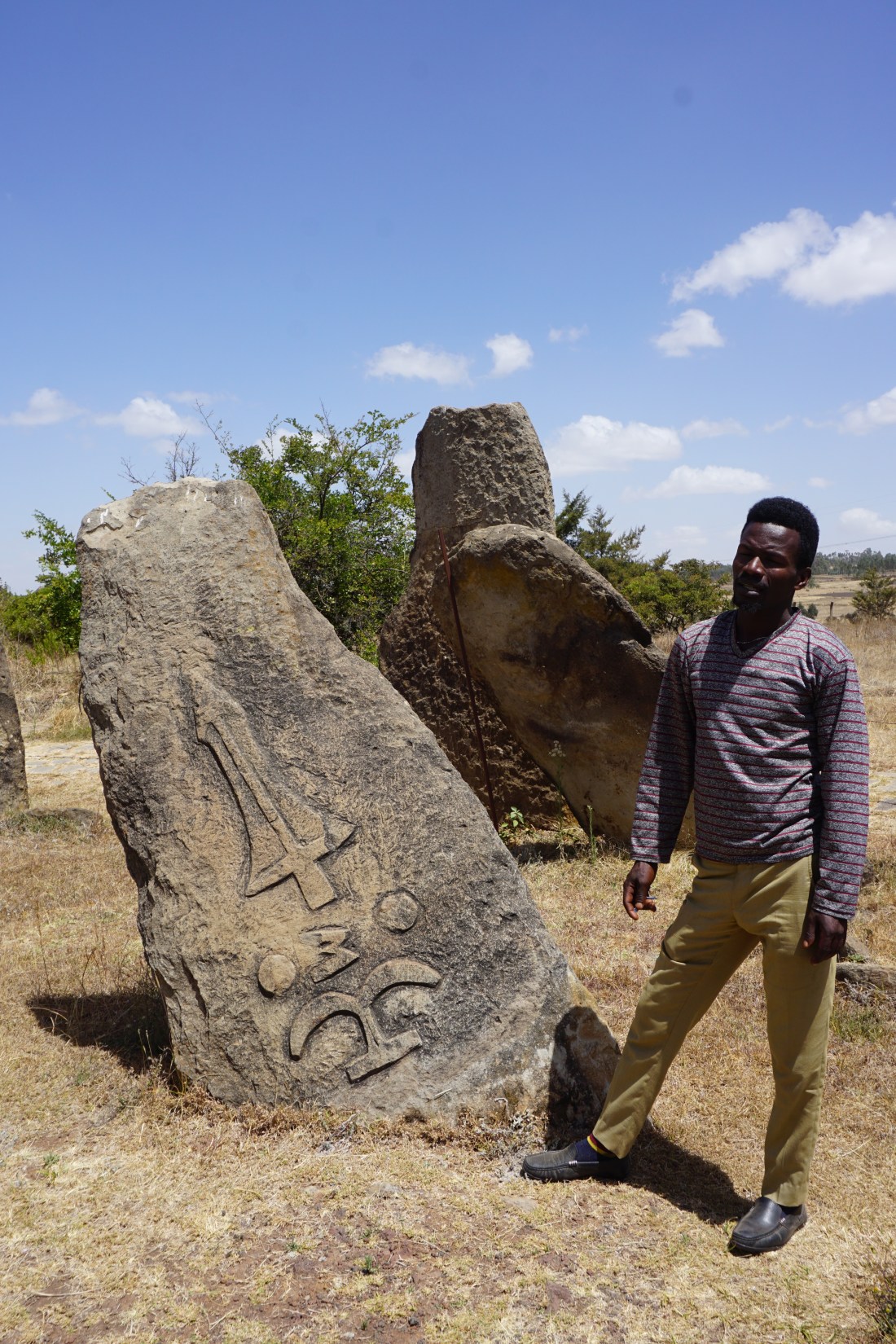
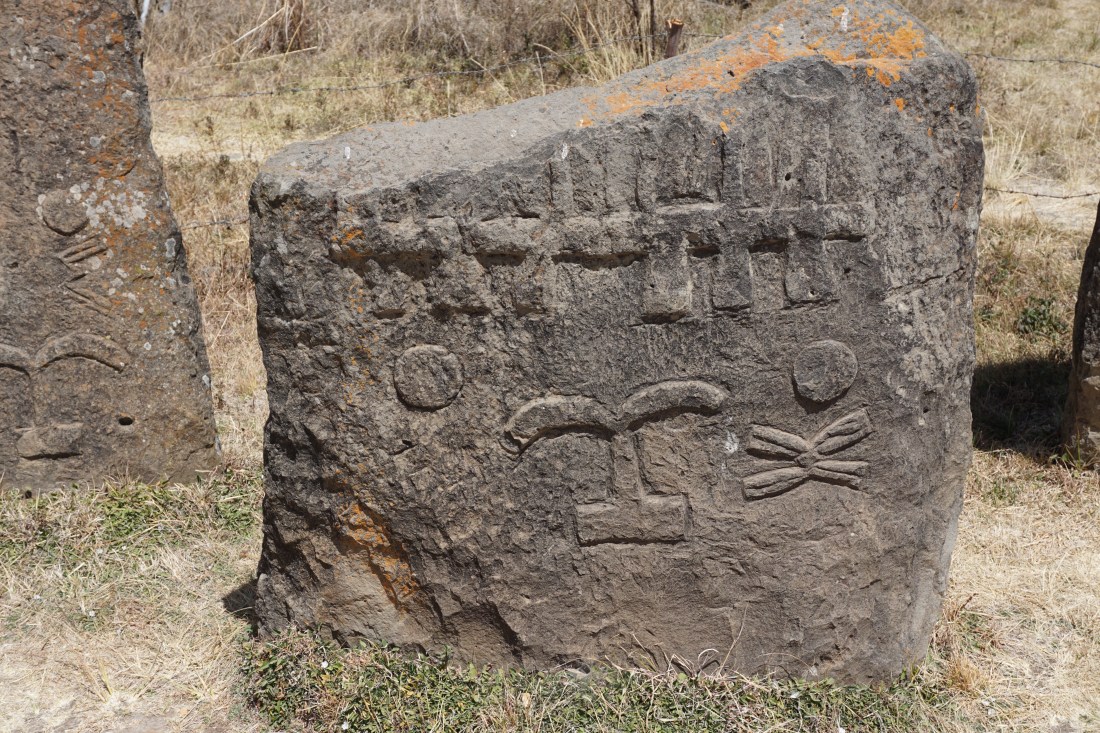
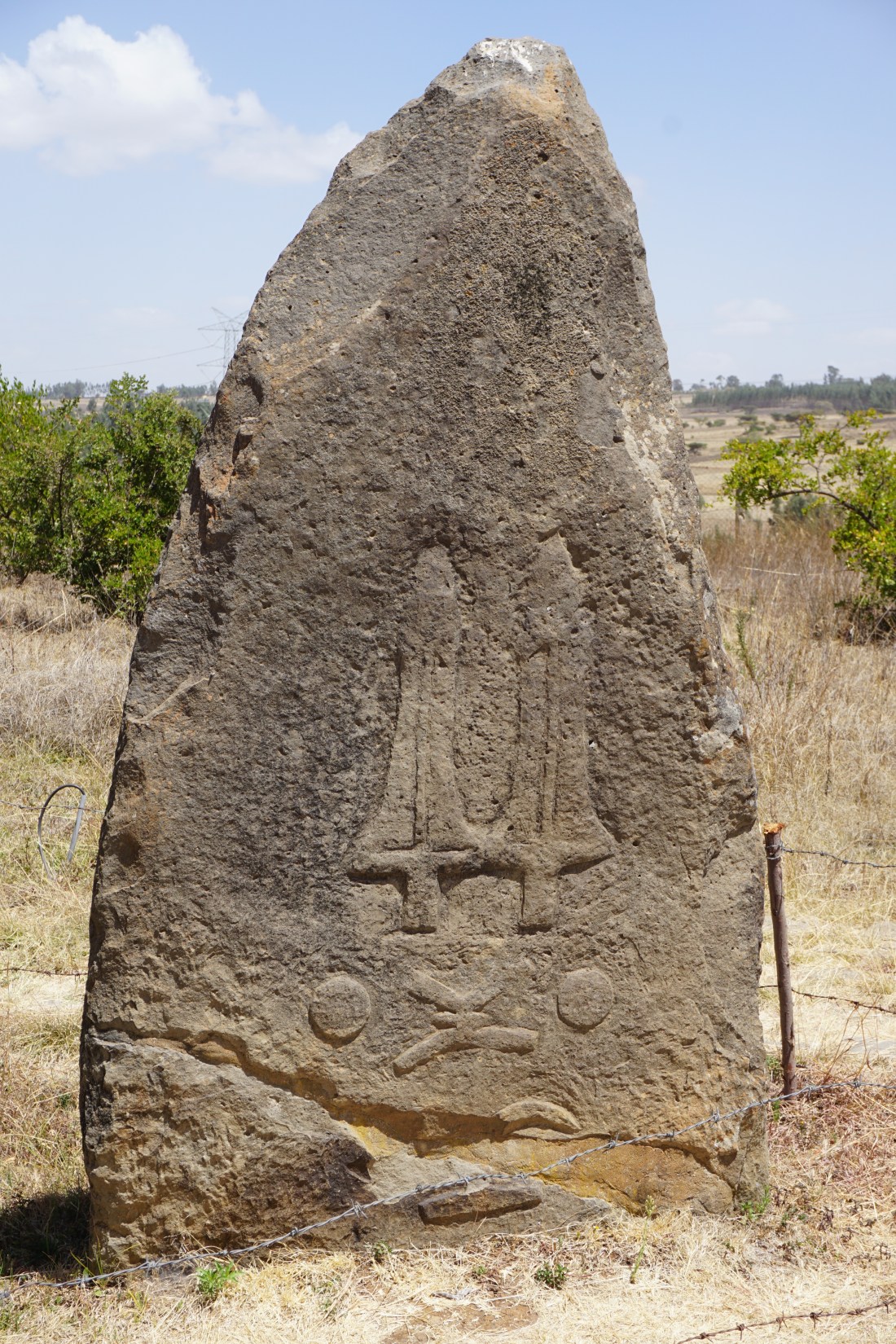
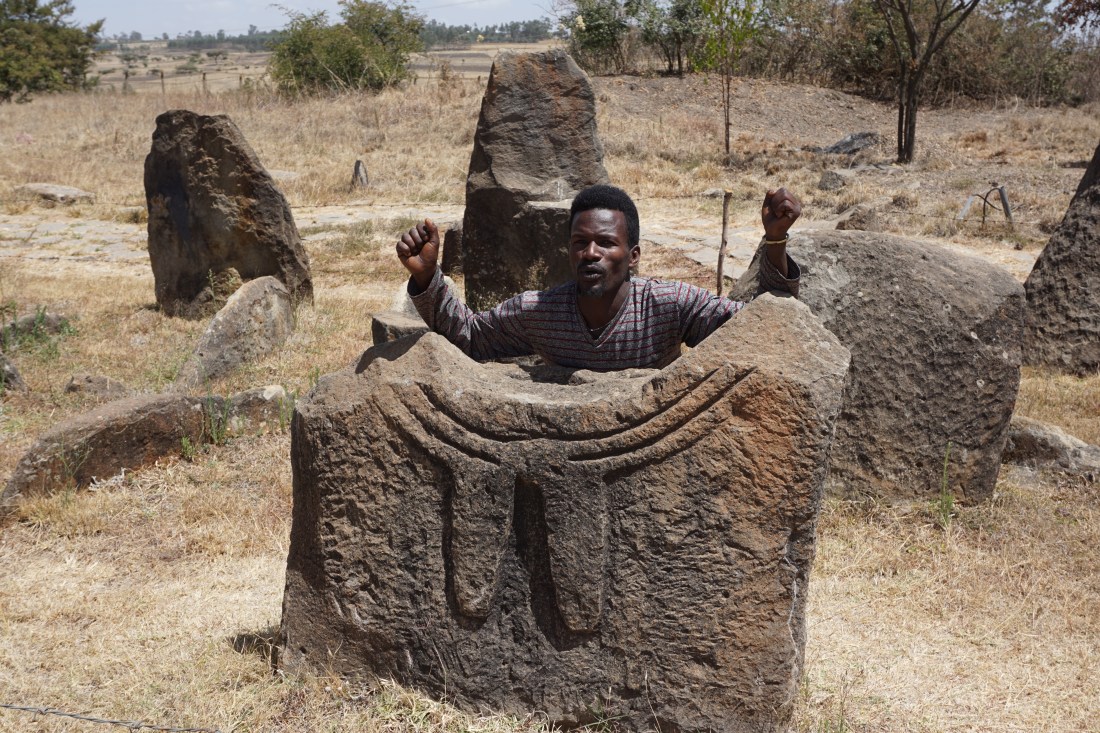
We arrived in Addis Abbaba in the morning and immediately left for Sodo. On the way we stopped to see the Tiya stele which were recognized in 1980 as a World Heritage Site.
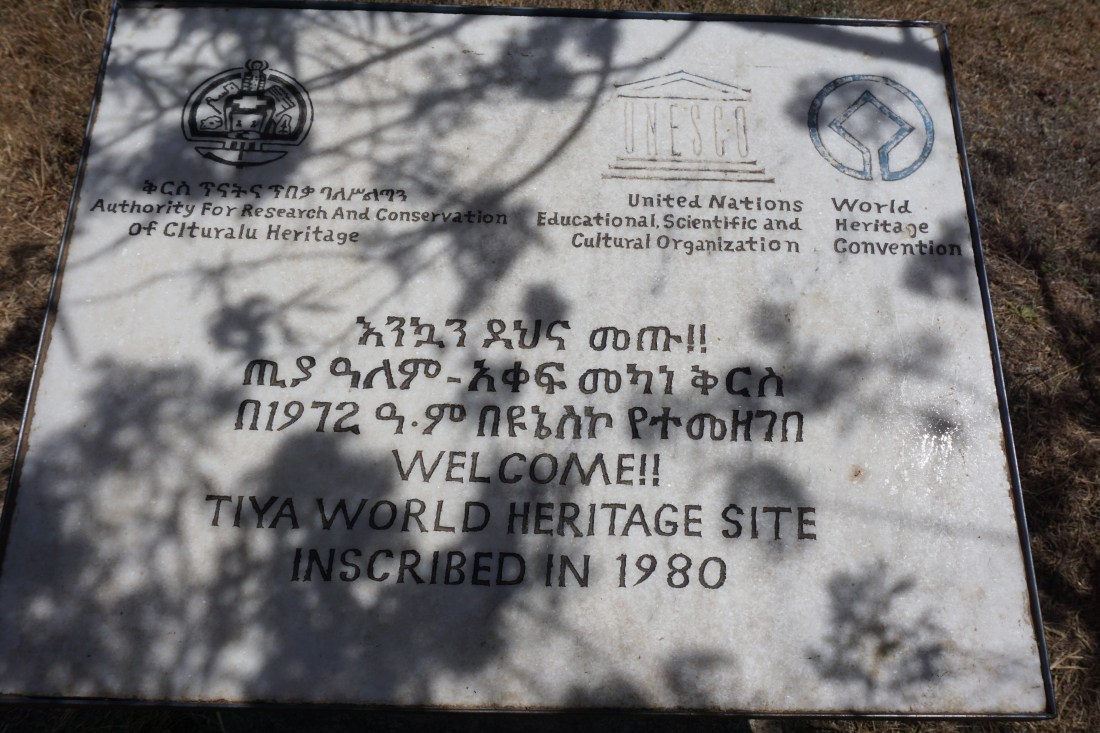
Our guide was a very enthusiastic anthropology student so was keen to give us a ton of information about them. A museum is being constructed to house the artifacts and provide information about the site.
On Day 2 of our program – our driver calls it our program – we left Sodo at 9:00 and arrived in the mountain village of Dorze at 11:30 and a two hour tour. On the way our driver told us about how bananas are picked green then driven all night in the dark to arrive yellow in the markets in the morning. He said there are often a lot of accidents attributed to the long hours the driver put in.
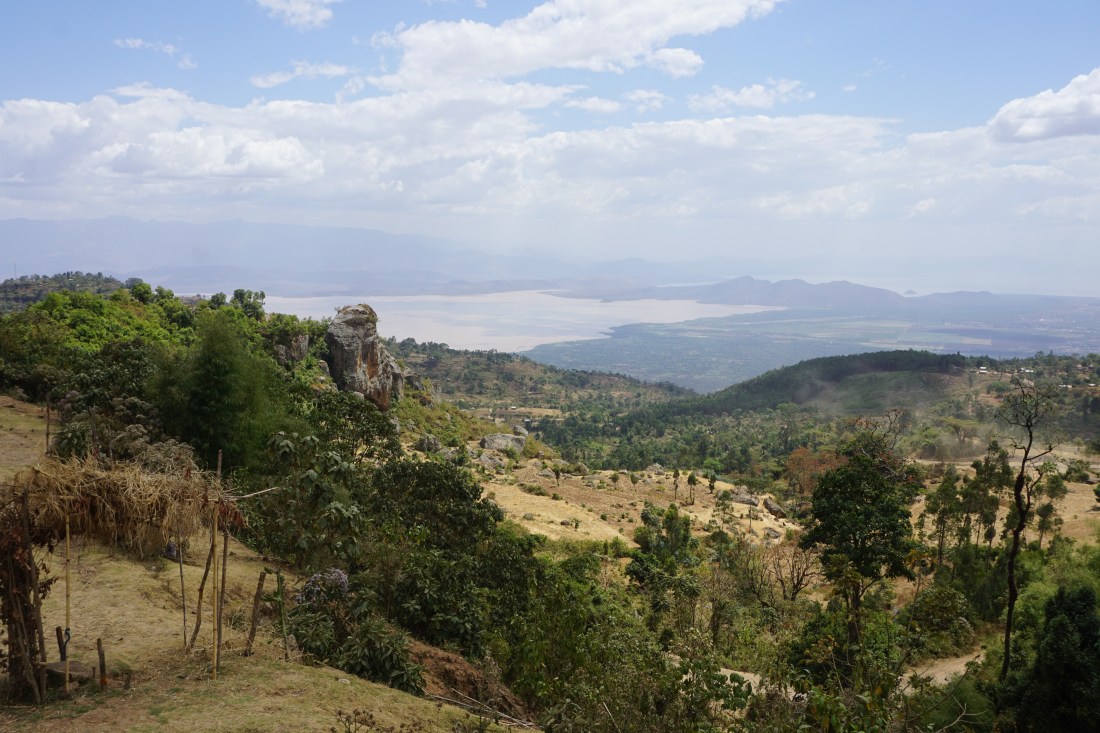
On the way we passed Lake Abaya. It is separated from Lake Chamo by what the locals call God’s Bridge. Lake Abaya is red in color and Lake Chamo blue. You can see God’s bridge between them.
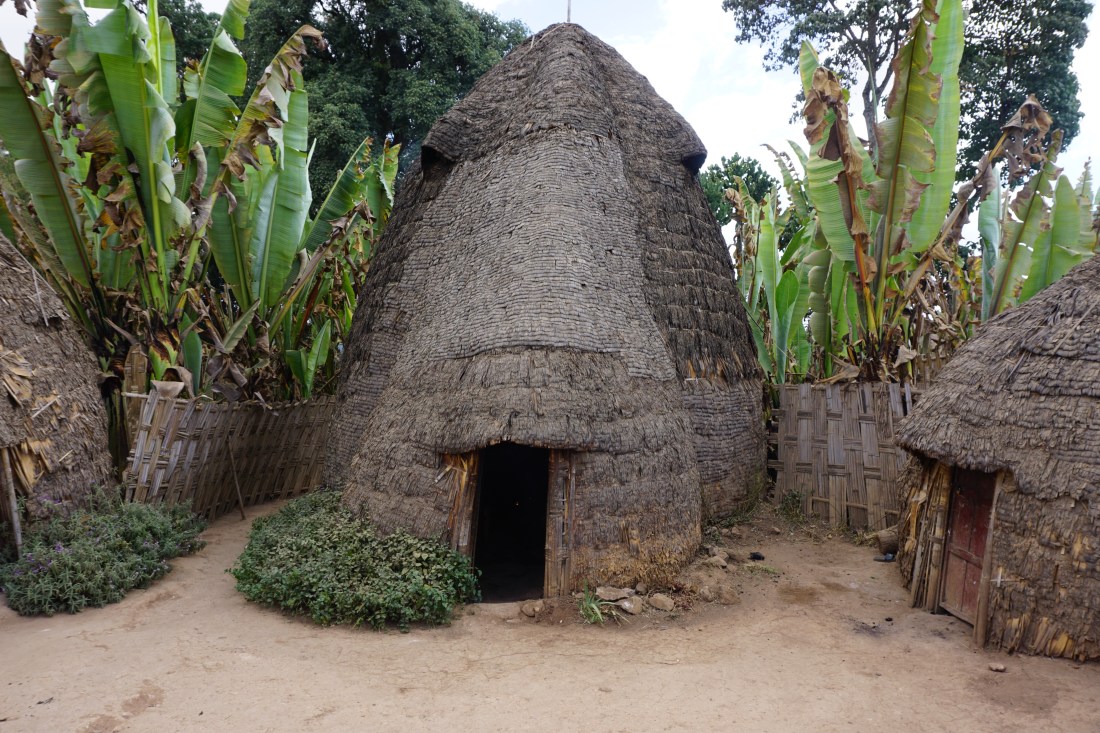
The traditional homes in Dorze are built in the shape of elephants which were hunted here but are no longer in the area. The traditional homes are made very tall using bamboo for the structure and banana leaves. When the termites eat through the lower level they cut the bottom part off and move the upper part to another location. Once they have been cut down three times, the last portion is used for storage.
The animals stay inside at night to provide heat for the family.
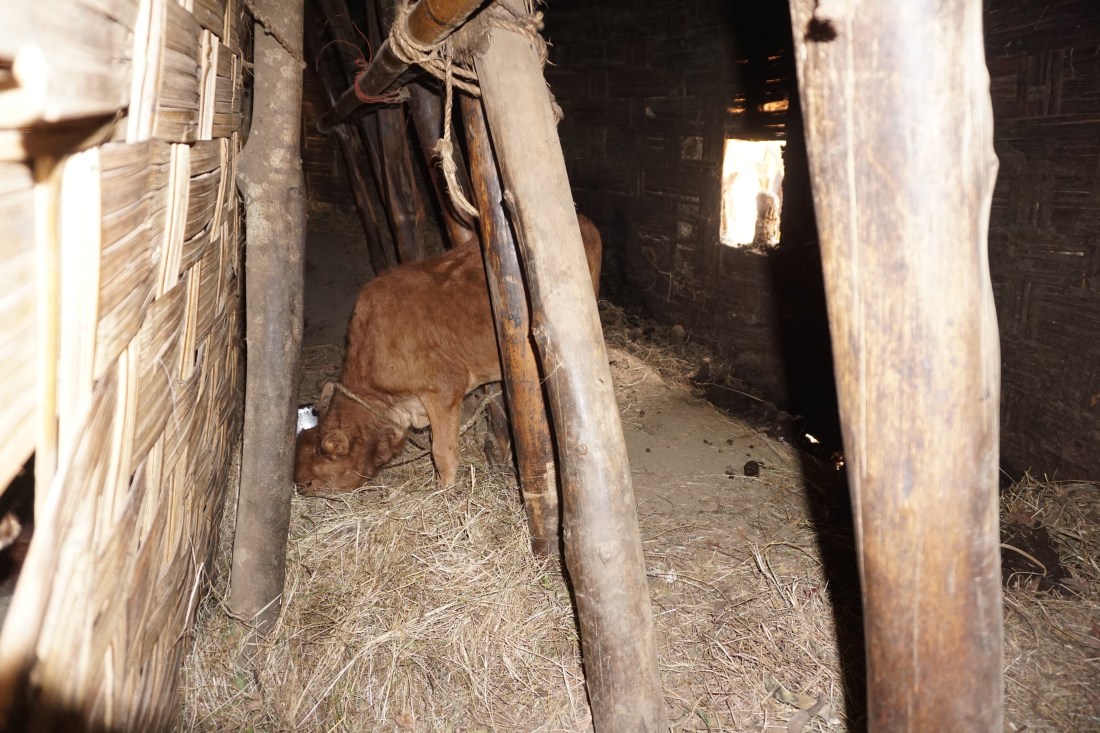
The sleeping areas are on either side of the entrance. Children sleep in the loft and younger children on mats on the floor.Many chairs are in the home for the drinking of coffee with guests.
Beer is made from ground sorghum, barley, wheat and maize mixed and dried above the fire in banana leaves for up to four months. It is then ground and mixed with water then fermented for 1 week. The beer is drank from these gourds.
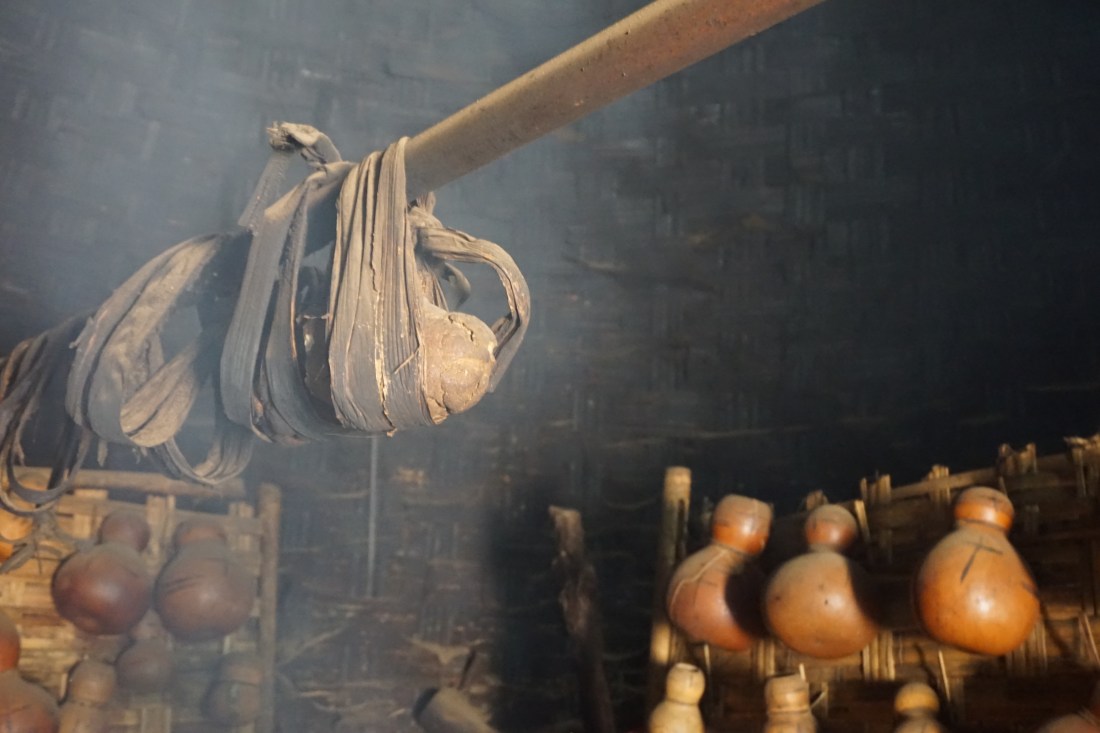
Women spin the cotton and the men do the weaving in the village.
We saw how pulp is removed from the base of the false banana plant.
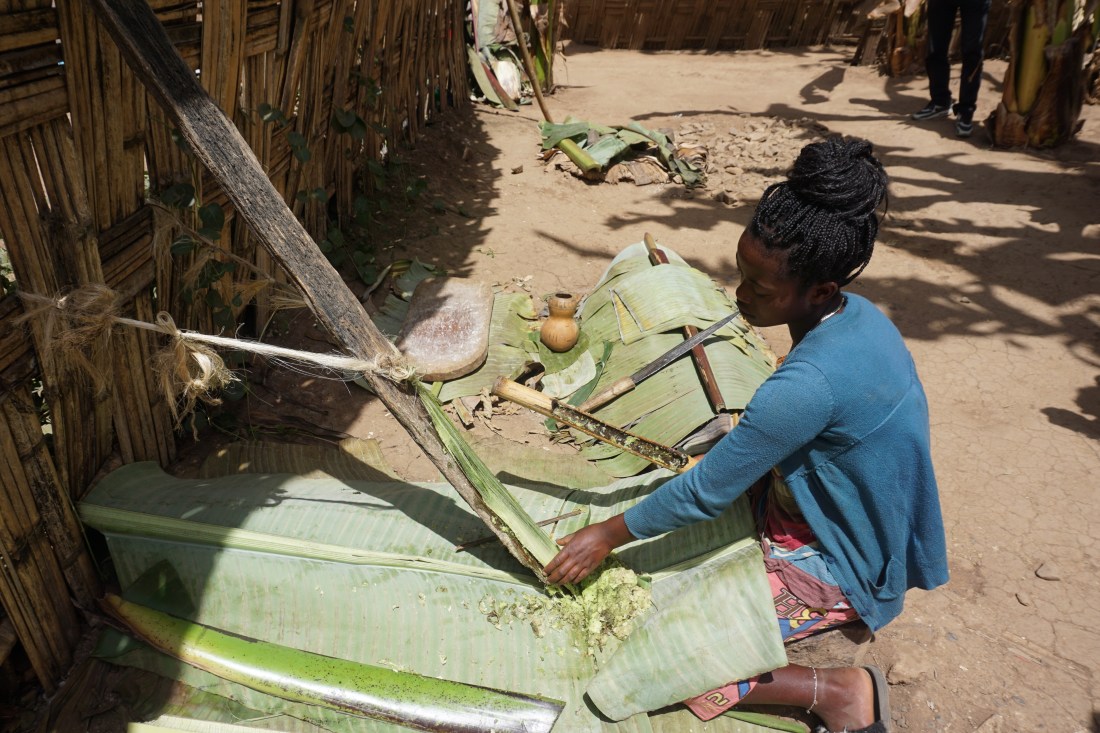
The pulp is placed between layers of banana leaves and stored in the ground for up to three months to ferment.
Once it is fermented it is chopped repeatedly to remove cut the fibres that remained in the plant.
Once the pulp is chopped it is mashed with water patted into a pancake form and cooked on the fire first in banana leaves then browned on the skillet.
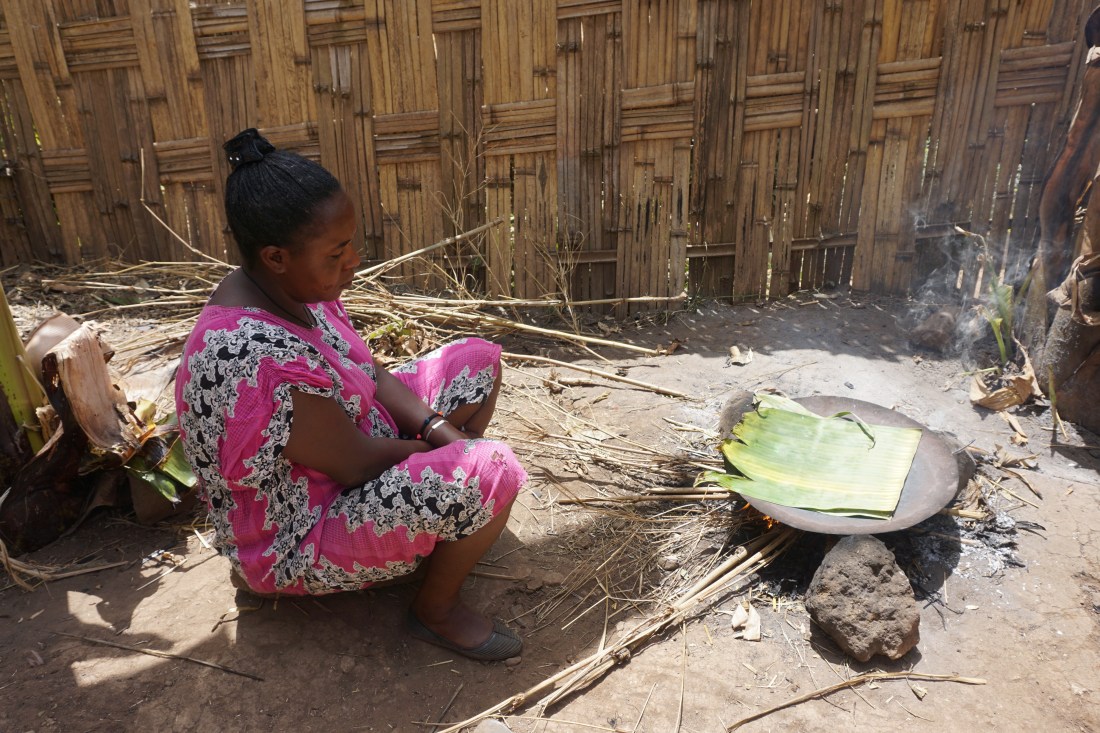
It is served with honey and chilli. We liked it better than the injera which has a much more sour flavor.
This small compound is used for trekking and horse back tour groups going into the mountains.
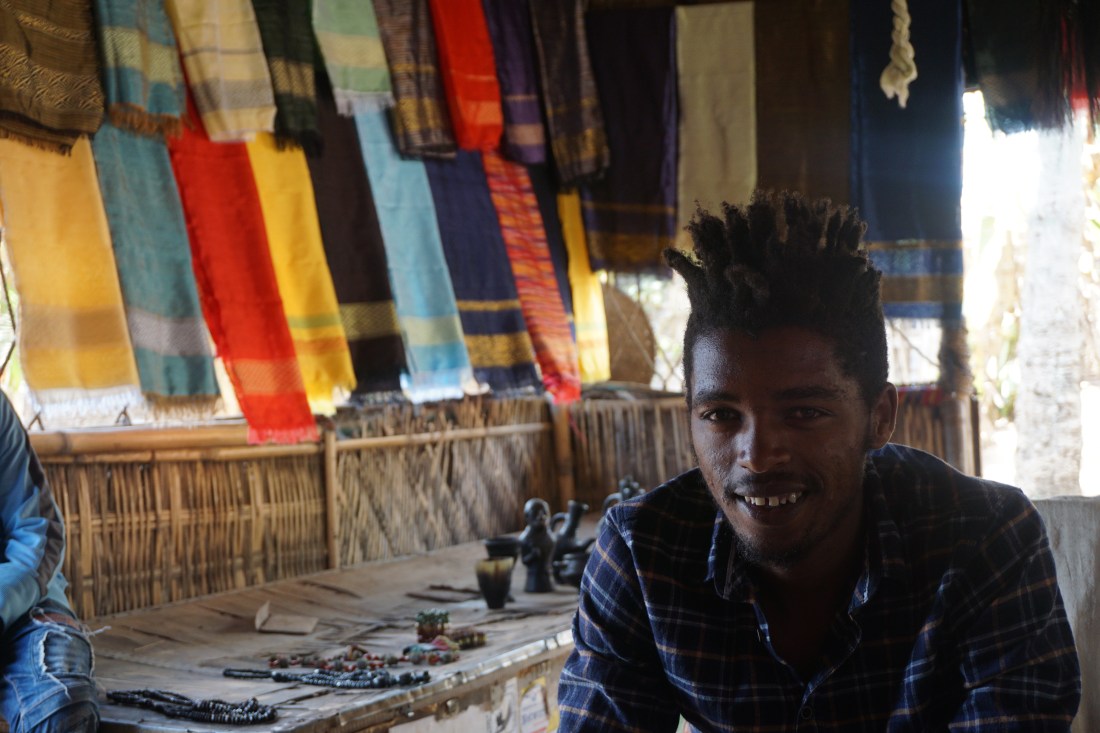
One of our guides with weavings behind.
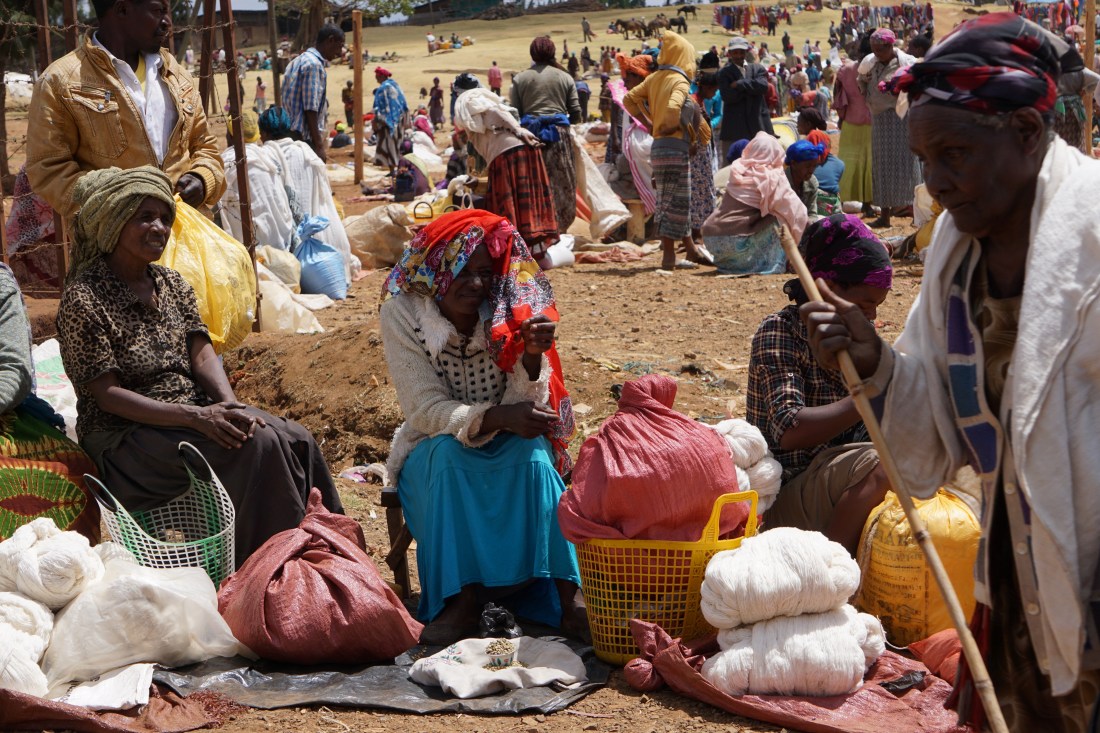
Local market.
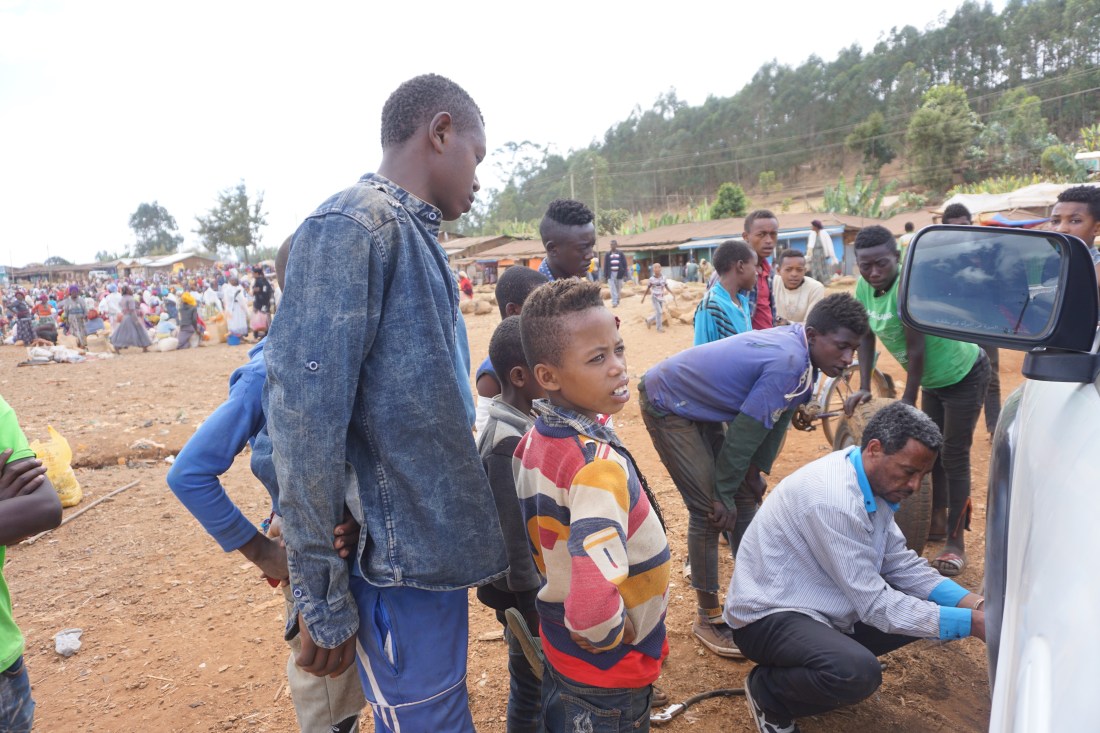
Our driver changing the flat tire with lots of on lookers.

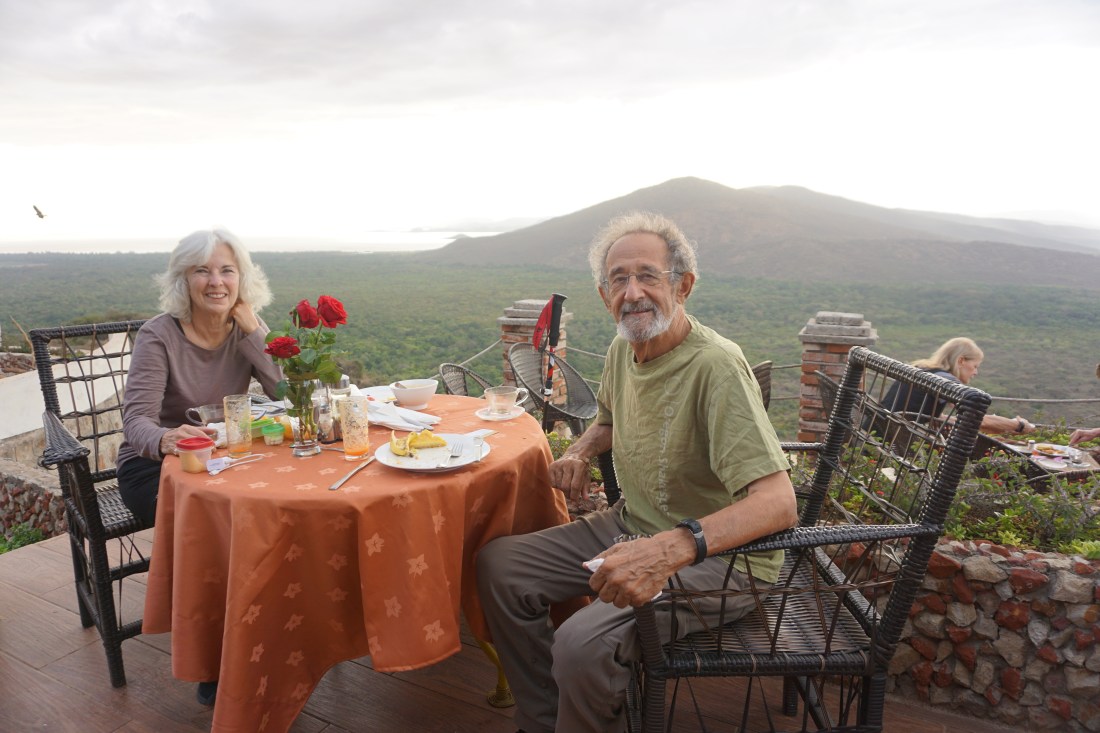






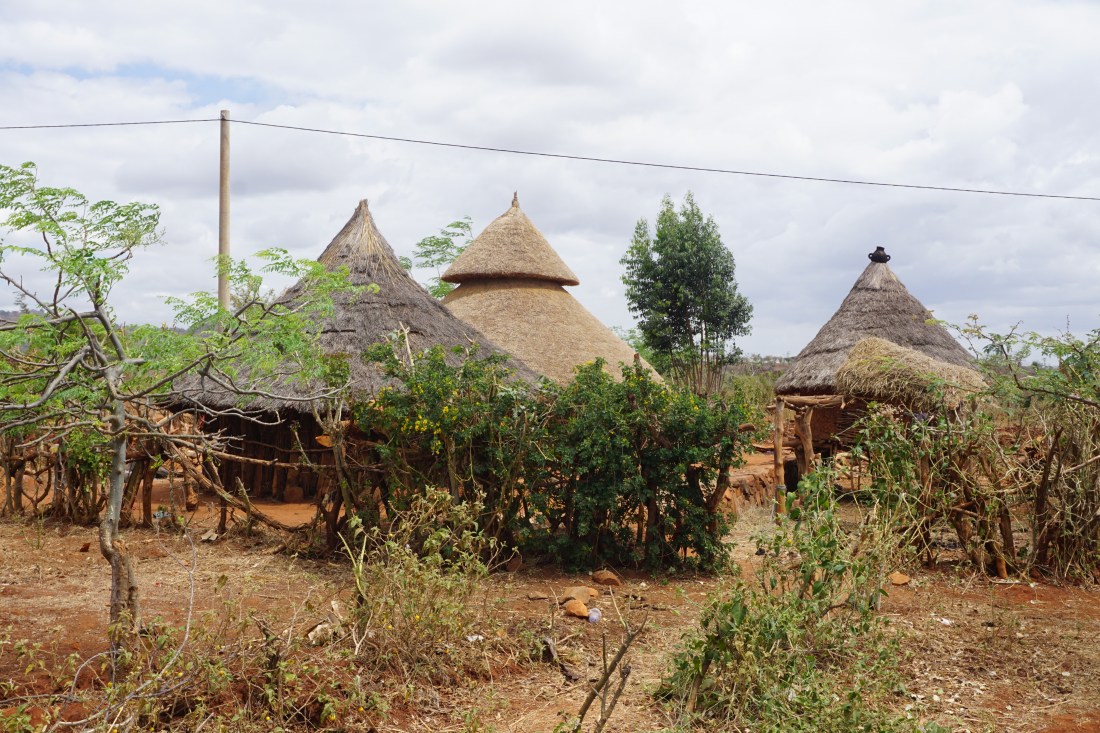
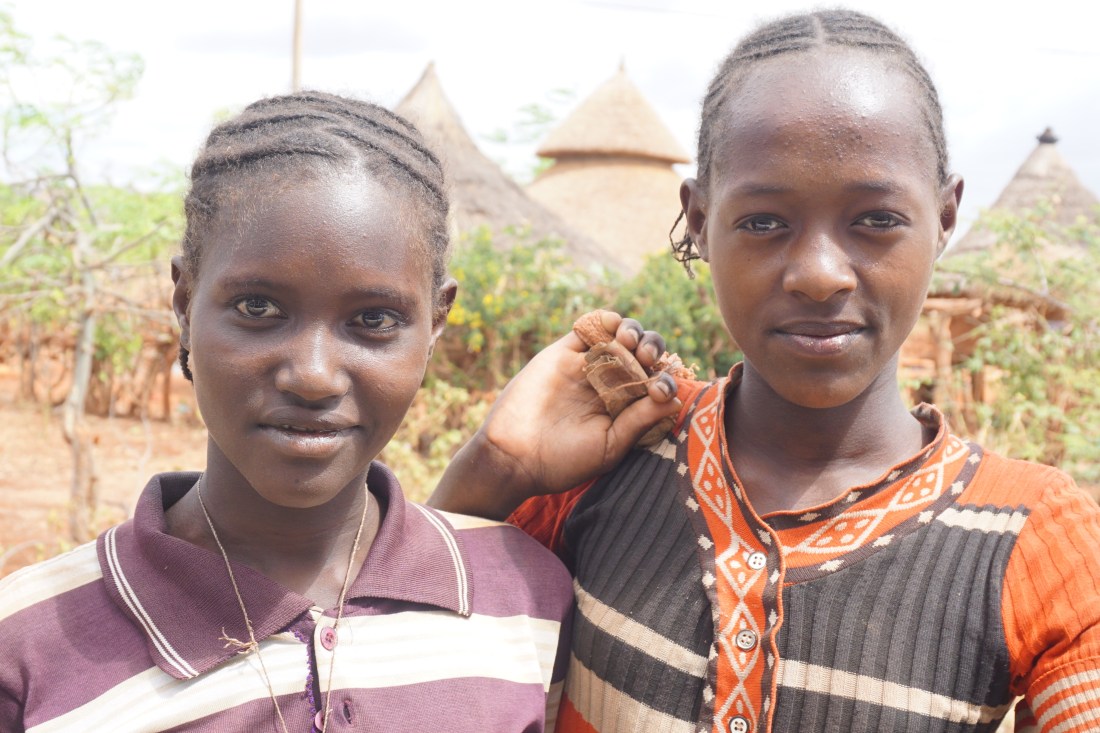
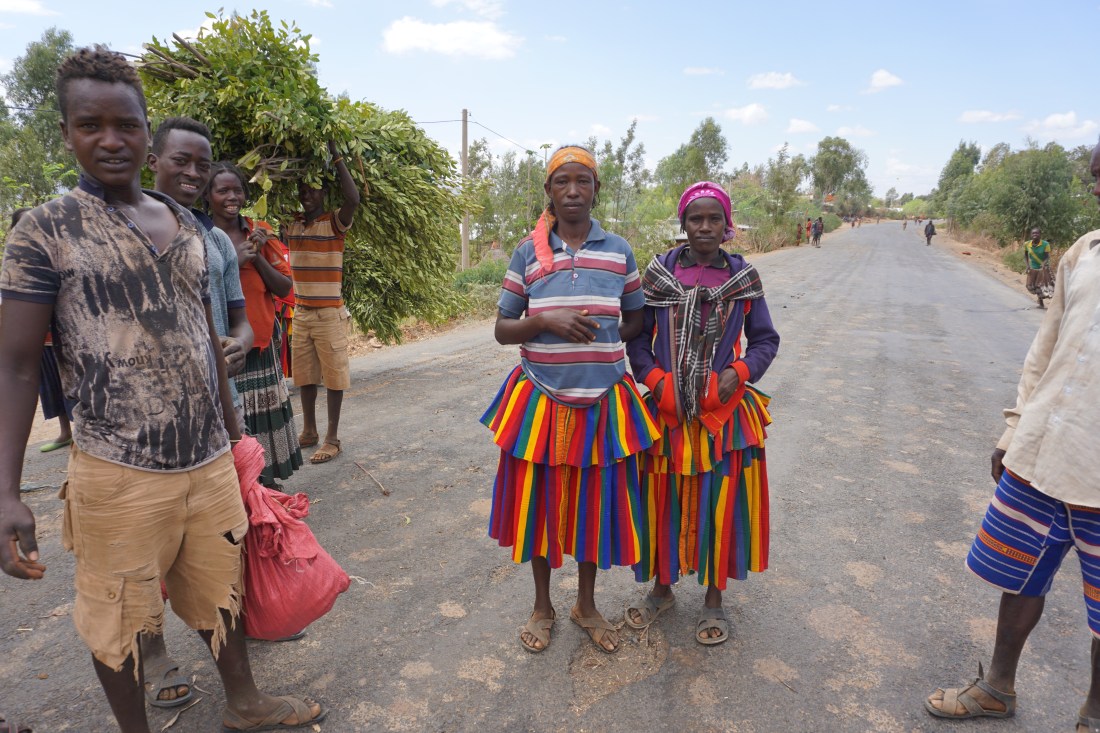


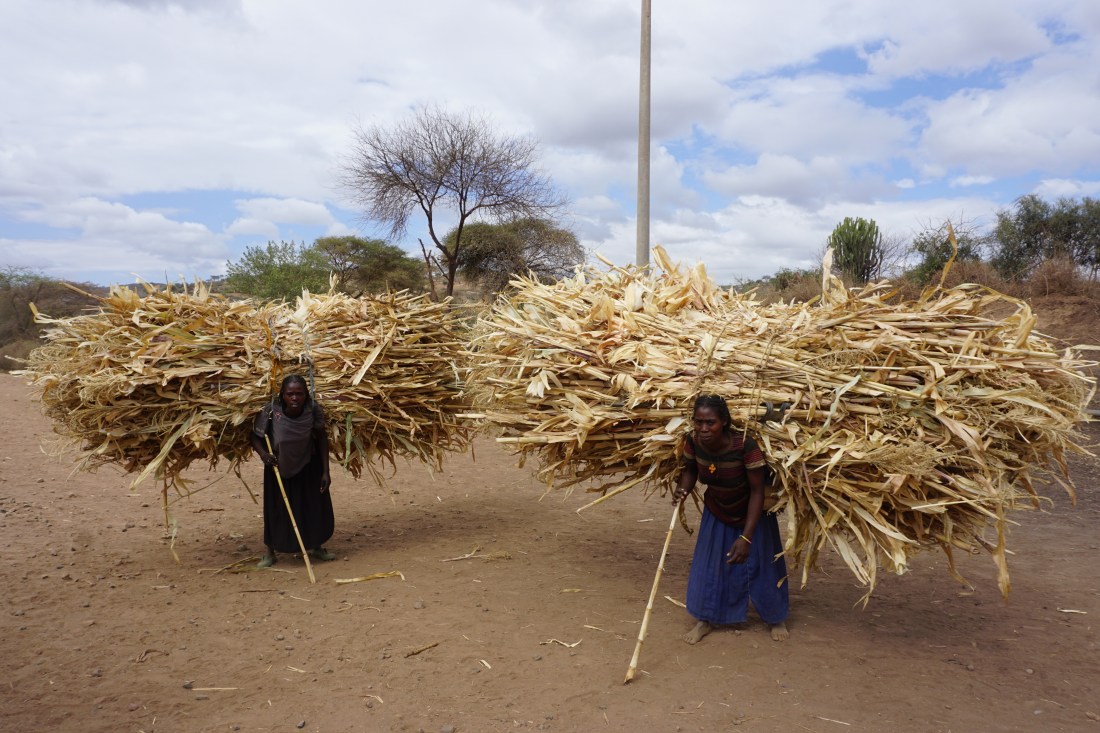
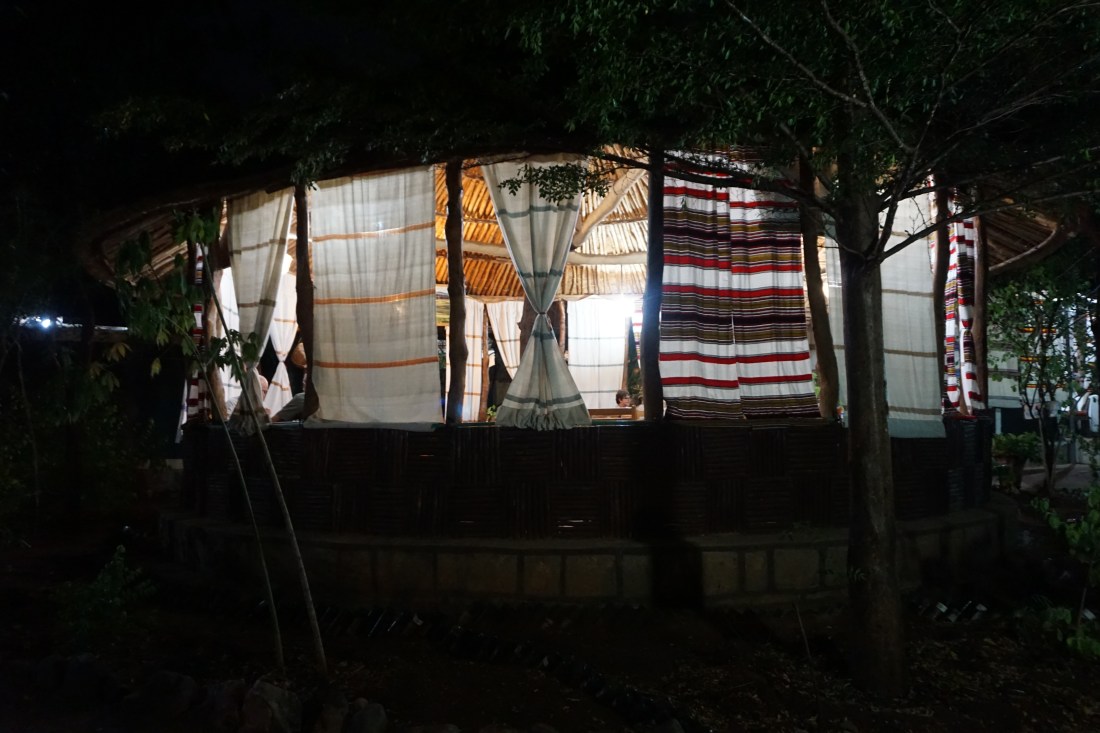












































 So cozy.













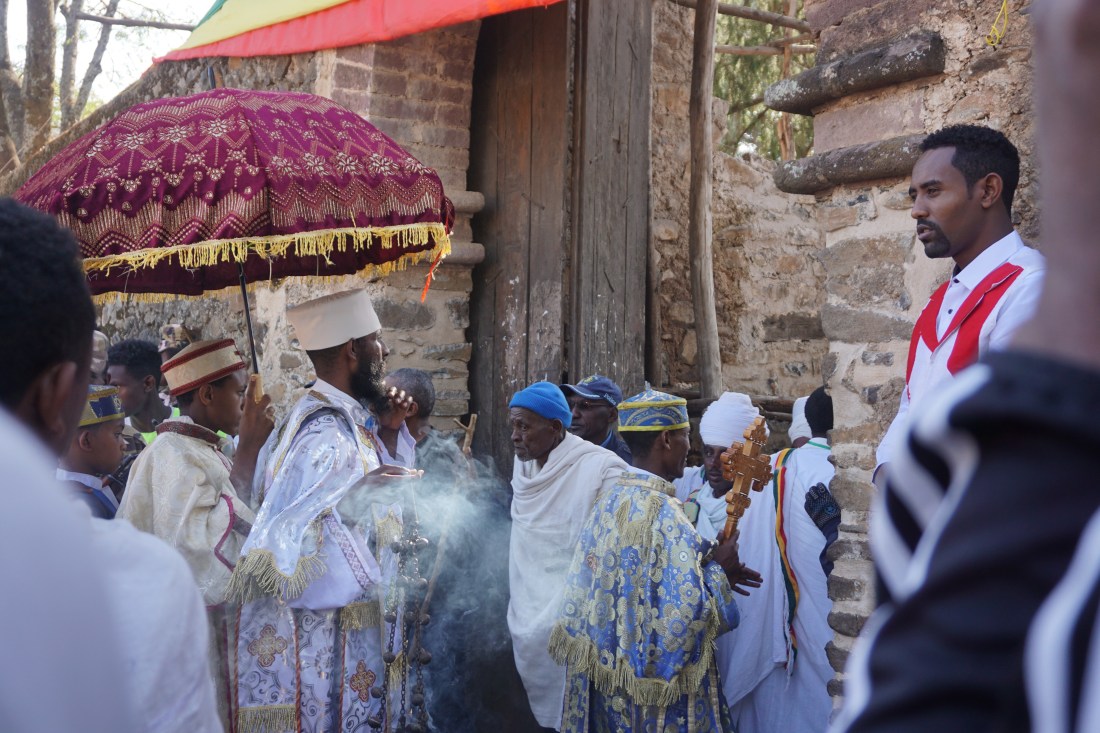


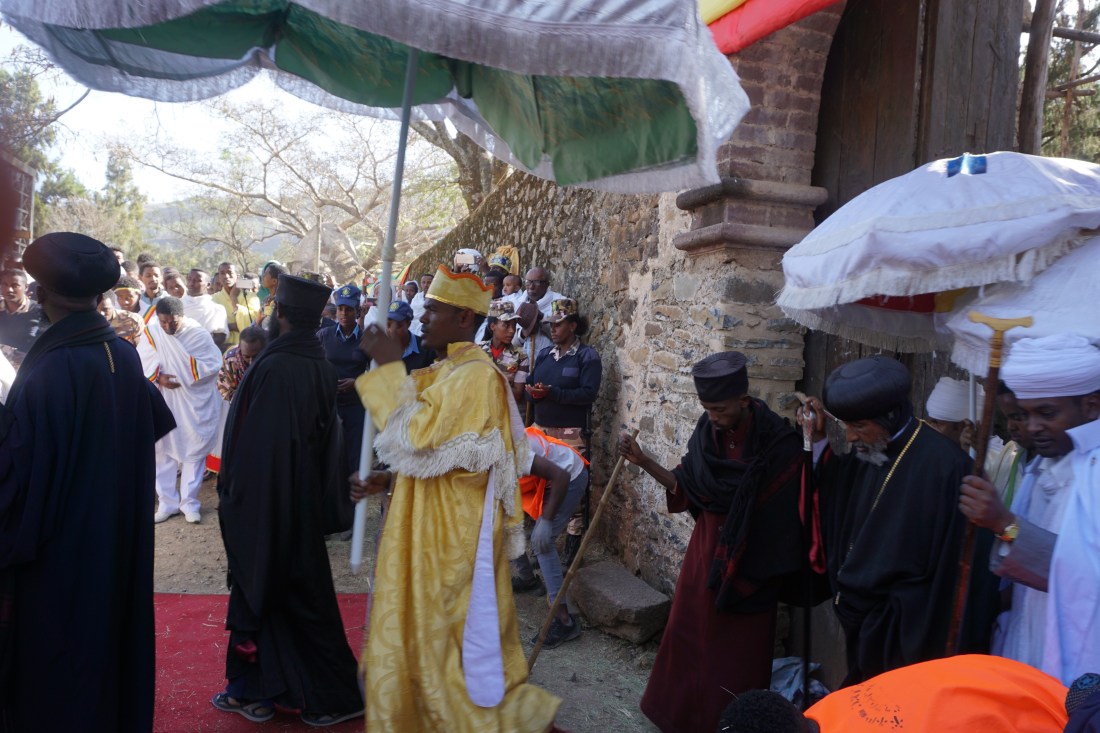


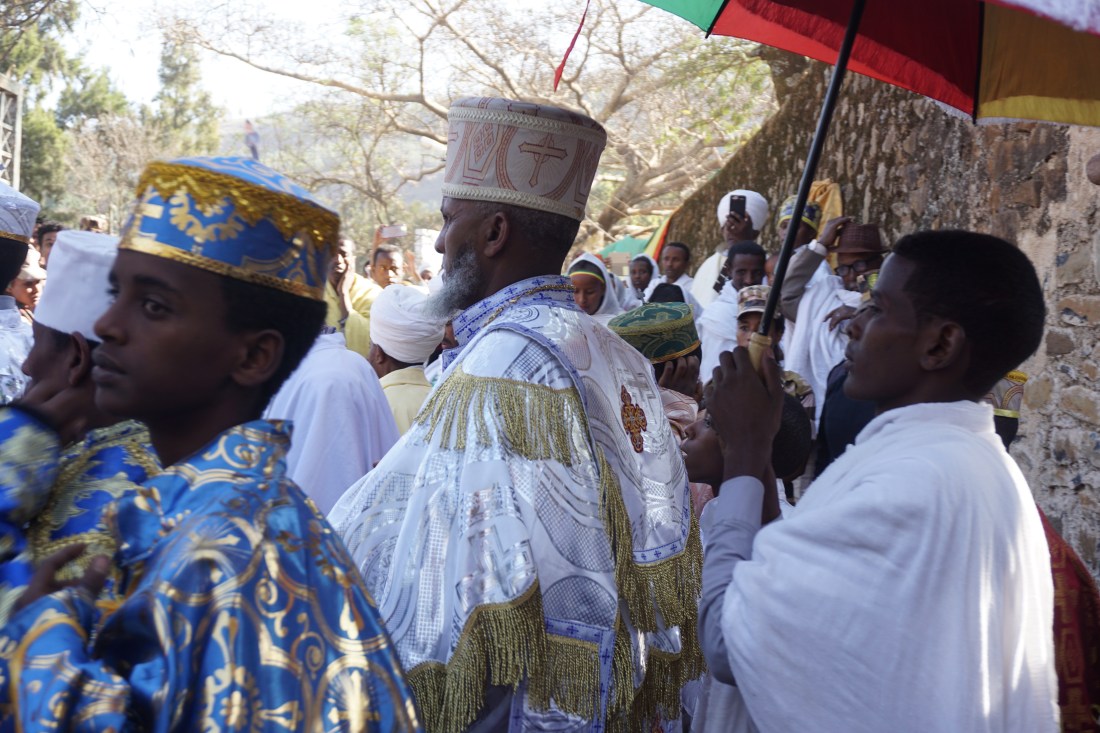
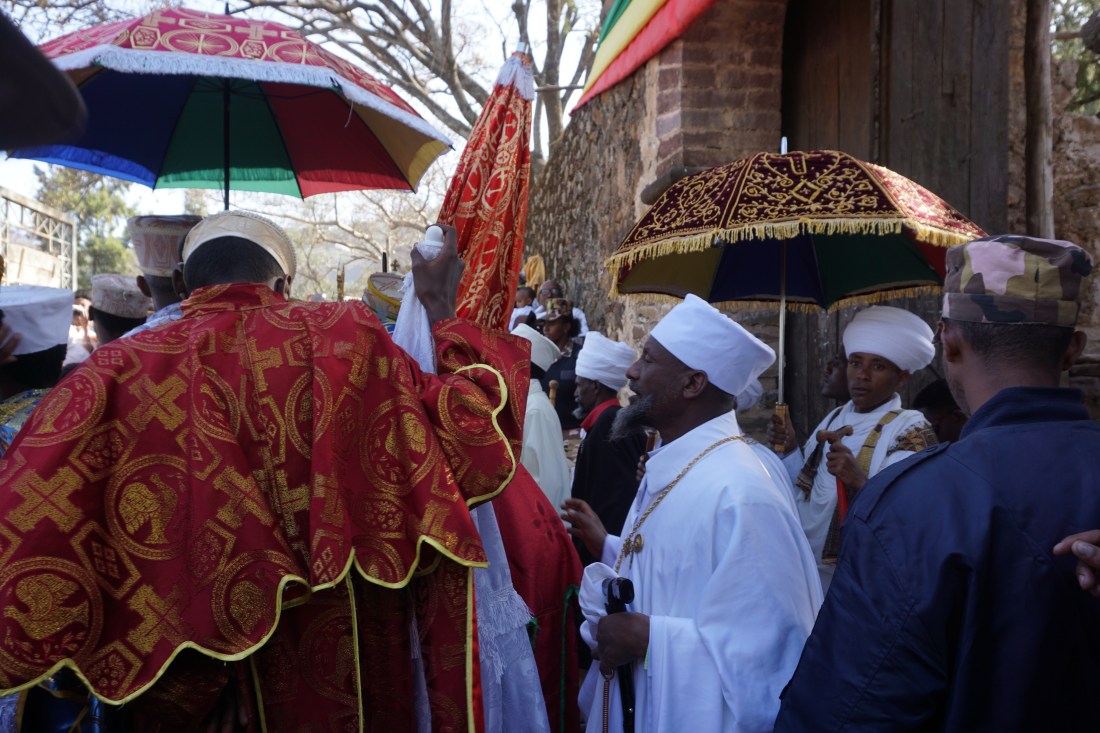
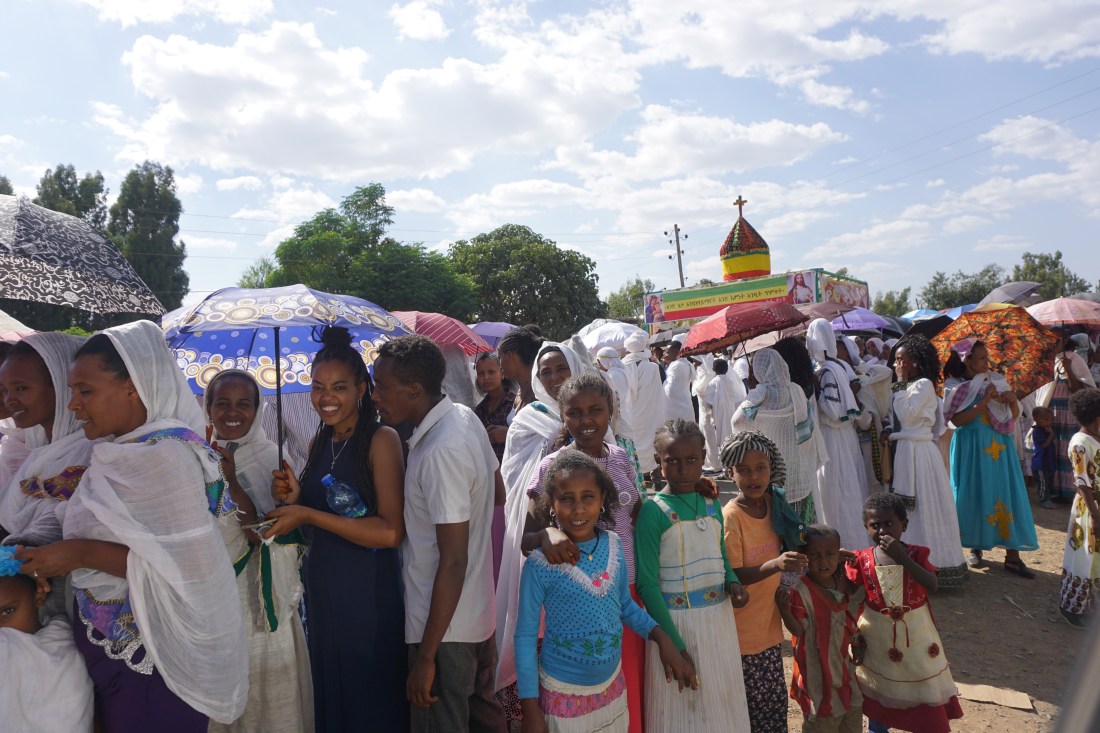
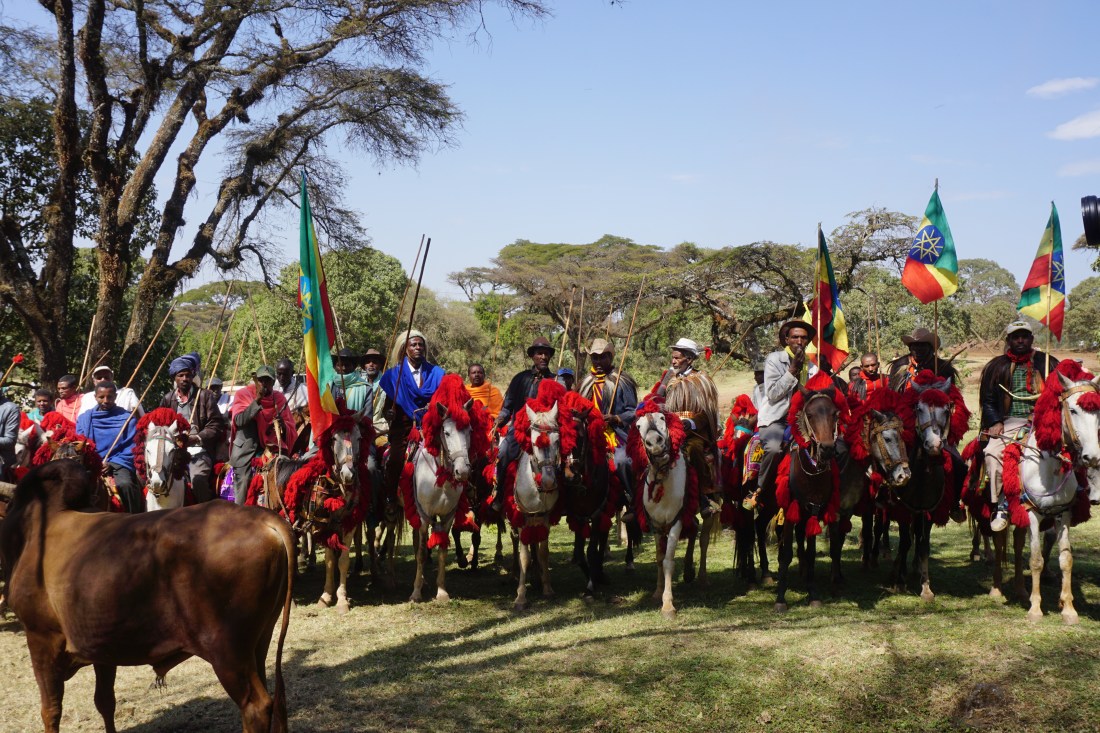


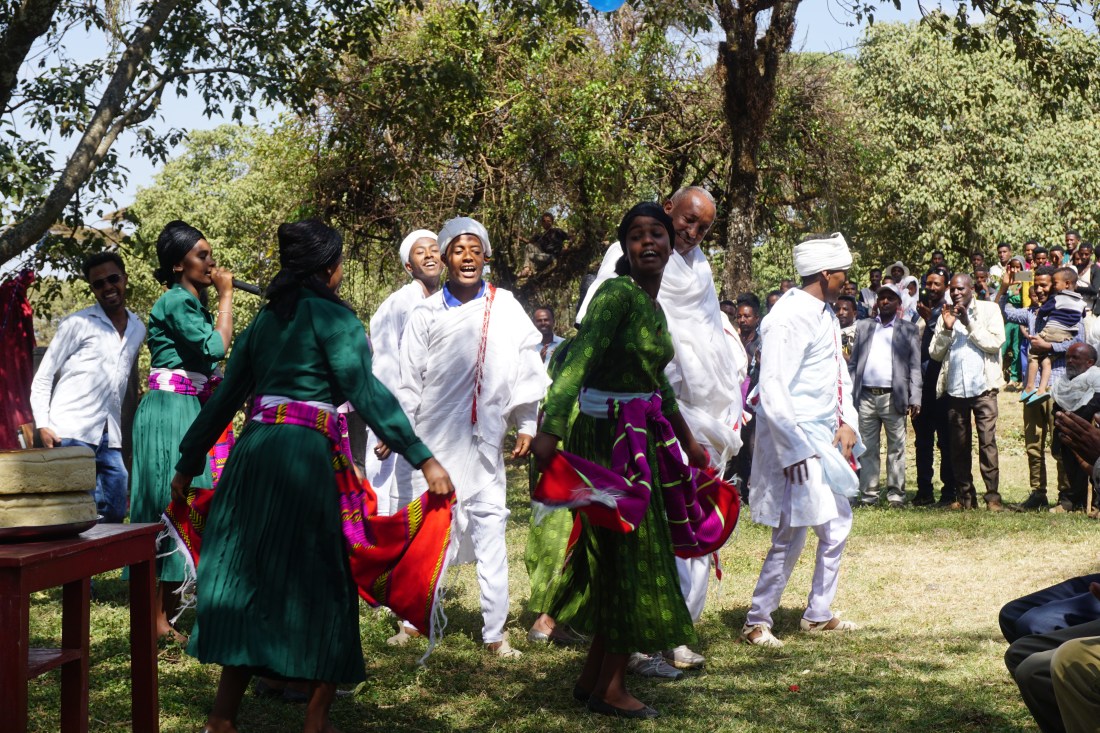
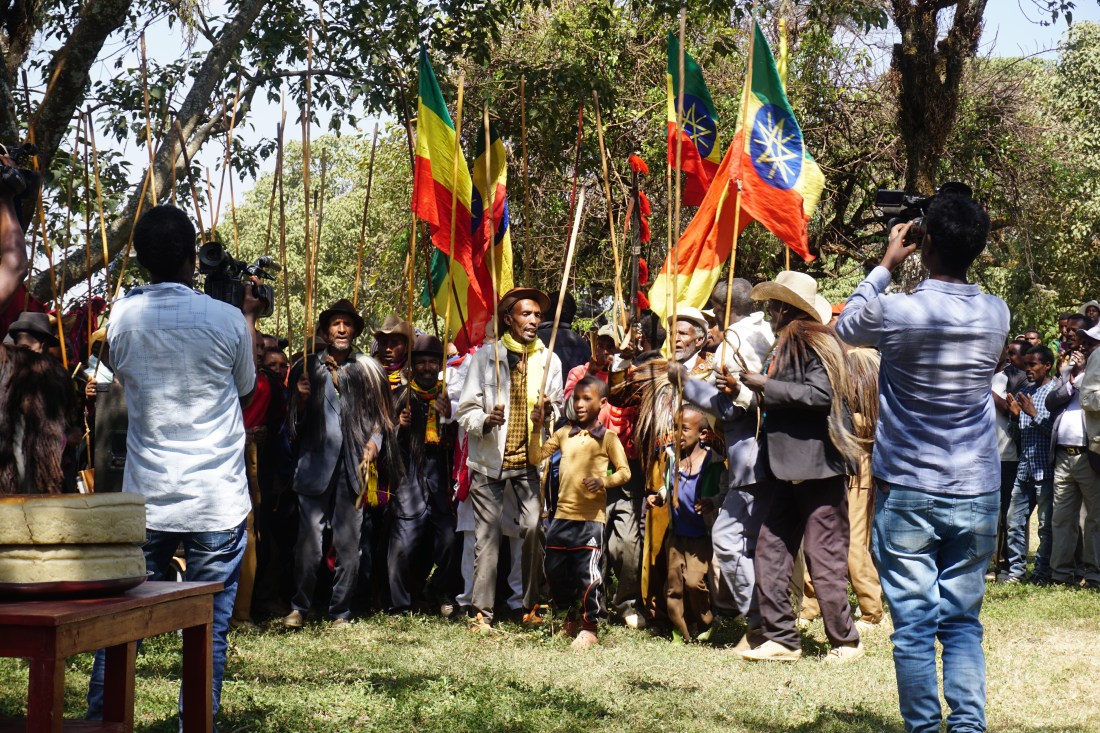
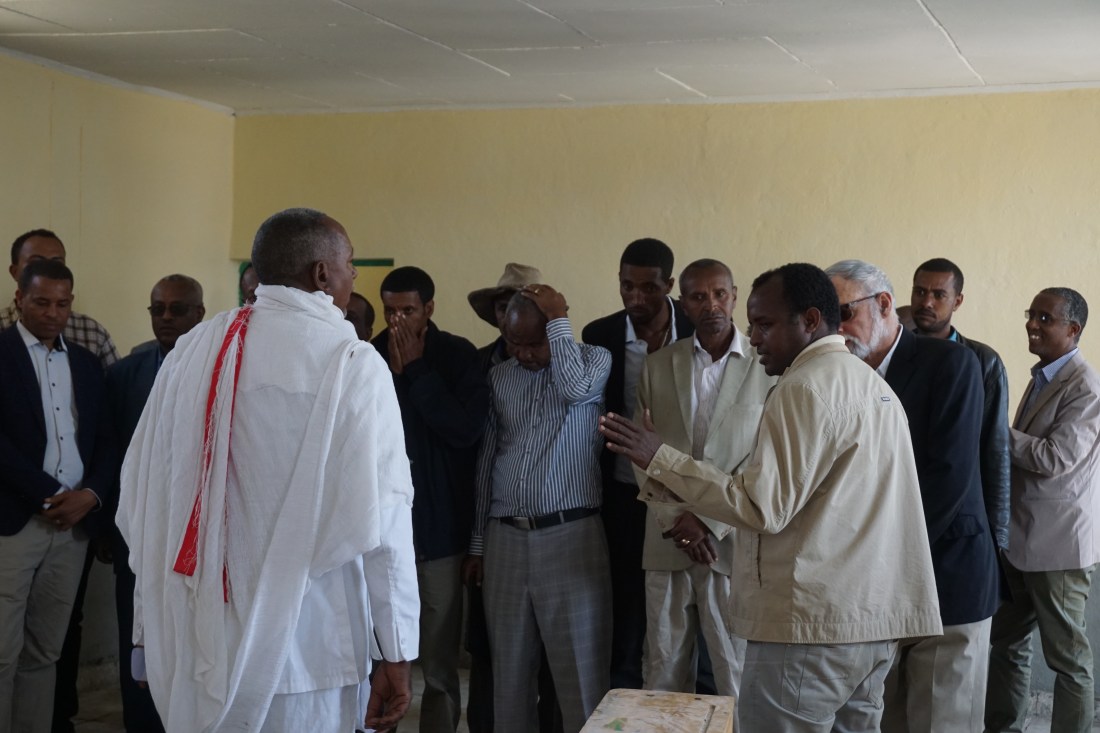


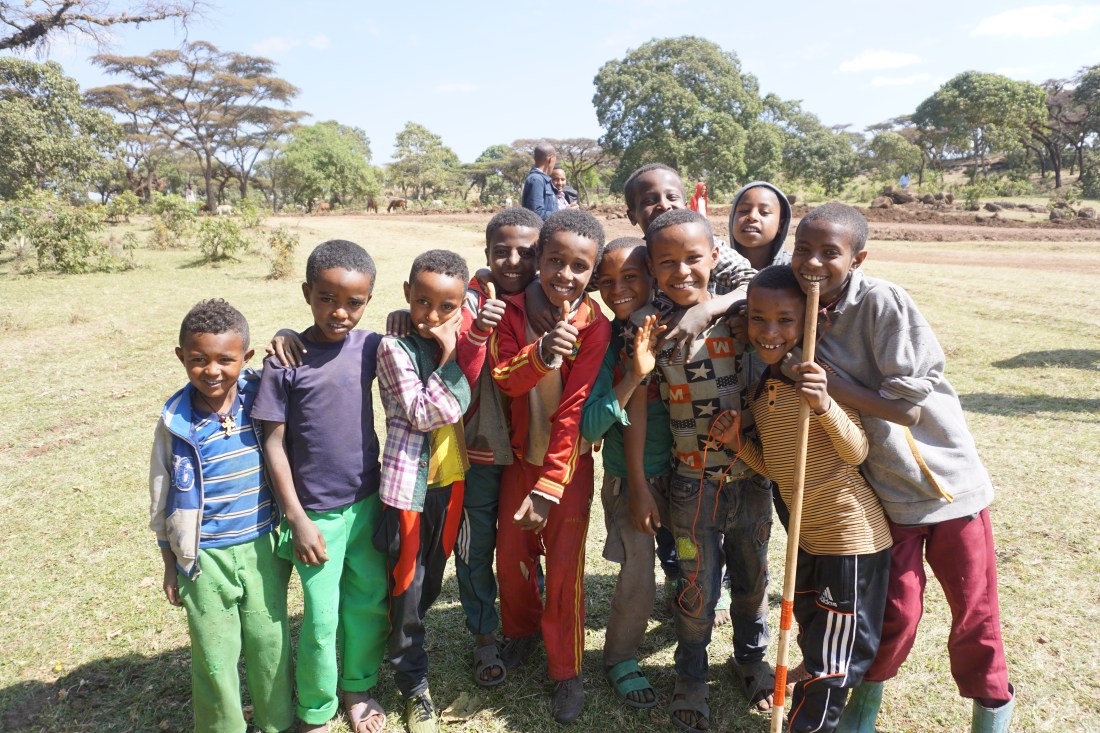
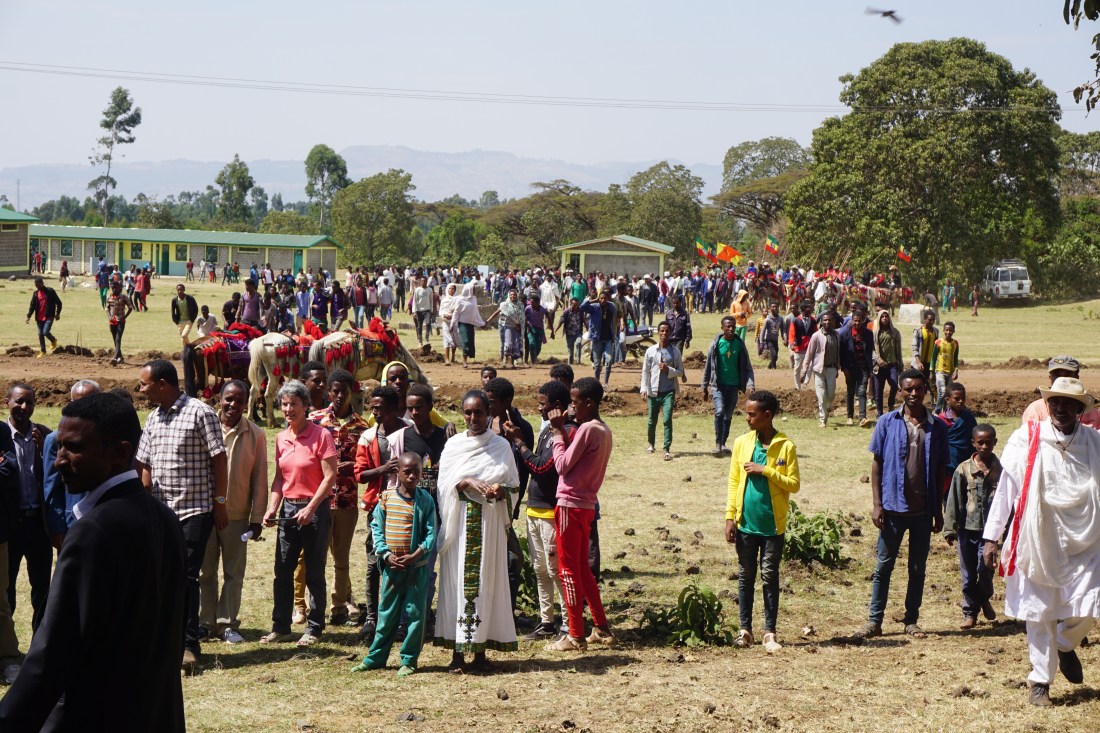
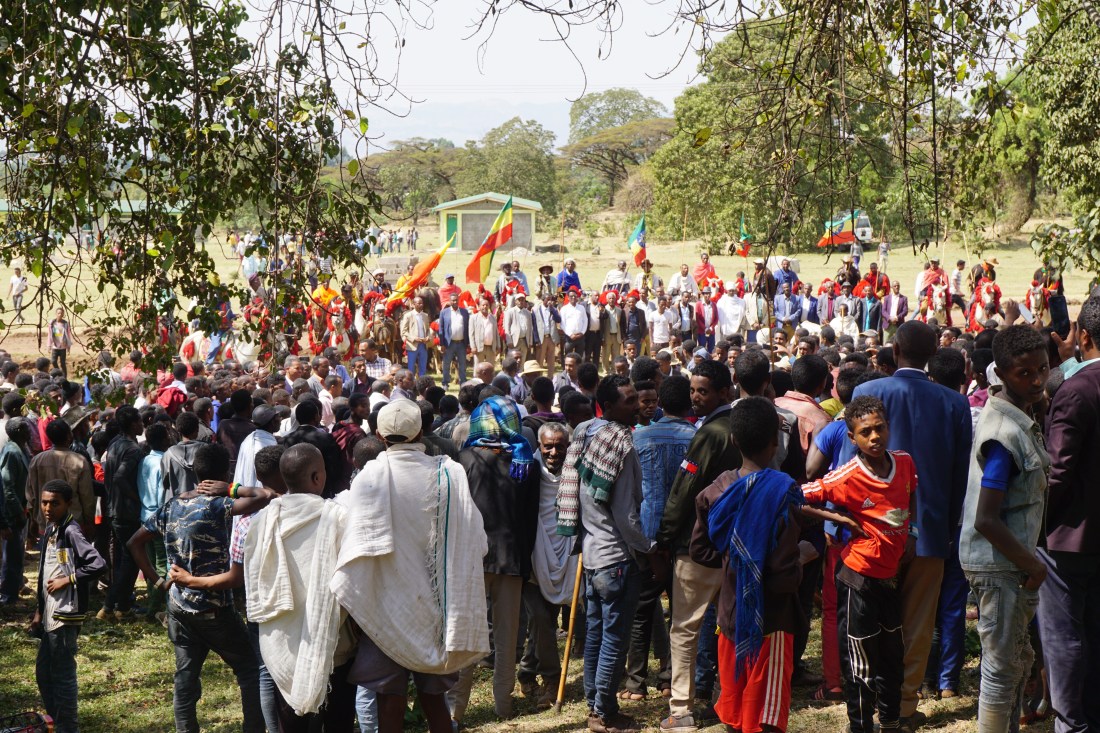


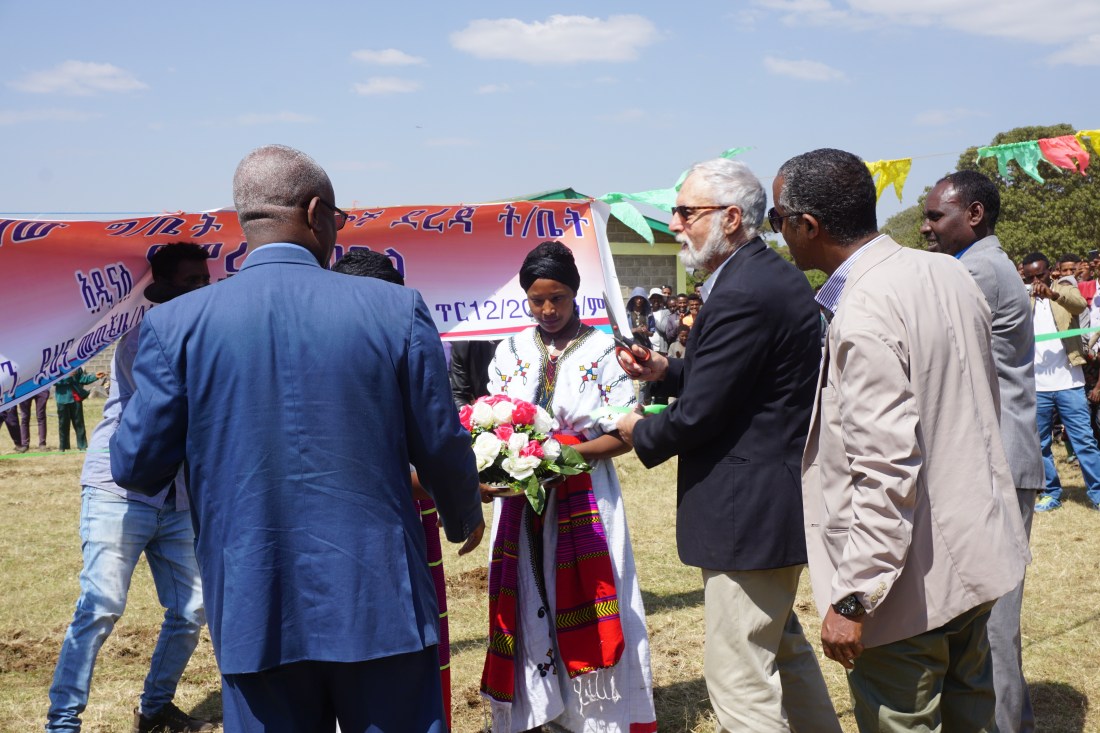
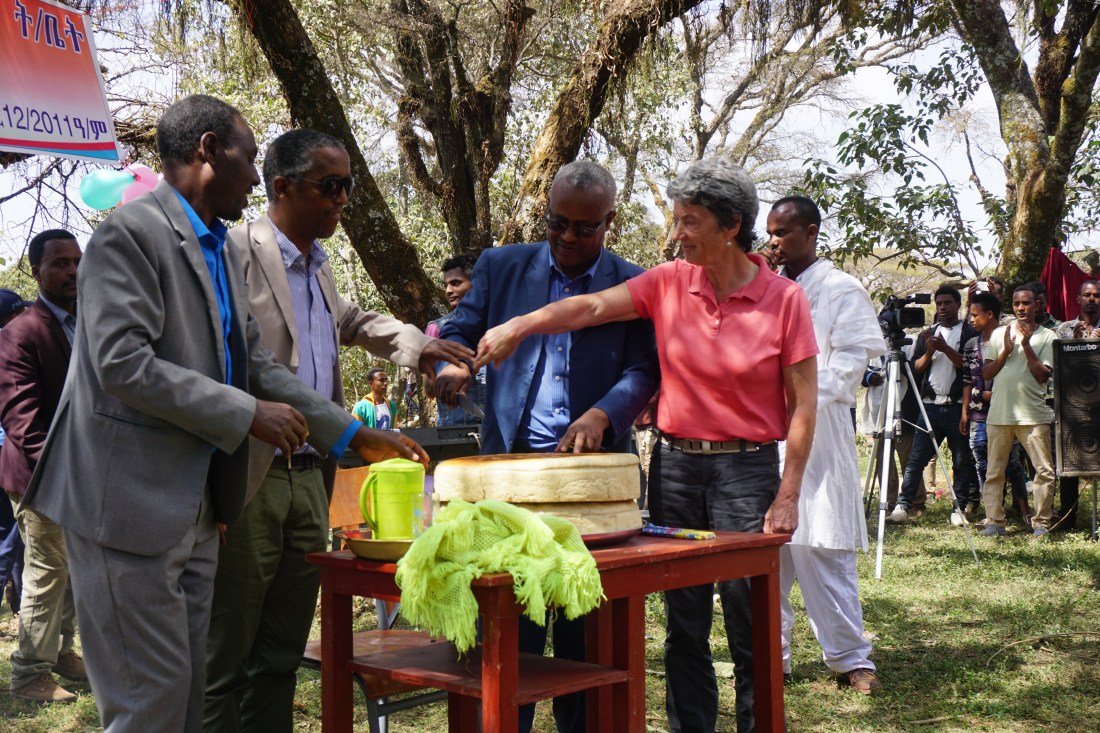
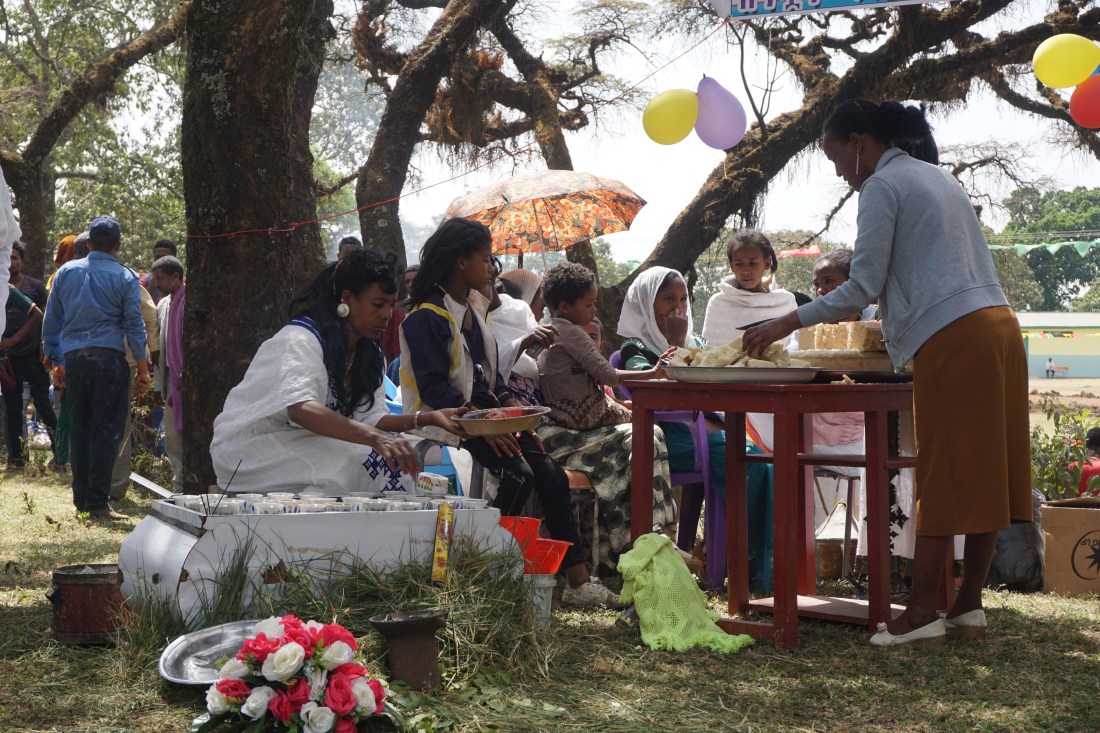


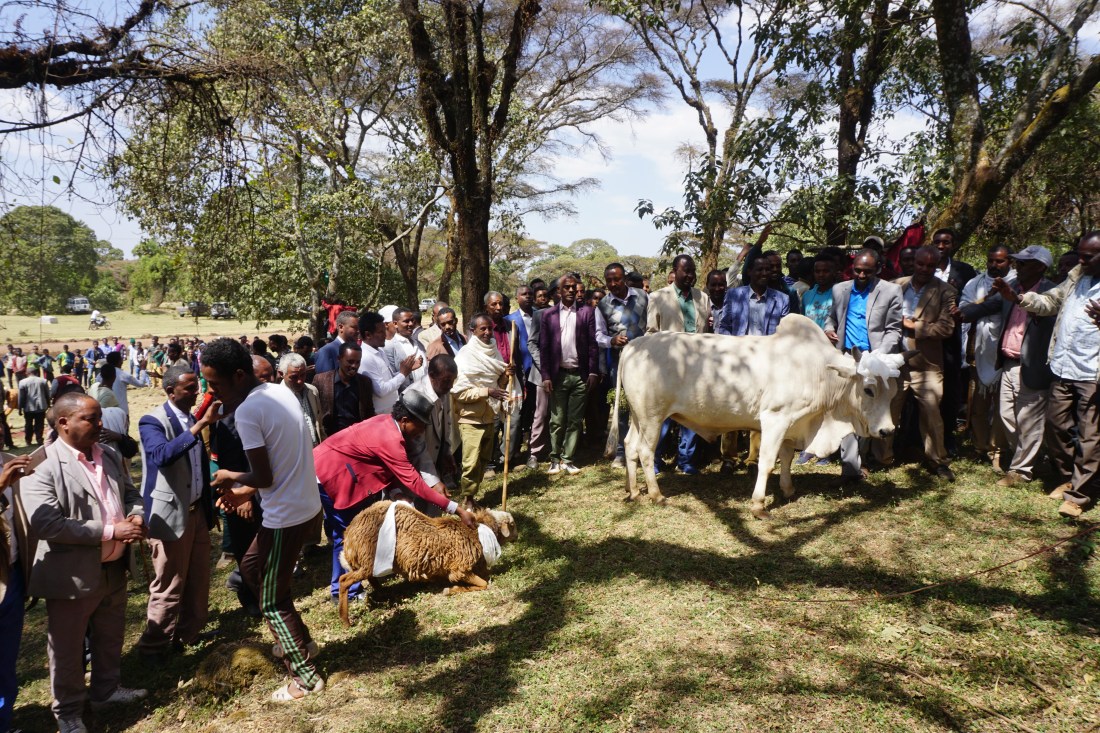
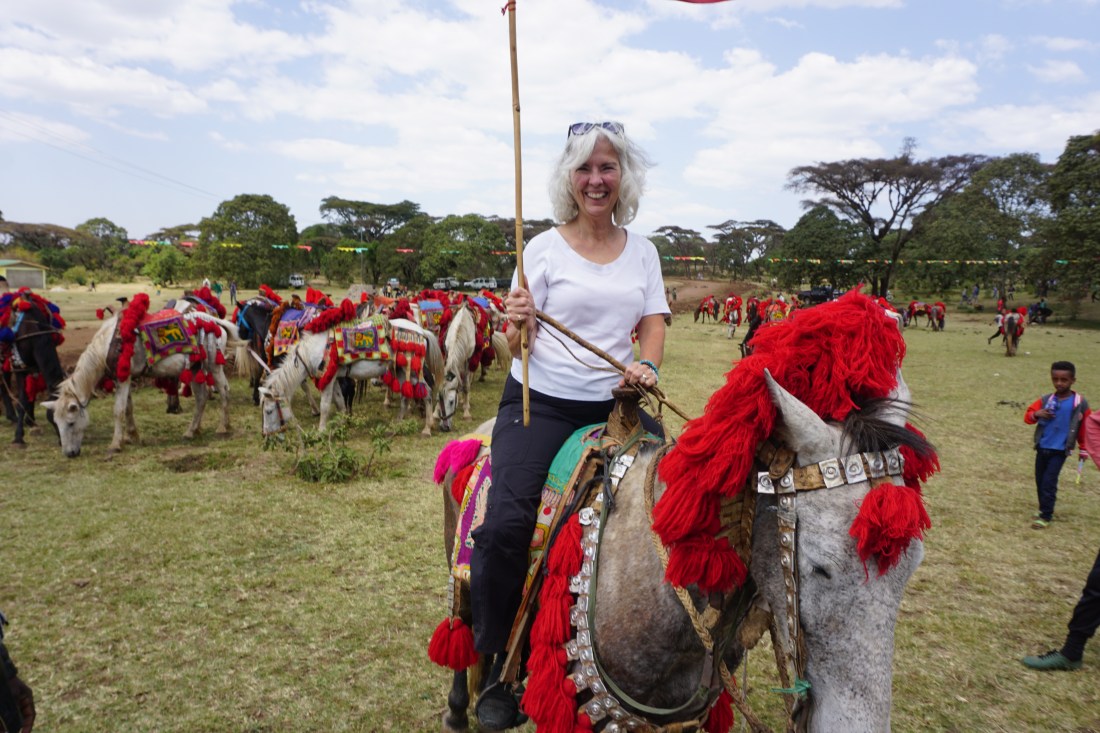
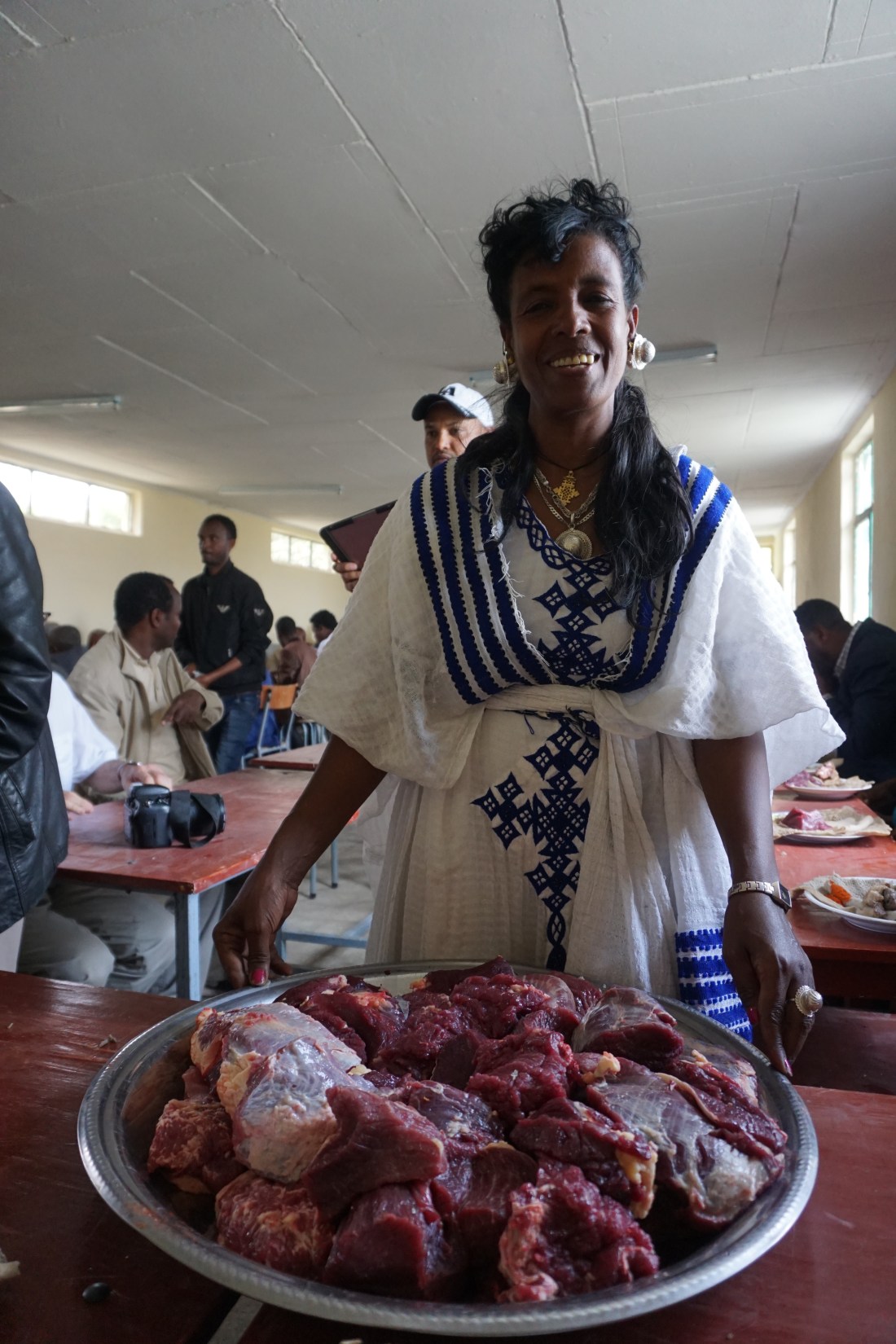
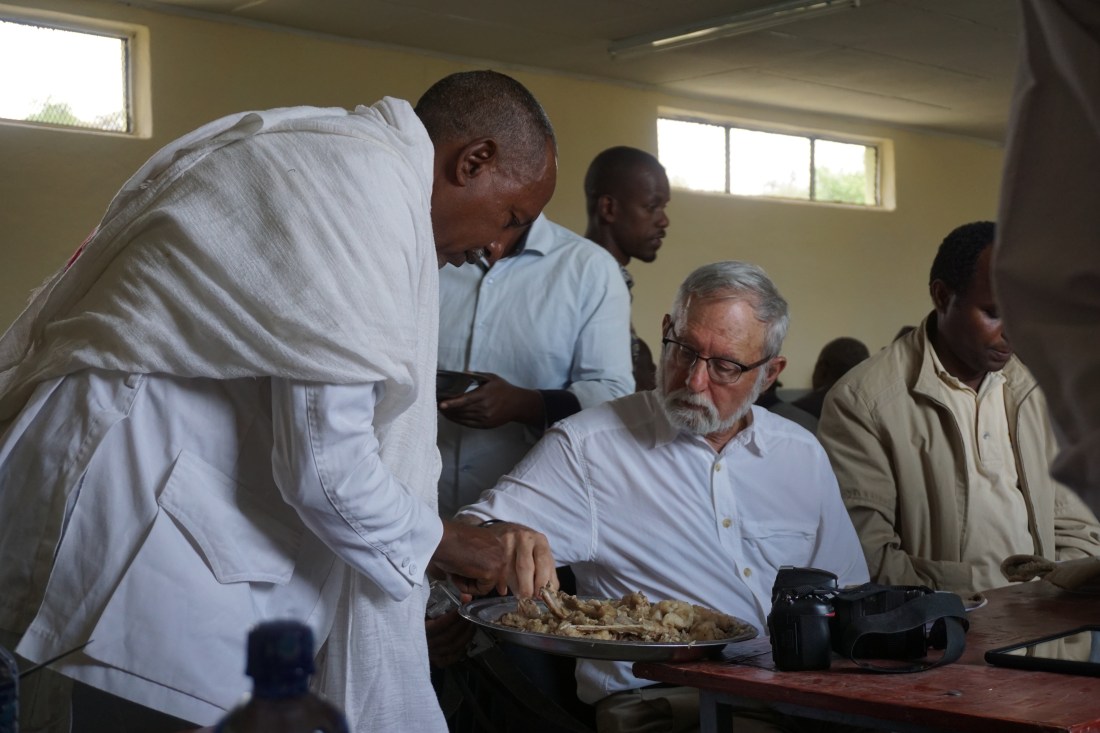
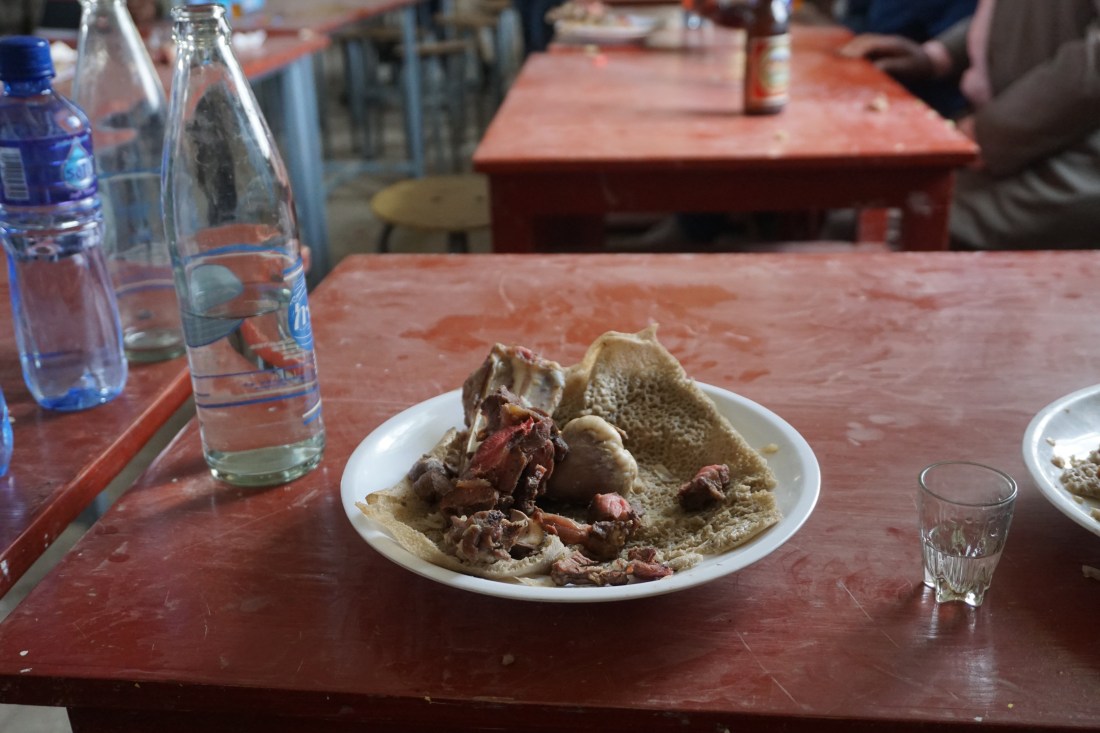 After the banquet the neighboring community school council took all dignitaries to a bar. Gina and I were the only females. At one point I counted 34 men. Likewise, the only women at the celebration were those who were helping out.
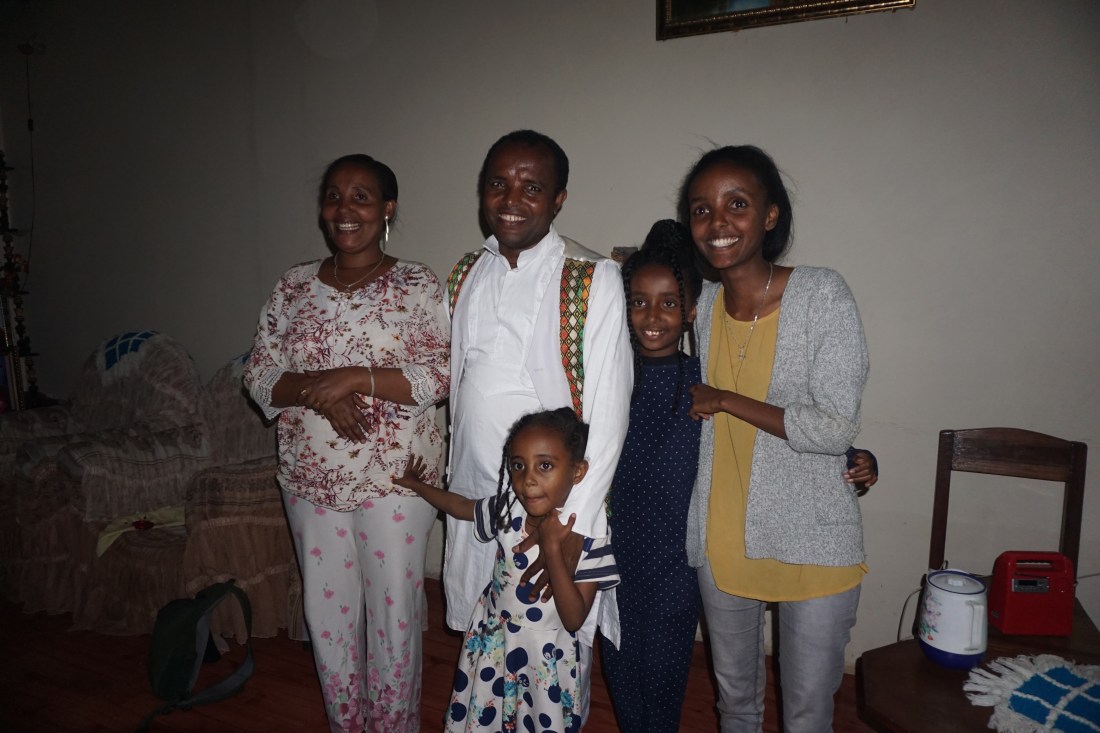
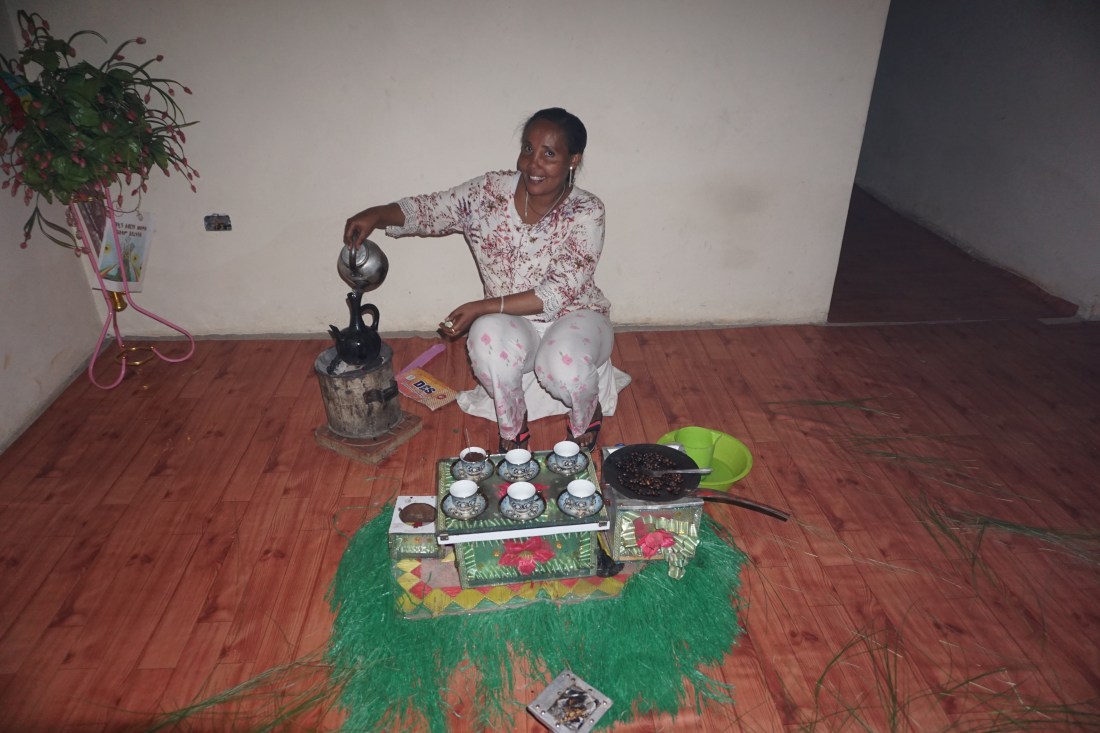
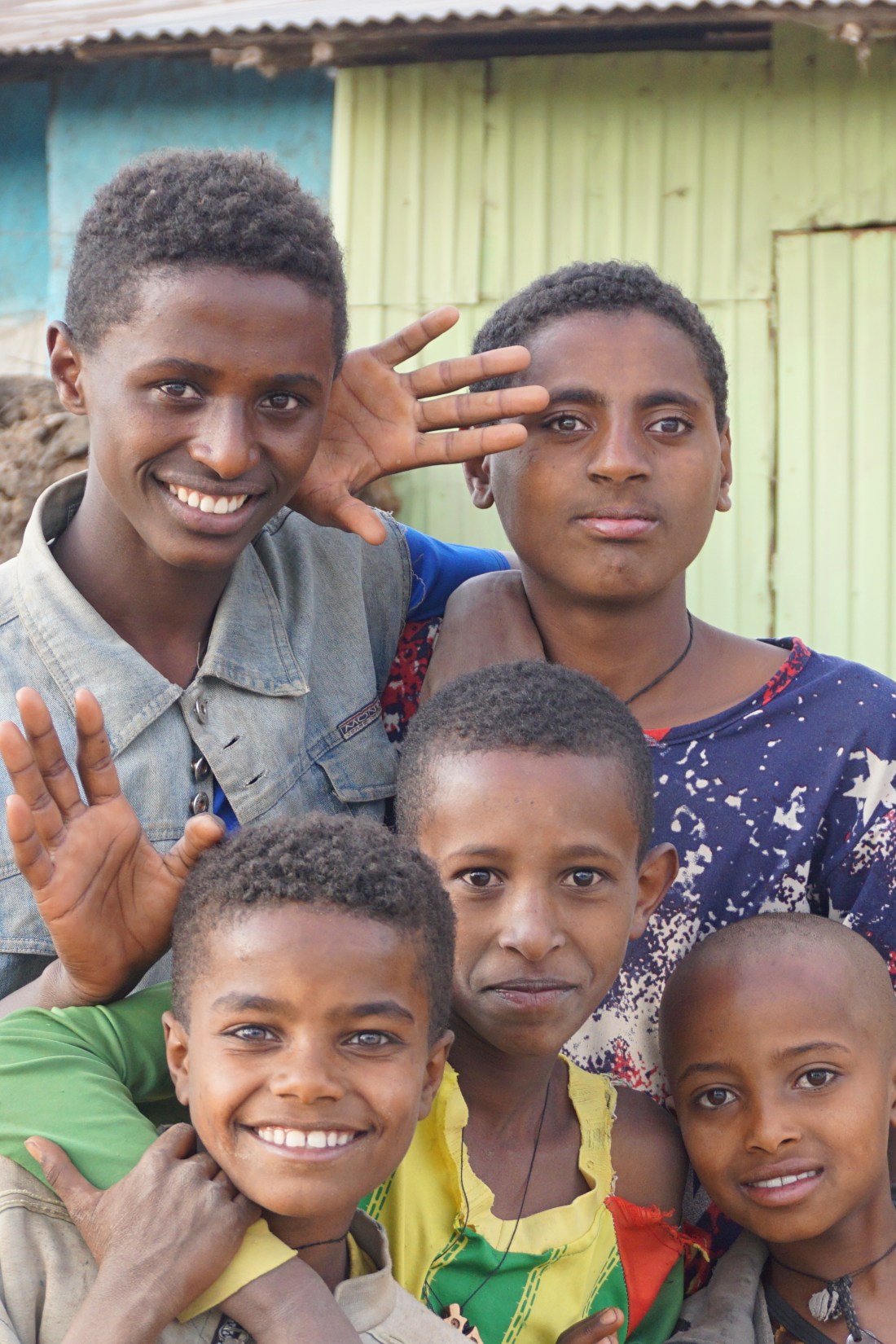 Lastly on the way back to the hotel we stopped at a distinguished teacher’s home for more coffee, meat and injera. He was honoured to have Gina and David as guests in his house. A sign of respect is to feed people personally, so we were all individually fed by him.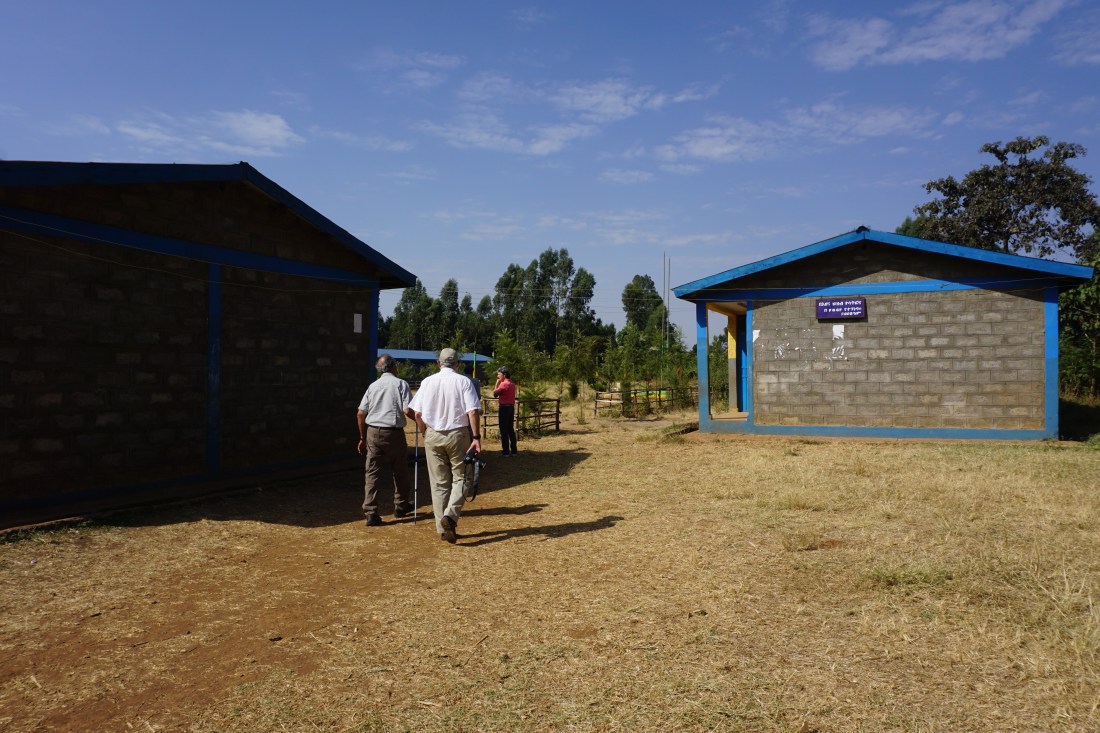




 BeverleyandJohn's2018Travels