Ethiopia – Bahir Dar

I went to the Doctor again as the antihistamines were not working. My welts turned out to be dust mite bites. Vicious insects. The Doctor recommended keeping tight clothes on as a prevention.

On Sunday we flew to Bahir Dar.  Our hotel and room were lovely.

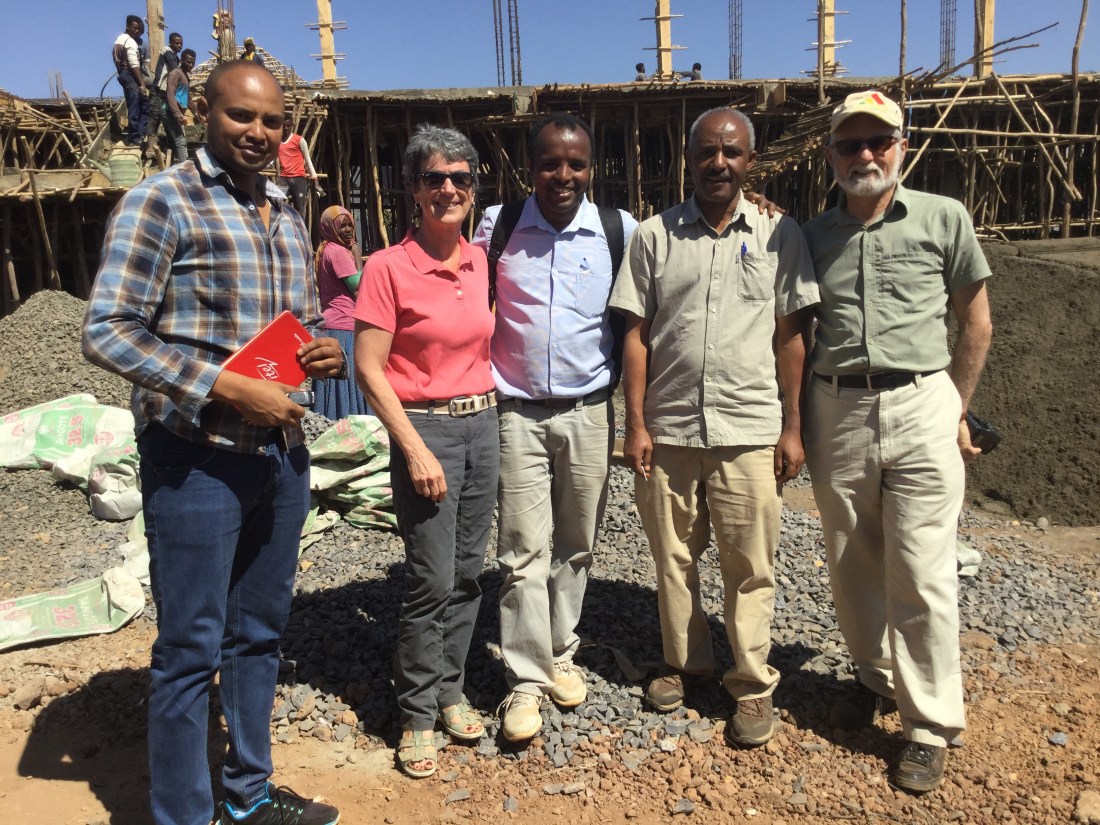
Here we met Gina and David Cosco from Whitehorse who run The Frances G. Cosco Foundation in Amhara Region.  They work collaboratively with local communities, government and other NGOs on education improvement projects. Their work includes facilities, teacher training, school greening, water sanitation and hygiene, and outcome measurement and research. You can check their website at FGC Foundation.org

Below from left to right are Girma, Gina, Abiyot, Yehalim (the Foundation’s Executive Director) and David in front of one of the new schools under construction.
img_0476

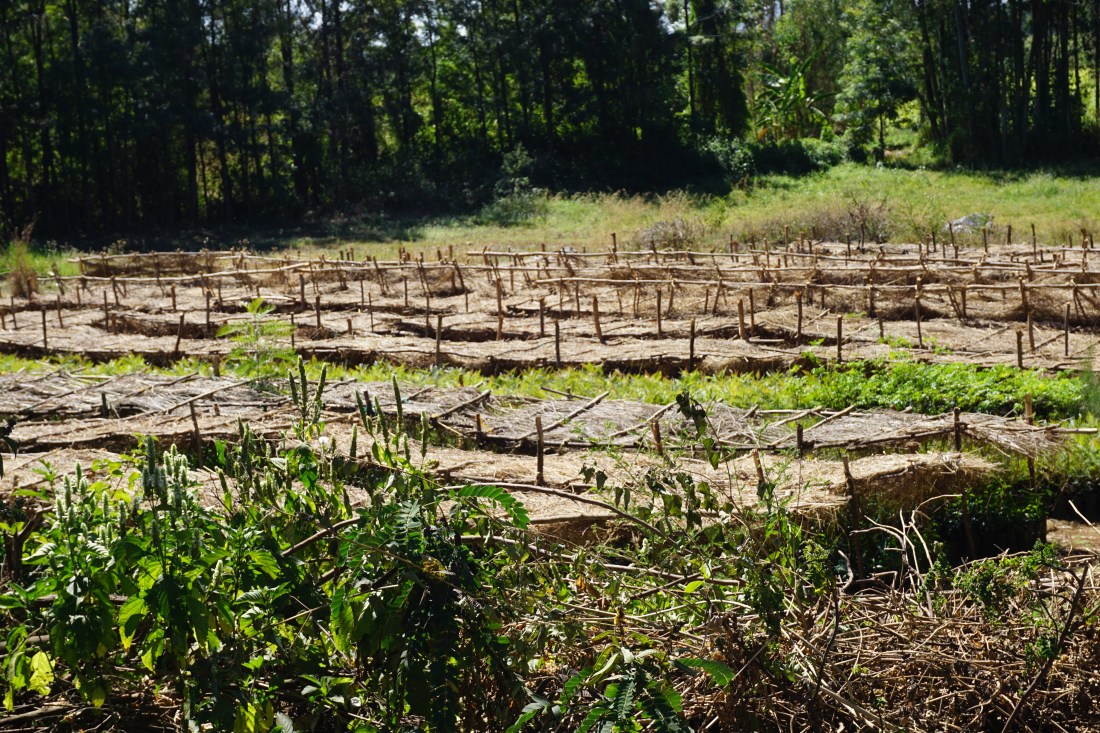
The day after arriving we visited sights in and around Bahir Dar which is the third largest city in Ethiopia. Khat fields on the outskirts.
dsc00759

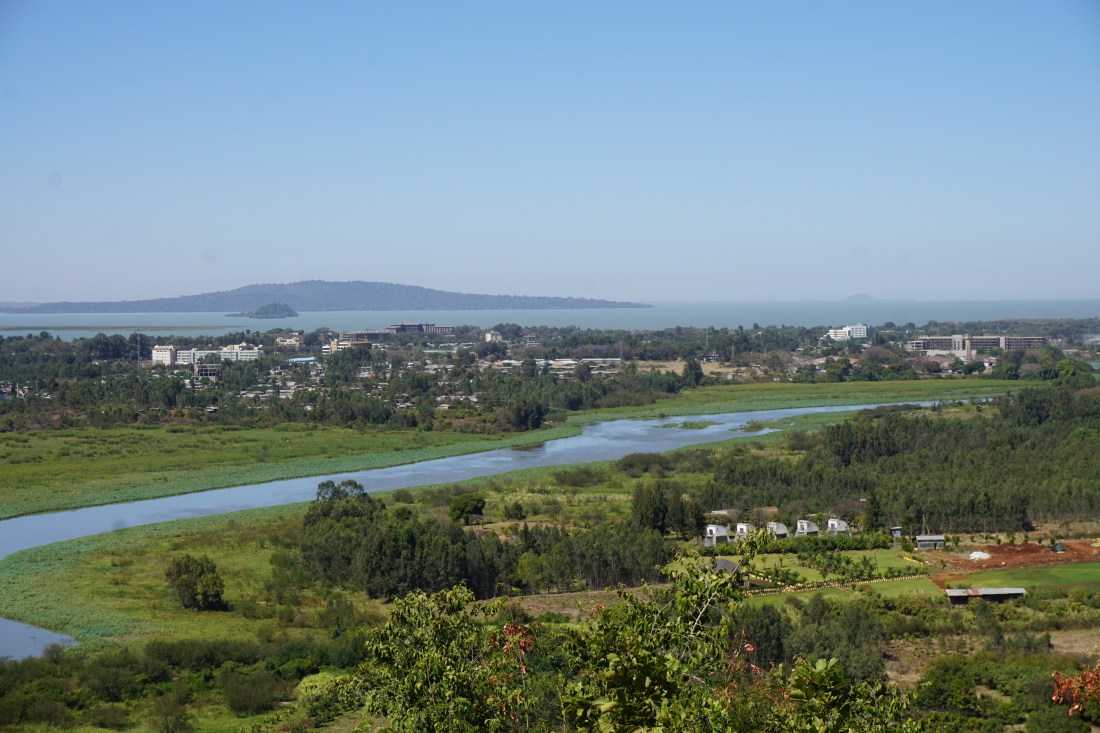
From this lookout you can see Lake Tana in the distance and the Blue Nile below. You can also see the khat farms in the foreground.  We were told 90 % of males and 36% of females use khat daily, though that seems like an exaggerated number to us.
dsc00768

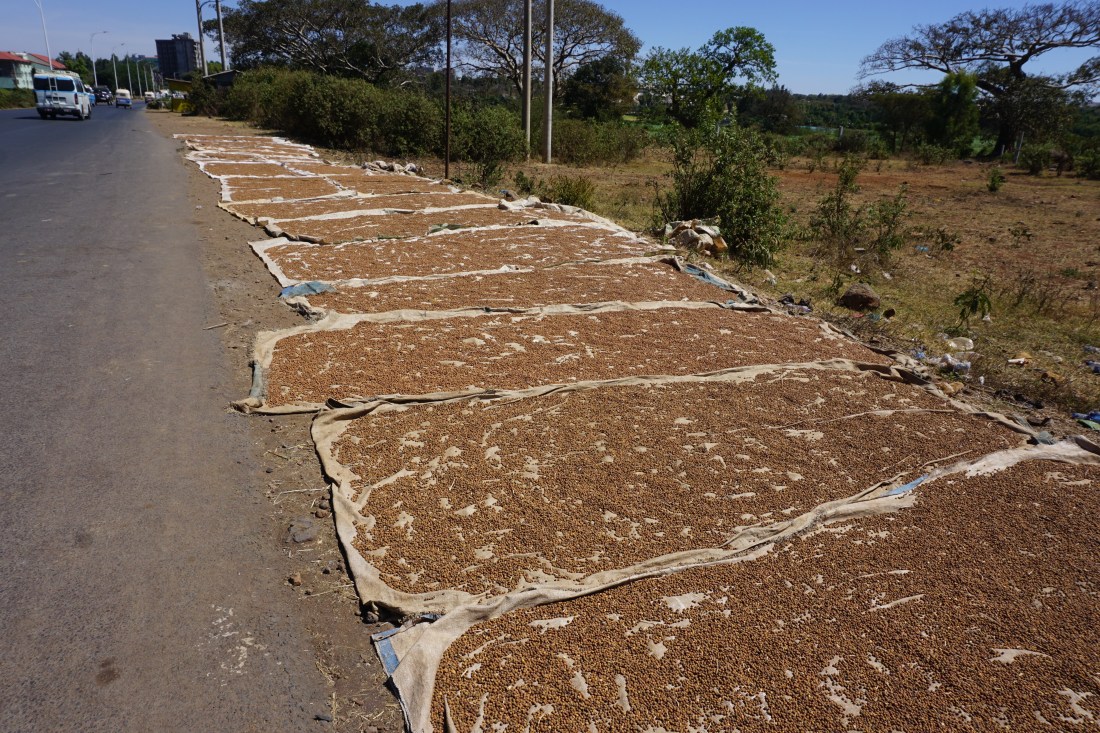
Along the sides of the road you can see the sun being used to dry a variety of foods.
dsc00750

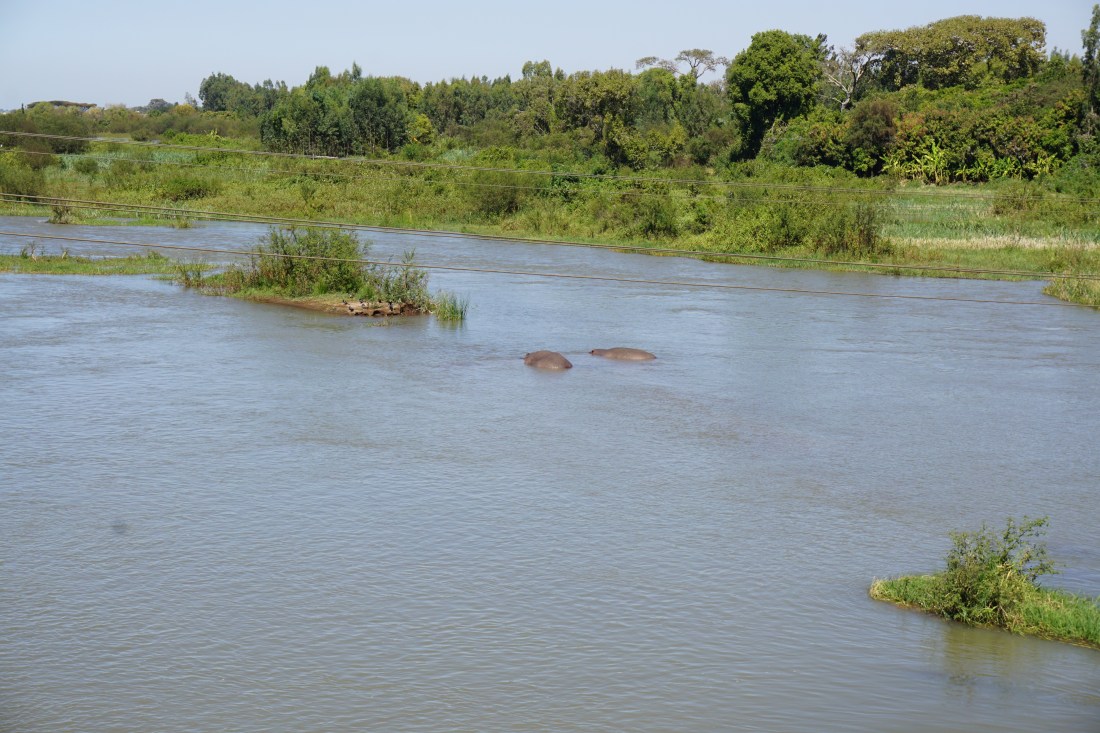
Our first hippo sighting

dsc00787

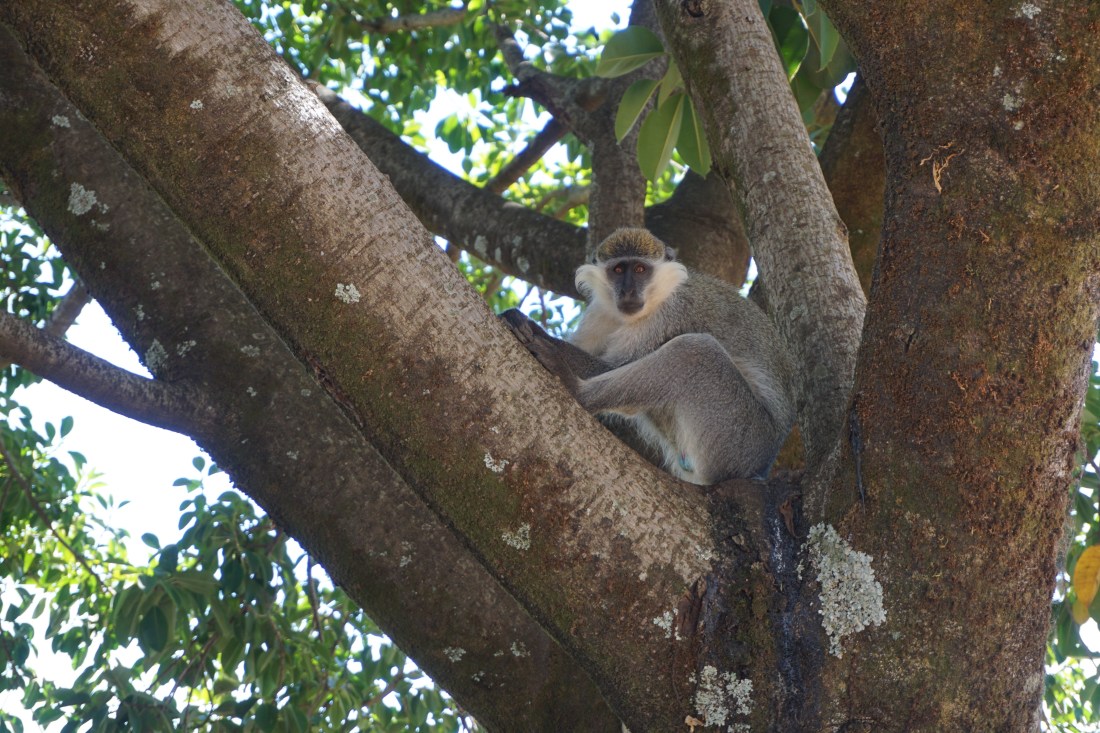
and monkey sightings too.

dsc00782

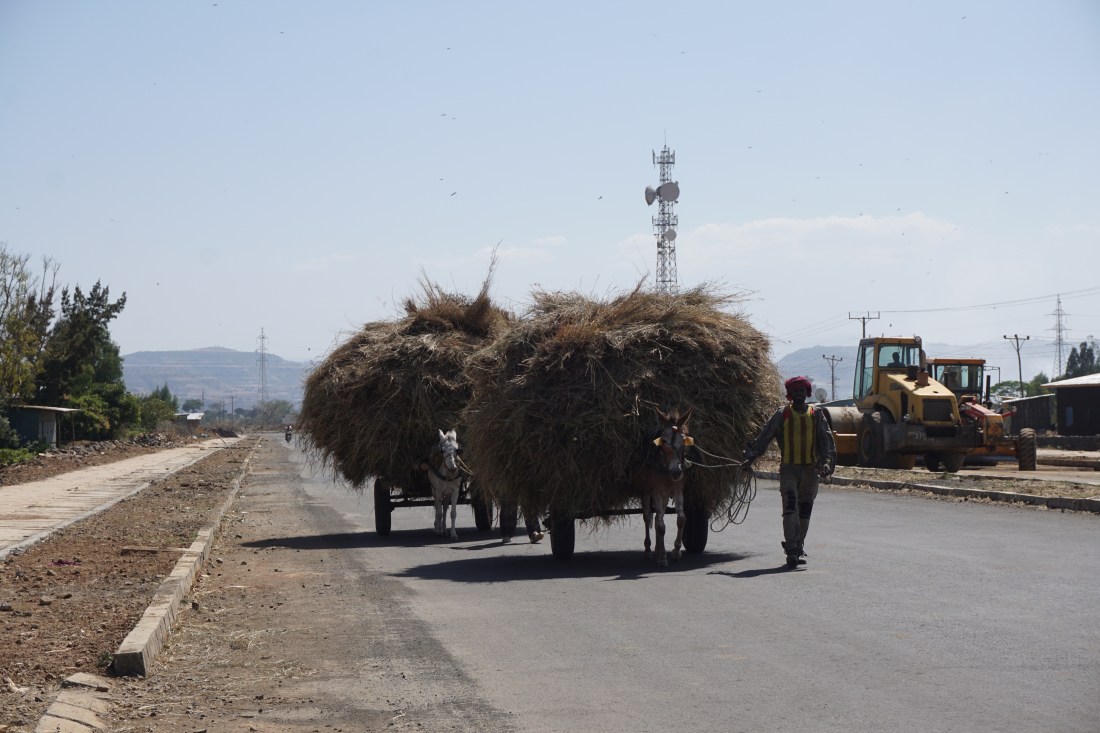
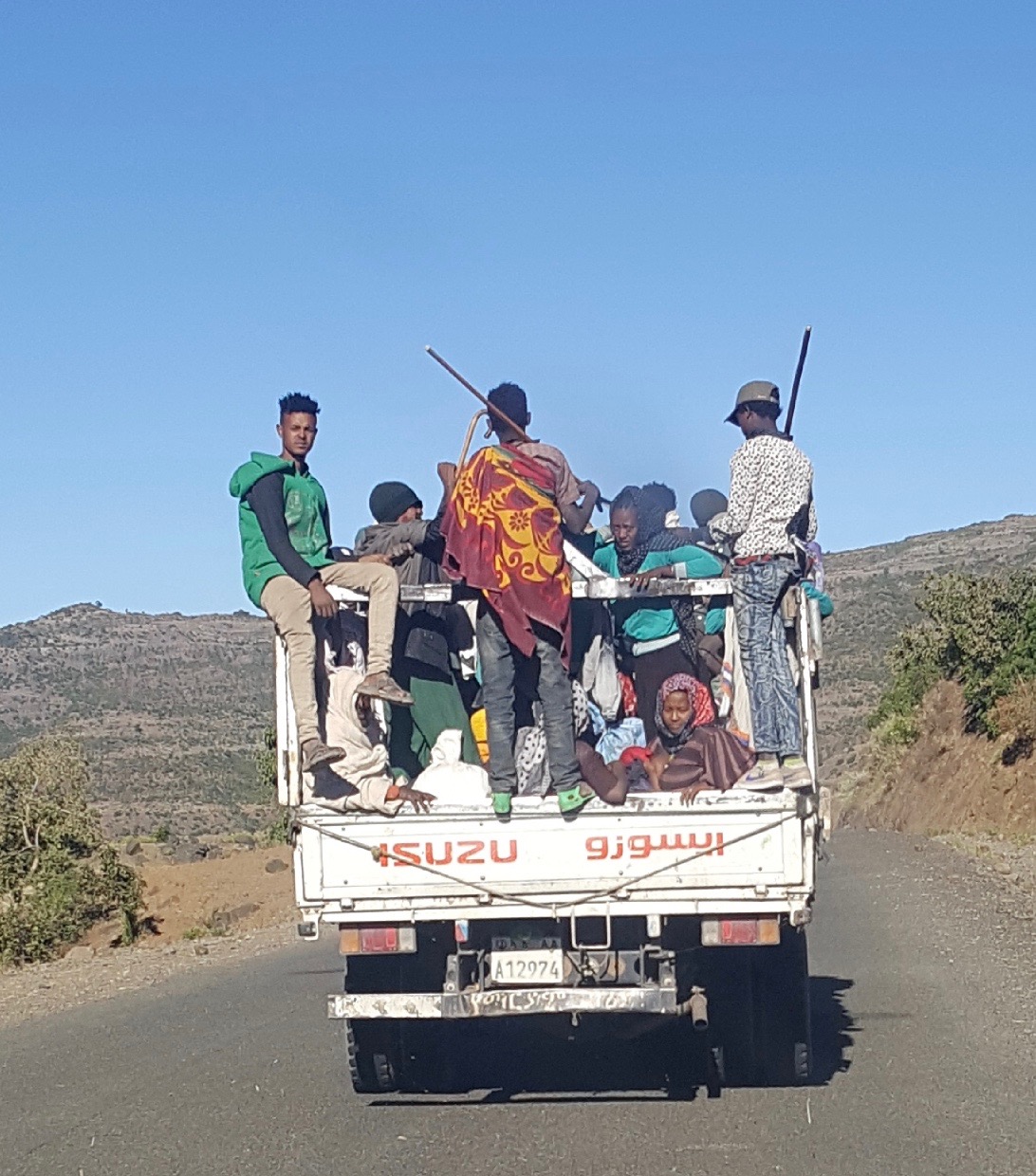
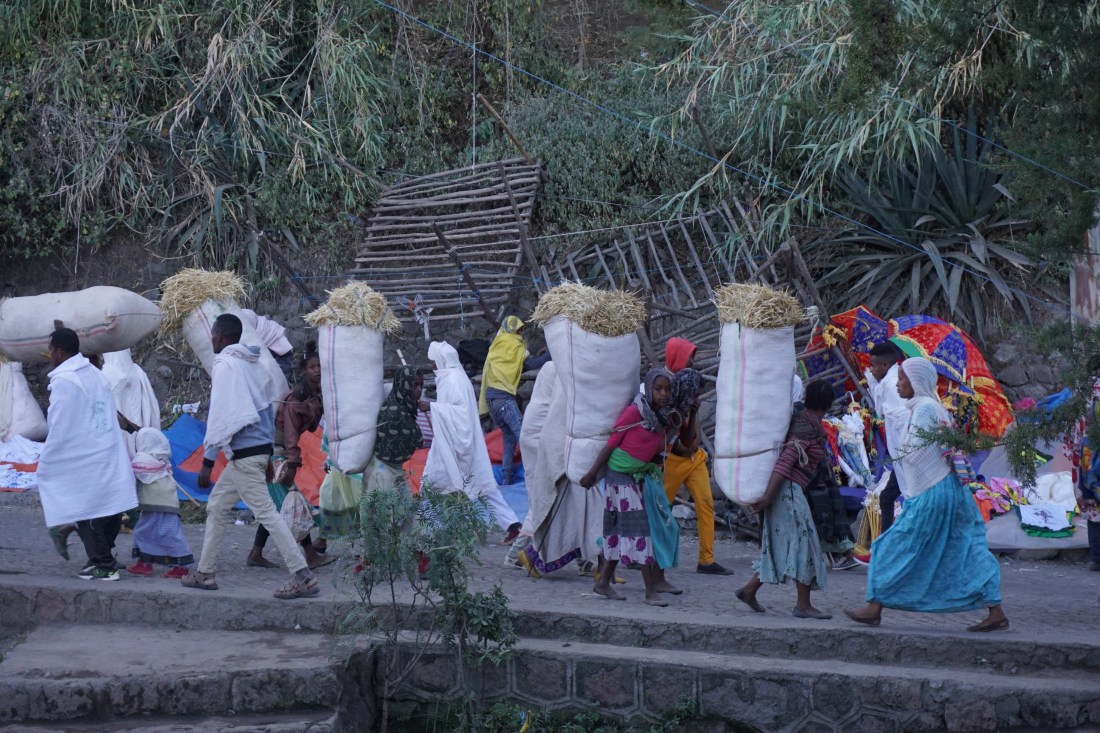
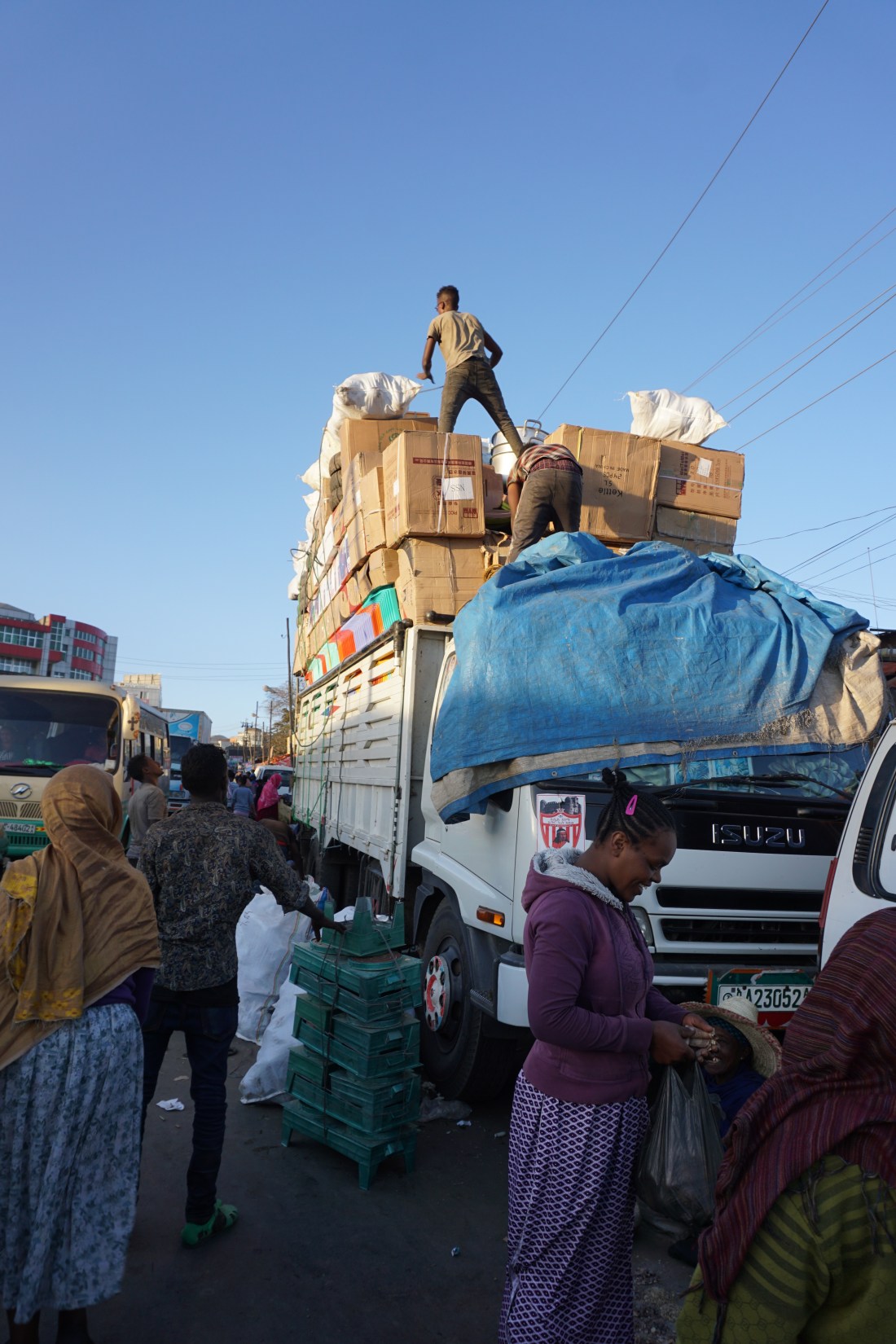
Amazing how high the loads can be.

dsc00798

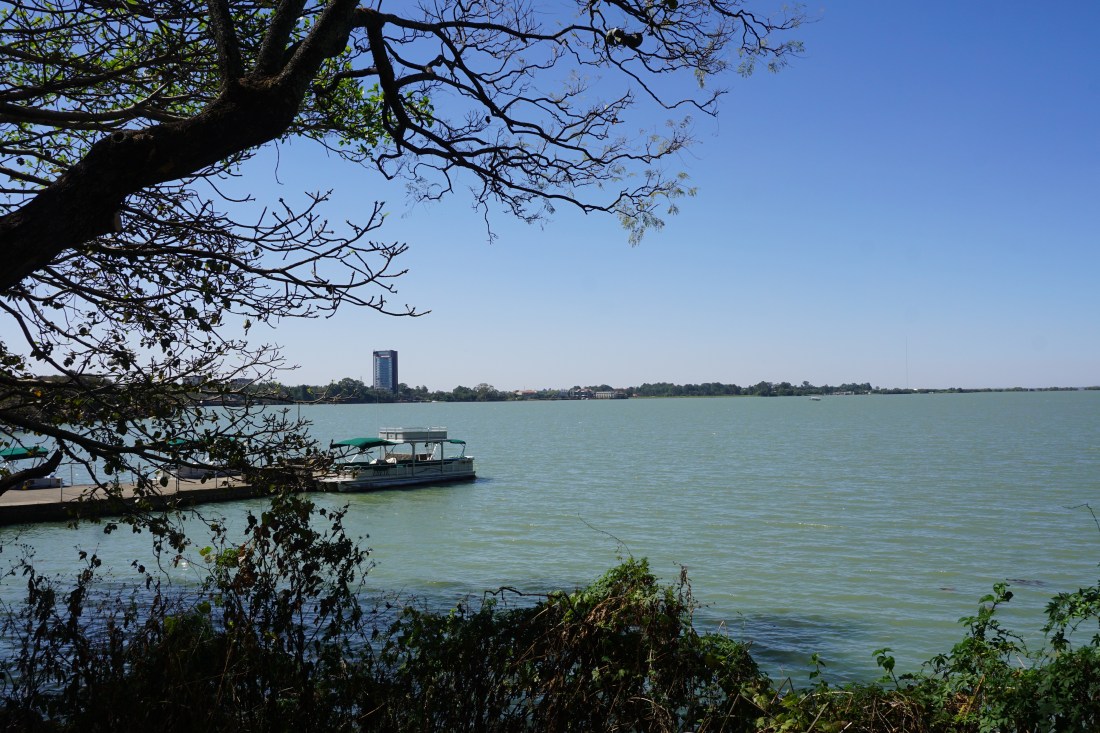
Lake Tana              .

dsc00789

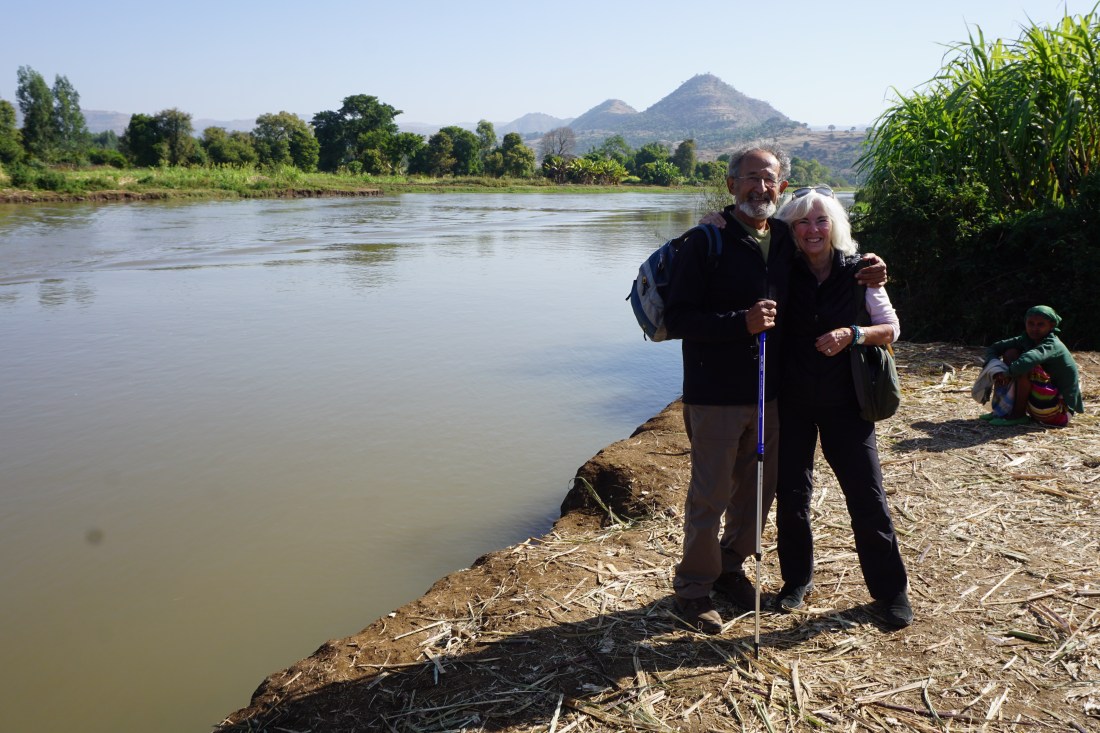
On a subsequent day we visited the Blue Nile.
dsc00803

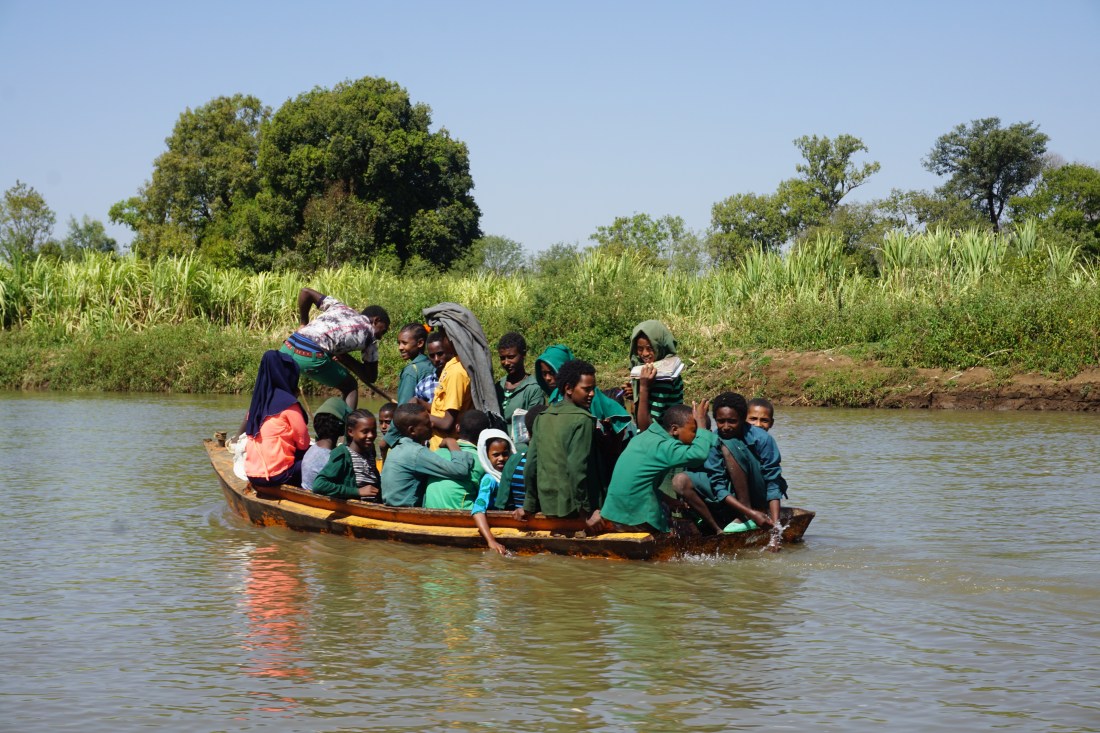
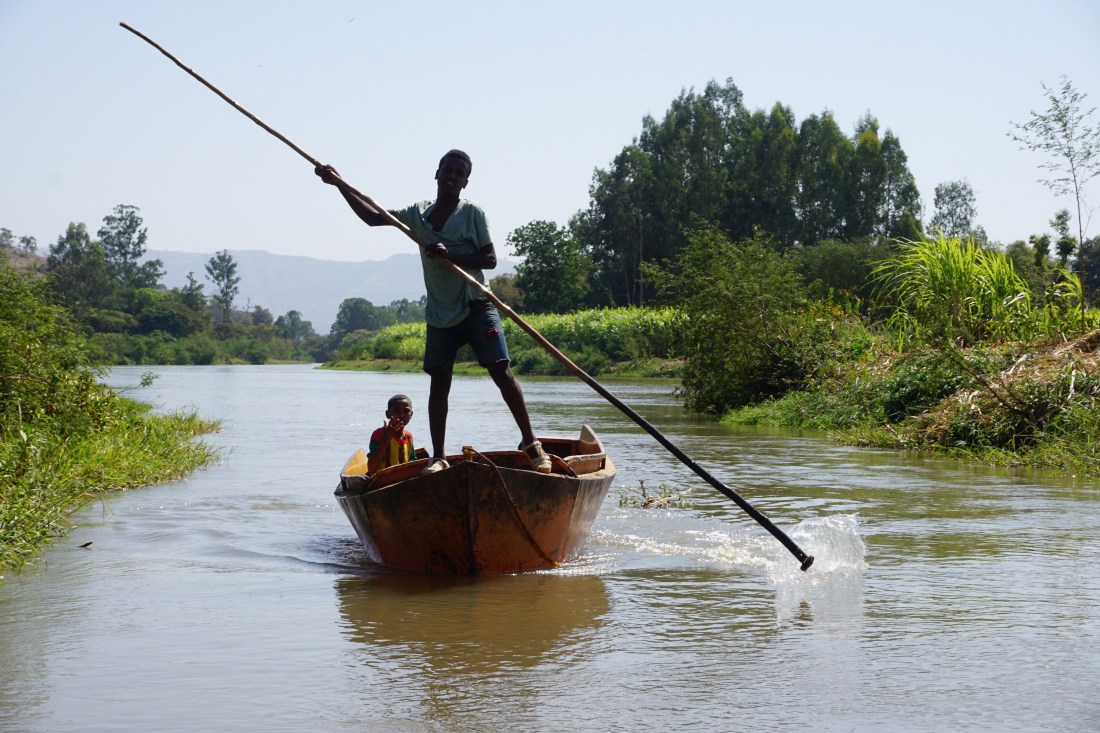
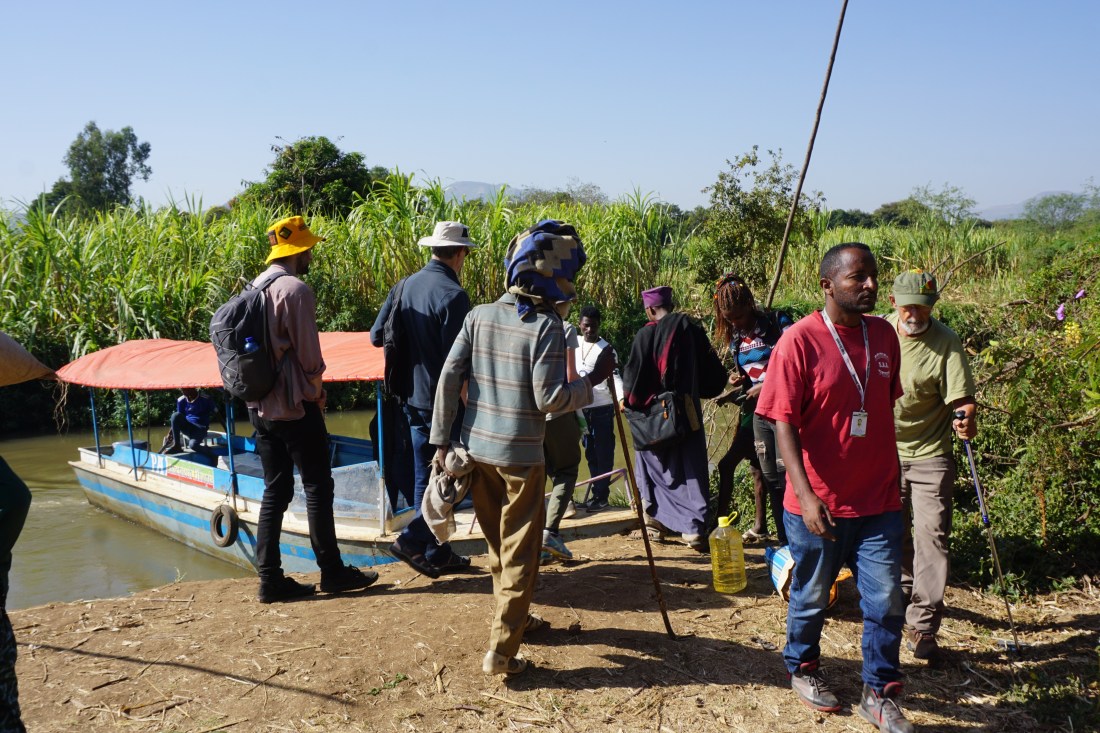
Ferry across the river for a hike to the falls.
dsc00809

School bus.

dsc00878

dsc00872

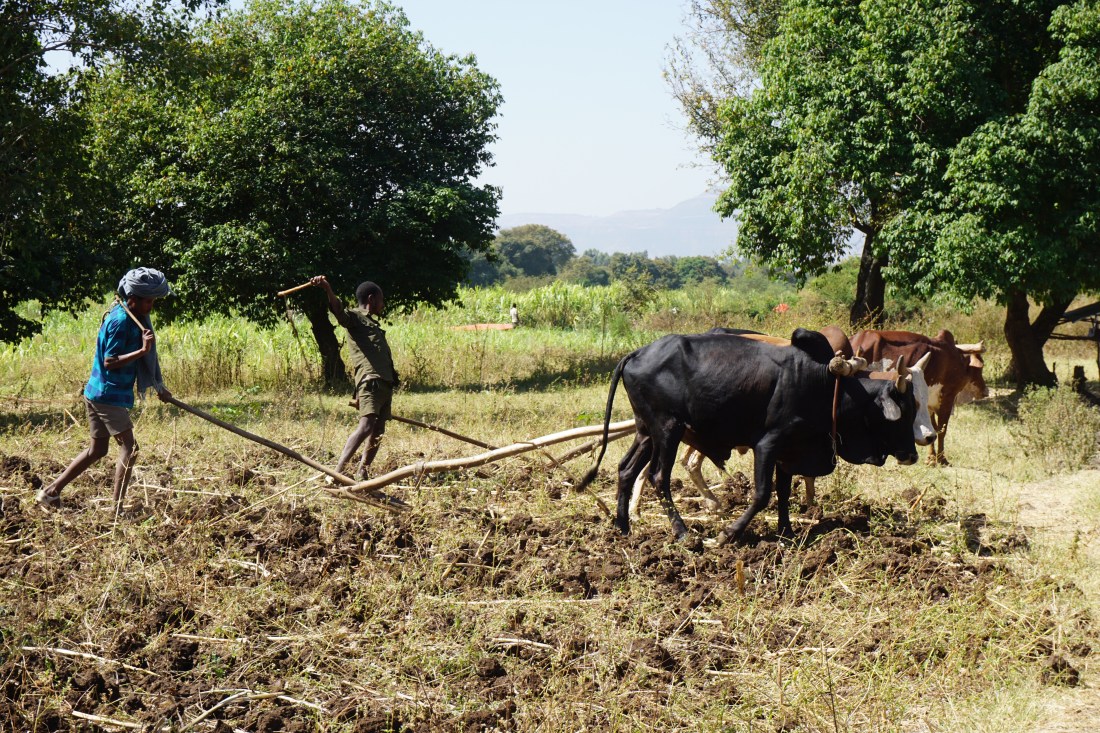
New fields being ploughed.  The whip cracking was a distinctive sound on our hike.
dsc00869

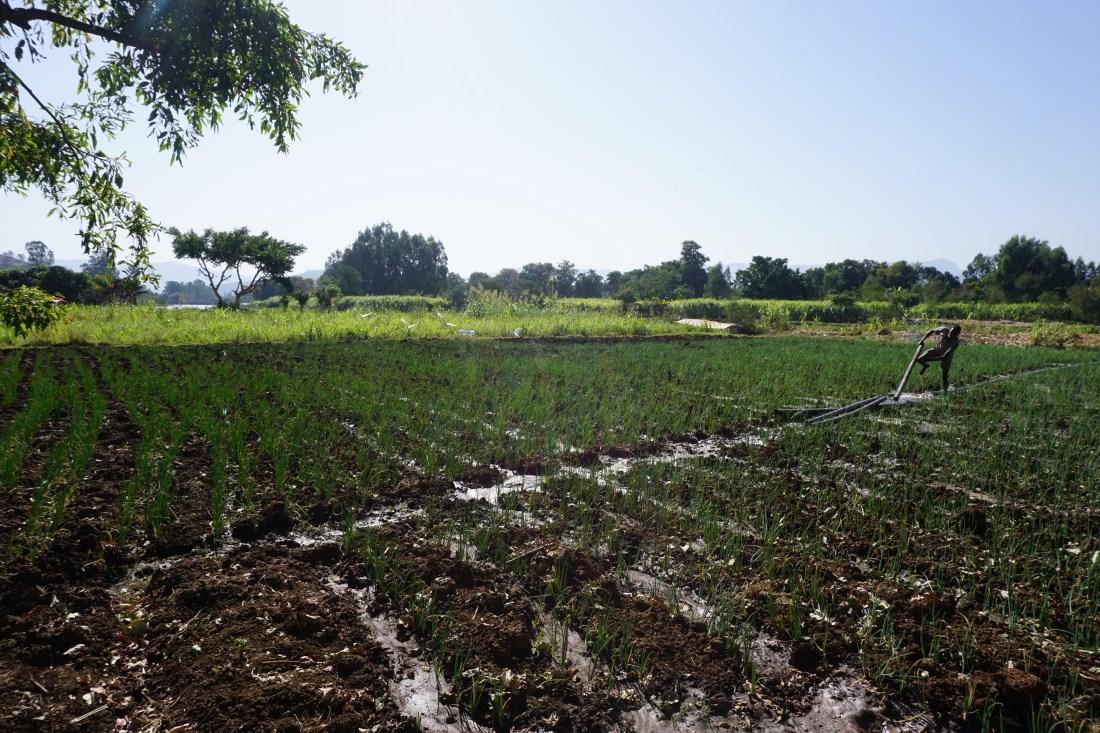
Fields of onions being tended to.

dsc00811

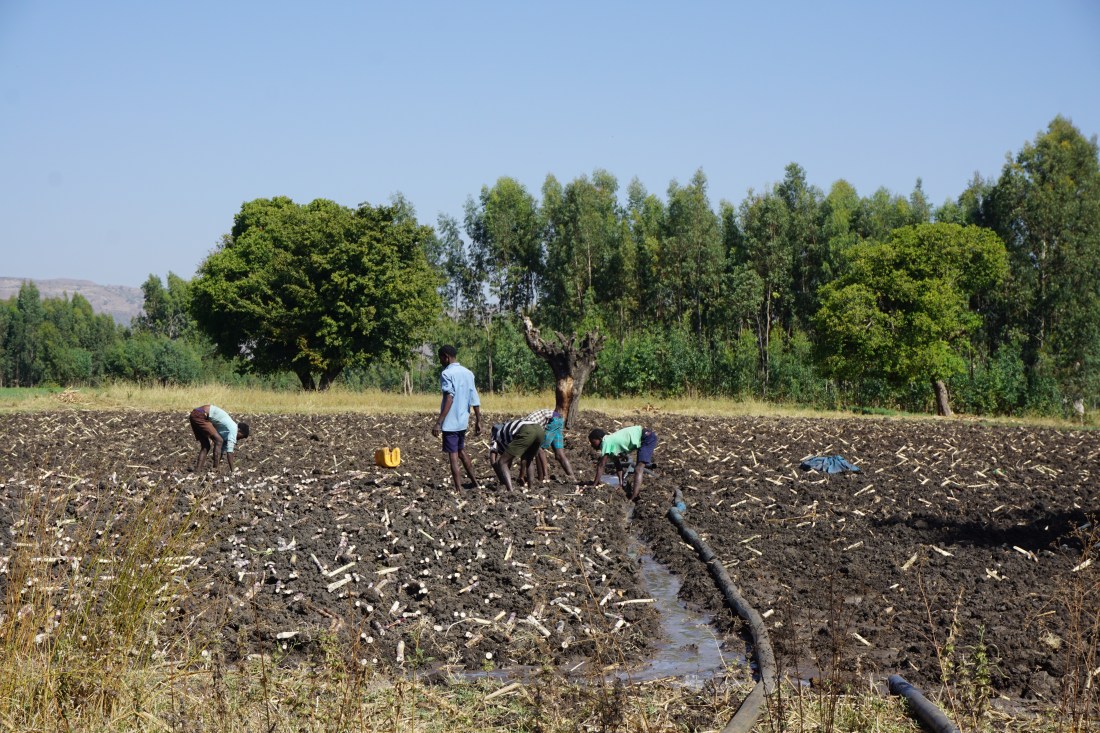
Sugar cane being planted.

dsc00826

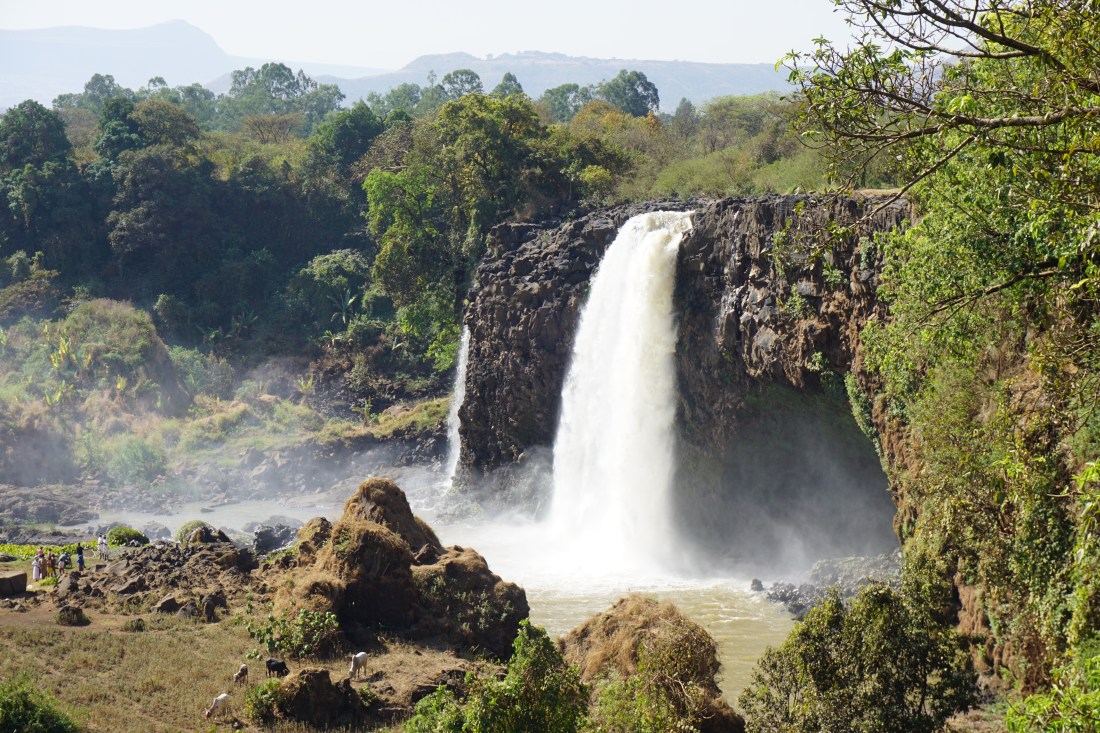
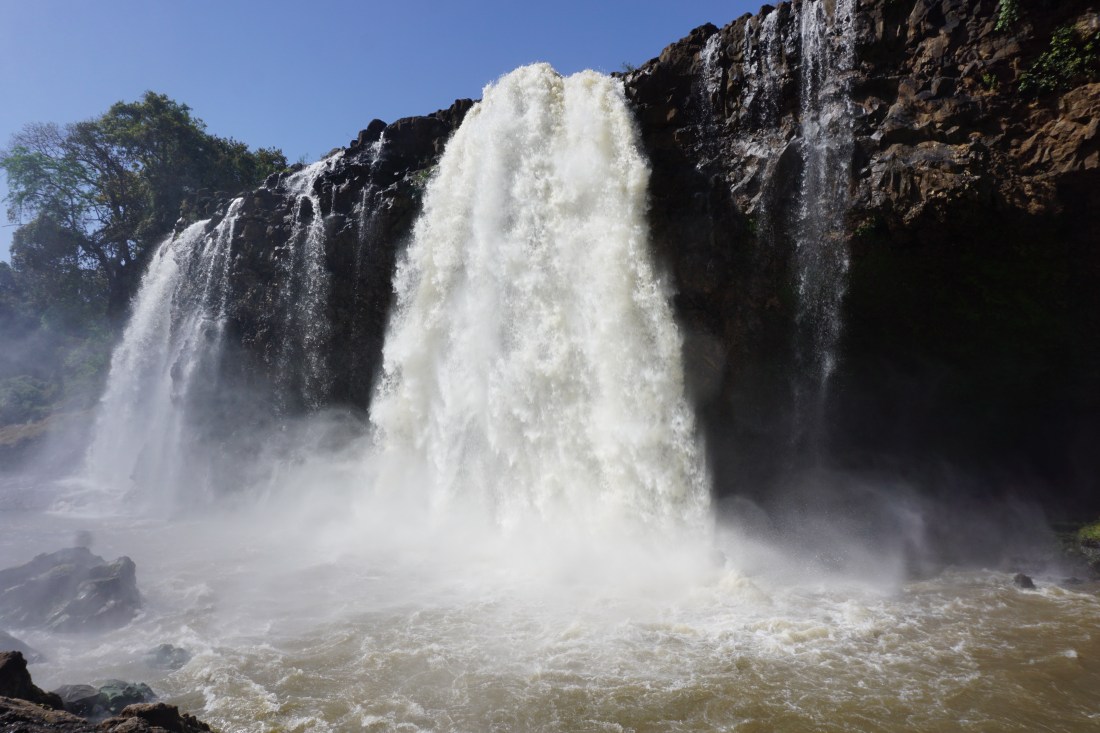
The Blue Nile falls.


dsc00831

dsc00844

dsc00848

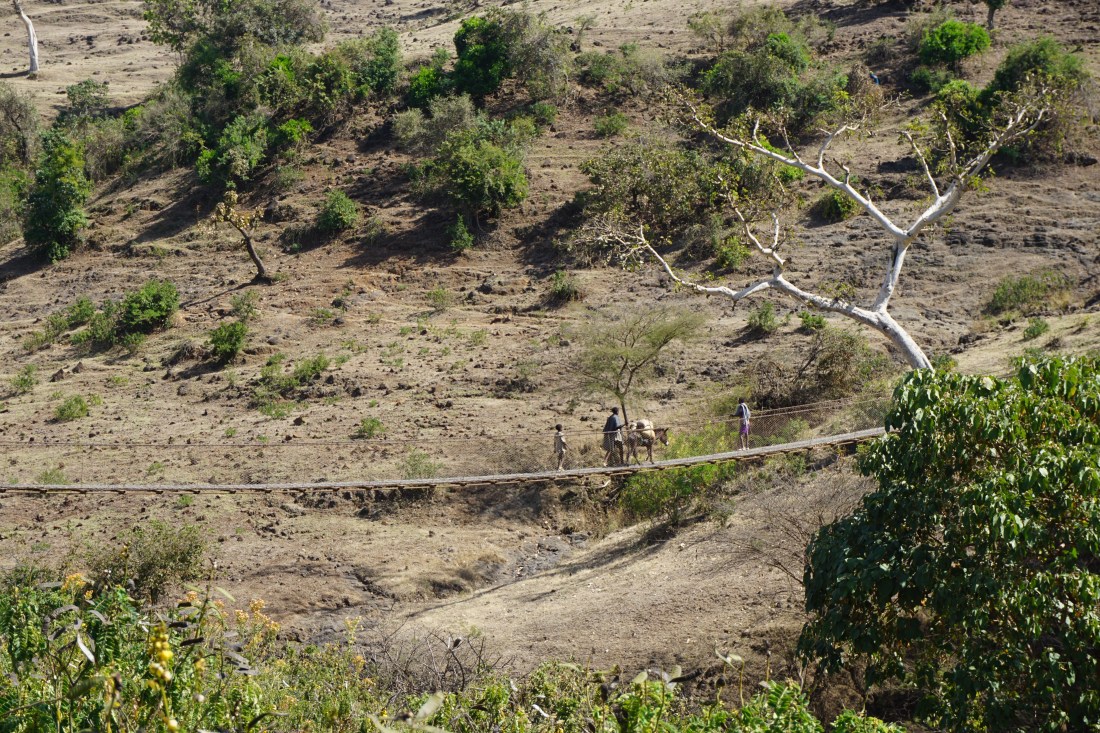
Swinging bridge over a deep ravine put in by an NGO so farmers can take their products to the market.
dsc00857

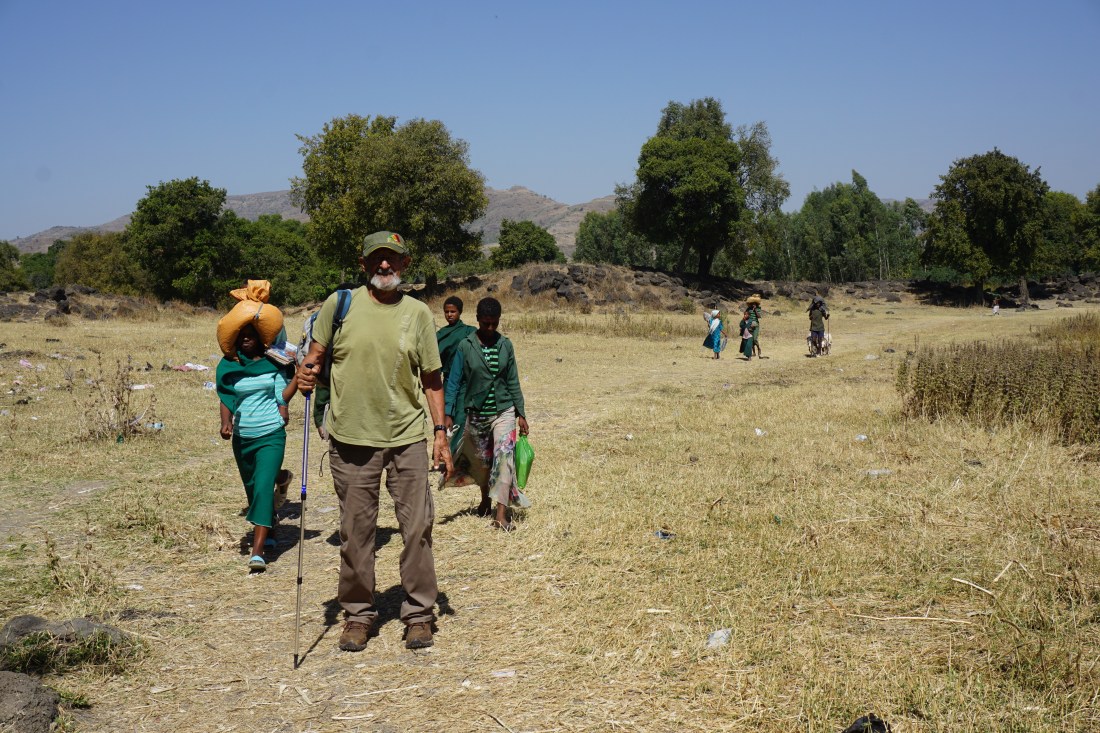
Returning from the hike for the bumpy ride back to town. High school students in the background with their green uniforms on.
dsc00884

Ethiopia – Harar

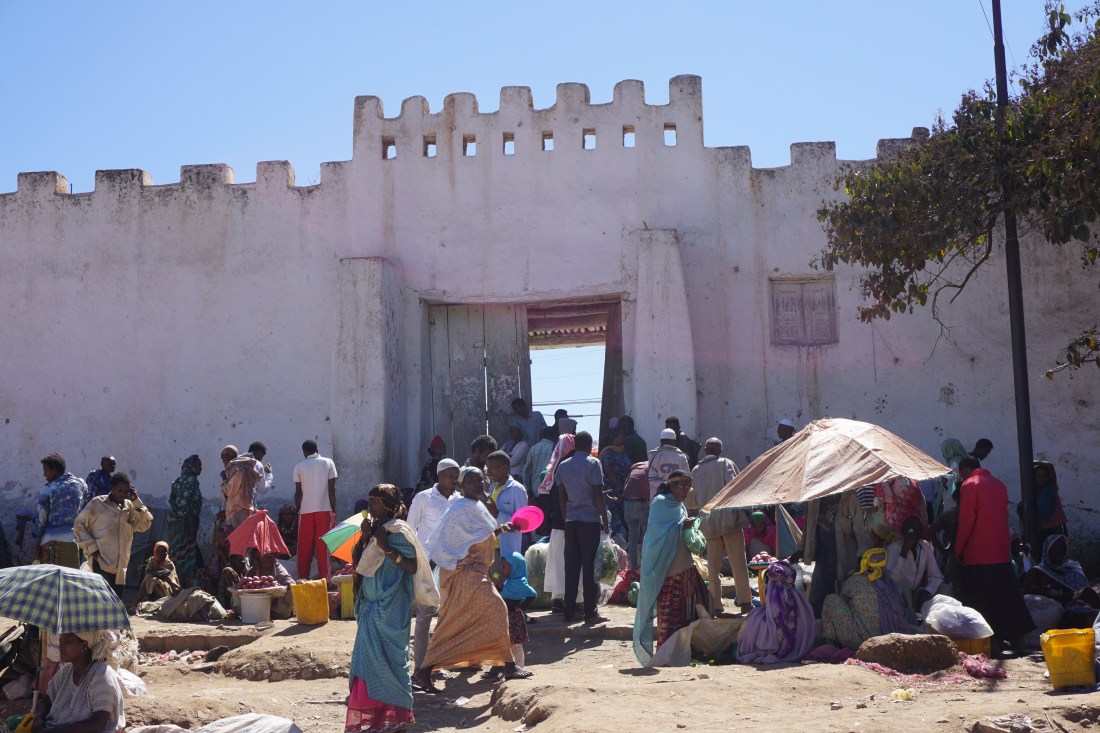
The Old City in Harar is an ancient historical site.  It is one square kilometer and thirty thousand people live within its walls. There are five gates into the city.

dsc00703


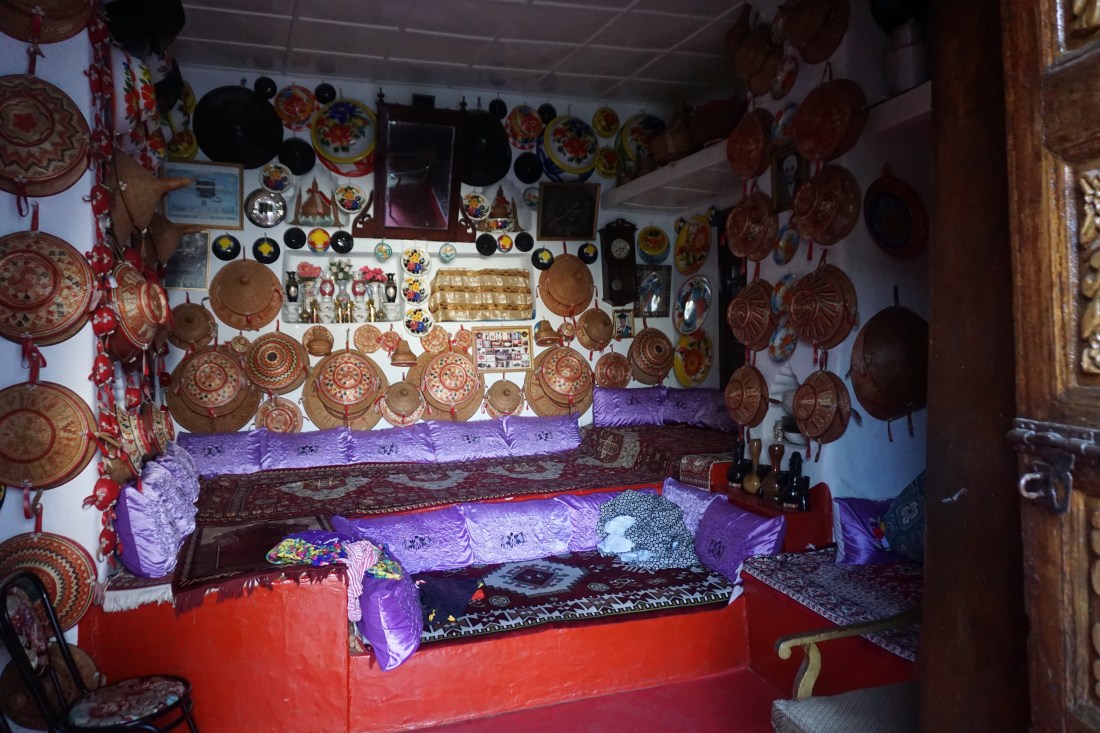
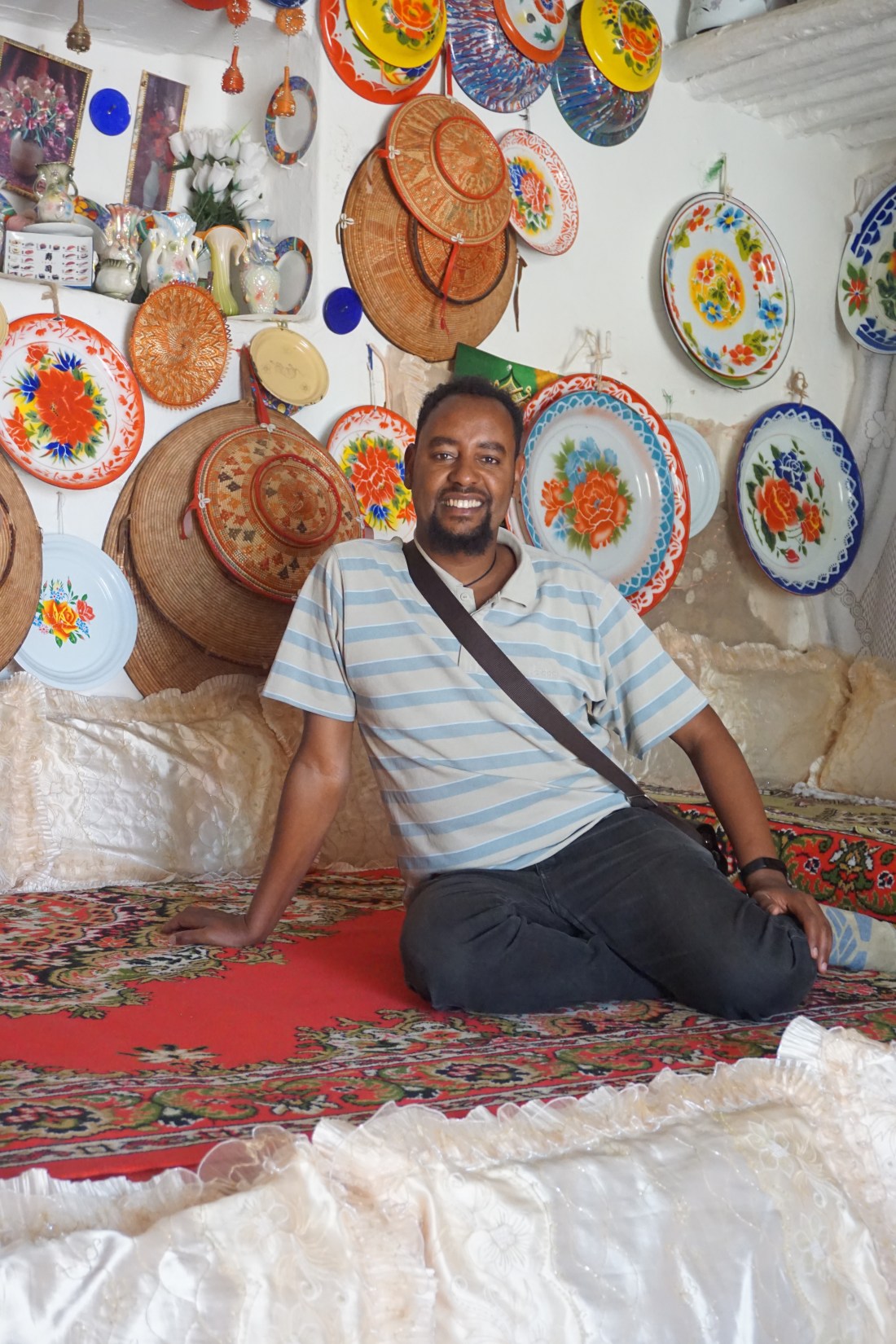
There are many traditional homes in the city that you can visit and stay in. The homes contain subtle information. For instance if you curl back the carpet you are sitting on and a reed carpet is evident underneath you know the household has a marriageable daughter or daughters.  If you look above the doorway the number of rolled carpets will tell you how many.   Where you sit and sleep is indicative of your status in the family.
dsc00417

We hired Hailu for a four hour tour of the market. His number is +251913072931.  He was excellent.

dsc00558

To preserve the city no changes can be made to the structures but painting is permitted. Before celebrations new painting becomes evident.


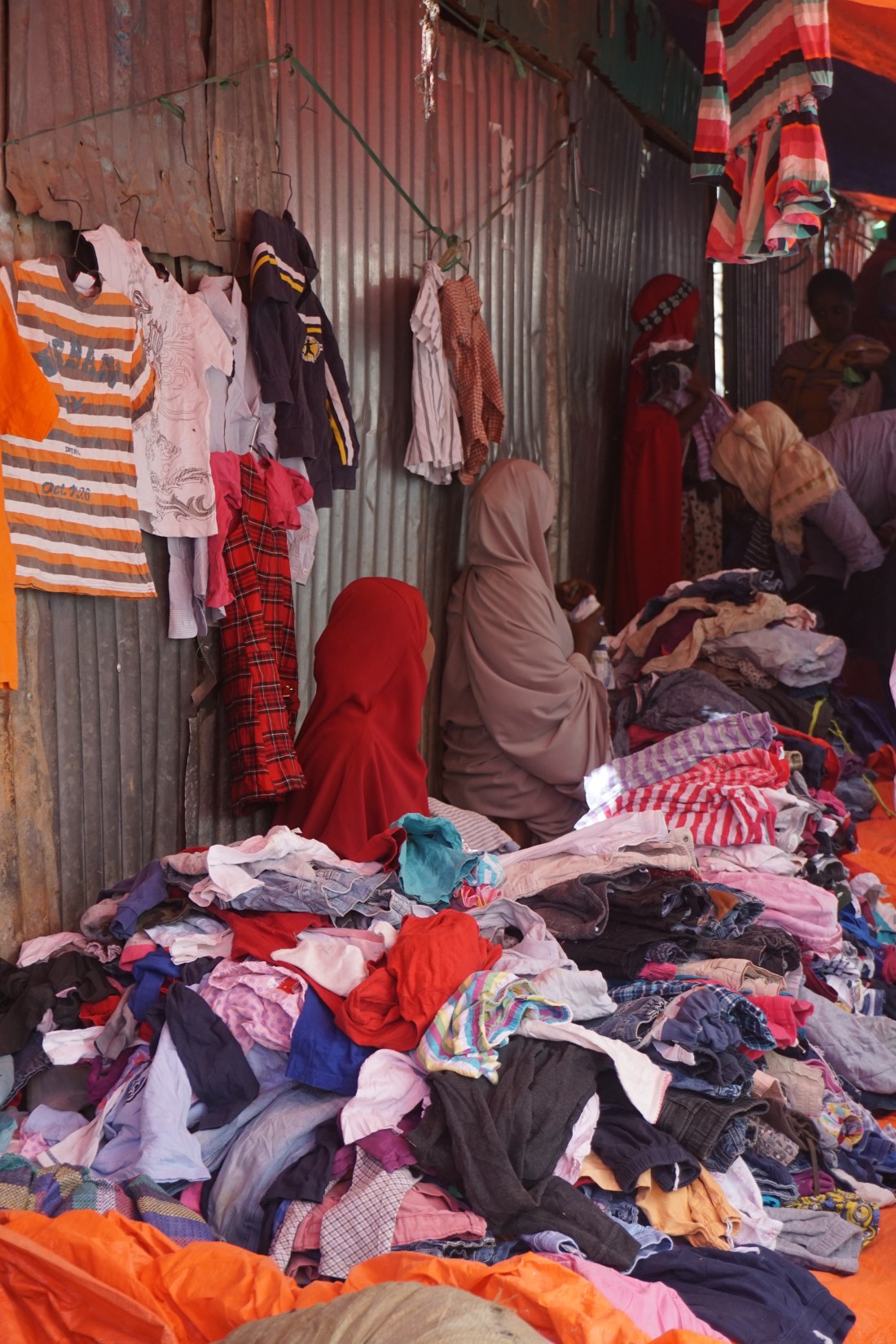
The Smugglers’ Market.  Being a traditionally Muslin community,  women cannot be searched by men so many items are smuggled into the country under their hijabs. Our guide was pleased to show off the boots he got here.

dsc00468

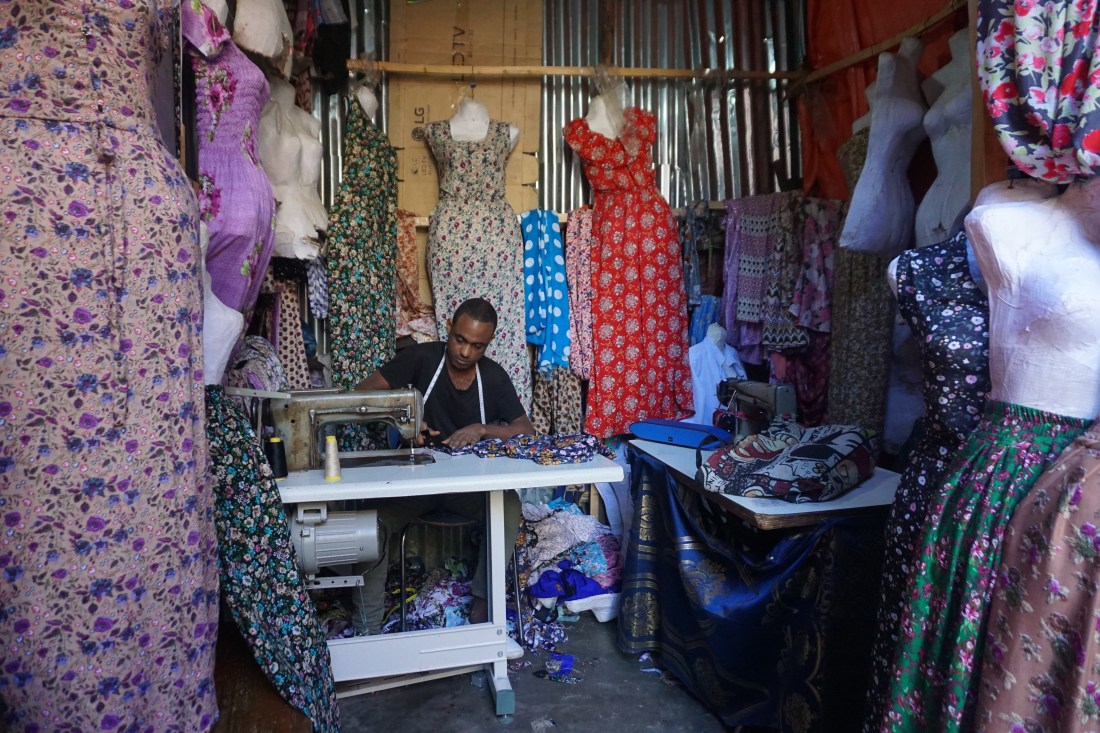
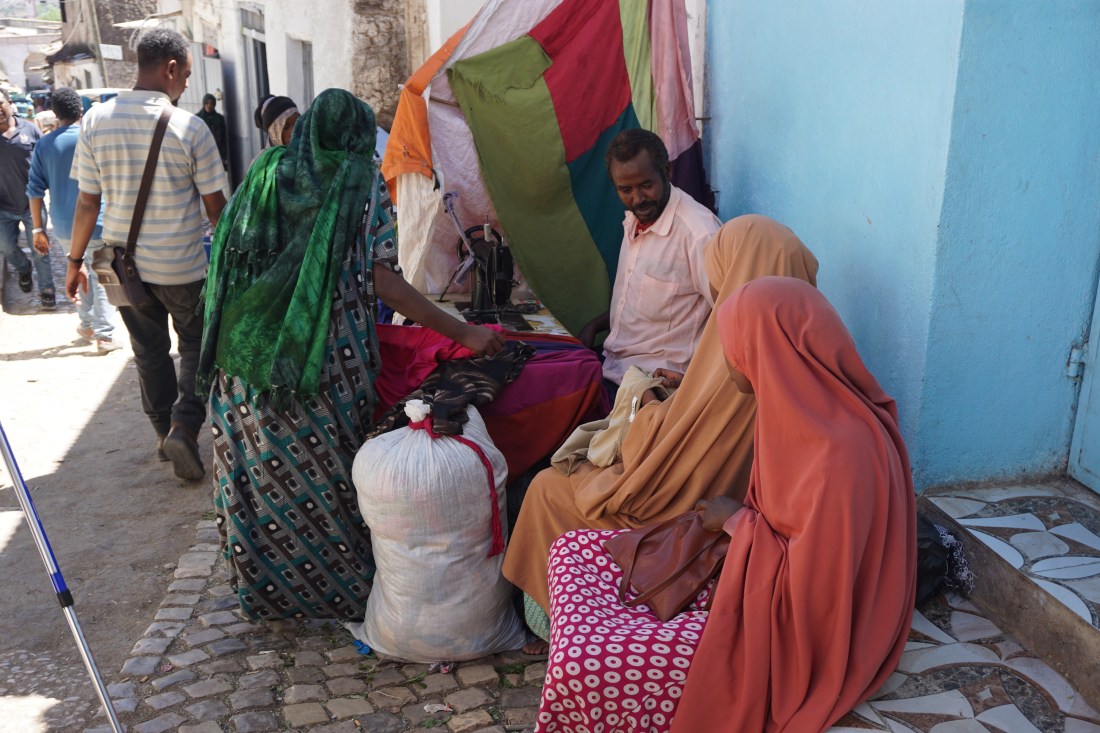
Women choose the fabric they like and take it to any of the many tailors available.

dsc00477

dsc00587


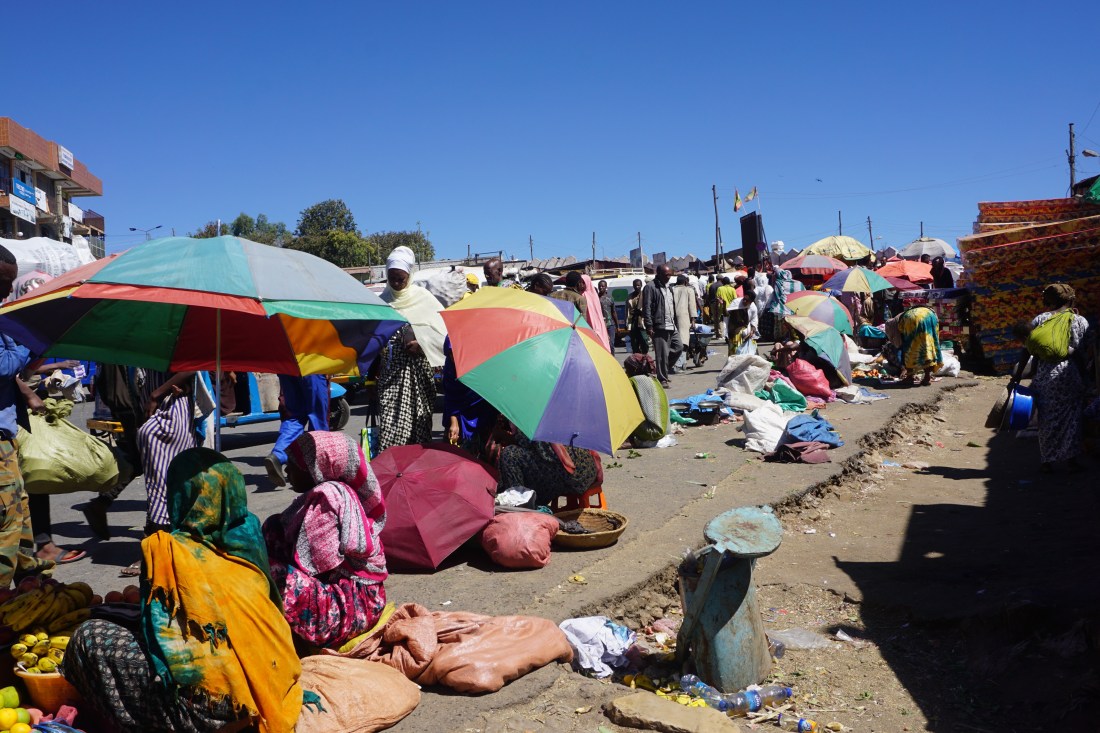
Colorful market sights.

dsc00369


Never any waste.

dsc00578


dsc00577


dsc00548


dsc00421

Sugarcane ladened donkeys.


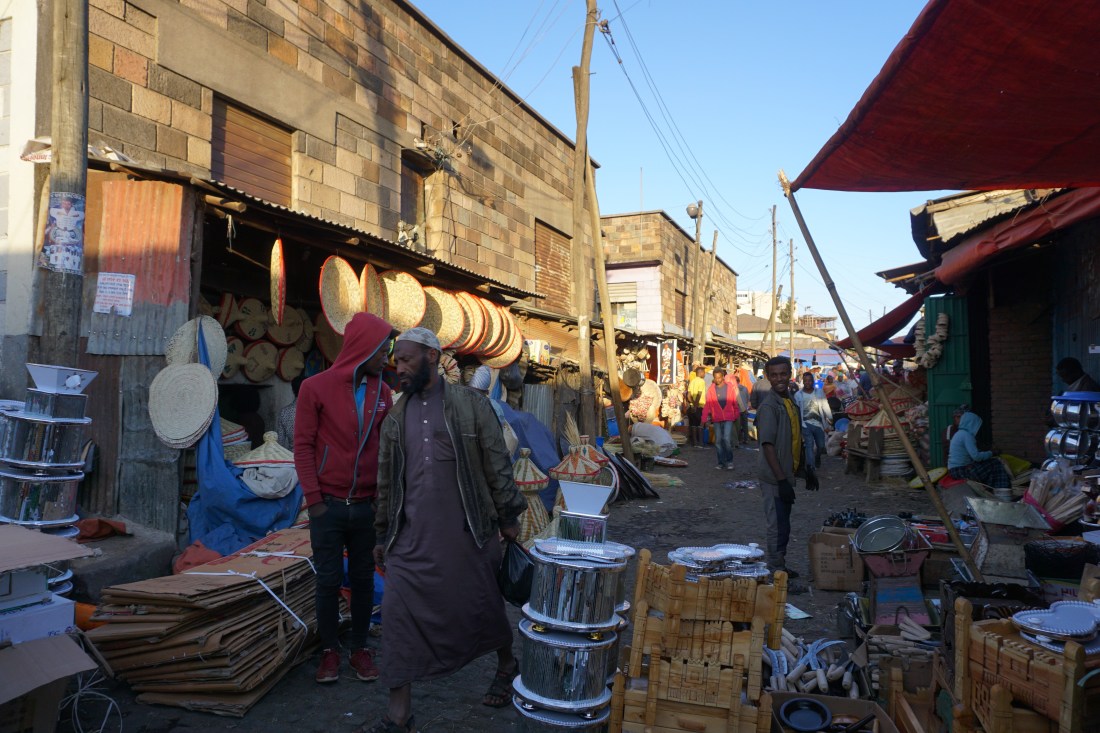
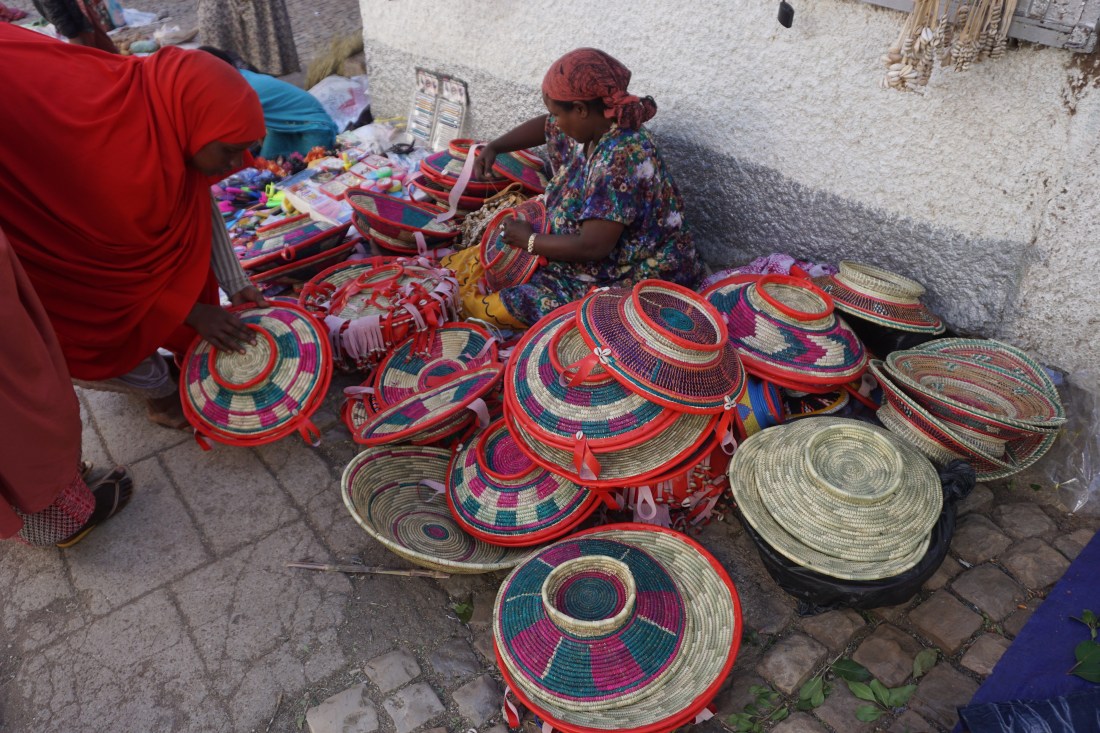
Baskets specially woven to hold injera.

dsc00352


Truck loads of khat being brought to market. khat is a narcotic plant, chewed by a very high percentage of men in the country and exported to many countries around the world.  It is a problem because it is addictive, and farmers are choosing to grow it rather than food crops, because it is much more lucrative. There are plenty of social and public health problems associated with it as well.

dsc00701

Women selling khat.


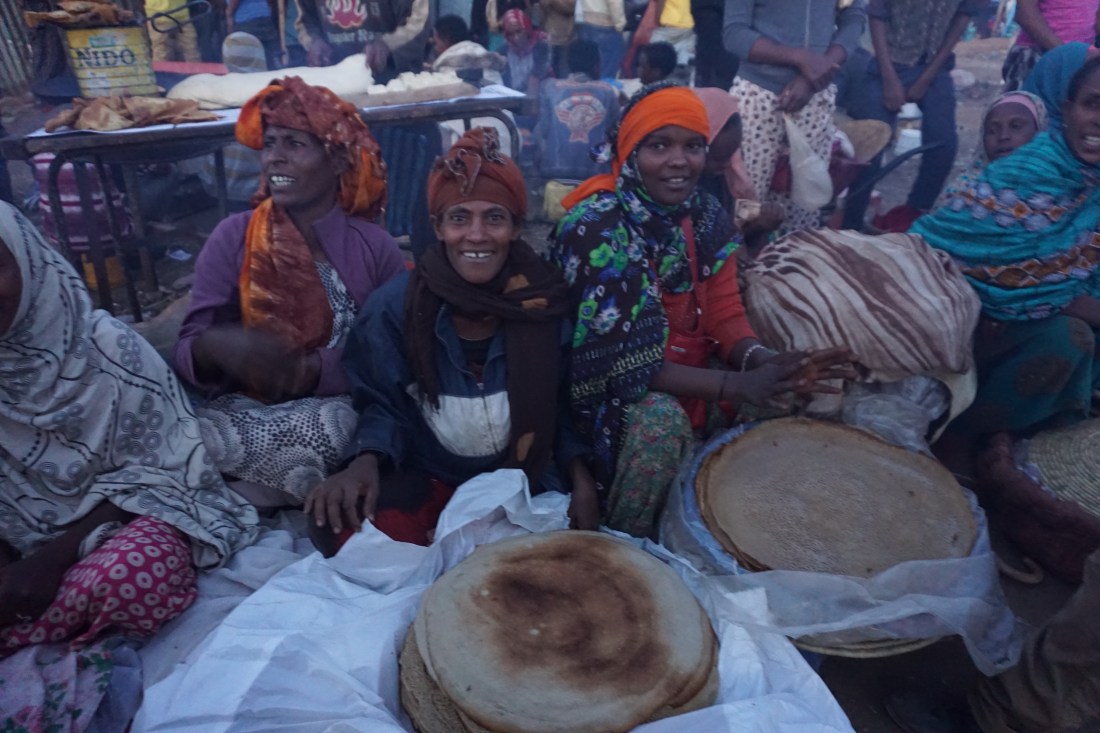
Injera.

dsc00729

dsc00435

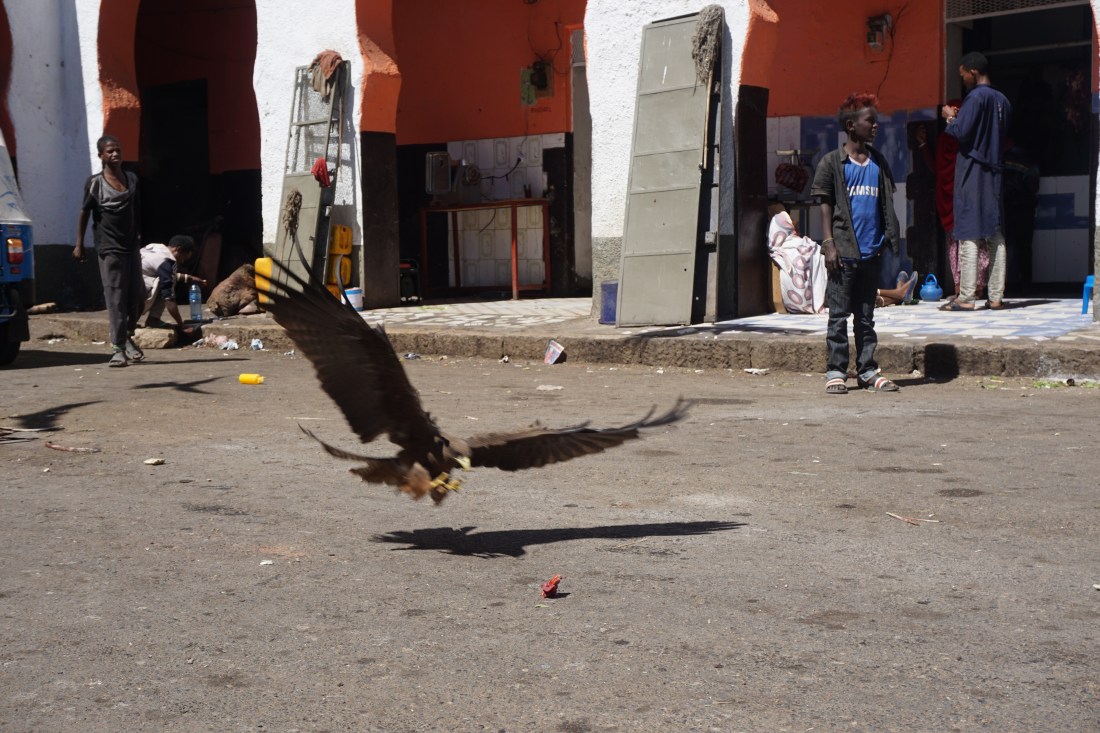
Our guide started this activity with the kites for his tours and to provide a little money to the camel meat shops.

dsc00616


A worker holds up a piece of meat, and the kites, who are roosting on the roof, swoop down and very adroitly snatch it from his hand or head or even in mid-air.

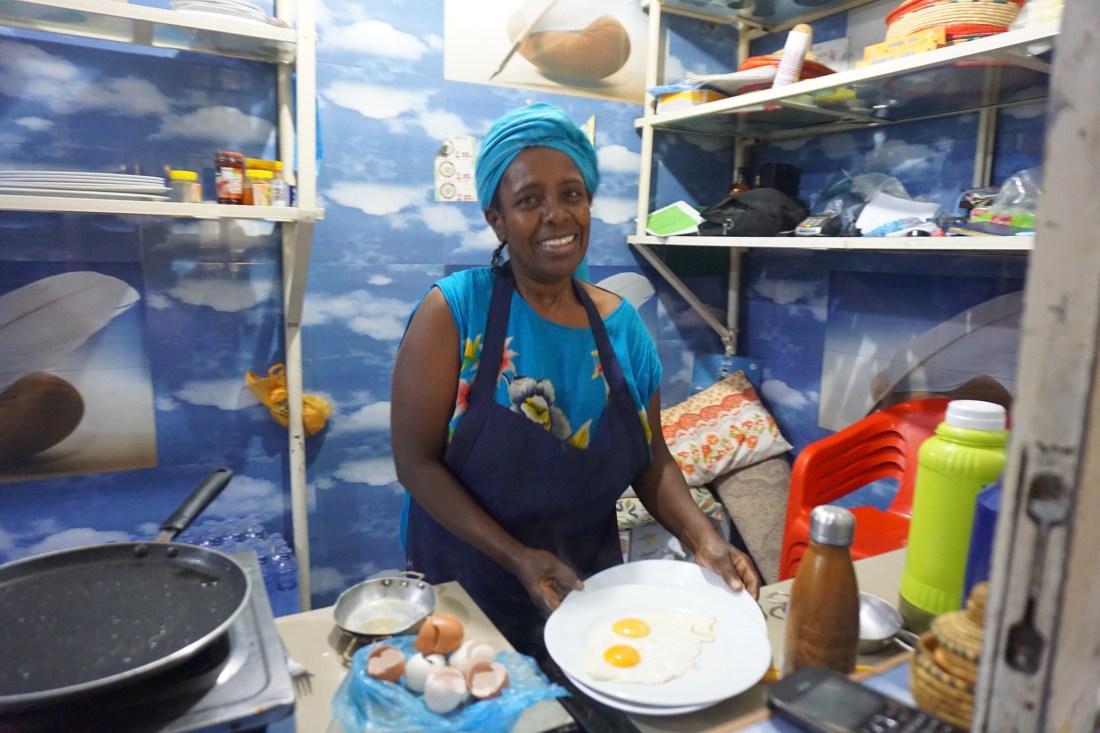
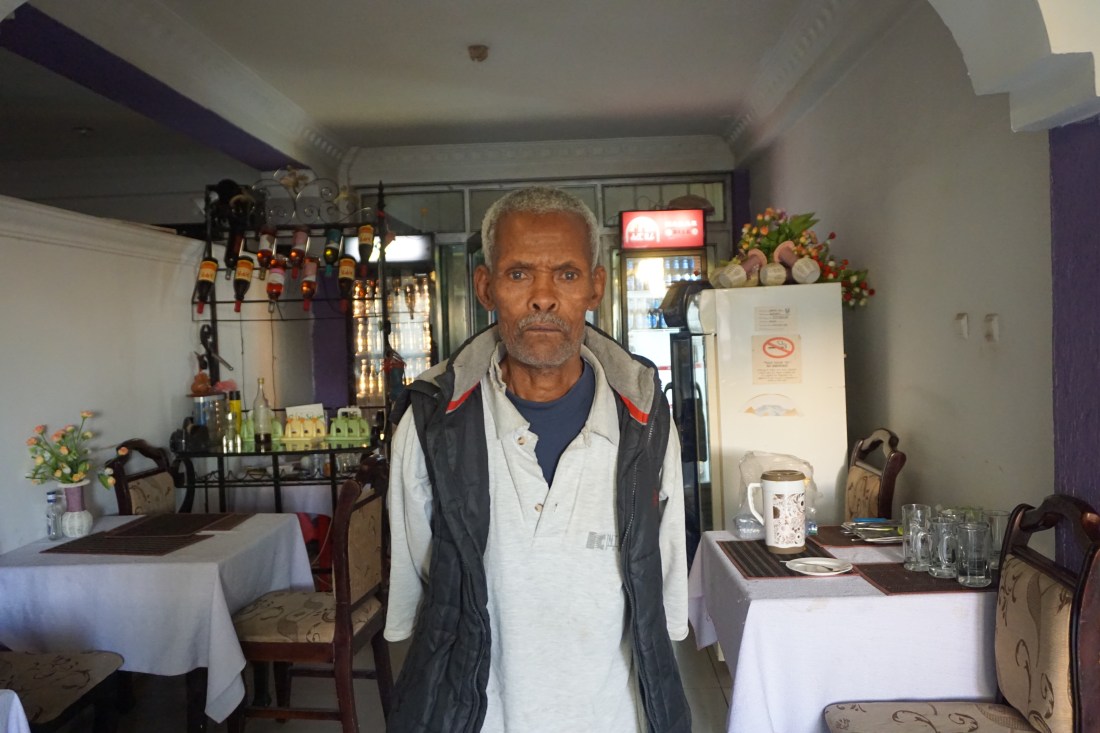
The lovely hotel cook who made a special soup for John when she heard he was sick.

dsc00737


Ethiopia – Harar

On Jan 9 we traveled to Dire Dawa by plane. An airport scene.

dsc00221

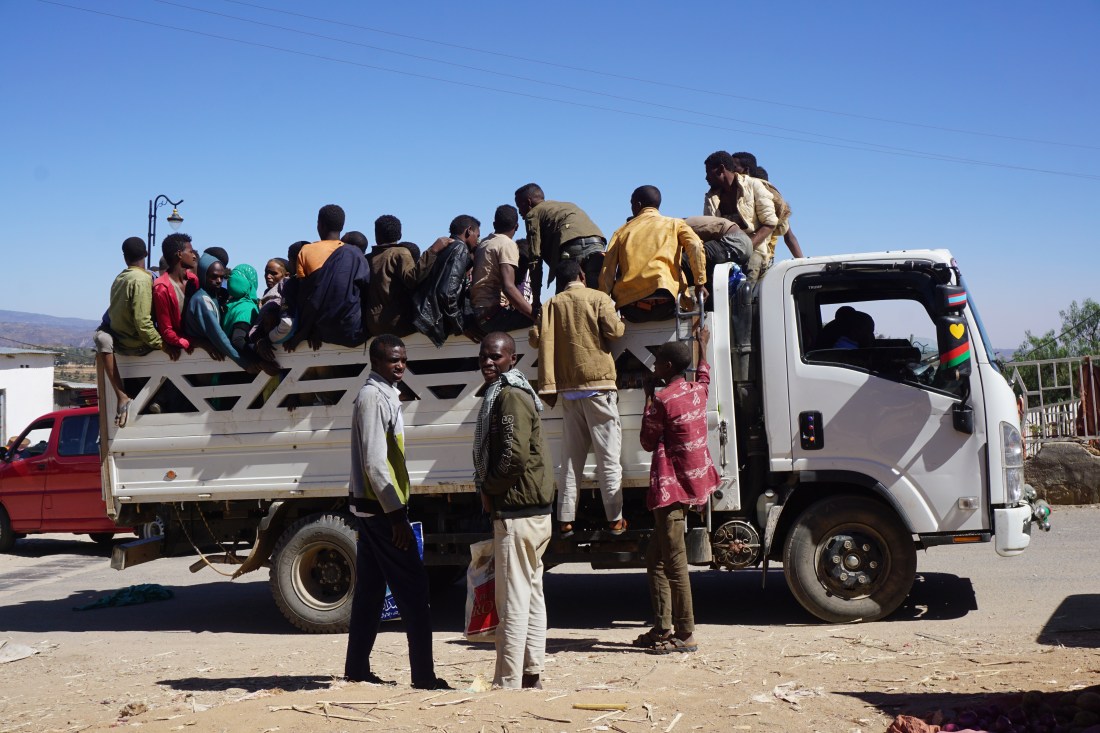
From Dire Dawa we rode 43 k to Harar,  a predominantly Muslim area,   Stopping for water.

dsc00225

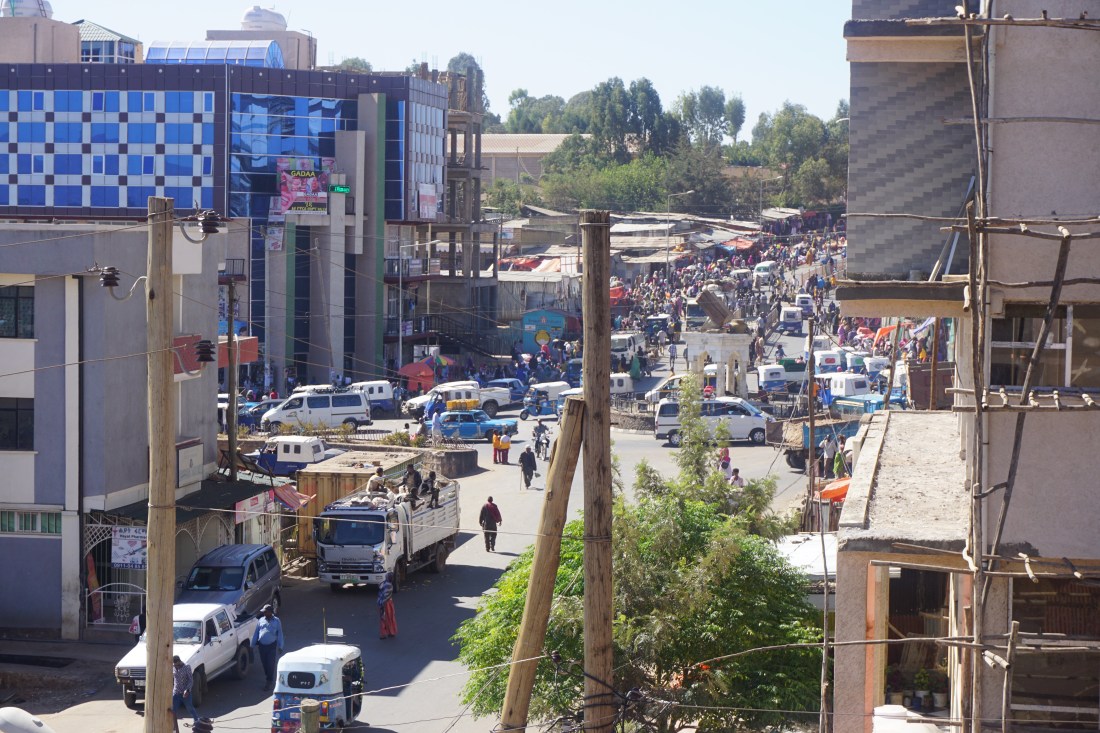
We were overwhelmed by the sights of poverty, congestion, color and animals.

dsc00507

View from our hotel.

dsc00350

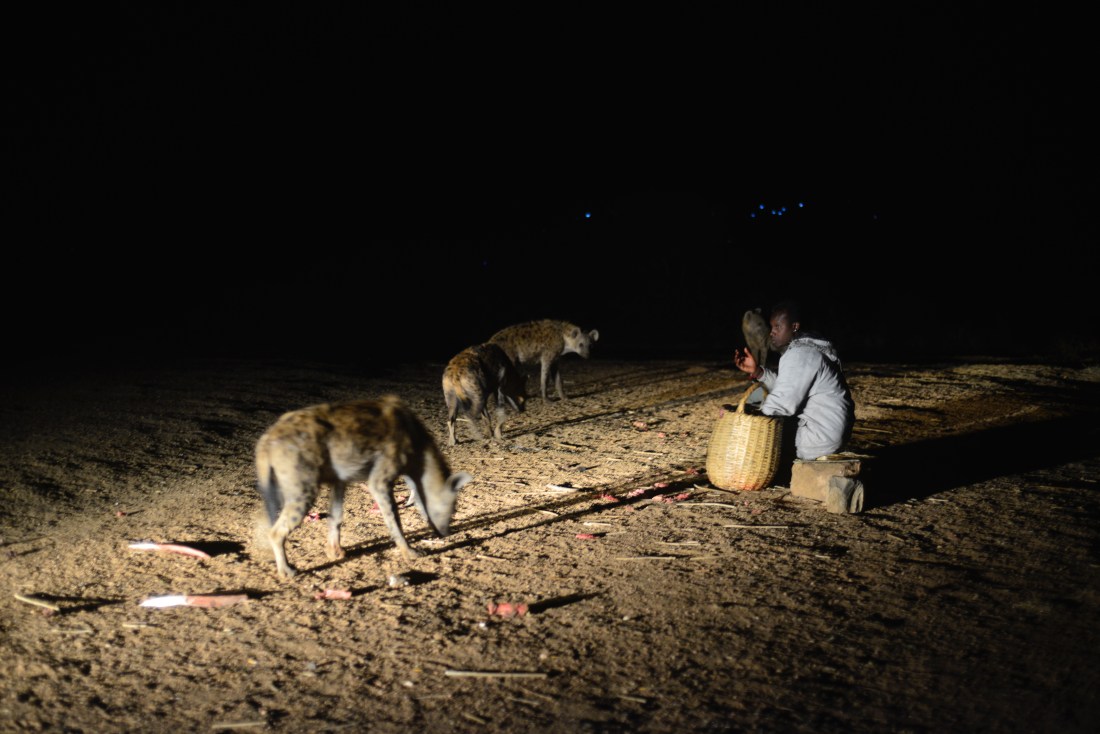
When we arrived at the hotel we immediately left with another traveler to see the man who feeds the hyenas.  The man’s father became famous when a National Geographic story was written about him.  Now the son feeds the hyenas every night. He said there are over 150 that come. He kept calling them in a low throaty sound and throwing meat to them. This day there were not many as it was mating season and the dominant female was not there.

_d808193

I woke up at 4:30 with a terrible itchy rash. I had been itchy for a few days but this morning the itch erupted into red bumps. I felt like I had measles or chicken pox. The night watchman at the hotel got us a tuktuk or bajaj,  as they call them and accompanied us to the hospital where I saw a doctor and got antihistamines. Our so helpful night watchman.

dsc00739

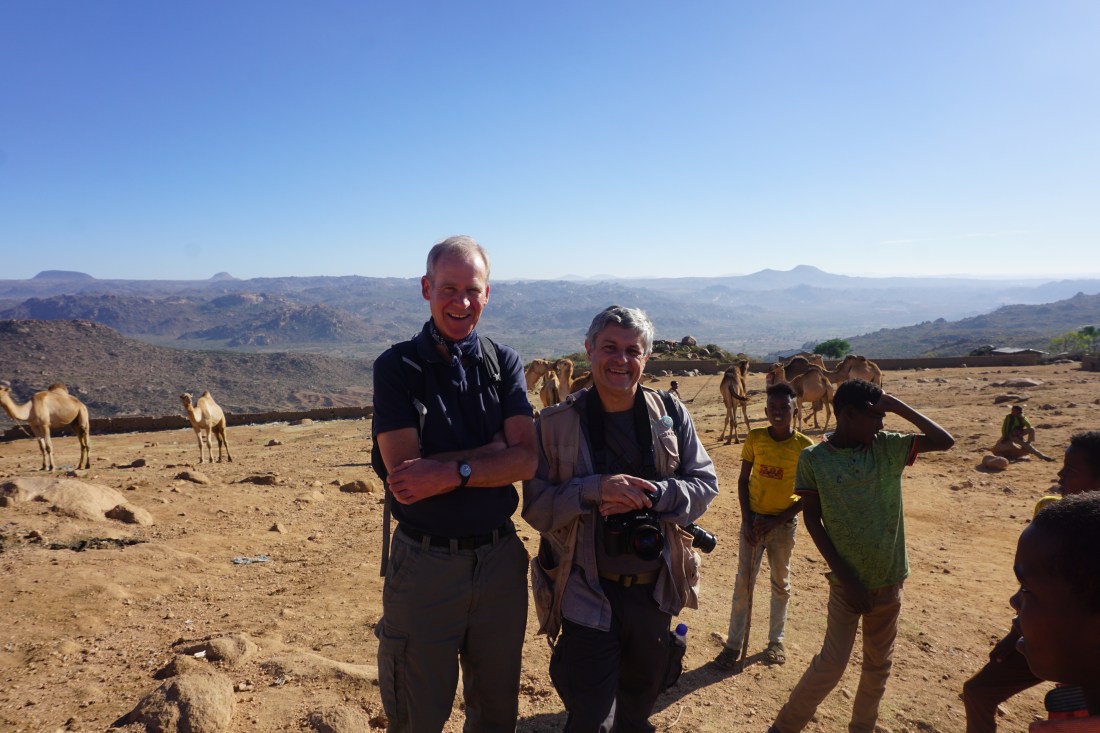
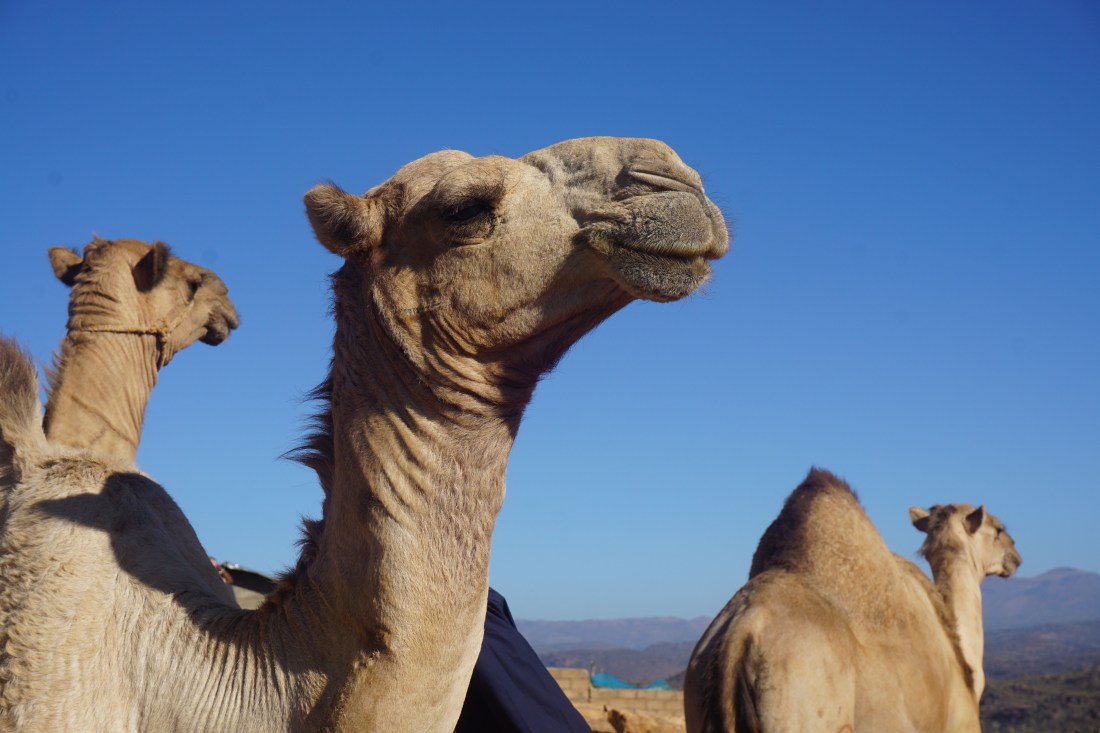
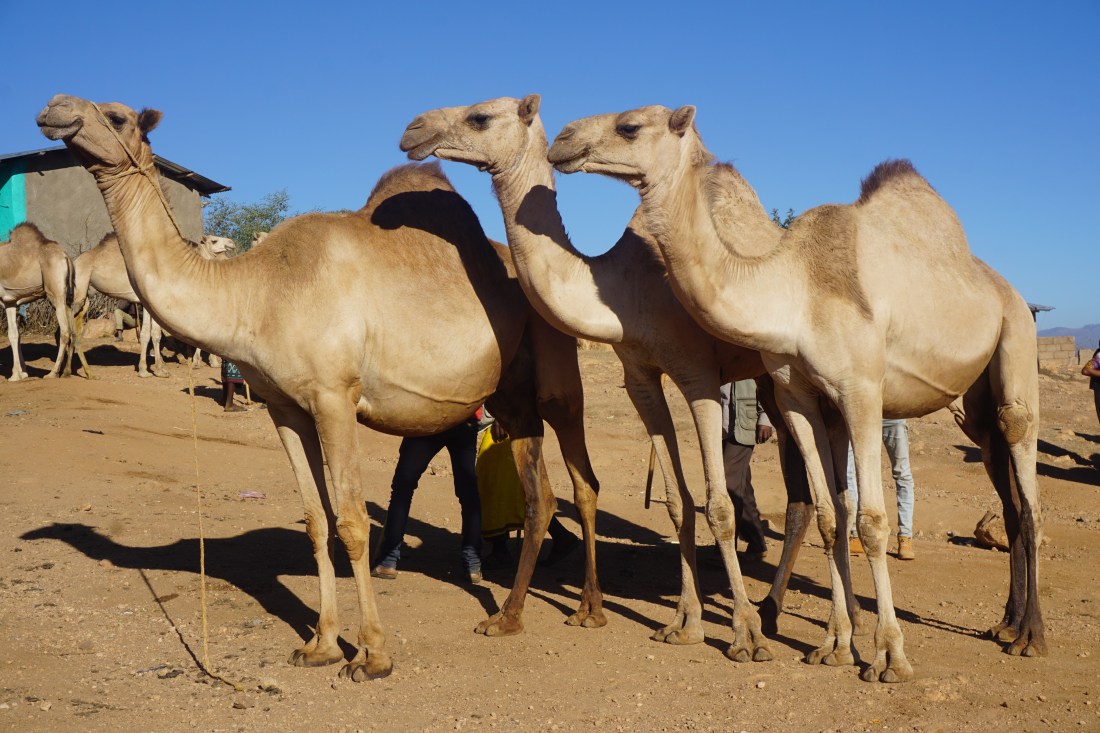
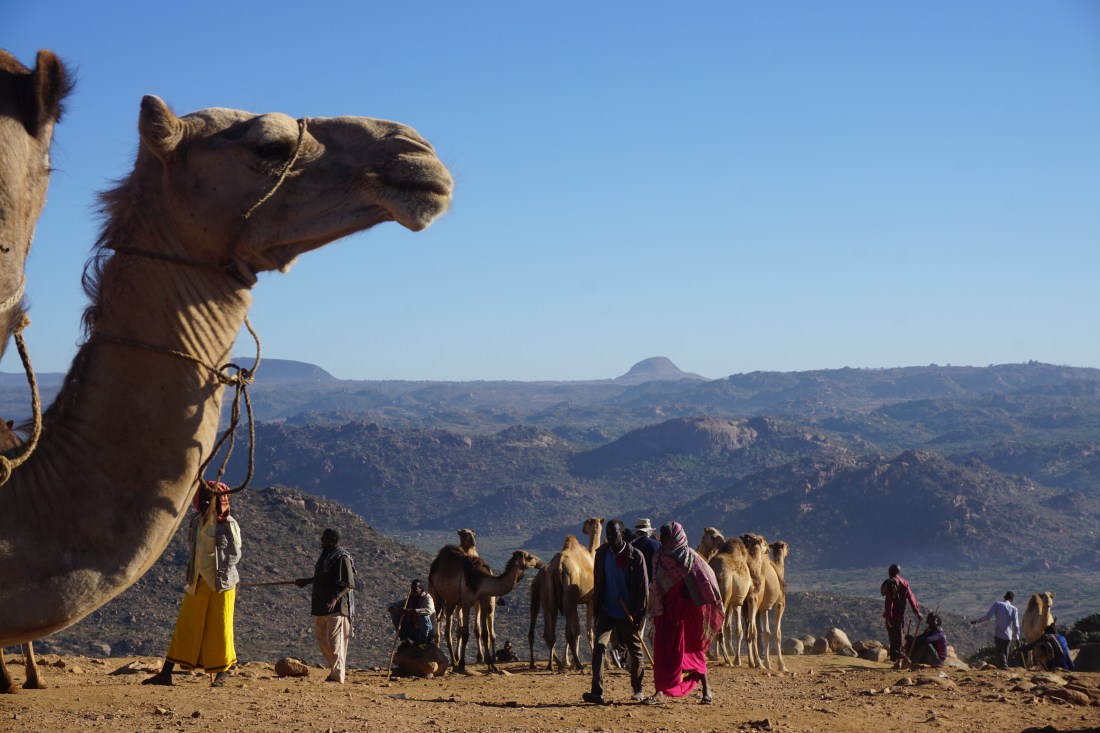
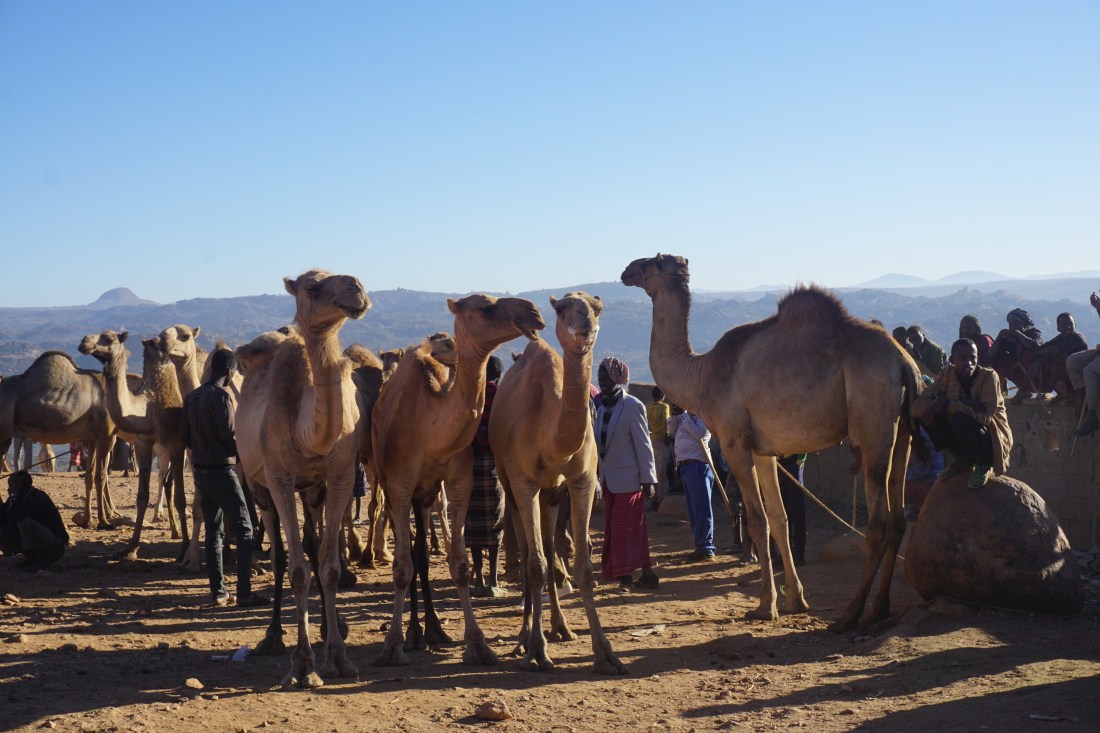
When I got back from the hospital I accompanied these two fellow travellers to the camel market 53 k from Harar, Richard from Worcestershire, England and Alex from Sao Paulo , Brazil.  John was sick and stayed behind..

dsc00311

dsc00302

dsc00292

dsc00268

dsc00241

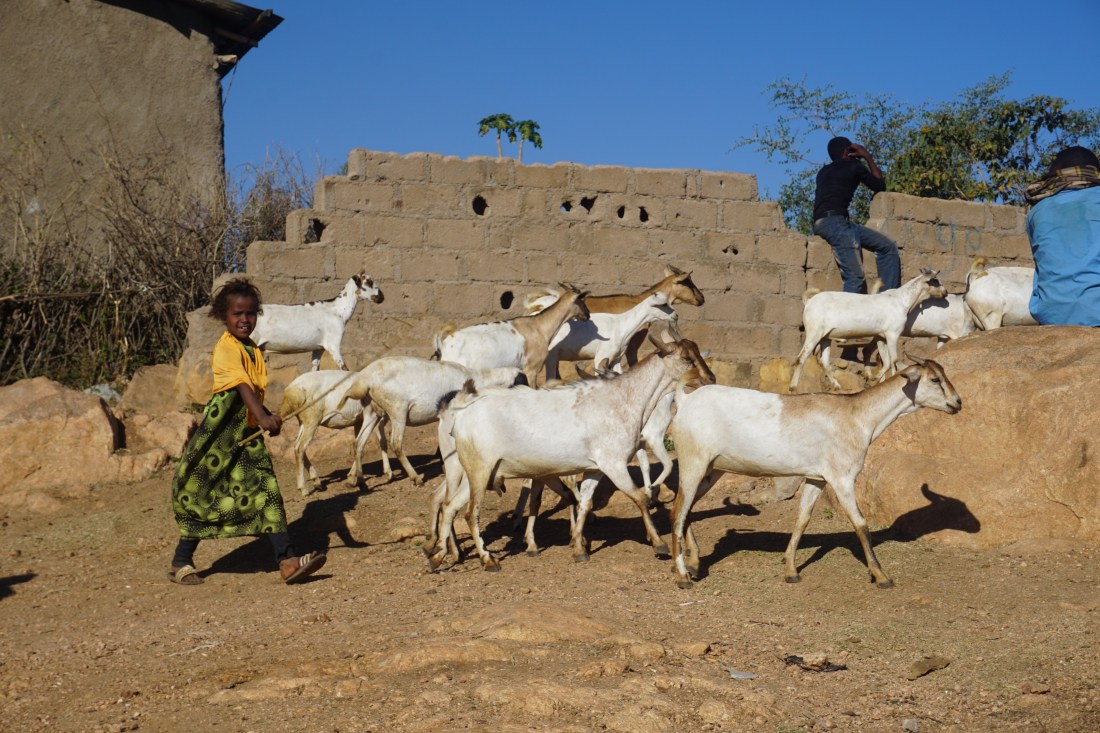
Responsible so young for the family’s animals.

dsc00308


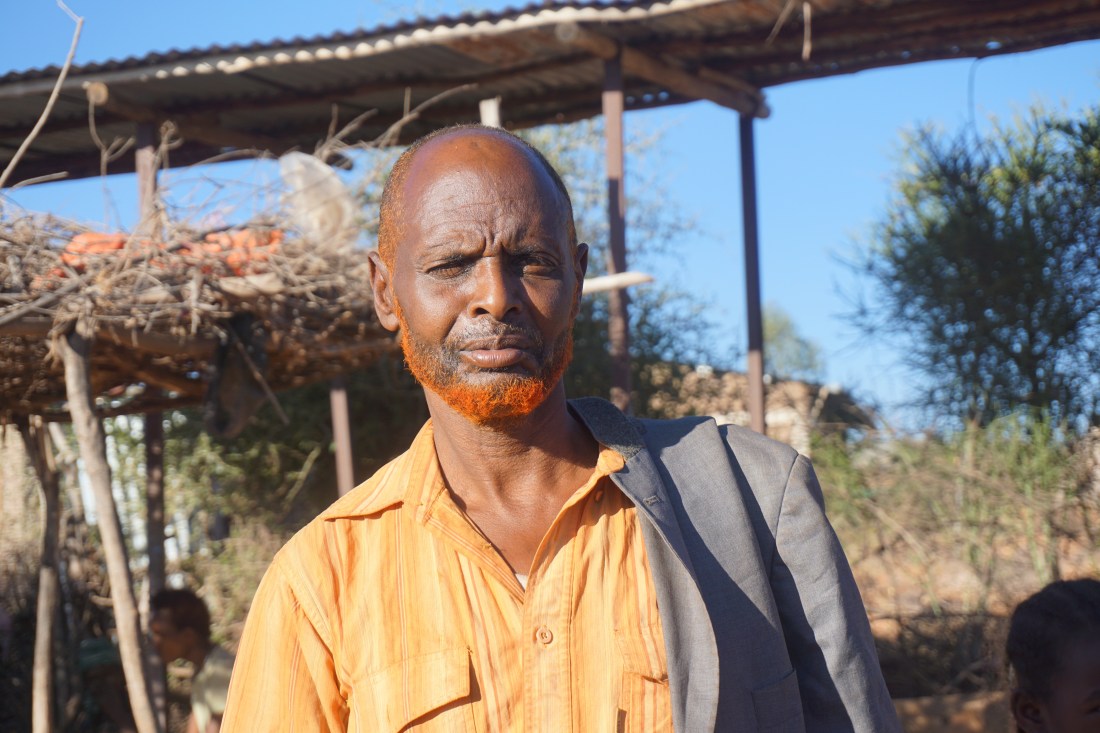
Men dye their hair red if they have been to Mecca or if they are planning to go.

dsc00251

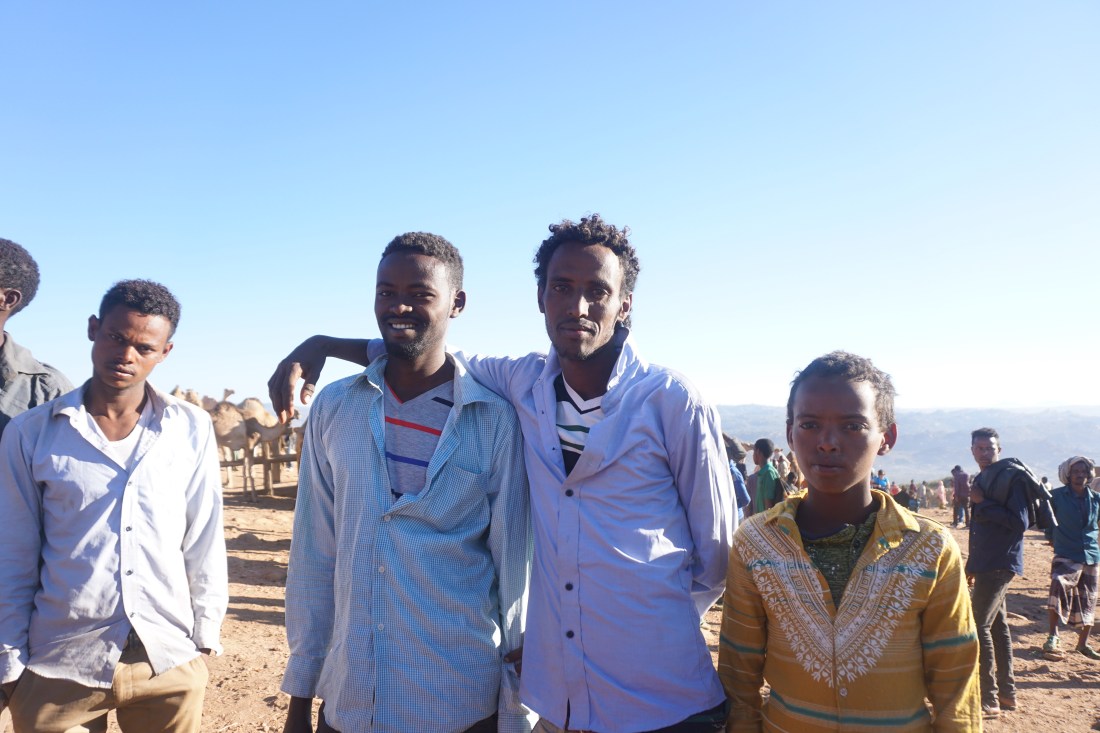
Young men at the market.

dsc00261

End of the market.

Driving back to Harar.

dsc00341

Ethiopia – Lalibela

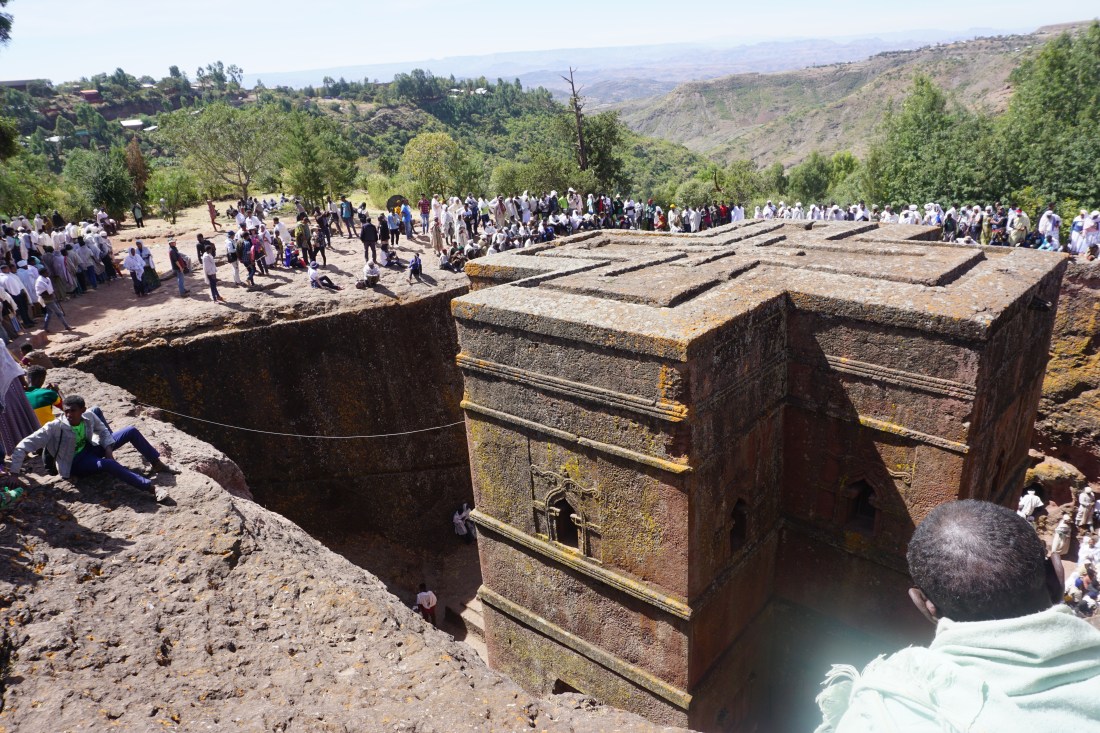
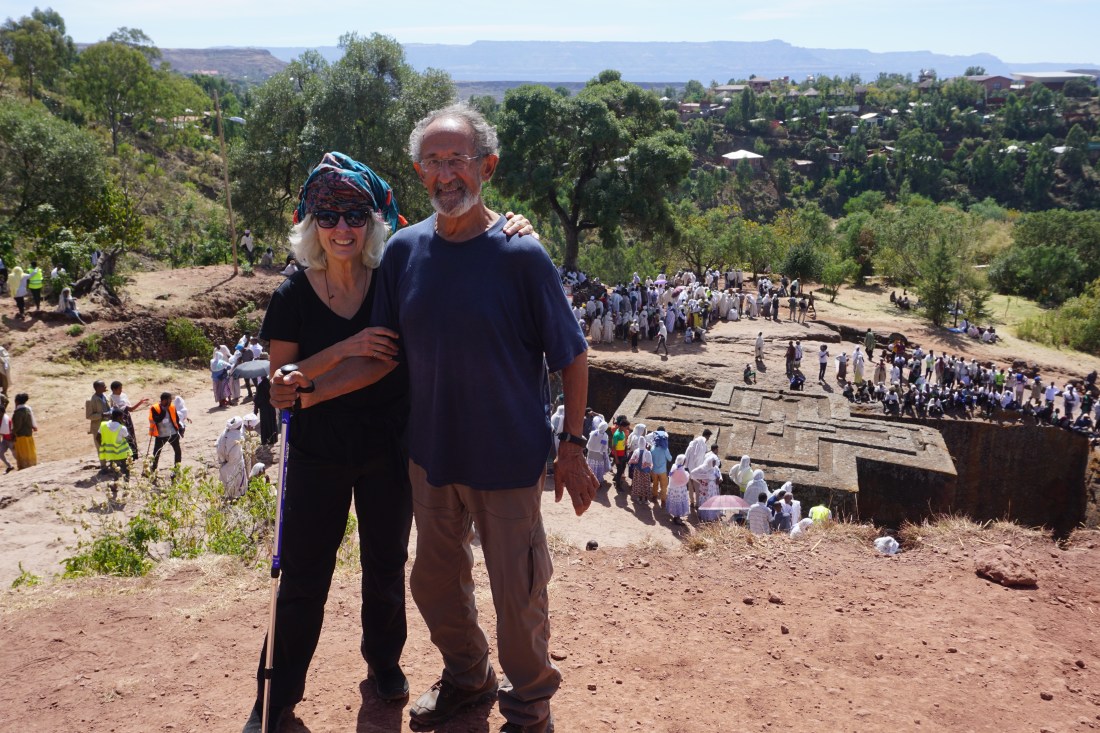
Henoch, 251911806229, took us to St. George’s Church, the one I am sure is the most photographed in Lalibela.

dsc09722

Check out John’s new walking stick loaned to him by Henoch.

dsc09716

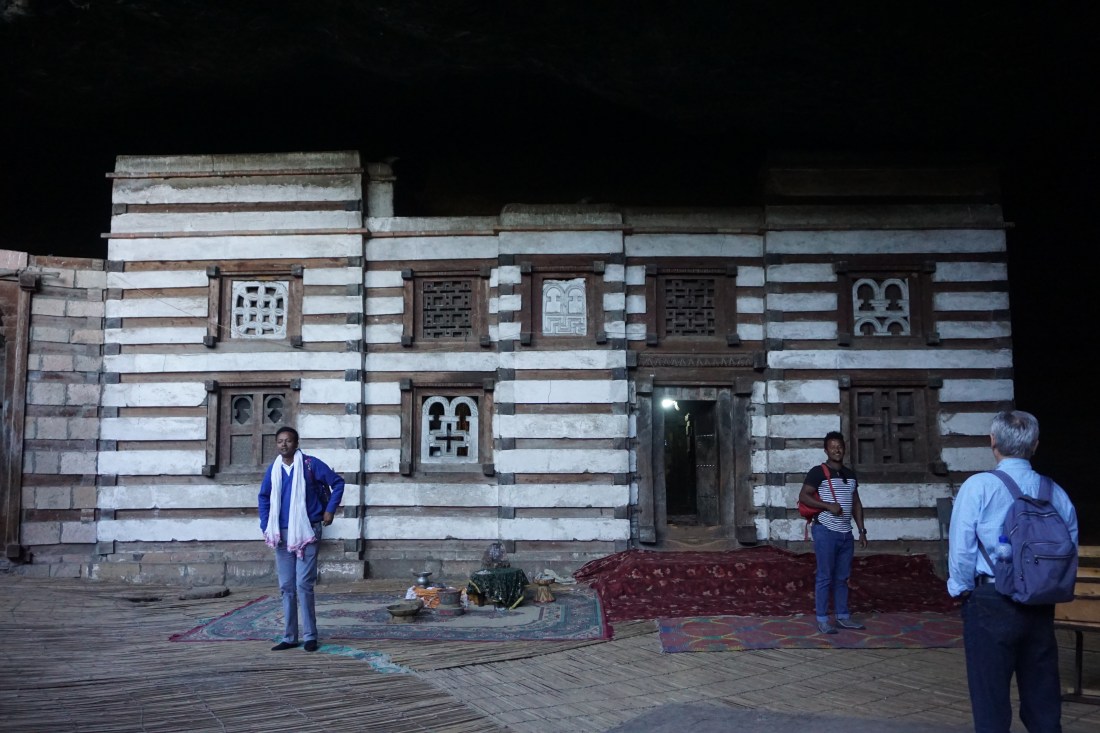
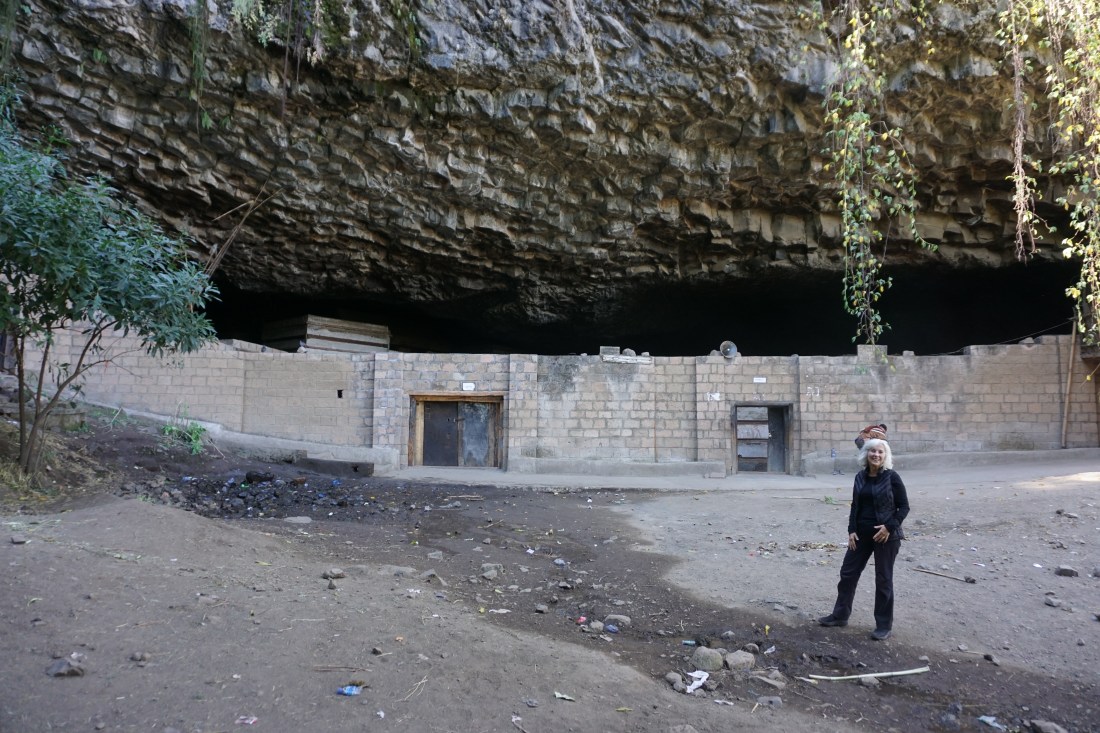
We traveled 43 k out of town to see a church built inside a cave.


dsc00130

dsc00170

Every possible space used.

20190108_161844

Packs for the donkeys are made out of old barrels.

We had lunch with Henoch and his girlfriend Tsgiemarysm.

img_3274

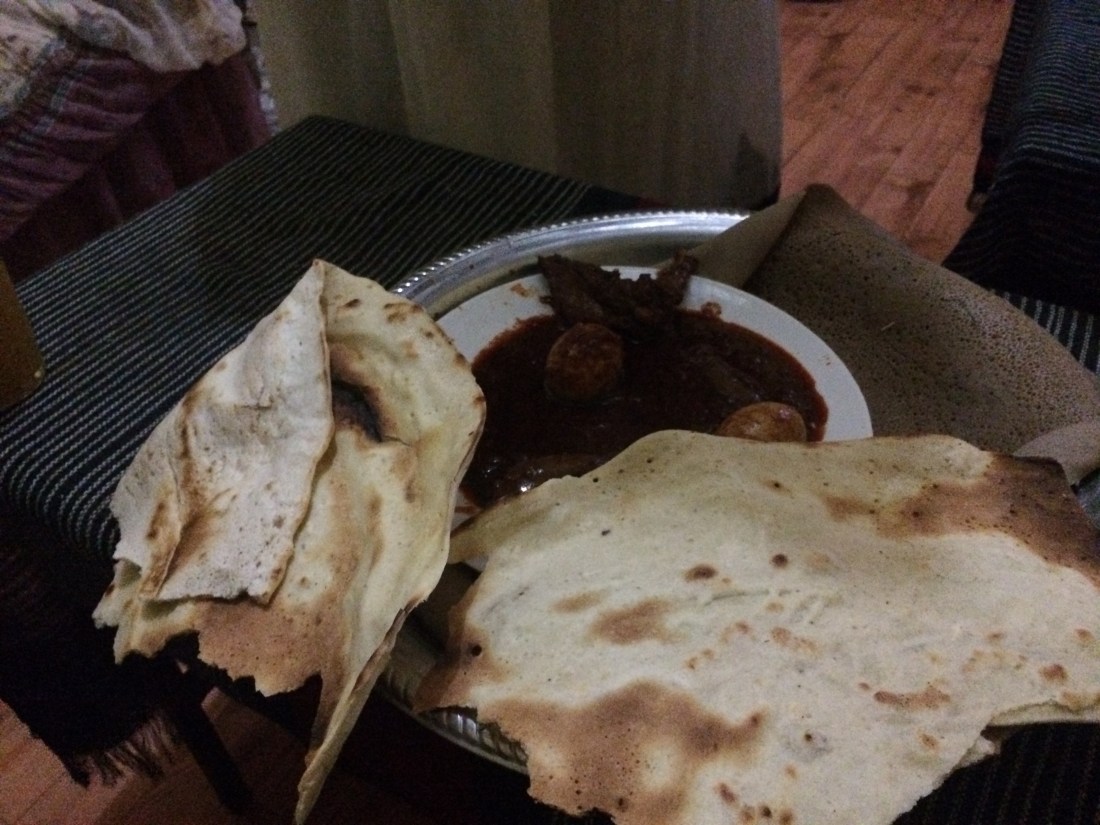
And a dinner of Duro Wat with Yared and his family that evening.

img_3287


Ethiopia – Lalibela

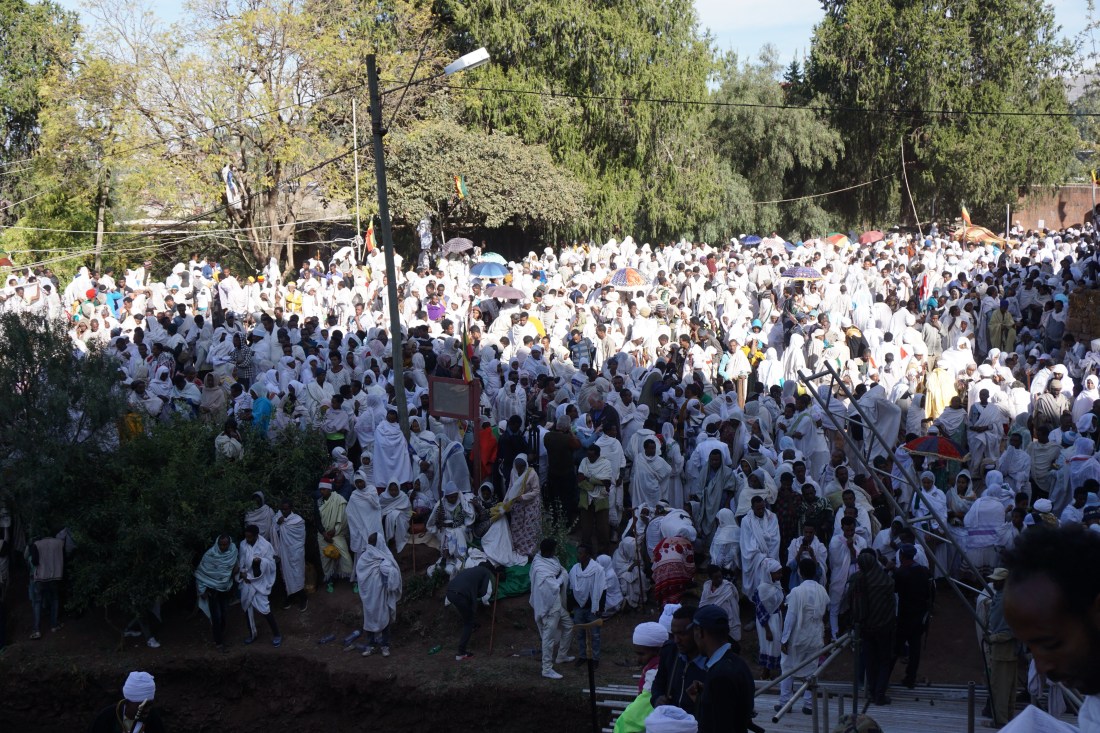
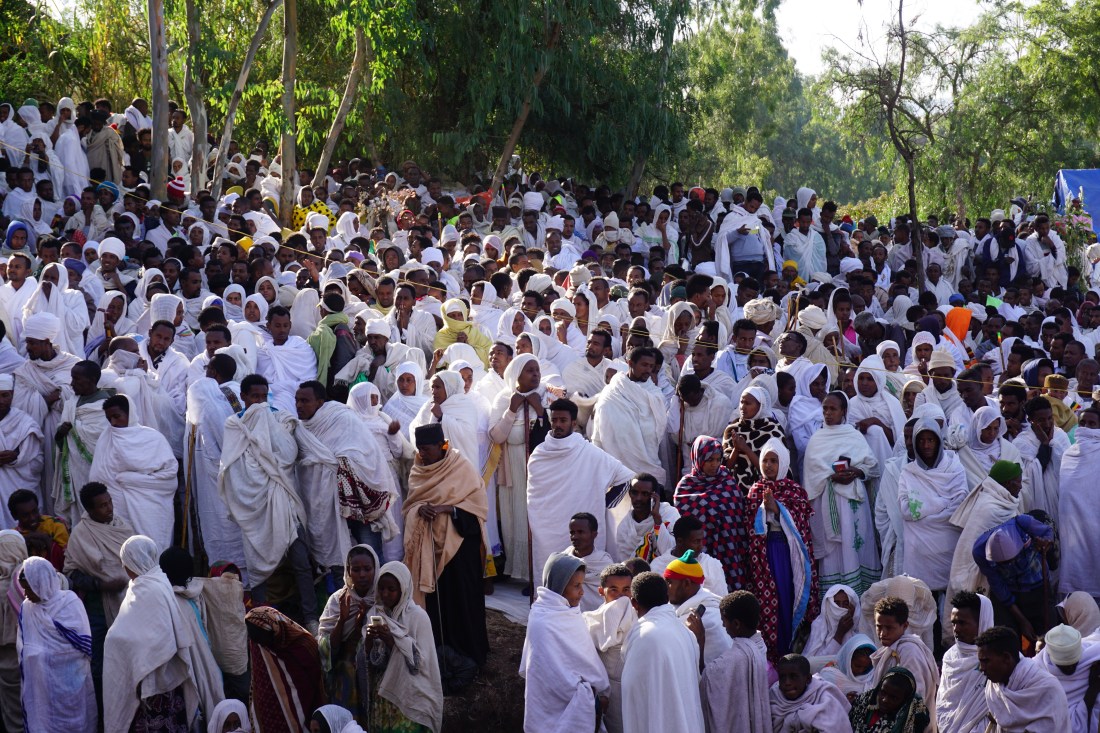
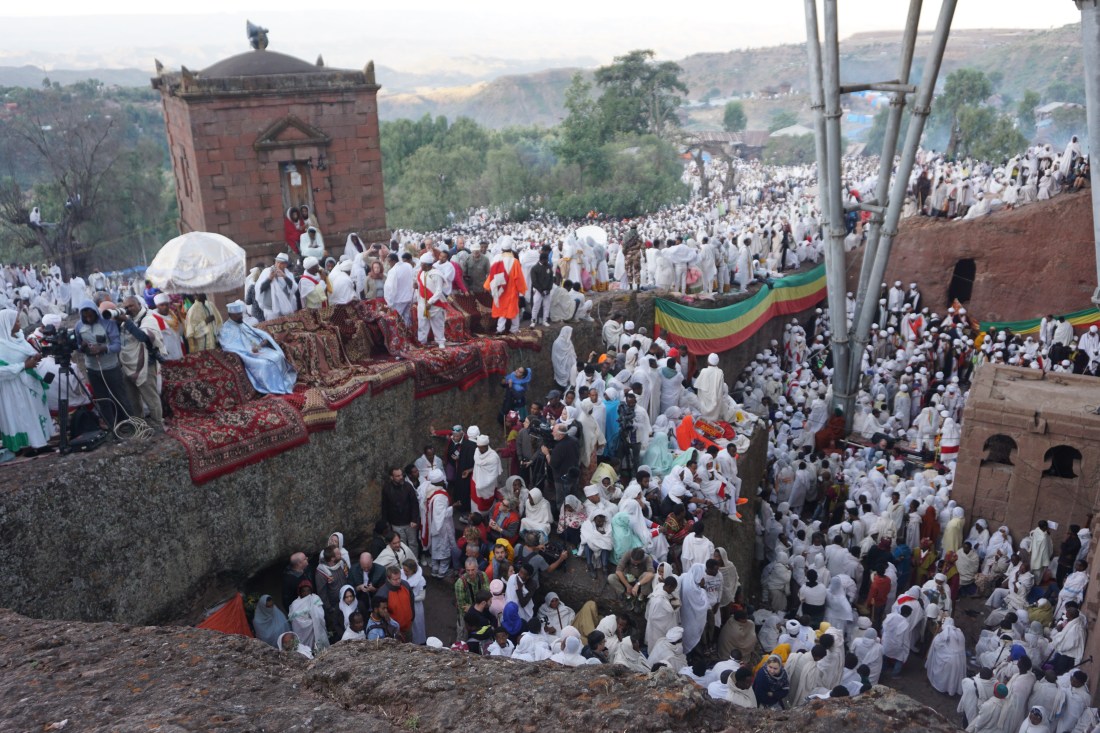
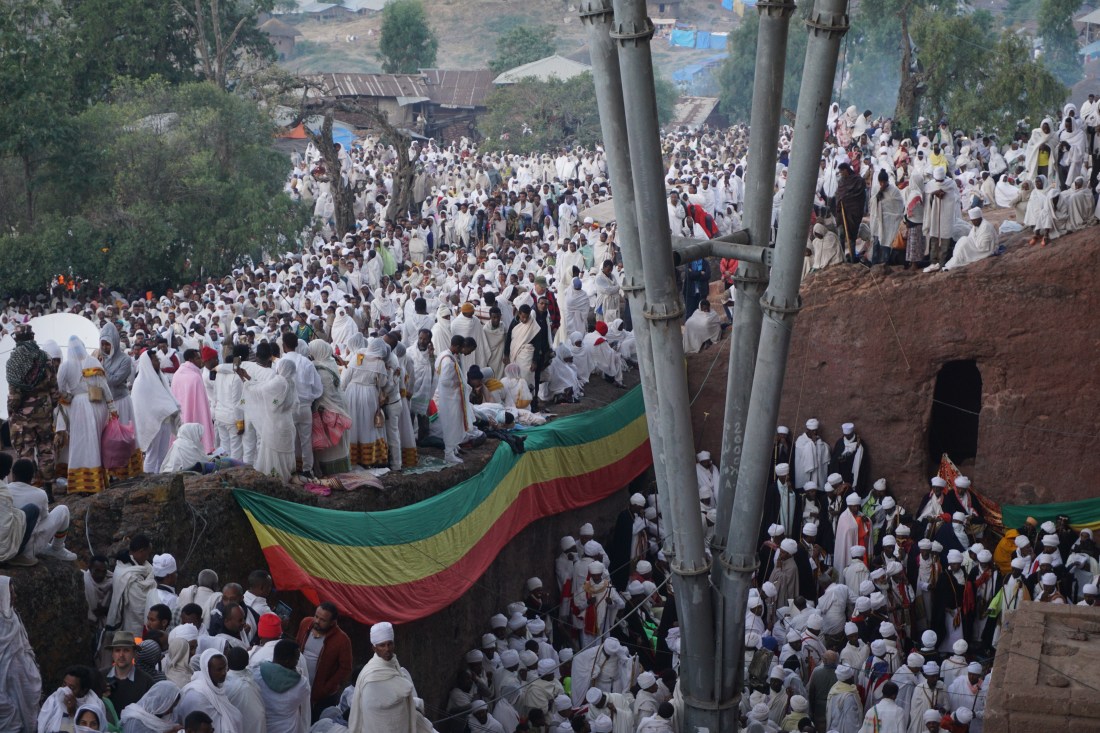
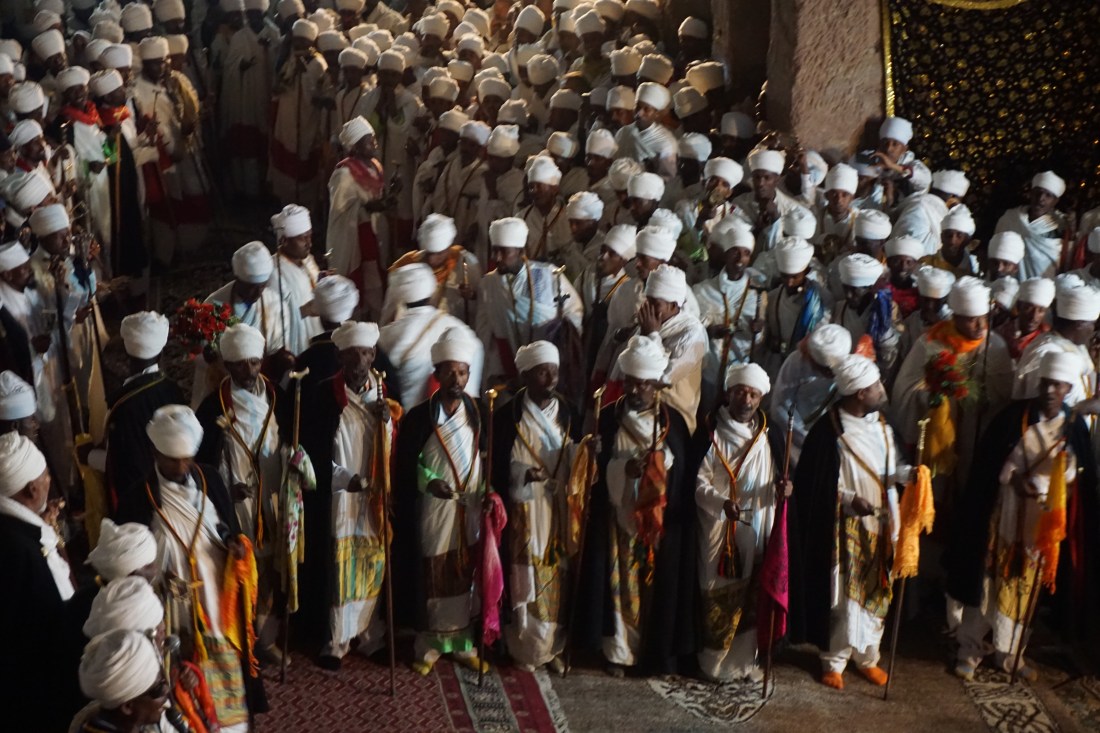
On Christmas morning Yared picked me up at 6:30 for the Christmas morning service.  John’s hip prevented him from negotiating the press of humanity.  Yared managed yet again to get me an excellent vantage point.  I am still amazed that he was able to navigate through the crowd that was all going in the same direction.


dsc09970

dsc09947

dsc09850

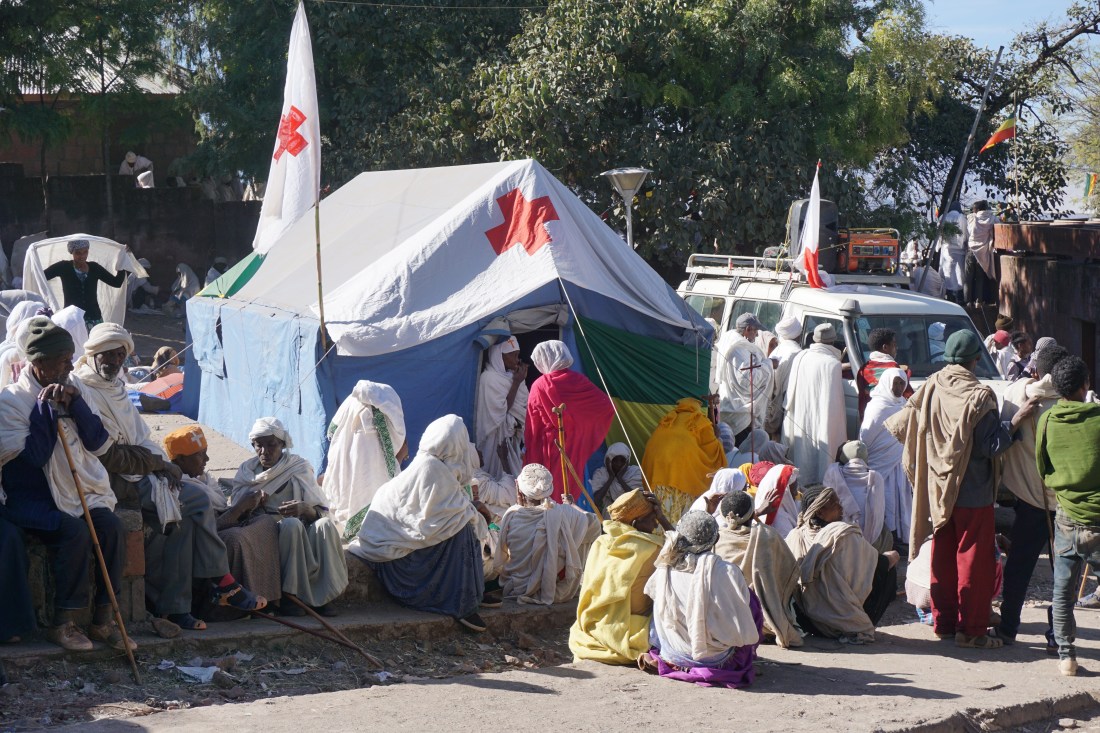
The Red Cross had a station set up for any emergencies.dsc09556

Right behind the carpeted area was my vantage point.

dsc09845


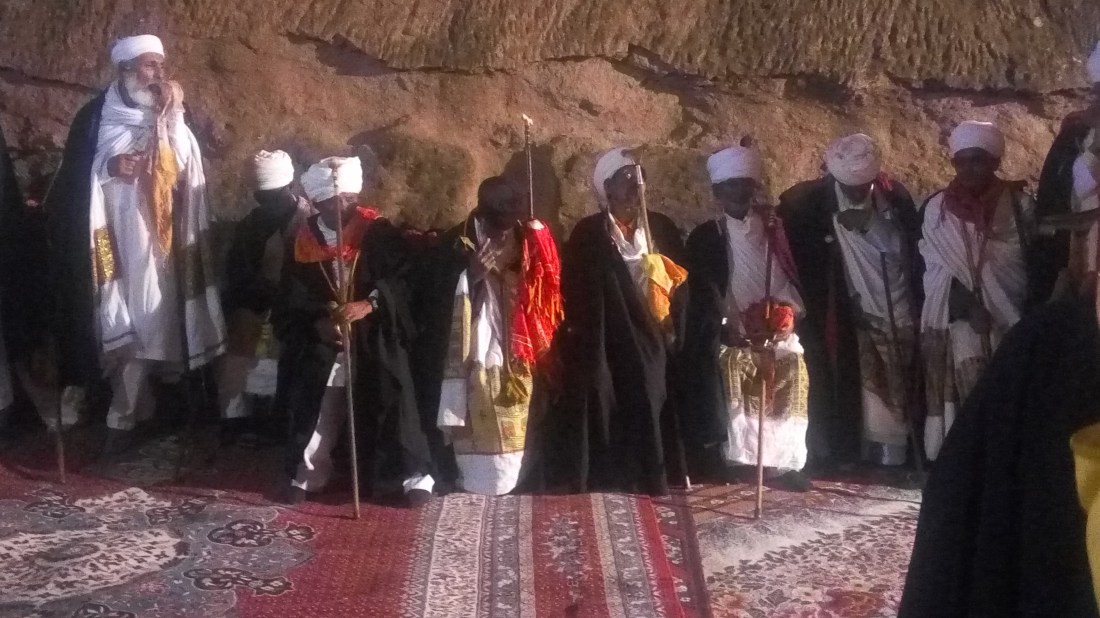
These were the bishops and priests that occupied the chairs.

This man called while all the priests on the periphery high above the church responded.

dsc09844

A very special Christmas indeed!


Ethiopia – Lalibela

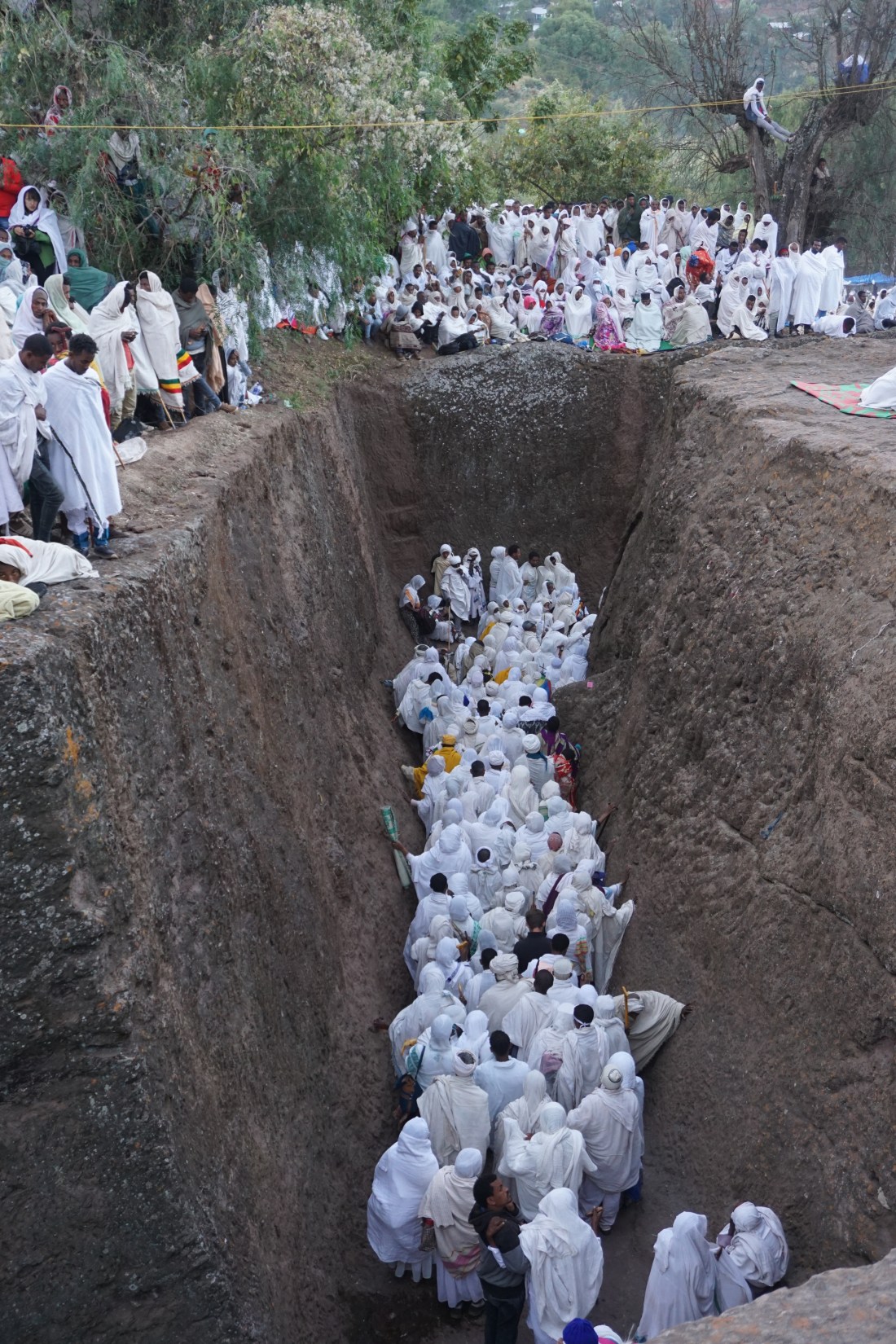
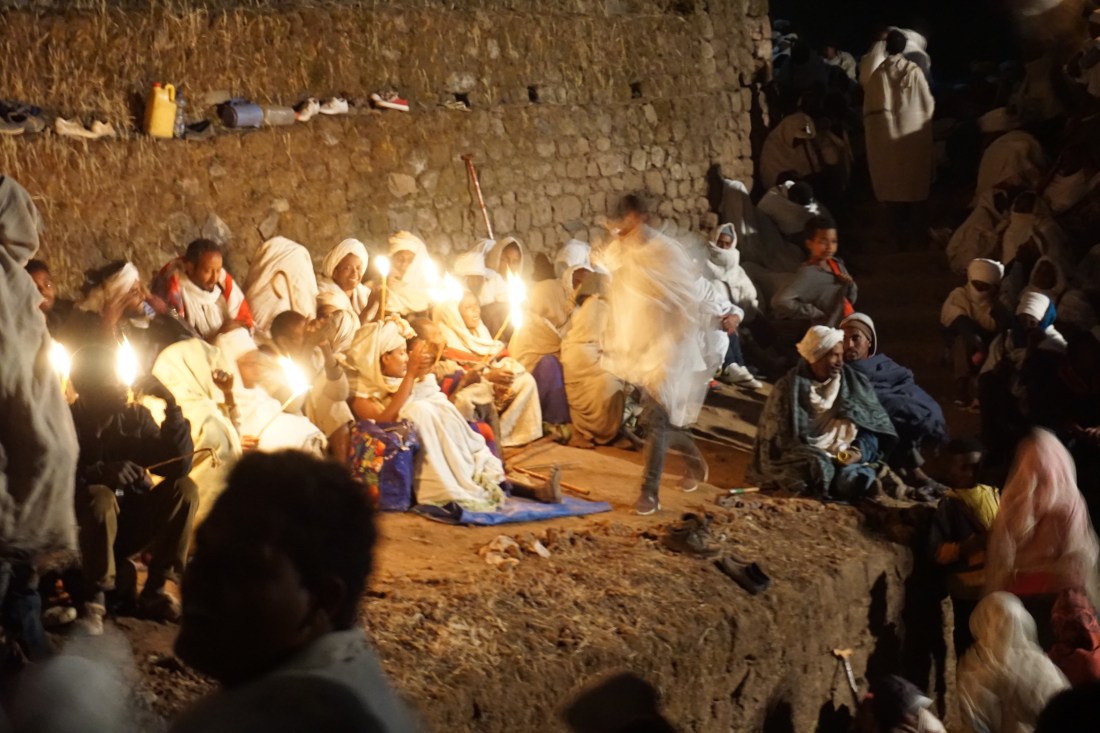
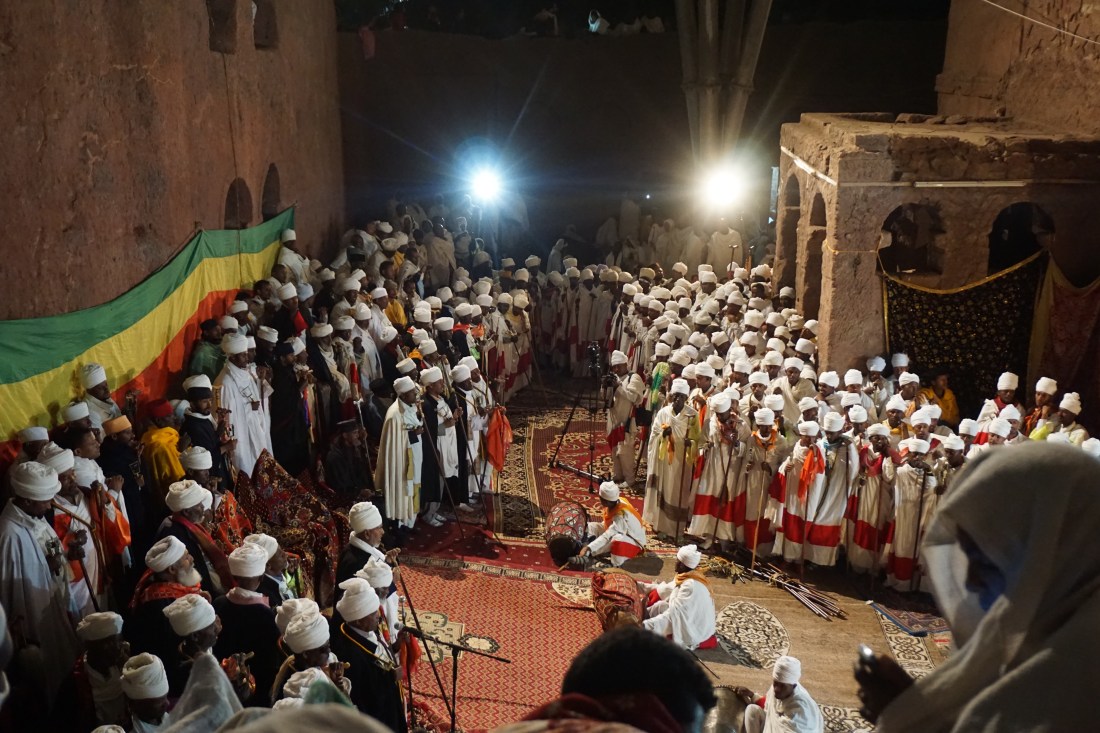
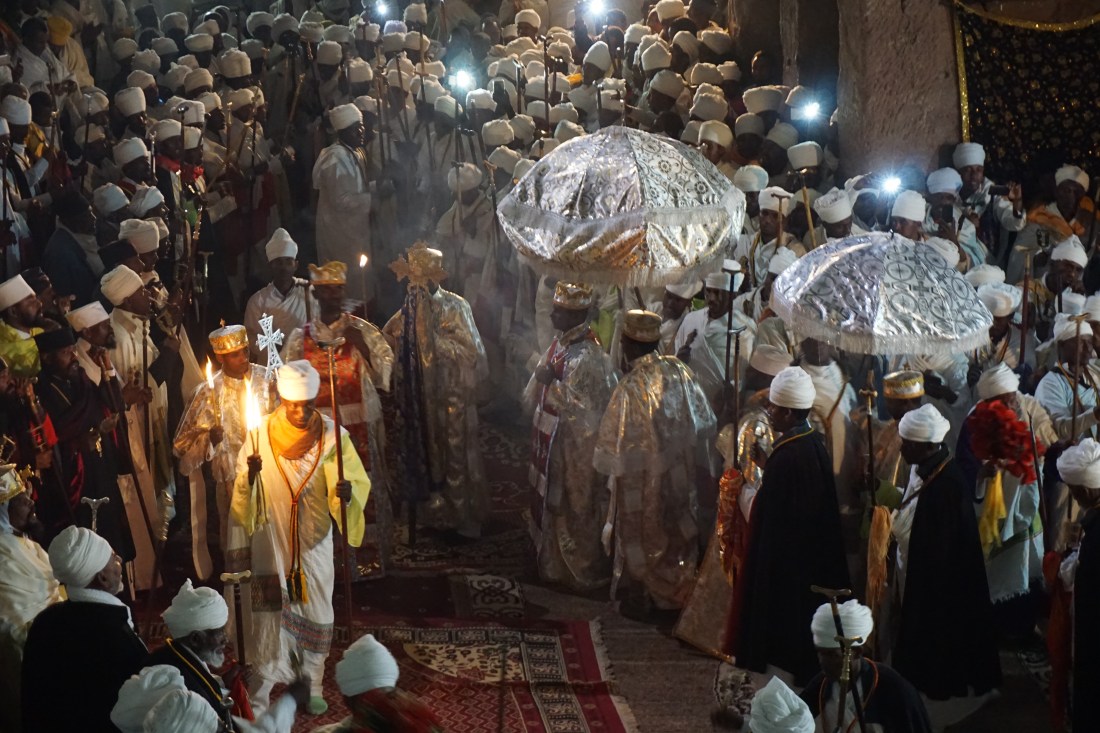
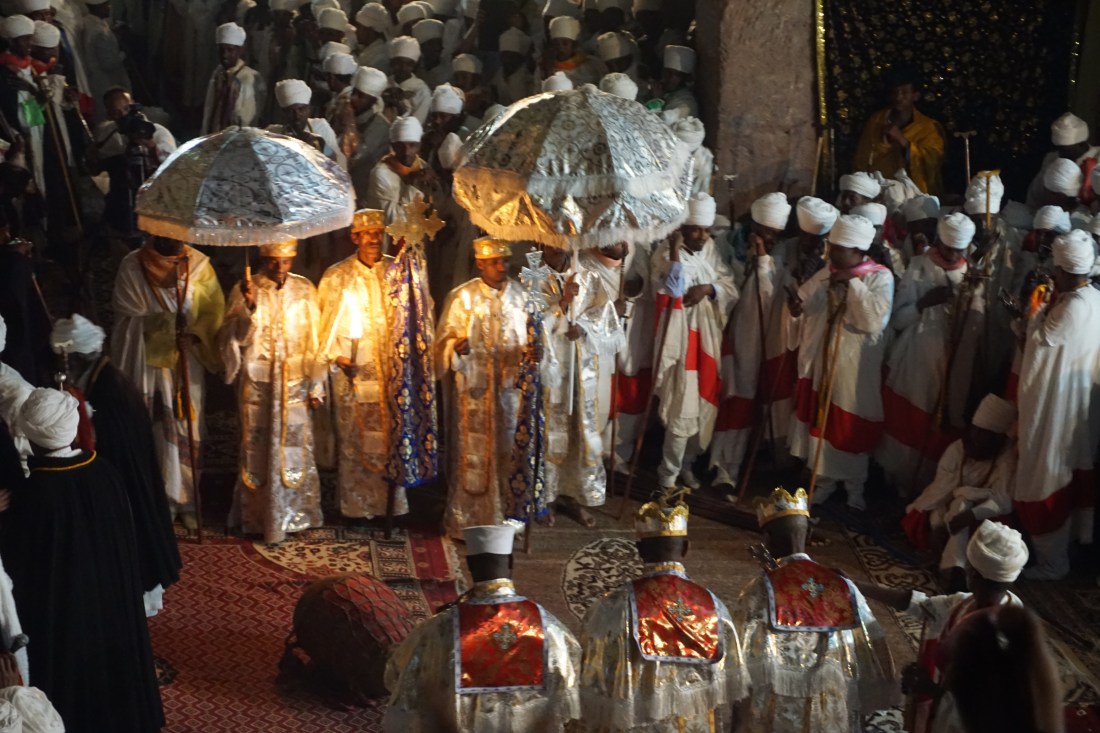
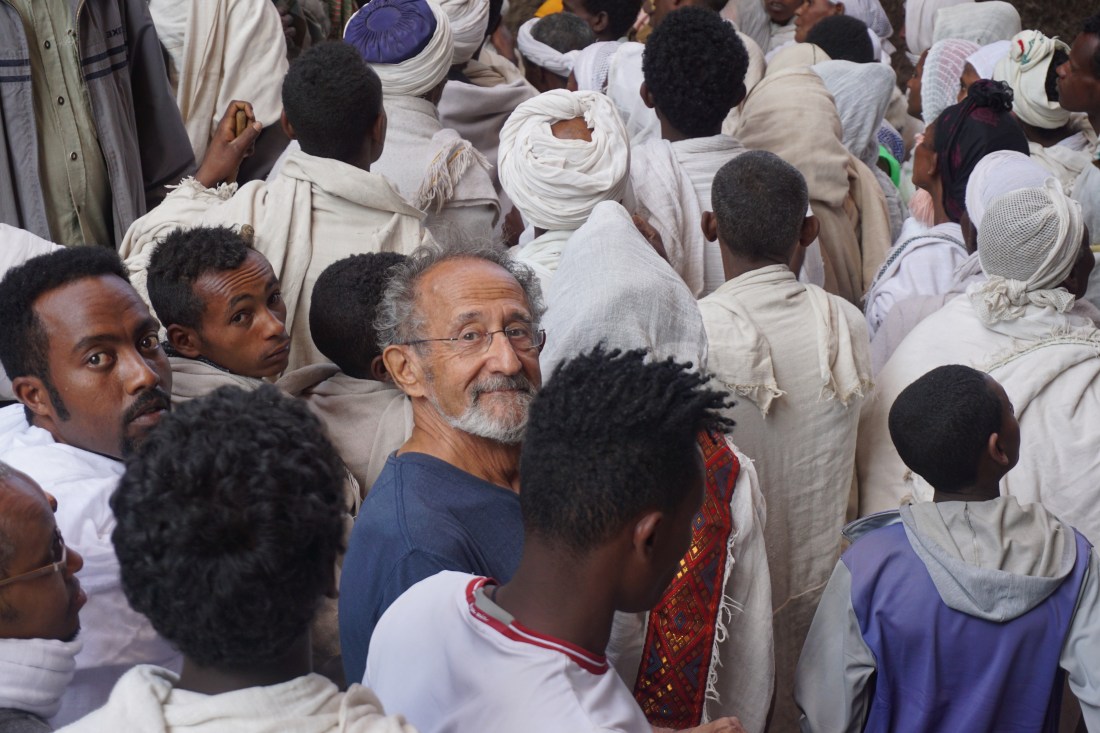
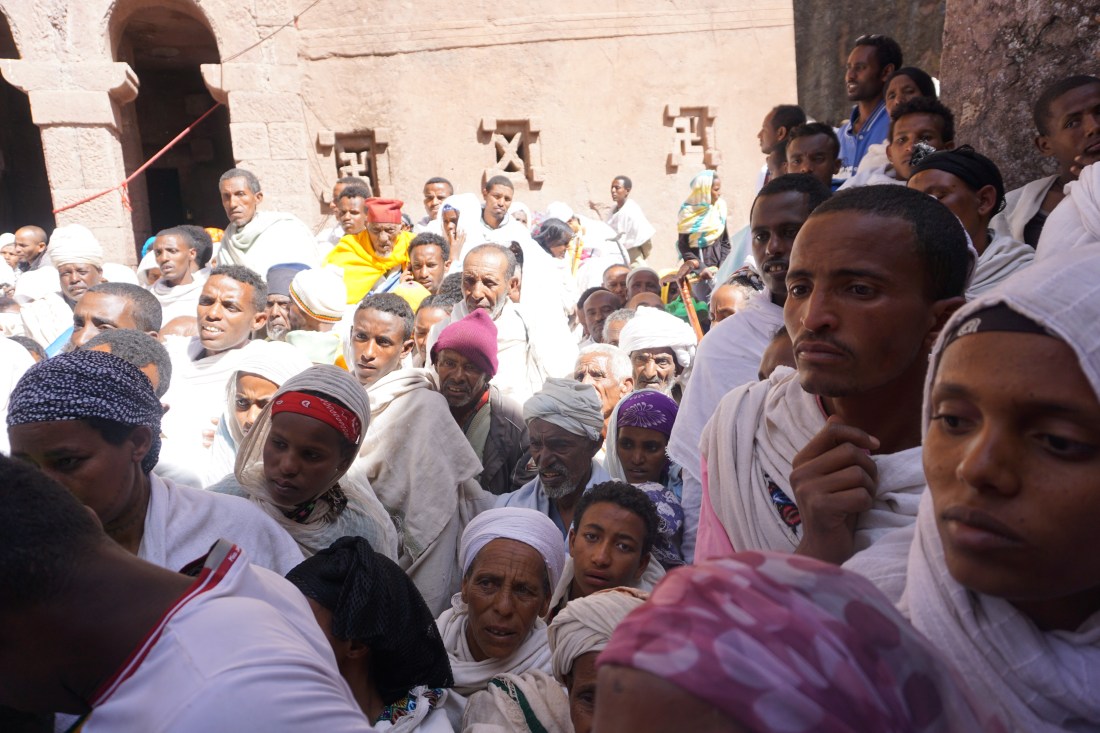
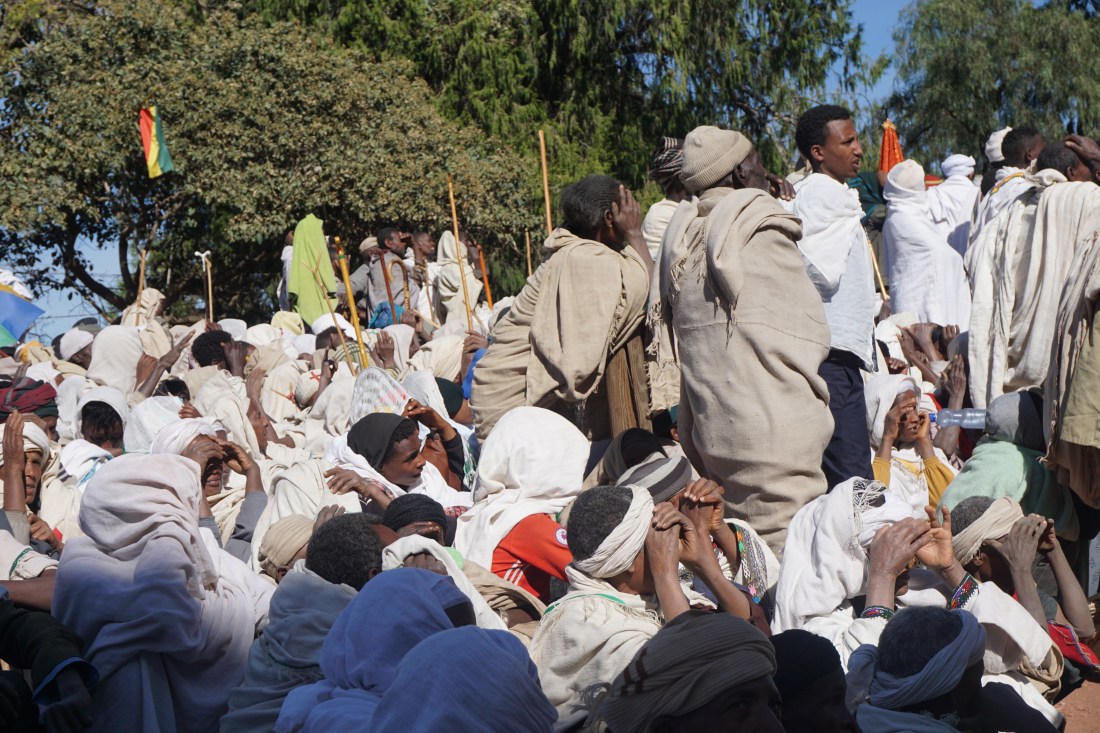
On Orthodox Christmas Eve,Jan 6,  Yared picked me up at 7:30 for the Christmas Eve service. The entire area around and in the church was a mass of pilgrims.

dsc09827

The service was projected on TV screens so that those not able to get in to get a close look could still see the service.  The pilgrims chanted as they waited.

dsc09768

Yared was able, with patience, to get me in right above the service where three to four hundred priests participated.

dsc09769


dsc09795

dsc09796

dsc09803

dsc09772


Ethiopia – Lalibela

Our guide today, Henoch a relative of Yared,  took us to some of the 11 churches in Lalibela.

dsc09598

The entrances to the churches were small, creating some interesting congestion as shoes needed to be removed before entering. A person was hired to watch shoes and while you were inside.  You can imagine the number of shoes at each entrance given the number of pilgrims!

dsc09596

Lining up to get in an entrance.

dsc09616

Line up behind us.dsc09664

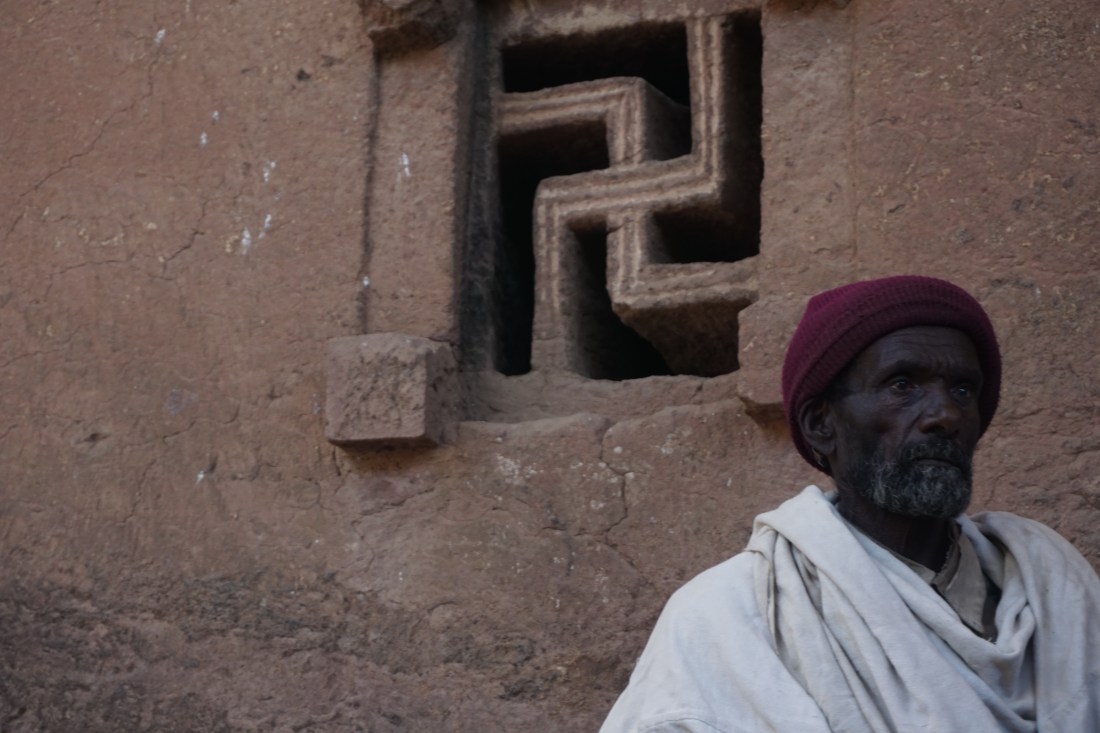
This rather startling symbol is of course quite old and can be seen is several ancient structures.

dsc09638

dsc09635

dsc09692


dsc09585


That evening we had injera with Yared and his family.


dsc00005

View from the front of our hotel.

dsc09526

View from our room in the morning

dsc00107

and in the evening.

dsc09763

Ethiopia – Lalibela

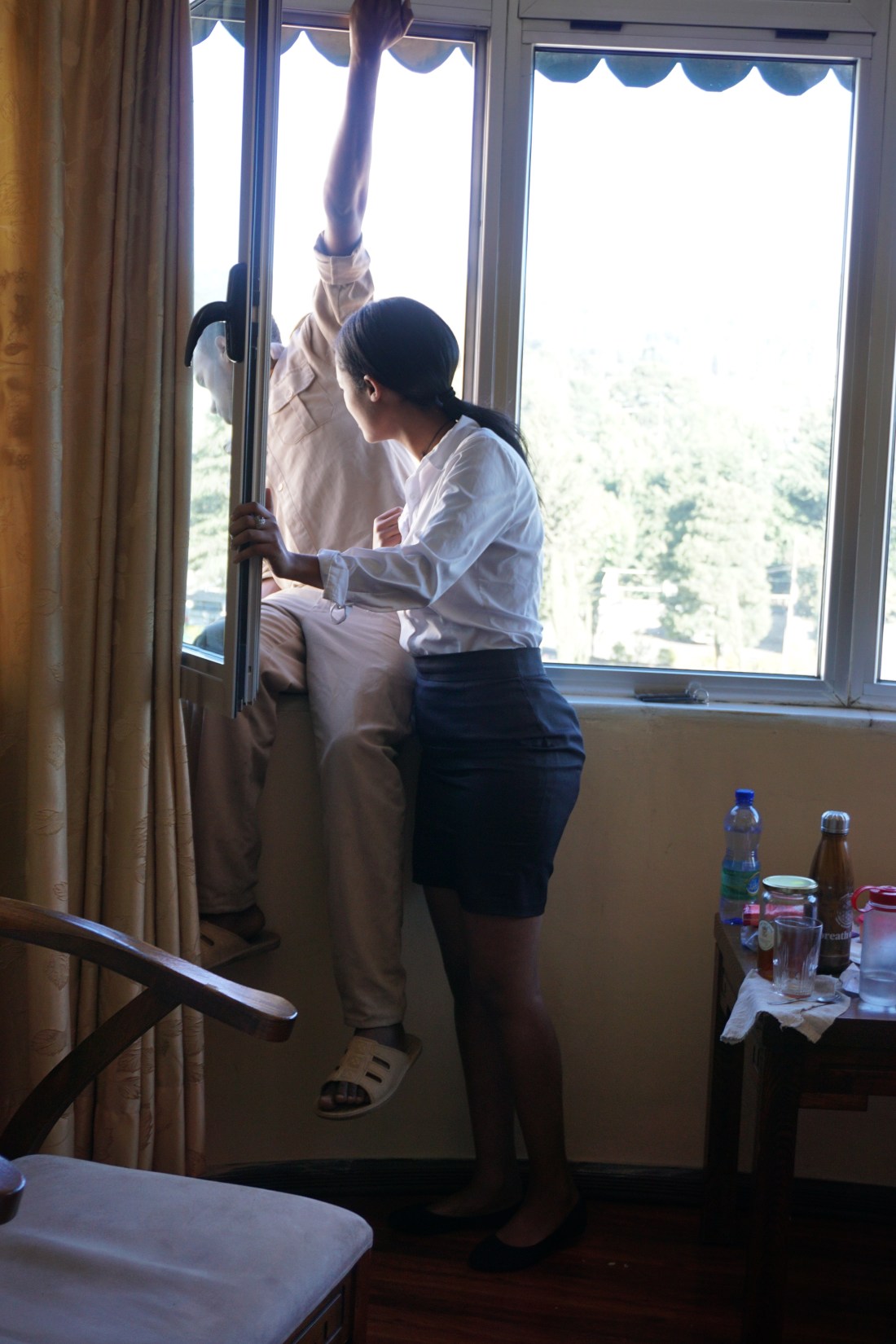
Jan 5 This morning before we left Addis, we heard a lot of banging and thought workers had started early.  It turned out the man in the next room was locked in his bathroom and could not get out.  The staff asked to come in our room and one reached out our window trying to reach his bathroom window with a long pole. We were trying not to be too nosy so it was a mystery to us how they got him out.

dsc09476

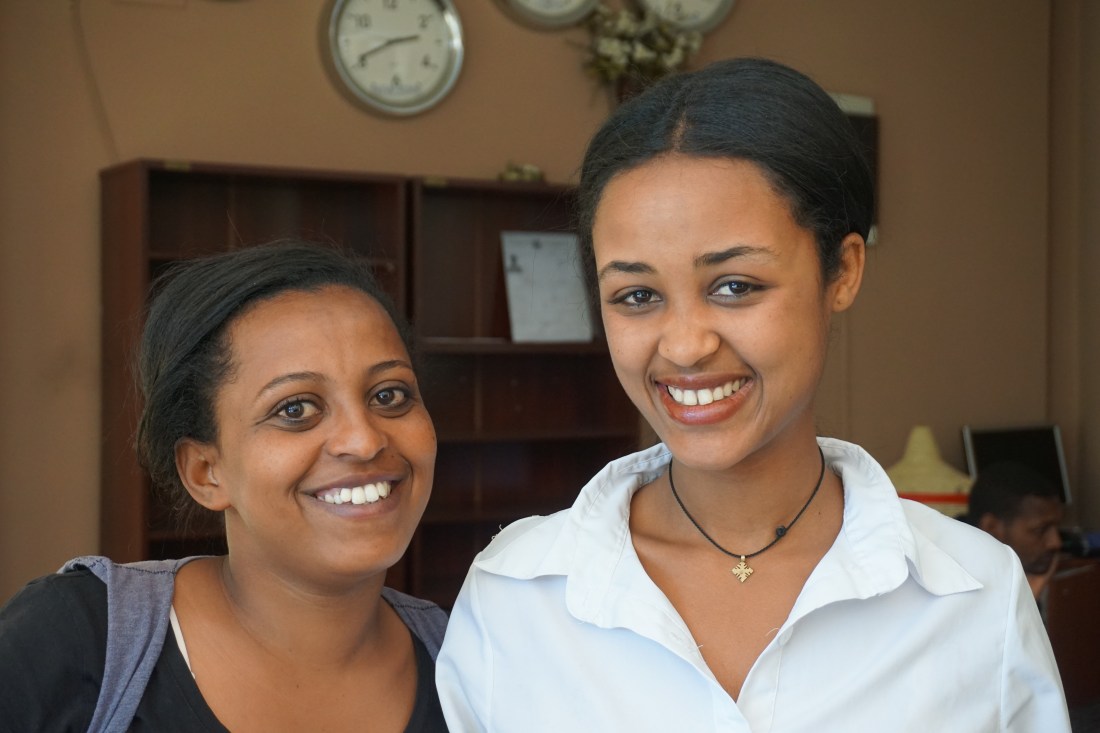
These two ladies were wonderful staff employees in our hotel.

dsc09478

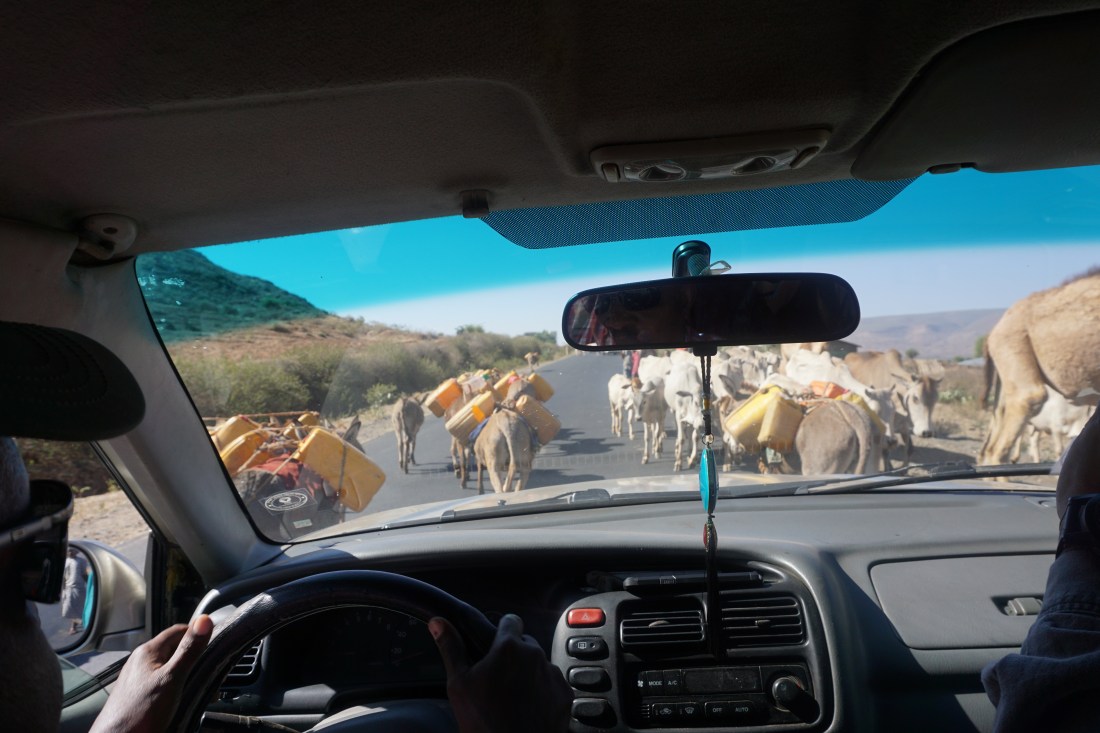
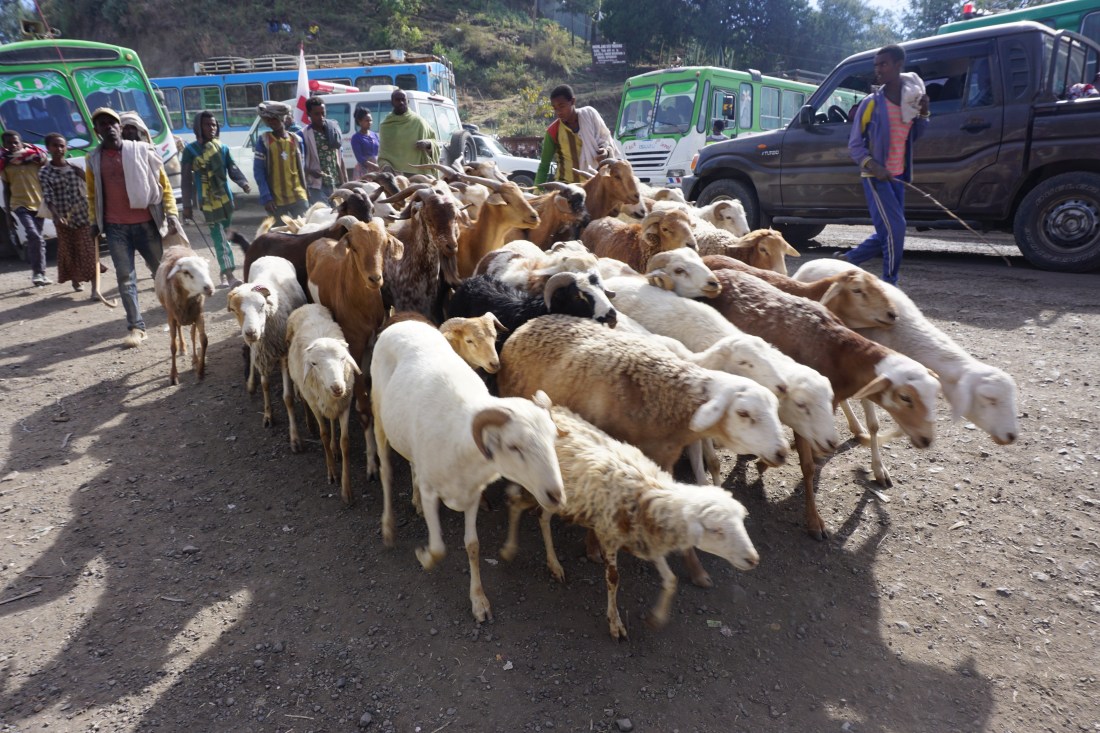
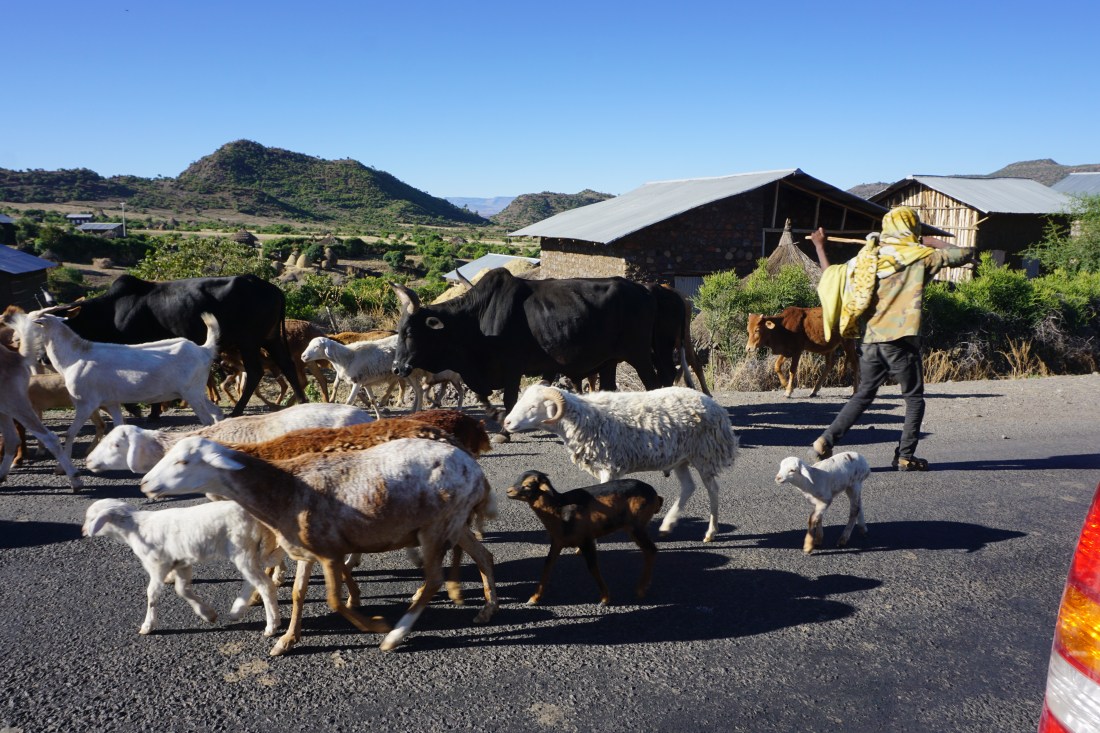
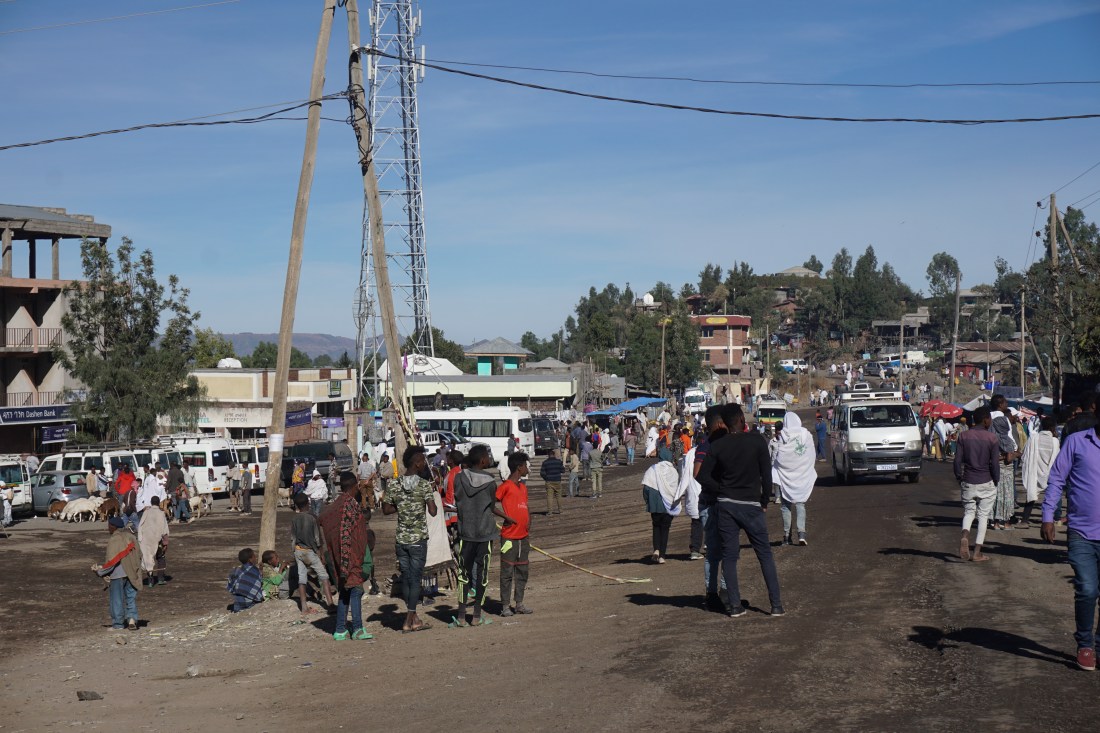
After we flew into Lalibela airport,  we rode 23k up the mountain  into town all the while a constant stream of animals and people passed us heading home down the mountain.  It had been a market day and people had bought livestock to take home for Orthodox Christmas.  Others were carrying their wares back home. What an incredible introduction to the town.
dsc09753

Here the houses are fashioned from eucalyptus poles, which are very straight and easy to grow, then covered with mud. Once dried some are  even painted.  They are uniform in size and design.

Animals are all over the road.  The traffic is constantly swerving to avoid them.

dsc00121

Main street Lalibela.

dsc09537


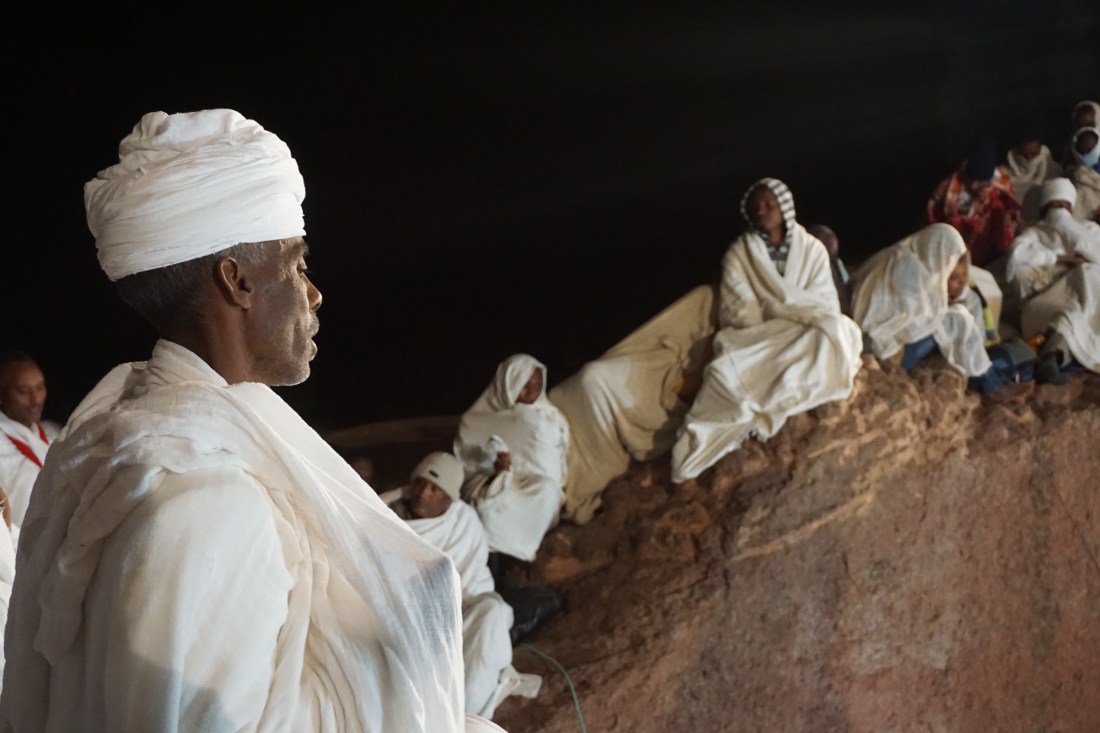
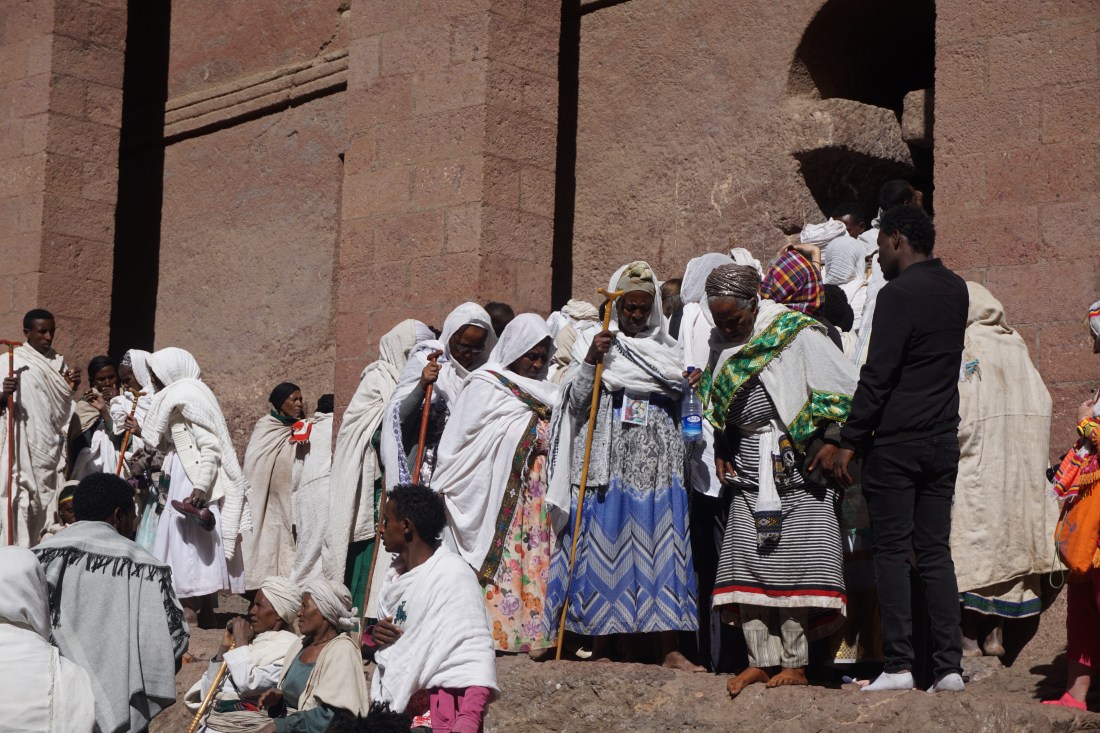
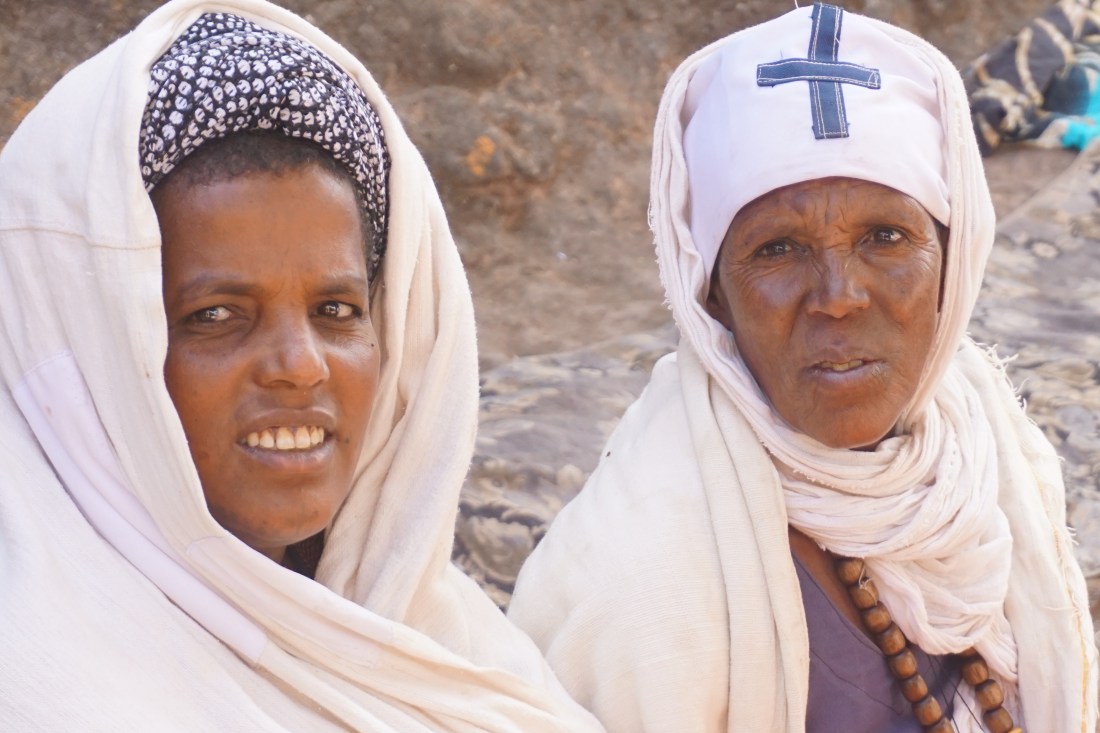
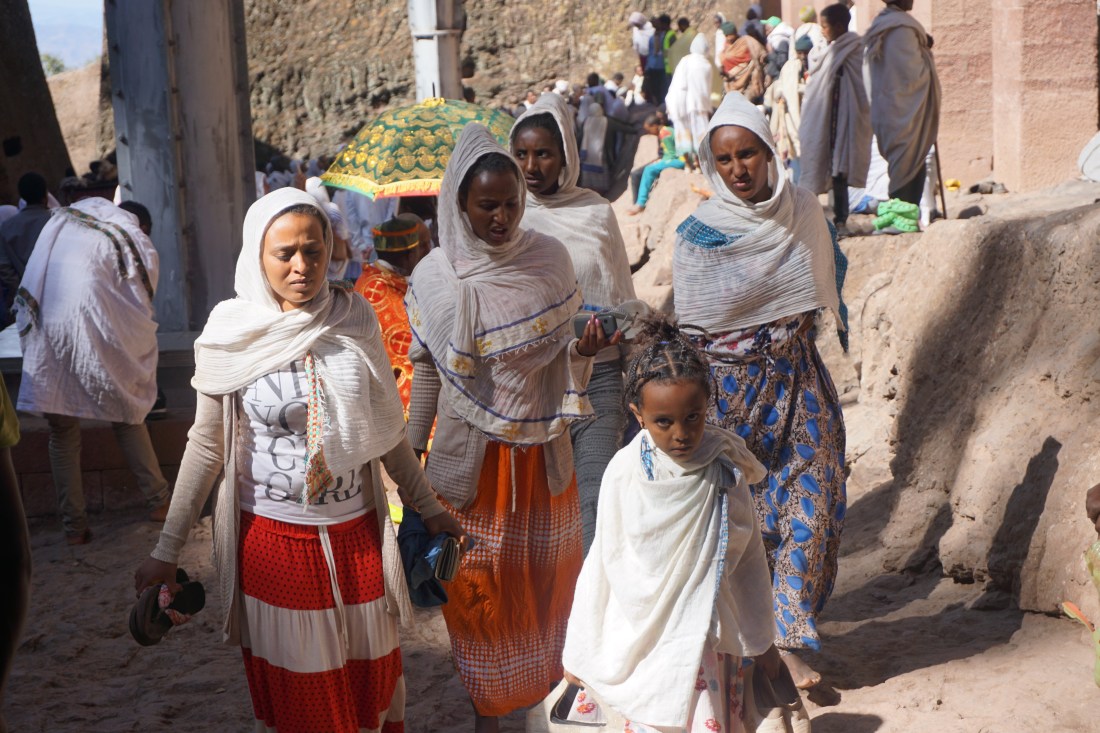
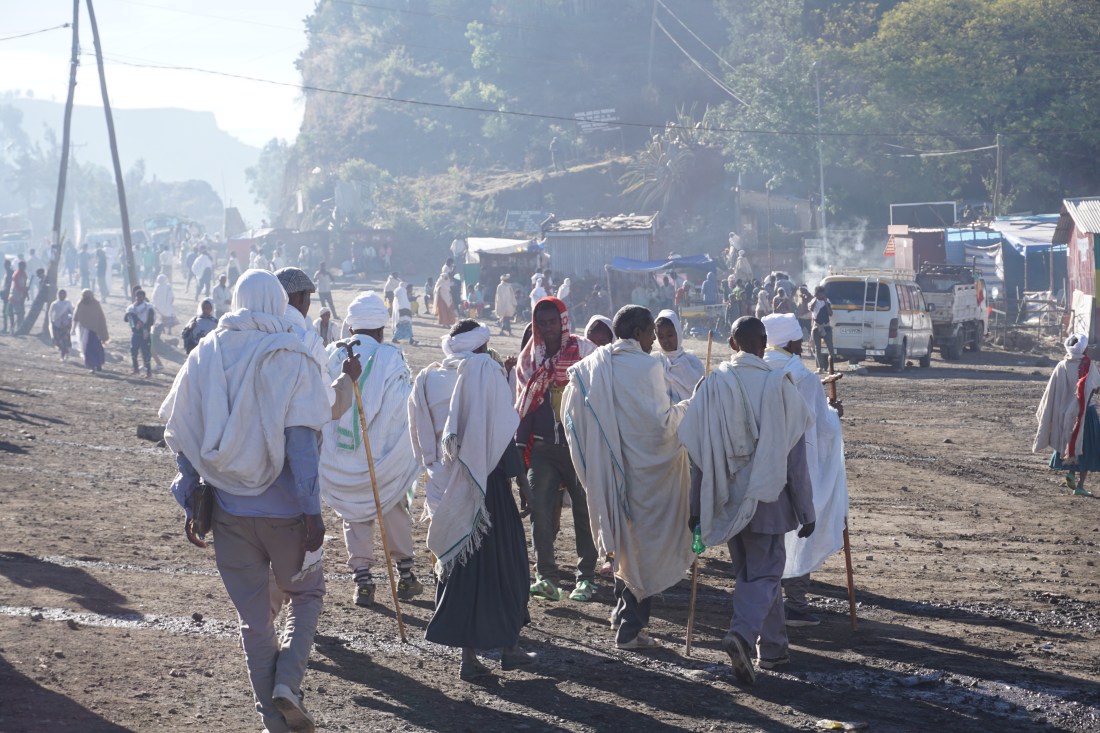
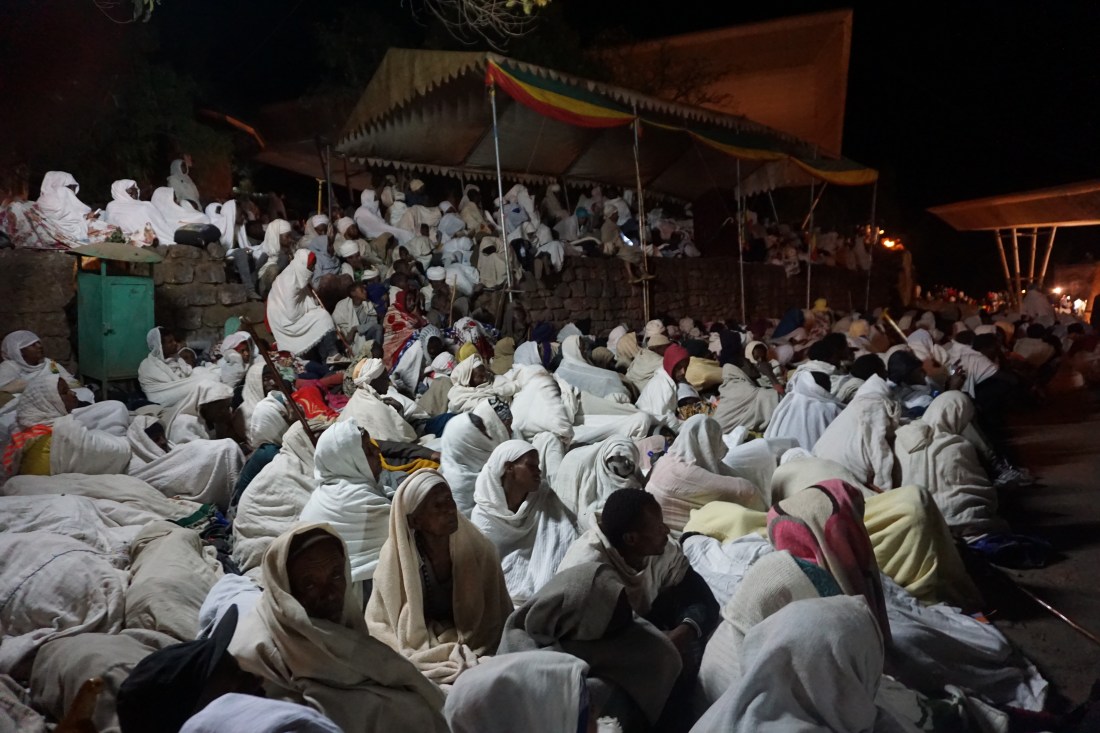
The pilgrims pour into Lalibela for the Orthodox Christmas celebration. They have no regard for their physical well being.  Some walk 7 and 8 days to get here. Estimates say 30 to 40 thousand arrive.  They are all wrapped in white and many are bare footed. Our senses are on overload.

dsc09533

dsc09564

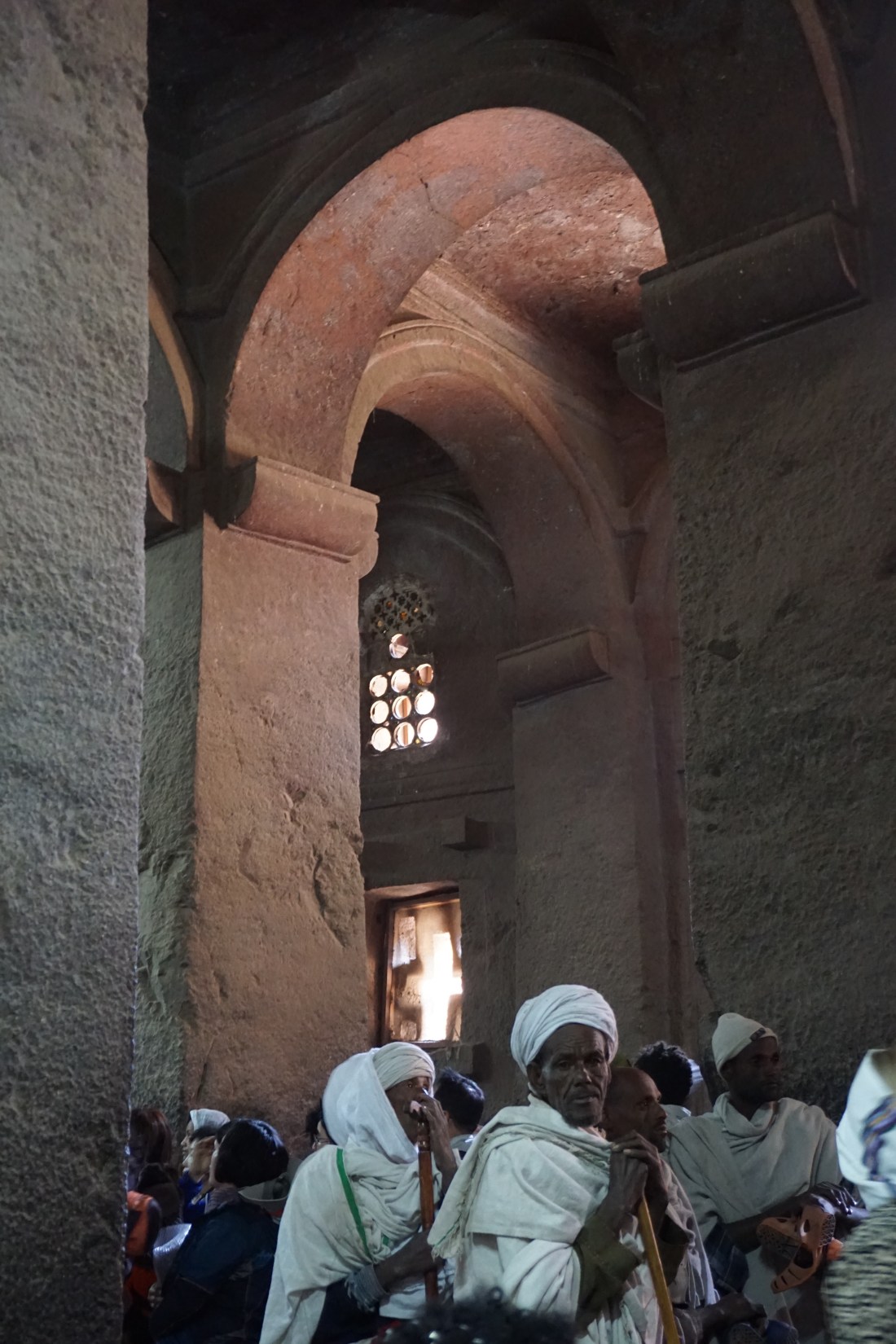
Our guide took us into a rock church that evening where 50 to 60 priests were chanting. They started at 9 and chanted until 9 the next  morning. We stayed for 2 hours. Our guide managed to get us right up beside the ceremony.

img_20190105_171049

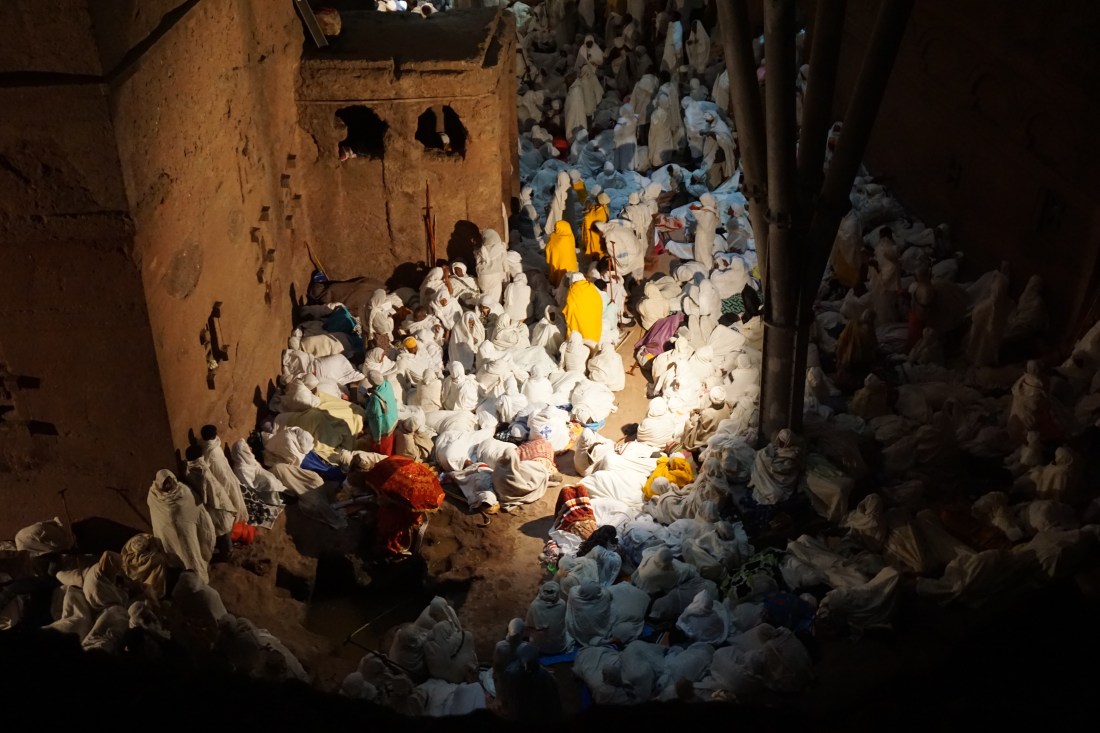
Coming out all of the area around the church was covered with white robes as the pilgrims curled up on the ground to sleep. Unbelievable.

dsc09829

Again we have been blessed with a great guide, Yared, 0983178276.

dsc00215


Ethiopia -Addis Ababa

Today we had to locate an Ethiopian Airlines office to pay for our tickets to Lalibela for the Orthodox Christmas celebration there. As always,  finding places in an overcrowded and frenetic city is an experience but we got there, got tickets and are thrilled for our next adventure.

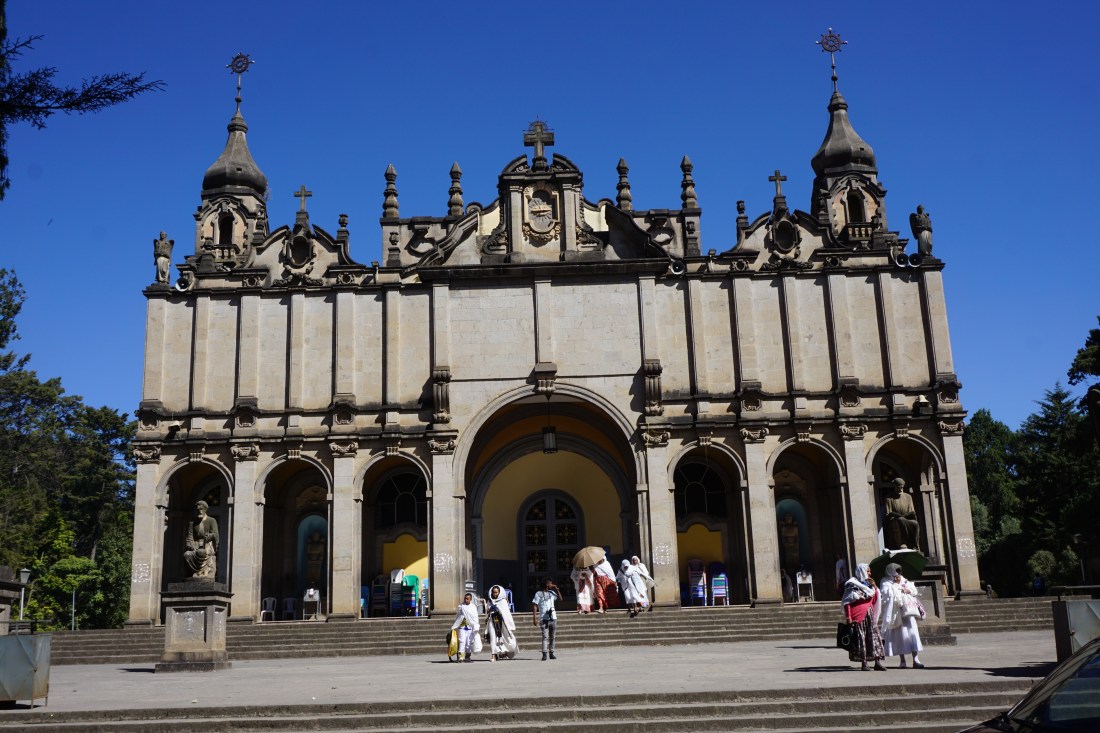
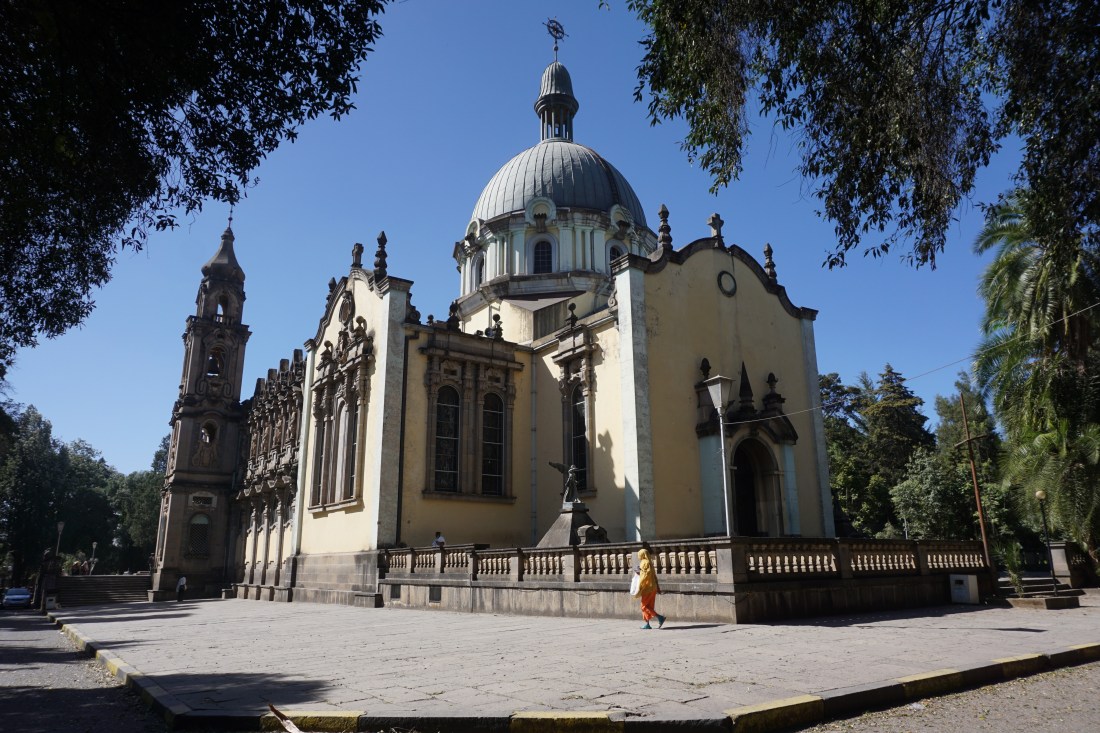
We spent the afternoon visiting the Holy Trinity Cathedral, which is the highest ranking Ethiopian Orthodox Tewahedo Cathedral in Addis.

dsc09449

dsc09451

The Selassie Museum would not allow any photos inside. The crowns and chalices in  gold and silver were exceptionally beautiful. What I really wanted was a photo of the  bible written in Amharic on horse skin. The writing was a work of art.

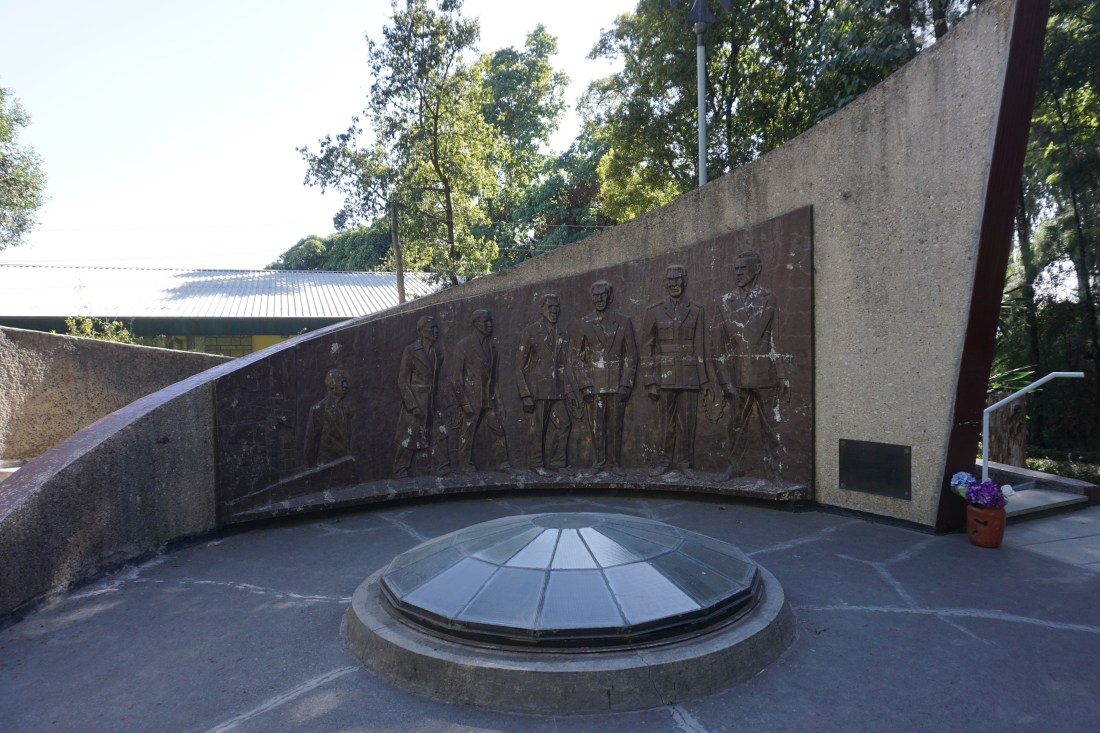
A monument to the members of Parliament that were killed when the Derg took over in Ethiopia in 1975.

dsc09461

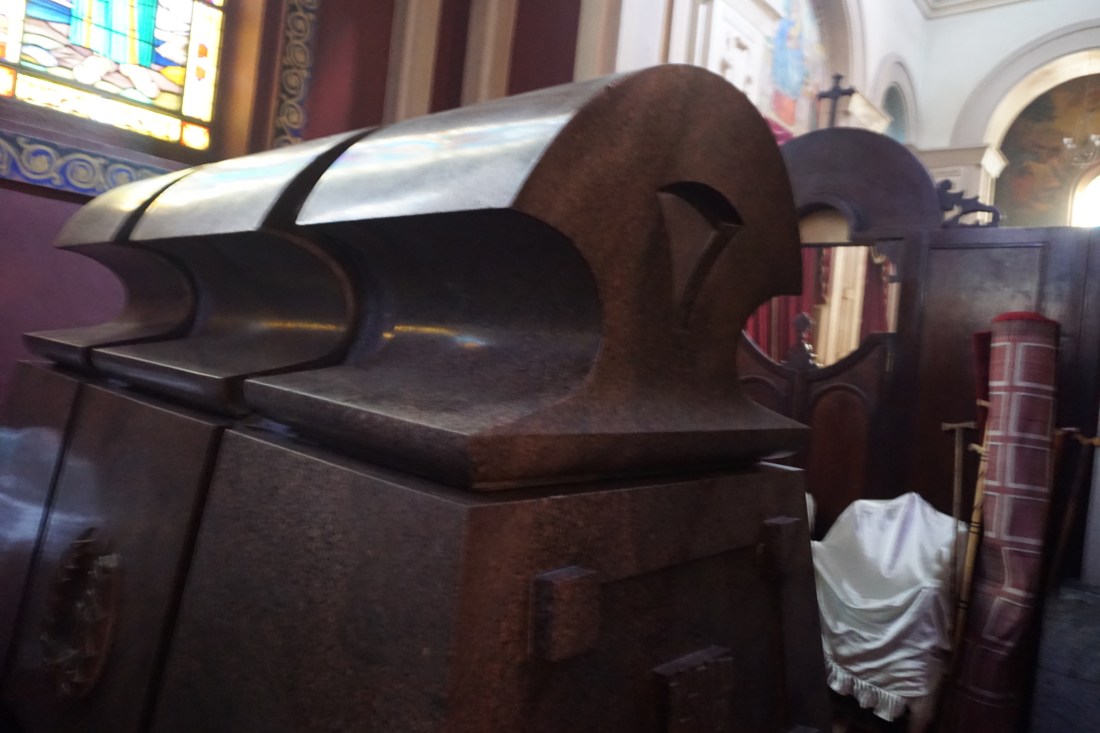
John went into see Halle Selassie’s tomb.  Haile Selassie was Emperor from 1930 to 1974. He was murdered in 1975 when the Derg assumed power.

dsc09455


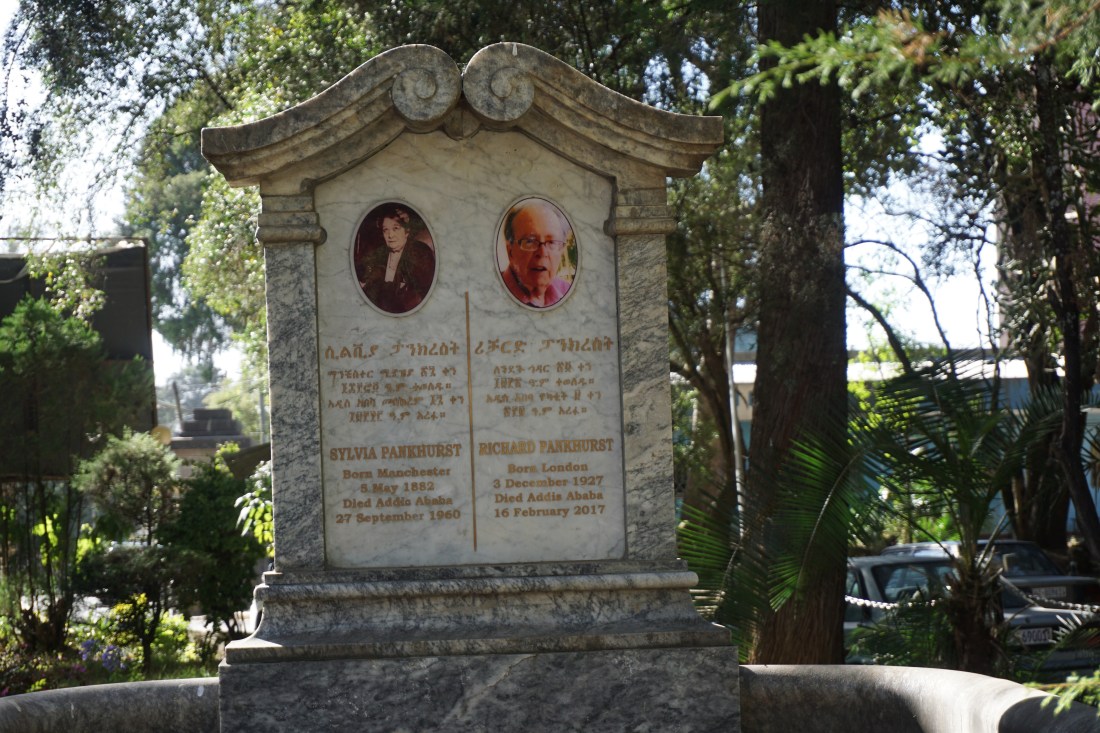
John was surprised to see that Sylvia  Pankhurst, the British Suffragette and Activist                                is buried in the Cathedral Cemetery.

dsc09466

These three were purchased by the Cathedral to be slaughtered for Christmas dinner for the poor. Happily they do not know their fate.

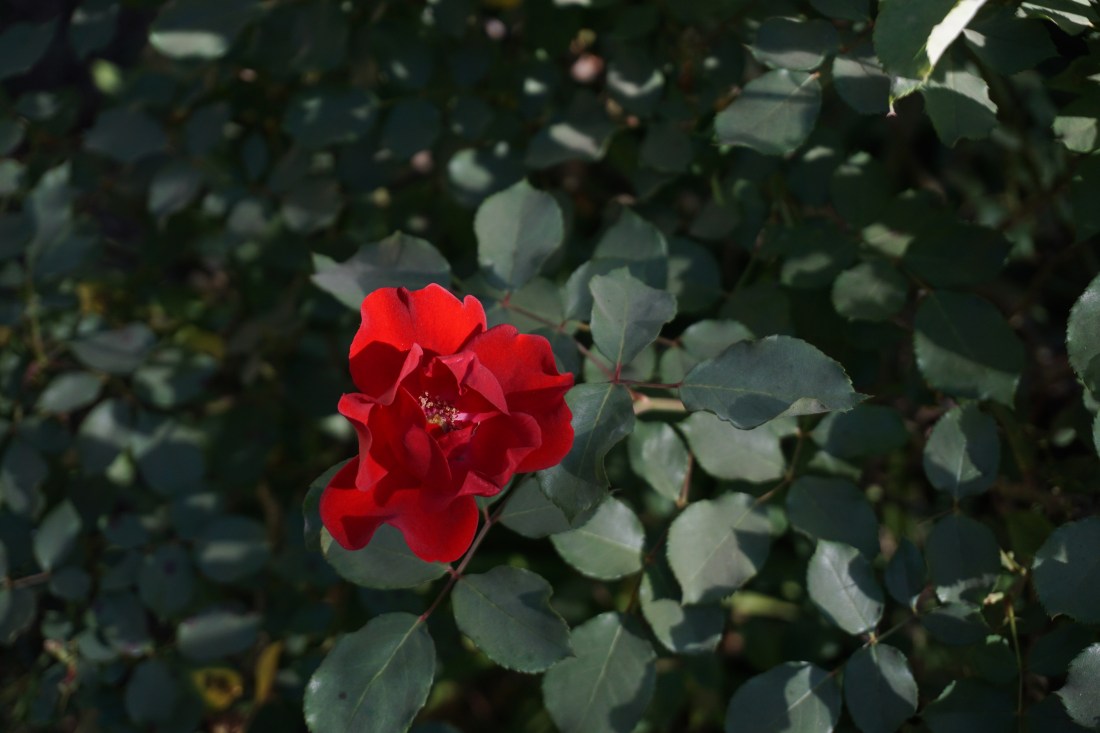
So special to see the blossoms.

dsc09463

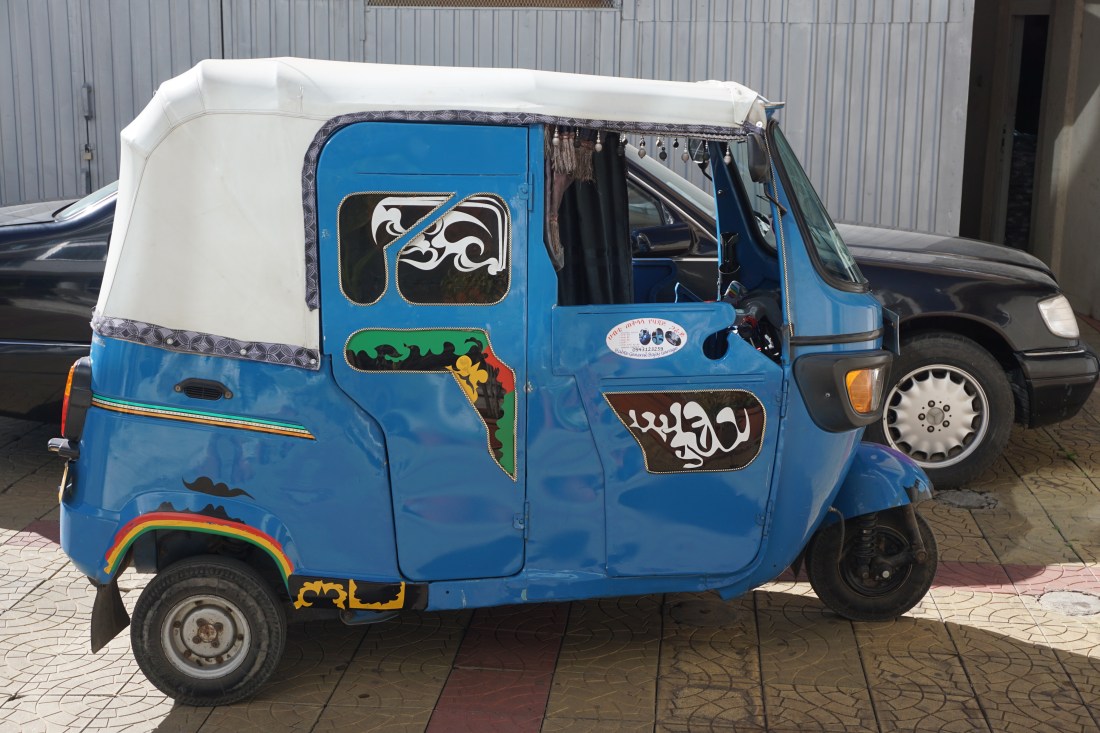
These little taxis outside our hotel are used just for transportation within the immediate district and not for travel to another districts.

dsc09444

Ethiopia – Addis Ababa

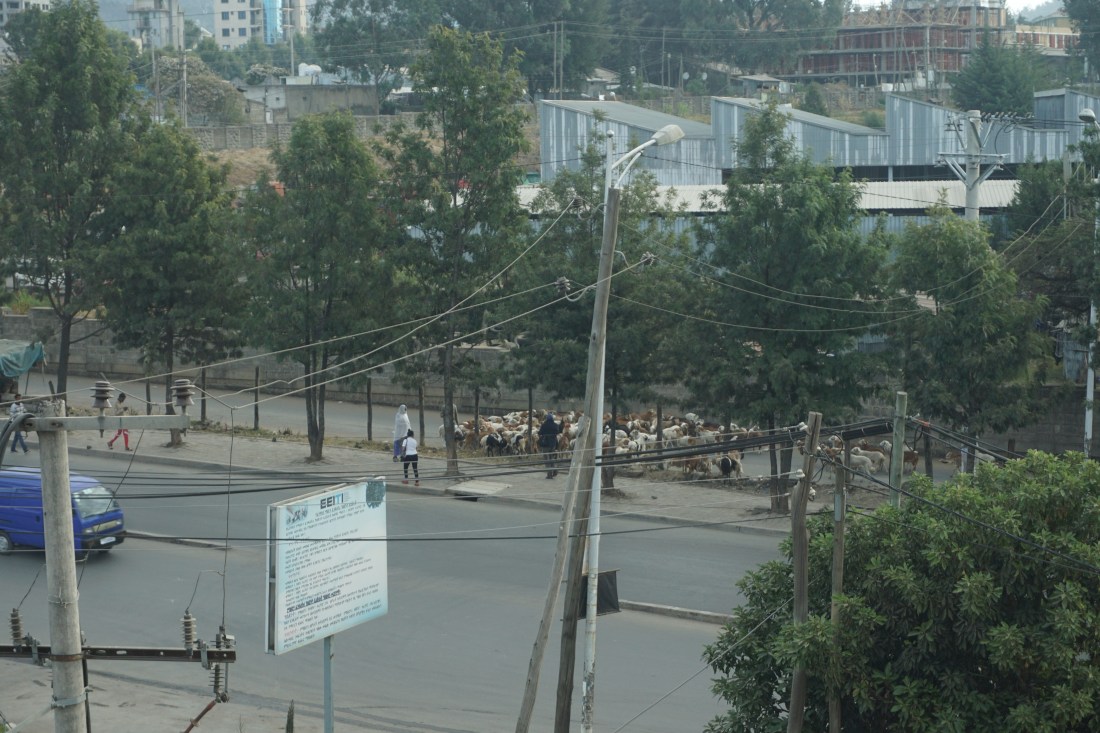
This morning Jan 3, I opened the curtains in our room and saw a herd of sheep across the road.

dsc09279

We had lunch with Yehalem, the director of the Frances G. Cosco  Foundation which builds schools in communities in Ethiopia. We talked about what service we can offer the Foundation while we are here. Our lunch was at a restaurant that gives orphans the skills to wait tables for employment in the hotels that are being built to accommodate the increase in tourism.

Yehalem told me the reason the sheep are in town is that the locals buy an entire animal for Christmas.  When we left the restaurant we saw two vehicles with animals tied on the roof.  As well,  while waiting for Yehalem I saw a man go by with a sheep that was hopping on three legs.  The man was leading him down the road by one leg. Then I realized why.

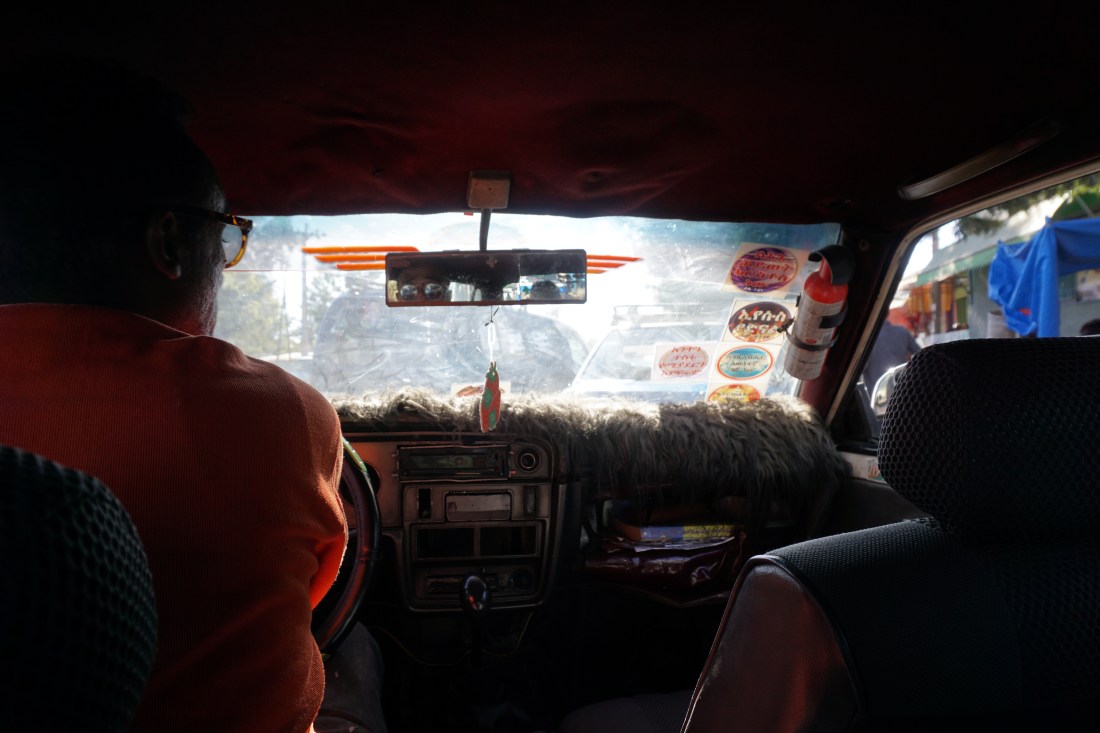
After lunch we went to the Merkato, which is the largest open market in all Africa.  Our taxi cab.

dsc09289

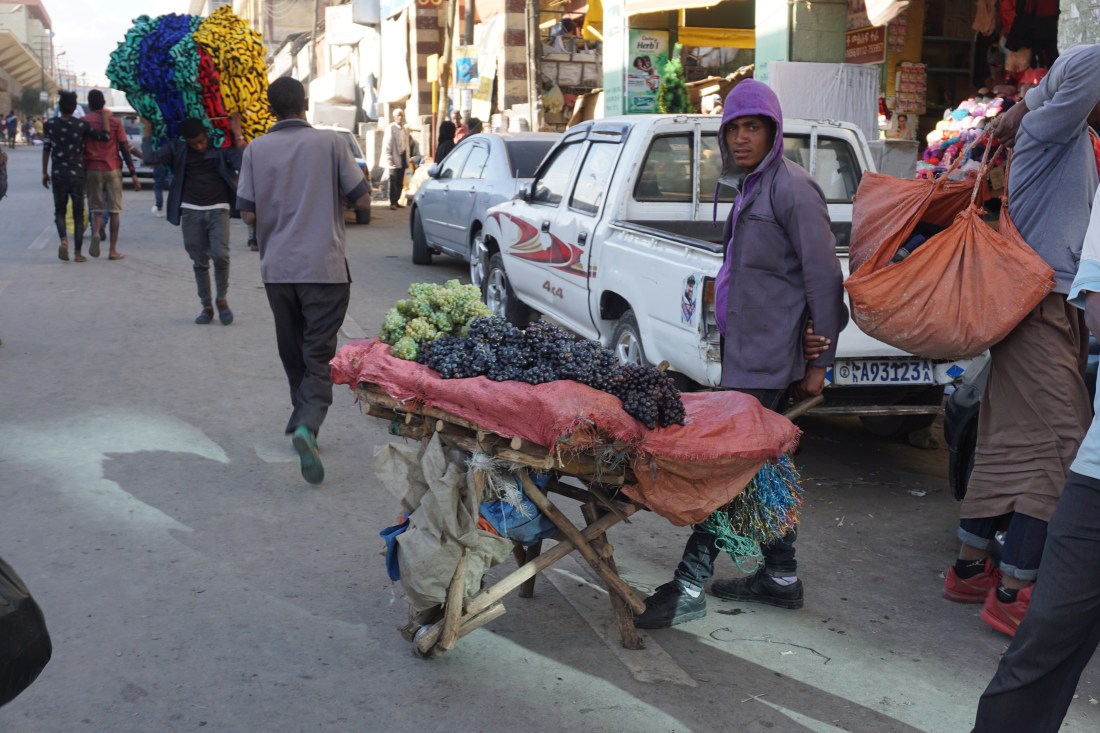
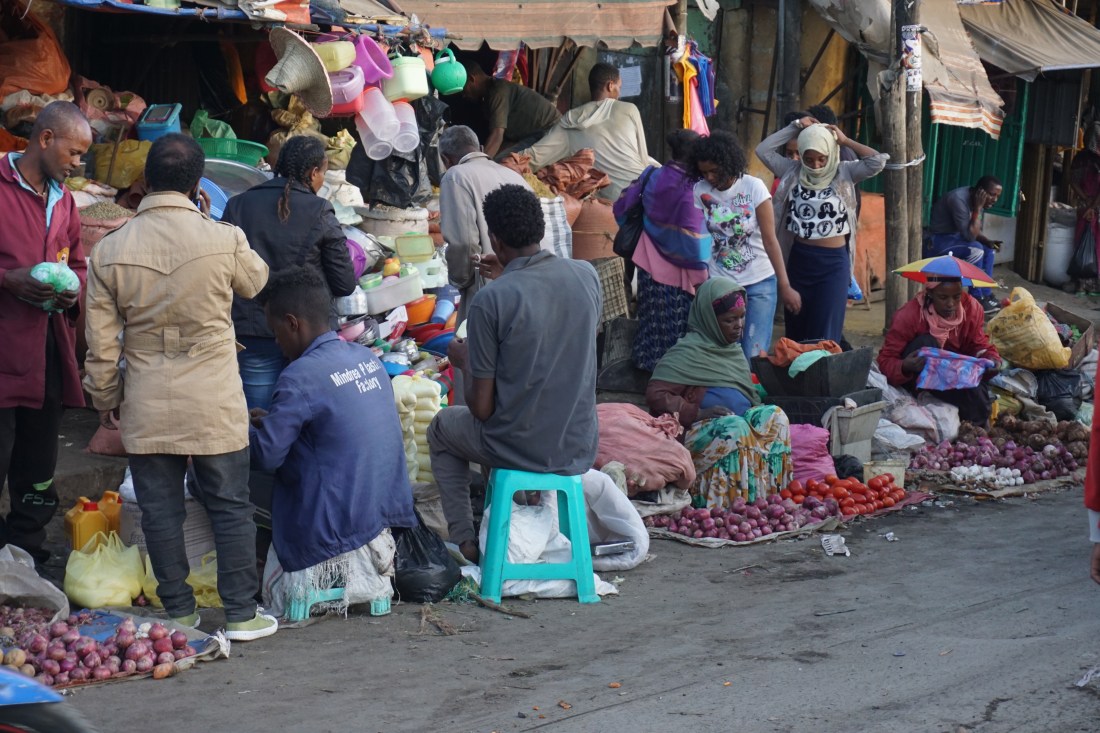
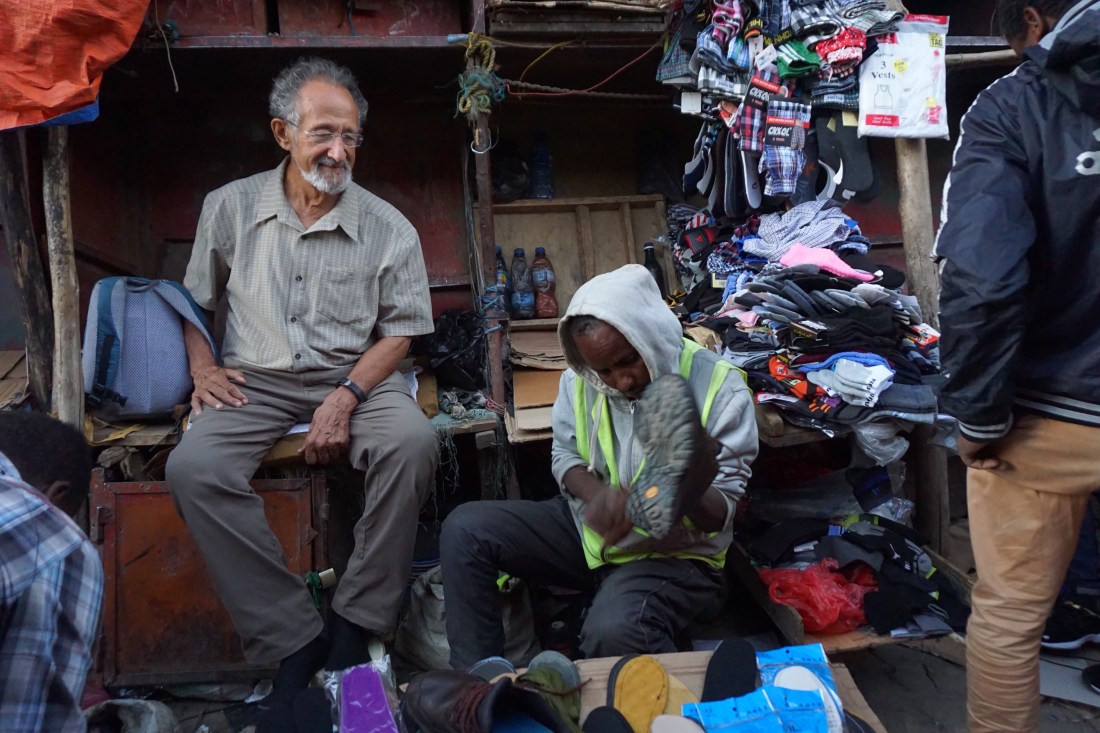
When we drove into the market looking out from the cab we were overwhelmed by the number of people and not one other tourist face.  We were thinking of not getting out at all when out of the blue a man appeared offering his service as a guide for the market. We negotiated a price and were amazed by what he provided.  He was proud of his country and enjoyed explaining absolutely everything we passed. His number if you need a guide for the market is 0947901155 and his name is Sun.                                   .

Notice the homemade wheel barrow. Our guide talked about the resourcefulness of the people and pointed out many examples of recycling that is evident in their products. Notice the red sling on the man’s back on the right.

dsc09317

People carry their products in these tarps and lay them in the market where they can.  They do not have licences so they are always on the watch for the authorities.  In the bottom left picture you can see the security with his stick chasing them and the left picture the boy leaving with his products.

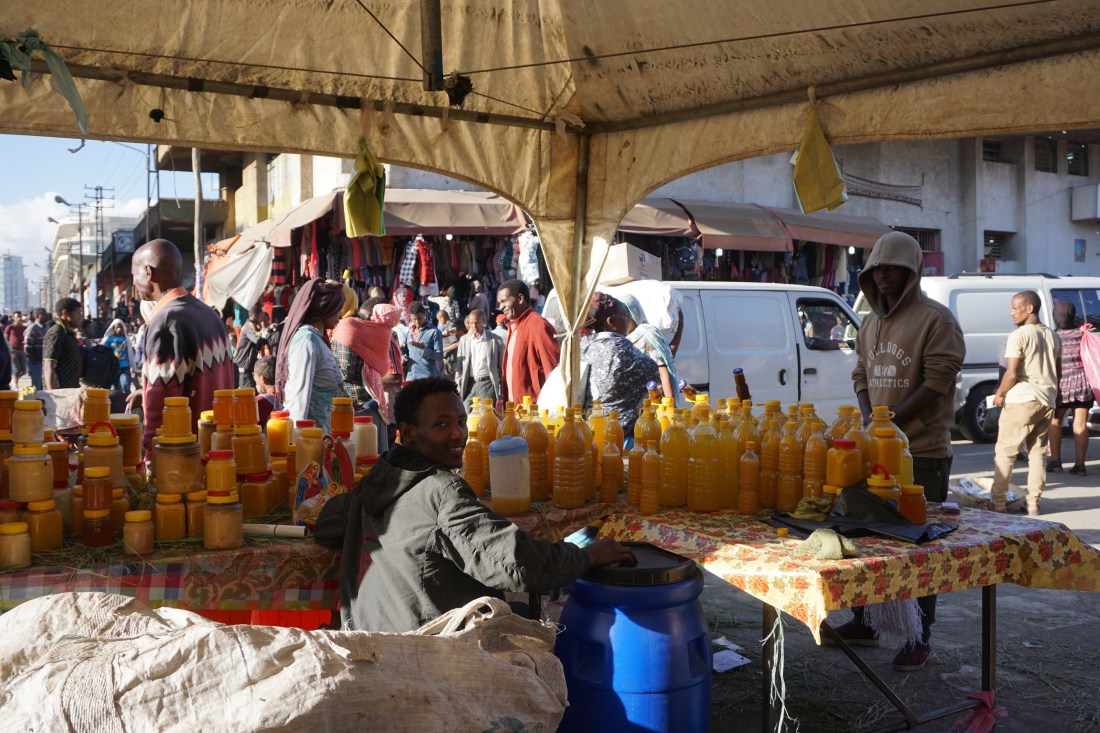
John bought a bottle of this home made honey alcohol that is made at home and sold for  Christmas which here is Jan 7 Orthodox)  The market was extra busy because of Christmas shopping.

dsc09326

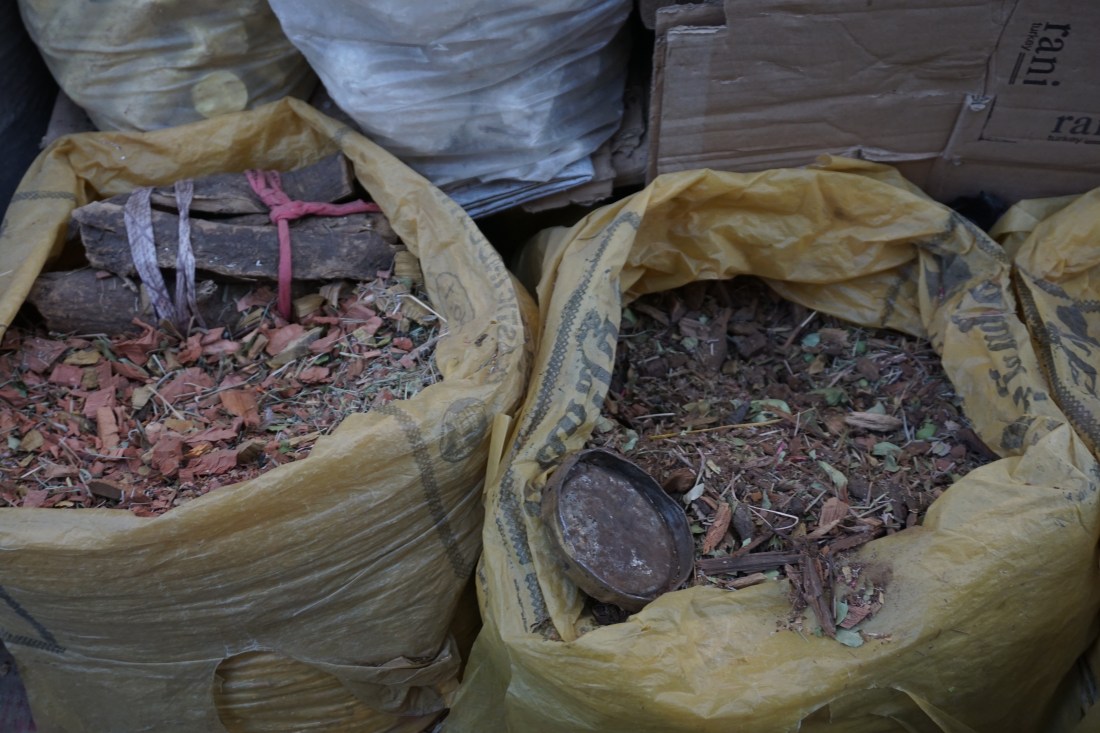
They burn frankincense on their little stoves for the rich smell when they have their friends over for Christmas.dsc09337

The sulphur is used for cuts and sores and the khole, in block form and little bottles for womens’ eyes.

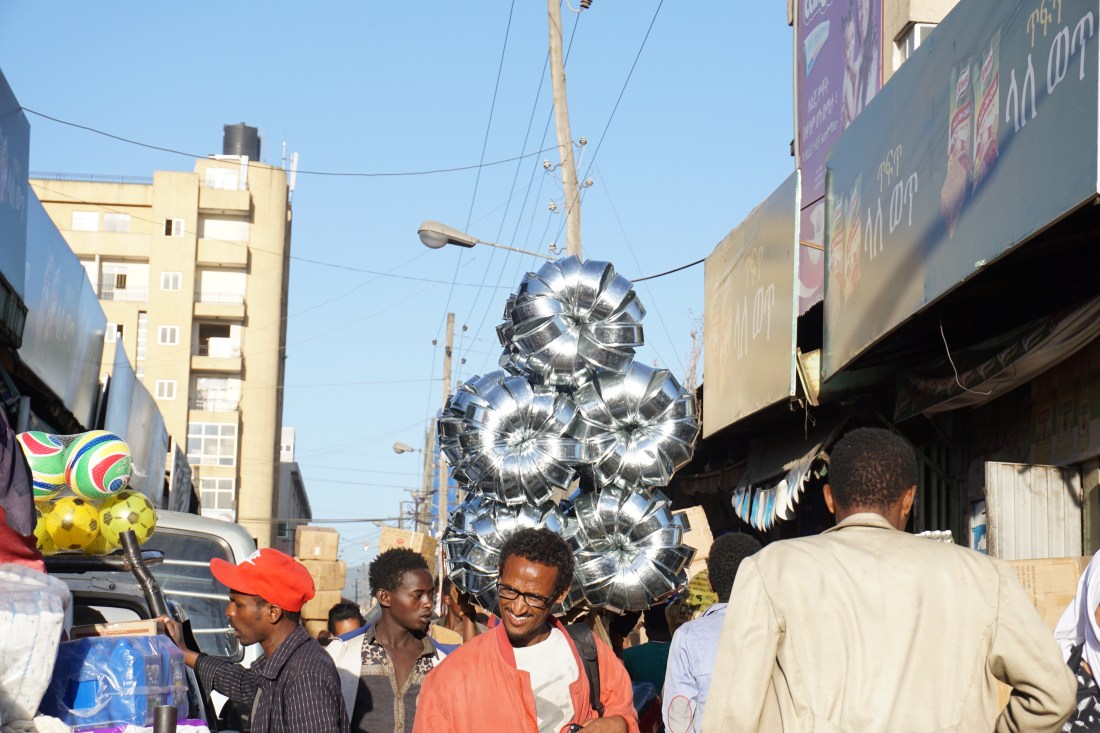
Strainers and sieves made from recycled metal drums.

dsc09351

These women make envelopes from recycled paper.  The vendors selling spices buy from them.

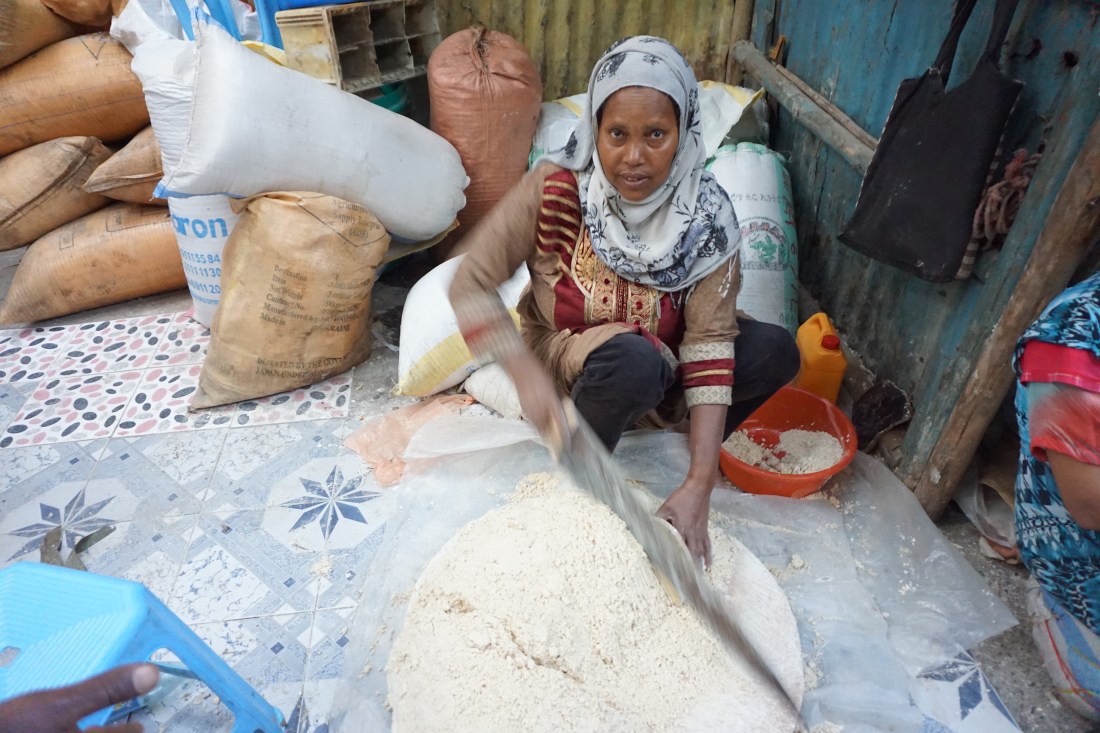
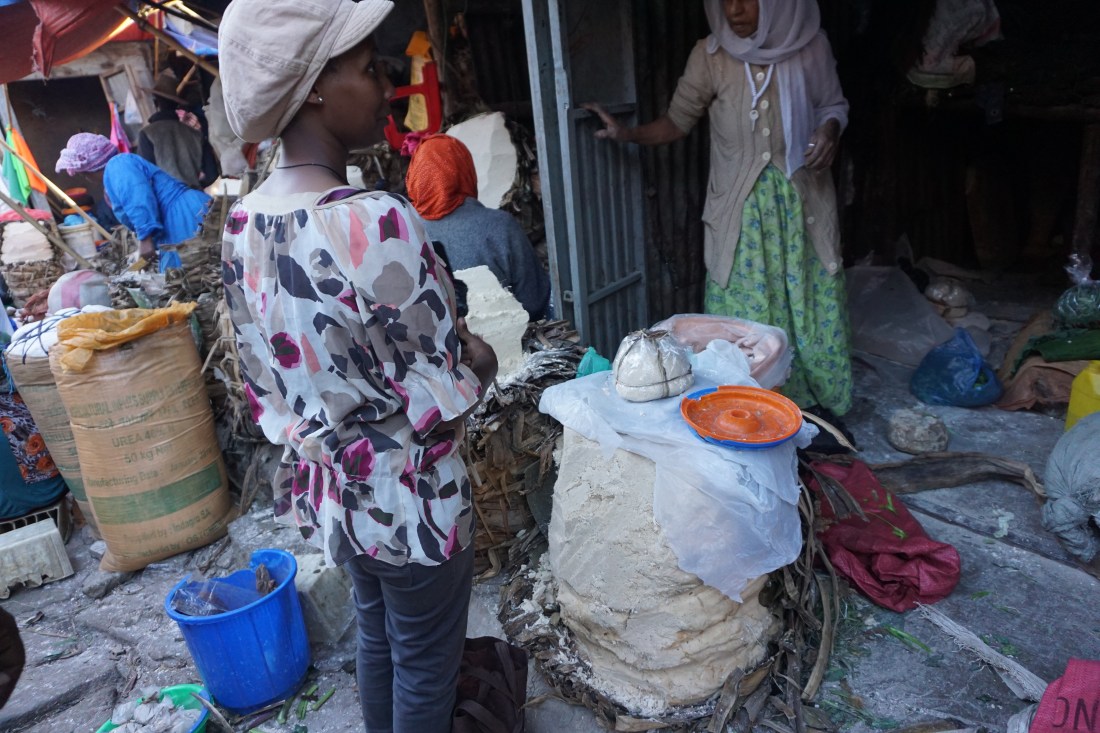
These women are cutting up a fibrous food from the base of a banana plant that does not produce bananas and then mix it with butter.  Further refining and mashing produces a type of porridge.


dsc09404


Wrapped and sold in packages.

dsc09373

Buying at the market to take to the outlying communities.

dsc09394

dsc09306

Spices abound.

dsc09342

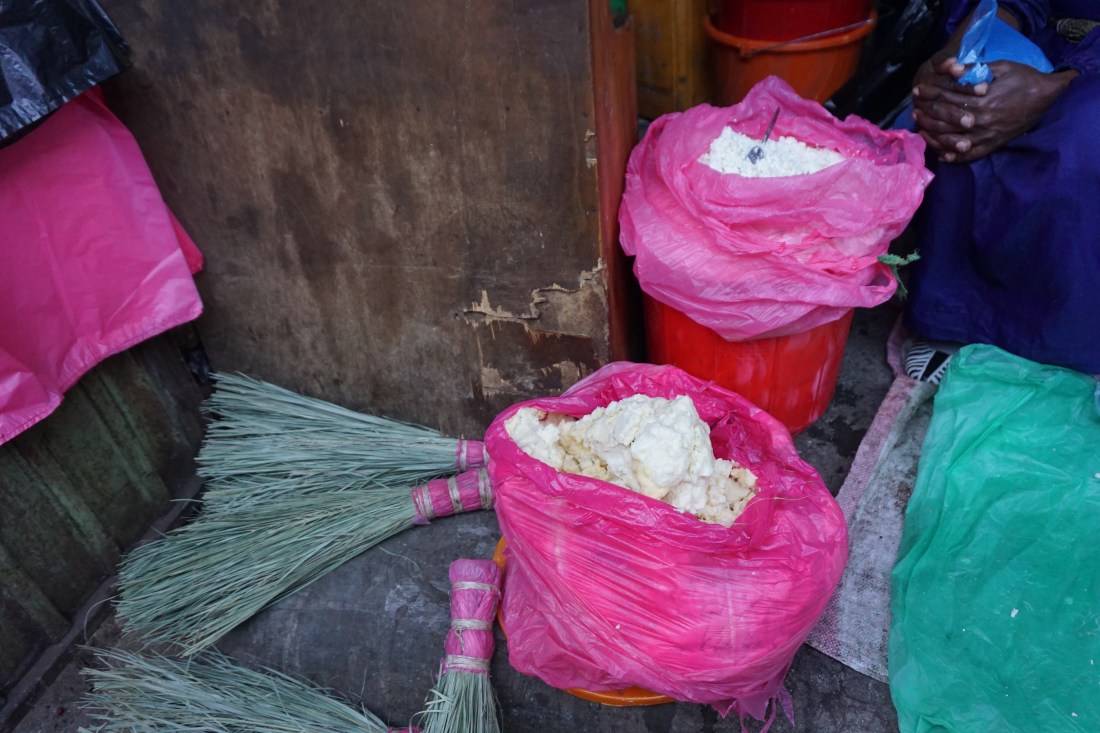
A type of butter women put in their hair and leave for up to six hours before they go to the hair dresser to make it soft. Cottage cheese in the back bucket.

dsc09383

dsc09371

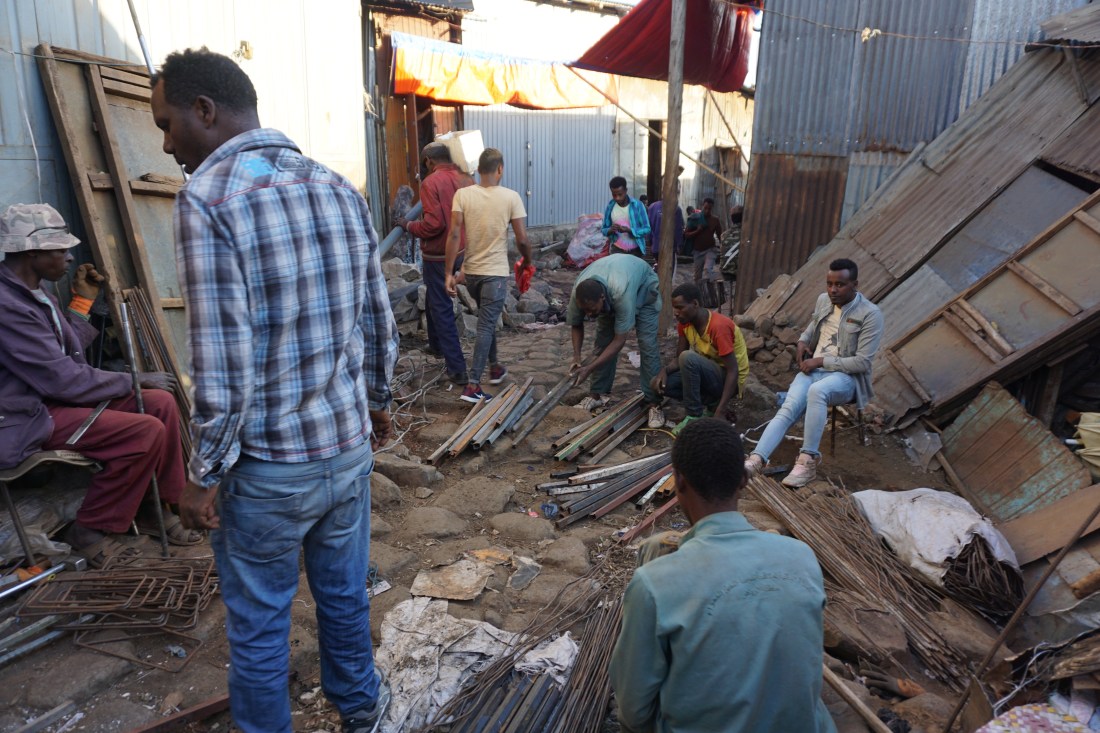
Metal being recycled and reused.

dsc09381

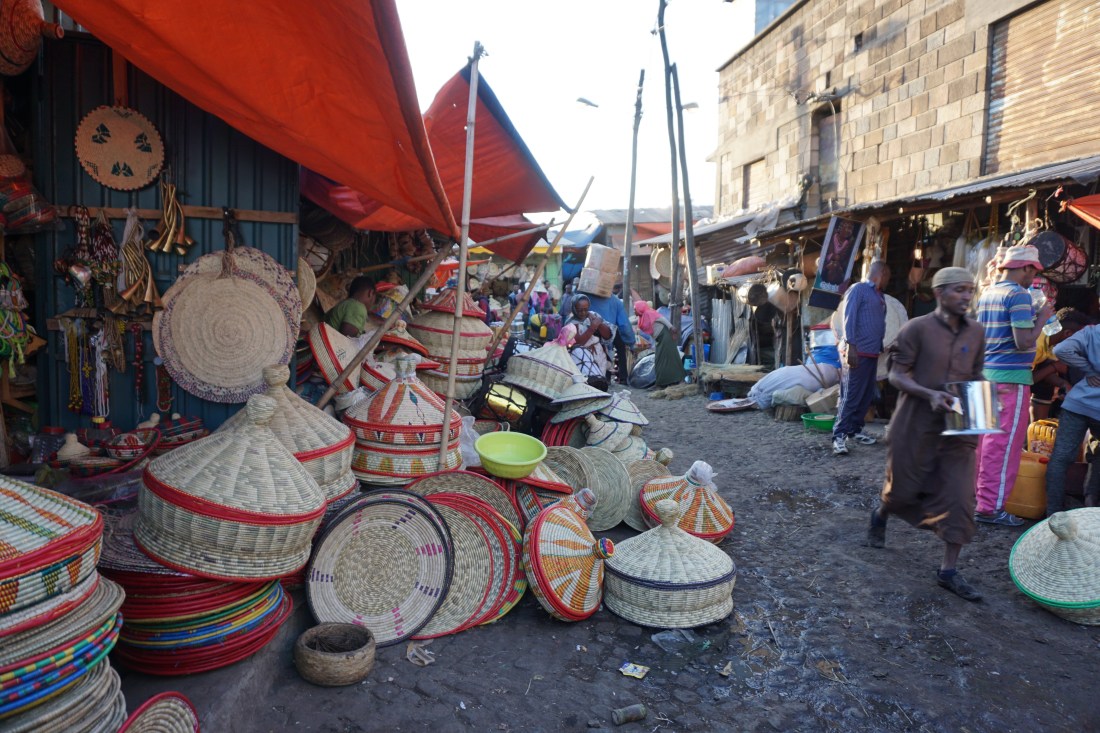
Large baskets made to store injera in which keeps it  fresh for up to four days.

dsc09390

dsc09401


Animals like this pregnant goat wander the market eating the scraps,  then go home on their own at closing time.

dsc09386


A happy camper.

dsc09438

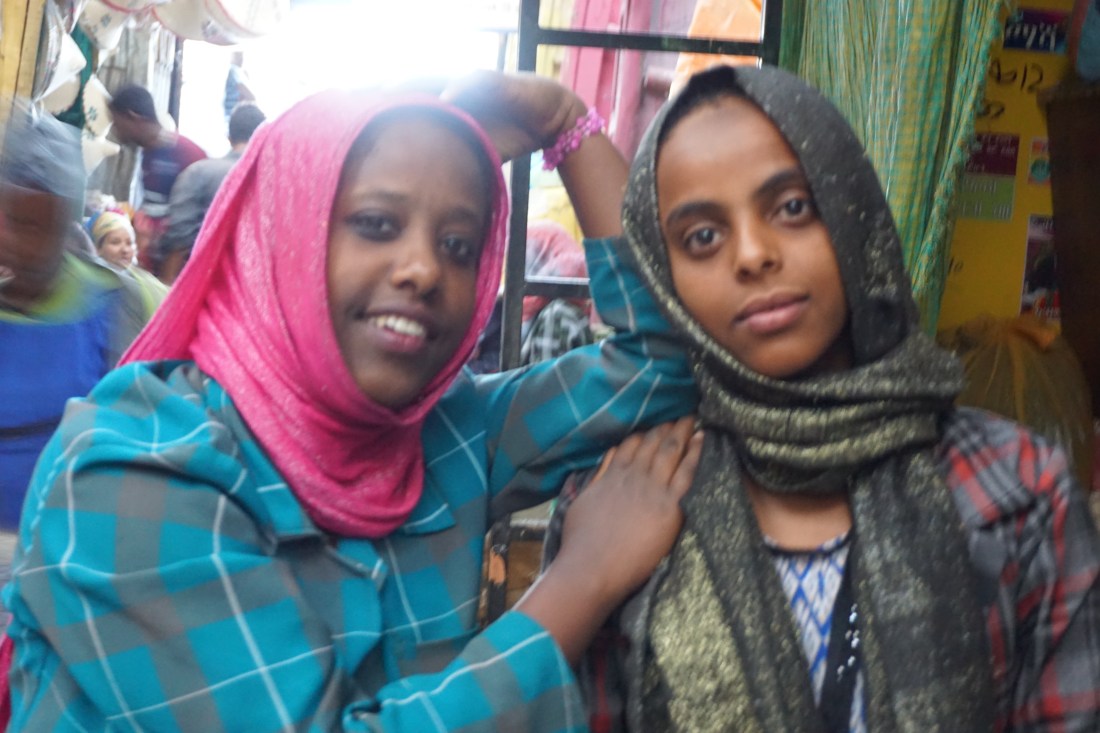
When these young girls saw me taking photos they were happy to pose for one.

dsc09411